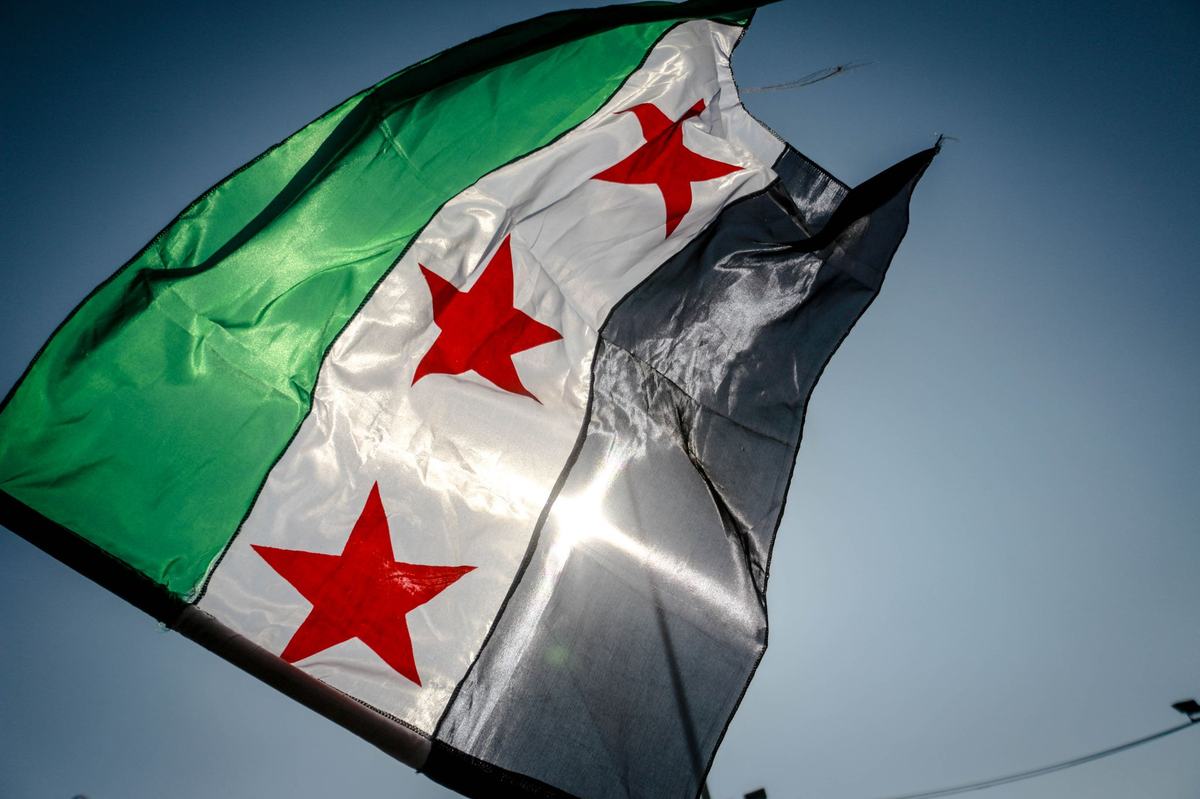
- Capital: Damascus [1]
- Population: roughly 23 million as of recent estimates [2]
- Area: about 185,000 square kilometers, slightly larger than the state of North Dakota [1]
- Official language: Arabic [1]
- Currency: Syrian pound (SYP)
- Distinguishing claim: home to Damascus, widely considered one of the oldest continuously inhabited capital cities in the world [3]
I grew up thinking the oldest cities in the world were somewhere in Greece or maybe Egypt. Then I read that Damascus has been lived in continuously for about 11,000 years and had to put the book down for a minute. People have been waking up, making bread, and arguing about the price of olives on the same street corner since before the pyramids existed. The recent news out of Syria has been brutal and unrelenting, but the country sitting underneath those headlines is one of the most layered places on the planet. Every shovelful of dirt you turn over hits a different civilization.
A Land of Very Old Cities
Damascus is the headline act, but it's not alone. Aleppo, in the north, has been continuously inhabited for at least 8,000 years and was a major commercial center long before Rome existed [4]. Ebla, near modern Aleppo, was a powerful trading kingdom around 2400 BCE, and archaeologists pulled around 20,000 cuneiform tablets out of its archives in the 1970s. The tablets are still being translated. Some of them mention biblical-sounding place names a thousand years before the Bible was written.
Then there's Mari, on the Euphrates, and Ugarit, on the Mediterranean coast. Ugarit gave the world one of the earliest known alphabets, a 30-letter cuneiform script developed around 1400 BCE that simplified writing from thousands of symbols down to something a regular person could learn in a week. Most of the alphabets used in the world today, including the one you're reading right now, trace back through Phoenician script to that Ugaritic experiment.
The Bazaar That Outlasted Empires
The Souq al-Hamidiyya in Damascus is the kind of place that flattens your sense of time. The bazaar's current covered roof was built in the late 19th century, but the street it runs along has been a market thoroughfare since Roman times. Walk to the western end of the souq and you step out onto a row of massive Roman columns that used to mark the entrance to the Temple of Jupiter. The Umayyad Mosque, one of the oldest and largest mosques in the world, was built right on top of that temple between 706 and 715 CE. The same site had previously been a Christian basilica, and before that an Aramean temple to the god Hadad. That's at least four religions layered on the same patch of ground, and people are still praying there.
A Lot of Religions Started Here or Passed Through
The Saul-to-Paul conversion story in the Christian New Testament happens just outside Damascus, on what's still called the Street Called Straight. The street exists. You can walk down it. It's been continuously occupied for over 2,000 years and still functions as one of the city's main commercial spines.
Syria was an important center of early Christianity, and it remained majority Christian for centuries after the Arab conquest in 636 CE. Some Syrian Christians still speak Aramaic, the language of Jesus, in towns like Maaloula north of Damascus [5]. Aramaic is one of the oldest continuously spoken languages on Earth, and the version still spoken in Maaloula is the closest living relative of what was being spoken in Galilee 2,000 years ago.
Islam took root quickly after the conquest, and Damascus became the capital of the Umayyad Caliphate from 661 to 750 CE, which at its peak controlled territory from Spain to the borders of India [6]. For about a century, the most important political decisions affecting roughly a third of the world's land surface were made in Damascus.
Palmyra and the Desert Queen
Out in the Syrian desert, about 200 kilometers northeast of Damascus, sit the ruins of Palmyra, a caravan city that grew rich connecting Rome with the East. In the third century CE, Palmyra was briefly the seat of an independent empire under Queen Zenobia, who conquered Egypt and parts of Anatolia before the Romans crushed her in 272 CE [7]. The Romans dragged her back to Rome in golden chains, supposedly, and she lived out her days in a villa near Tivoli.
The Palmyra ruins, with their colonnaded streets and elaborate temples, were inscribed as a UNESCO World Heritage Site in 1980. Significant parts of the site, including the Temple of Bel and the Arch of Triumph, were deliberately destroyed by ISIS between 2015 and 2017. Restoration is underway but slow, and some of what was lost cannot be replaced.
Crusader Castles That Still Look Like Castles
Syria has a remarkable collection of medieval fortifications, most famously Krak des Chevaliers in the western part of the country [8]. T.E. Lawrence called it "perhaps the best preserved and most wholly admirable castle in the world". Built by the Knights Hospitaller in the 12th and 13th centuries, the castle could house 2,000 soldiers and withstand sieges lasting months. It changed hands several times during the Crusades and was finally captured by the Mamluk sultan Baibars in 1271. The walls are still standing. From the upper battlements, on a clear day, you can see the Mediterranean coast roughly 50 kilometers away.
A Cuisine Built on 5,000 Years of Trade
Syrian food sits at the crossroads of Mediterranean, Persian, and Turkish cooking, with a fingerprint left by every empire that passed through. Aleppo is widely considered one of the great culinary cities of the Arab world, famous for its kibbeh, muhammara (a roasted red pepper and walnut spread), and a chili pepper called the Aleppo pepper that has a slow, fruity heat completely unlike a jalapeño. Damascus is known for its sweets, especially baklava and a milk-based pudding called muhallabia. The Iranian, Turkish, and Levantine cooking traditions you find scattered across the Middle East all owe something to the Syrian kitchen, which kept refining recipes while empires rose and fell.
Frequently Asked Questions
What is the capital of Syria?
Damascus is the capital and one of the largest cities in Syria. It is widely considered one of the oldest continuously inhabited capital cities in the world, with evidence of settlement going back roughly 11,000 years. The city has been a major center of culture, trade, and religion since antiquity.
What language is spoken in Syria?
The official language of Syria is Arabic, and the variety spoken is known as Levantine Arabic. Smaller communities speak Kurdish, Armenian, Turkmen, and Aramaic. The town of Maaloula, north of Damascus, is one of the last places where a form of Aramaic, the language of Jesus, is still spoken in daily life.
How old is Damascus?
Archaeological evidence suggests Damascus has been continuously inhabited for around 11,000 years, making it one of the oldest cities on Earth. The city was a major trade hub in antiquity, served as the capital of the Umayyad Caliphate in the seventh and eighth centuries, and remains the capital of Syria today.
What religions are practiced in Syria?
Syria is majority Muslim, with most of the population being Sunni, alongside significant Alawite, Druze, and Ismaili minorities. Christians have lived in Syria for nearly 2,000 years and historically made up around 10 percent of the population. Some Syrian Christians still use Aramaic in their liturgy and daily speech.
Is Palmyra still standing?
Parts of Palmyra still stand, but the ancient city suffered severe damage between 2015 and 2017, when ISIS deliberately destroyed several monuments, including the Temple of Bel and the Arch of Triumph. UNESCO and Syrian authorities have begun restoration work, but full reconstruction of the site will take decades.
Sources
- Syria - The World Factbook (CIA)
- Syrian Arab Republic - World Bank Data
- Ancient City of Damascus - UNESCO World Heritage
- Ancient City of Aleppo - UNESCO World Heritage
- Maaloula and the Last Speakers of Aramaic - Smithsonian Magazine
- The Umayyad Dynasty - The Metropolitan Museum of Art
- Palmyra - Encyclopaedia Britannica
- Crac des Chevaliers and Qal'at Salah El-Din - UNESCO World Heritage