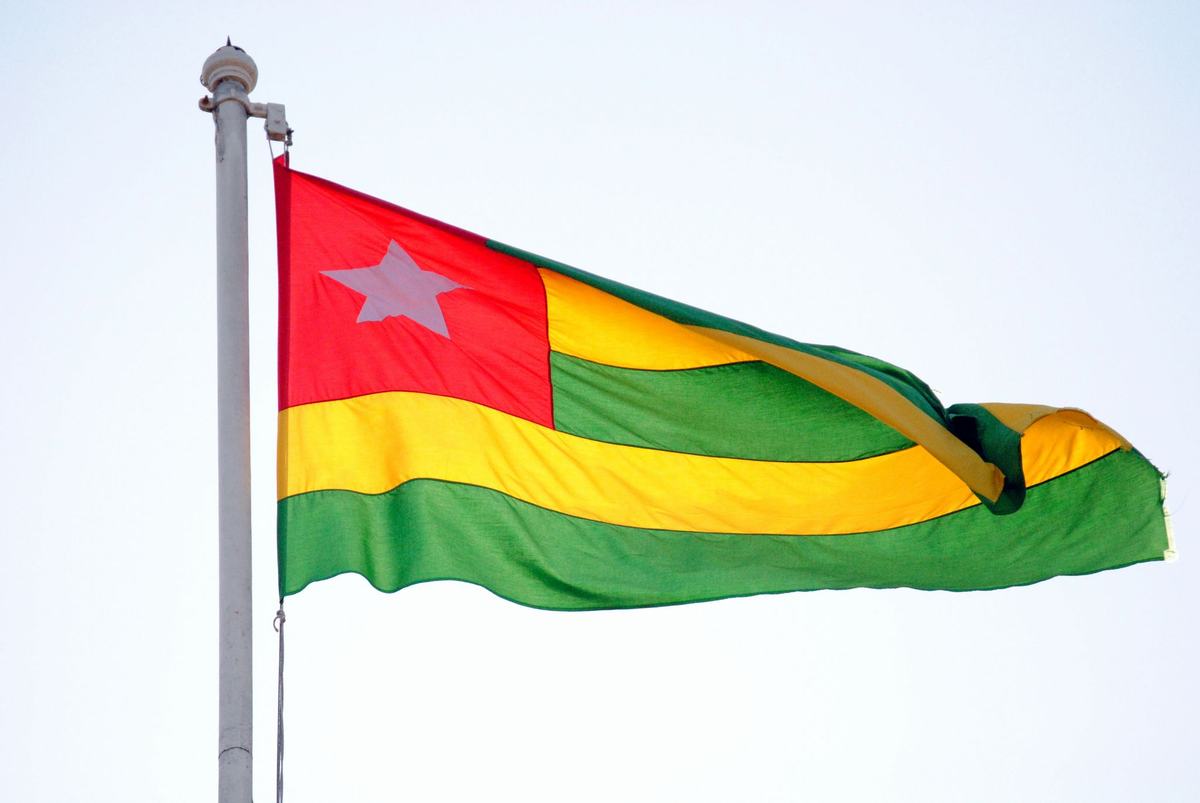
- Capital: Lomé (one of the few African capitals right on the coast) [1]
- Population: about 8.8 million [2]
- Area: 56,785 square kilometers - smaller than West Virginia [1]
- Official language: French; over 40 local languages spoken, mainly Ewe and Kabiyé [3]
- Currency: West African CFA franc (XOF) [2]
- Distinguishing claim: birthplace of Vodun (voodoo), still practiced by a large share of the population [4]
I grew up looking at maps of Africa where the country names got squeezed sideways just to fit. Togo was one of those. A vertical strip so thin the cartographers had to rotate the letters. I never gave it a second thought until I started actually reading about the place, and now I have this whole running list of things about Togo that I didn't know I needed to know.
A Country Shaped Like a Bookmark
Togo is roughly 56 kilometers wide at its coast and stretches about 600 kilometers inland. That's the kind of shape you get when colonial powers draw borders with a ruler and zero curiosity about what's on the ground. After World War I, Germany lost its colony of Togoland, and the territory got split between Britain and France. The British piece eventually joined Ghana. The French piece became modern Togo in 1960. Which, if you think about it, means half of what was once Togoland is now part of another country entirely. People in eastern Ghana and western Togo often speak the same language, share the same family names, and cross the border like it's a county line back home.
Lomé Sits Right on the Border
Most countries put their capital somewhere in the middle or at least a respectful distance from the neighbors. Togo put Lomé practically on top of Ghana. You can walk from downtown Lomé to the Ghanaian border in about fifteen minutes. The city grew up as a coastal trading post, and when independence came, nobody saw a reason to move it. Today it has a deepwater port that handles cargo for several landlocked countries to the north - Burkina Faso, Niger, Mali - which gives this small nation an outsized role in regional trade.
The Birthplace of Voodoo
Here's the thing most Americans get wrong about voodoo. The version in pop culture, with pins and dolls and horror movies, has almost nothing to do with the real religion. Vodun originated in what is now Togo and neighboring Benin, and it's a structured spiritual practice involving ancestors, deities, and a worldview where the seen and unseen worlds overlap constantly. When enslaved West Africans were taken to Haiti, Brazil, and Louisiana, they brought Vodun with them, and it evolved into the regional traditions we now call voodoo, Vodou, and Candomblé. The Akodessawa Fetish Market in Lomé is considered the largest voodoo market in the world. It's not a tourist gimmick. People actually go there for ceremonial supplies.
Phosphate, Cotton, and a Tough Economy
Togo's biggest export for decades has been phosphate, a mineral used in fertilizer. The country sits on one of the world's larger deposits, and mining started in the 1960s. Cotton matters too, especially for the rural north. But Togo remains one of the lower-income countries in the world by GDP per capita, and roughly half the population lives below the poverty line. I had to look this up twice because the country's reputation as a regional logistics hub made me assume the economy was stronger than the numbers show. Trade doesn't always mean wealth for the country doing the moving.
The Tamberma Valley and Its Castle Houses
Up in the northeast, in the Koutammakou region, the Batammariba people build homes that look like miniature mud castles. UNESCO calls them takienta - cylindrical towers connected by walls, with flat or conical roofs, designed to house animals on the ground floor and people above. The whole landscape is a UNESCO World Heritage Site. I've seen earthen architecture in the American Southwest, but nothing quite like these. The Batammariba have lived there for centuries, building these structures without imported materials or outside influence. Turns out human ingenuity doesn't need a hardware store.
A Surprising Soccer Story
In 2006, Togo qualified for the FIFA World Cup for the first time. Tiny country, huge moment. They didn't advance past the group stage, but for a place with under nine million people to make it onto that stage alongside Brazil, Germany, and Argentina was a national event. Forward Emmanuel Adebayor became one of the most recognized African players of his generation. Soccer in Togo is more than a sport - it's one of the few things that consistently unifies the whole country across ethnic and linguistic lines.
Frequently Asked Questions
Where is Togo located?
Togo is a narrow country in West Africa, bordered by Ghana to the west, Benin to the east, Burkina Faso to the north, and the Gulf of Guinea to the south. It is about 56 kilometers wide at the coast and stretches roughly 600 kilometers inland, giving it one of the most elongated shapes on the continent.
What language do they speak in Togo?
French is the official language of Togo, used in government, schools, and business. However, more than 40 local languages are spoken across the country. Ewe is most common in the south, while Kabiyé dominates in the north. Both are recognized as national languages alongside French.
Is Togo safe to visit?
Togo is generally considered safe for travelers who follow standard precautions. The capital Lomé is the main entry point and has tourist infrastructure. Visitors should stay aware of petty crime, avoid political demonstrations, and check current travel advisories from their home country before booking.
What is Togo famous for?
Togo is best known as the birthplace of Vodun (voodoo), its phosphate mining industry, and the UNESCO-listed Koutammakou cultural landscape with its distinctive Batammariba mud-tower houses. The country is also recognized for qualifying for the 2006 FIFA World Cup, its only appearance.