- Capital: Nuku'alofa, on Tongatapu island [1]
- Population: about 104,000 [1]
- Area: 747 square kilometers (288 sq mi), spread across roughly 170 islands [1]
- Official languages: Tongan and English [1]
- Currency: Pa'anga (TOP) [2]
- The only Pacific nation never colonized by a European power, and still ruled by a constitutional monarchy [3]
Most people couldn't find Tonga on a map. That's probably exactly how the Tongans like it. The country sits a third of the way down the Pacific between Hawaii and New Zealand, scattered across more water than most countries have land, and it keeps to itself in a way that feels almost deliberate. Here's the thing about Tonga though: it's the only country in the Pacific that was never colonized. Not by the British, not by the French, not by anyone. While the rest of Oceania was getting carved up by European empires in the 1800s, Tonga just kept being Tonga. And it still has a king, which makes it the last sovereign Polynesian kingdom on Earth.
A Kingdom That Outlasted the Empires
The Tongan royal line goes back roughly a thousand years. The current dynasty, the House of Tupou, has been on the throne since 1845, when King George Tupou I unified the islands and wrote a constitution that protected Tongan land from foreign ownership. That last part mattered more than anyone realized at the time. When the European powers came knocking later in the 1800s, they found a country with its own laws, its own king, and a population that wasn't interested in being a protectorate. Tonga signed a friendship treaty with Britain in 1900 that handled foreign affairs but left the monarchy intact. In 1970, Tonga ended even that arrangement and walked away as a fully sovereign kingdom. No flag changes, no transition government, no negotiated independence the way most former colonies got it. They just had never stopped being themselves.
170 Islands, And Most of Them Empty
Tonga is made up of about 170 islands, and only 36 of them have people living on them. The rest are uninhabited limestone or volcanic outcrops, some of them barely big enough to land a boat on. The four main island groups are Tongatapu (where the capital sits), Ha'apai, Vava'u, and the Niuas in the far north. Tongatapu is flat, agricultural, and home to most of the population. Ha'apai is mostly low coral atolls. Vava'u has cliffs and deep blue water that the sailing crowd treats like a religious site. Back home in Montana, I used to think a lake the size of a county was a lot of water. Tonga's exclusive economic zone covers about 700,000 square kilometers of ocean, and the country governs nearly a thousand times more sea than land [1].
The Quietest Sunday in the World
Sundays in Tonga are not like Sundays anywhere else. The constitution declares Sunday a sacred day, and commercial activity is prohibited by law. No shops, no flights, no public transport, no organized sports, no swimming at most public beaches. Tongans go to church (and the country is overwhelmingly Christian, mostly Methodist and Mormon), then they cook a big family meal called 'umu, slow-roasted in an underground oven of hot stones. The streets are empty. The ocean is empty. I had to look this up twice because I assumed there'd be exceptions for tourists. There aren't, really. If you visit, you build your week around the fact that one day of it just stops.
Whales, Volcanoes, And a Lot of Geology
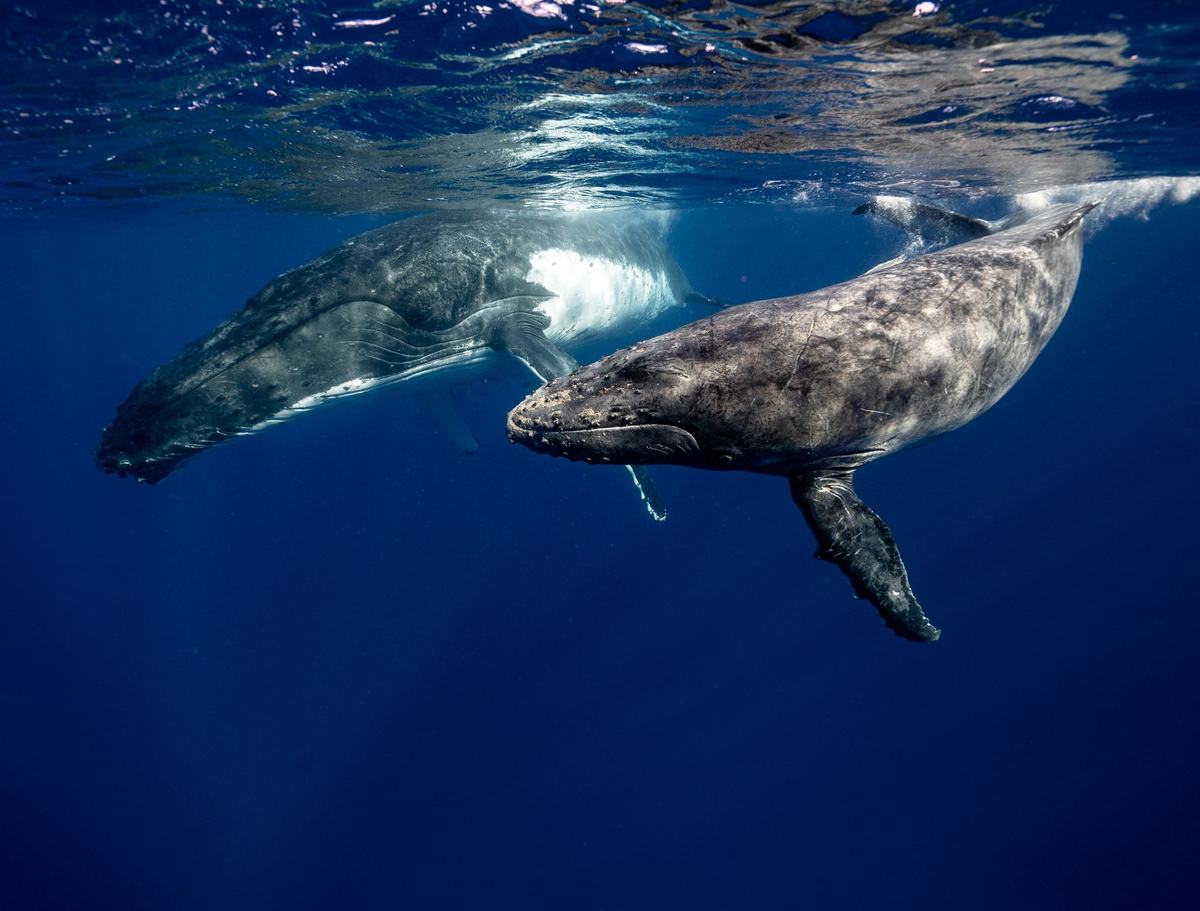
Humpback whales migrate to the warm waters around Vava'u and Ha'apai every July through October to give birth and nurse their calves. Tonga is one of the only places in the world where licensed operators can take swimmers into the water with them, and the experience is regulated tightly enough that the whales mostly seem fine with the whole arrangement. The country also sits on the Tonga Trench, one of the deepest underwater trenches on the planet, where the Pacific Plate is sliding under the Indo-Australian Plate at about 24 centimeters per year. That's the fastest plate motion on Earth. It's also why new islands occasionally just show up. In 2022, the underwater volcano Hunga Tonga erupted with the largest atmospheric blast recorded by modern instruments, sending a shockwave around the globe twice and briefly knocking out the country's only undersea internet cable [4].
Frequently Asked Questions
Where is Tonga located?
Tonga is in the South Pacific Ocean, roughly two-thirds of the way from Hawaii to New Zealand. It's east of Fiji and south of Samoa, made up of about 170 islands scattered across a north-south stretch of ocean.
What language do they speak in Tonga?
Tongan and English are both official languages. Tongan is a Polynesian language closely related to Samoan and more distantly to Hawaiian and Maori. Most Tongans speak both, and English is widely used in business, government, and schools.
Is Tonga safe to visit?
Tonga is generally safe for travelers, with very low rates of violent crime. The main risks are natural ones, including cyclones during the November to April season, occasional volcanic activity, and tsunami warnings tied to the active subduction zone offshore.
Why is Tonga called the Friendly Islands?
Captain James Cook gave Tonga the nickname "the Friendly Islands" in 1773 after a warm reception from local chiefs. There's a historical irony there because at least one chief was reportedly planning to attack his ships, but the plan fell apart and Cook never knew about it.