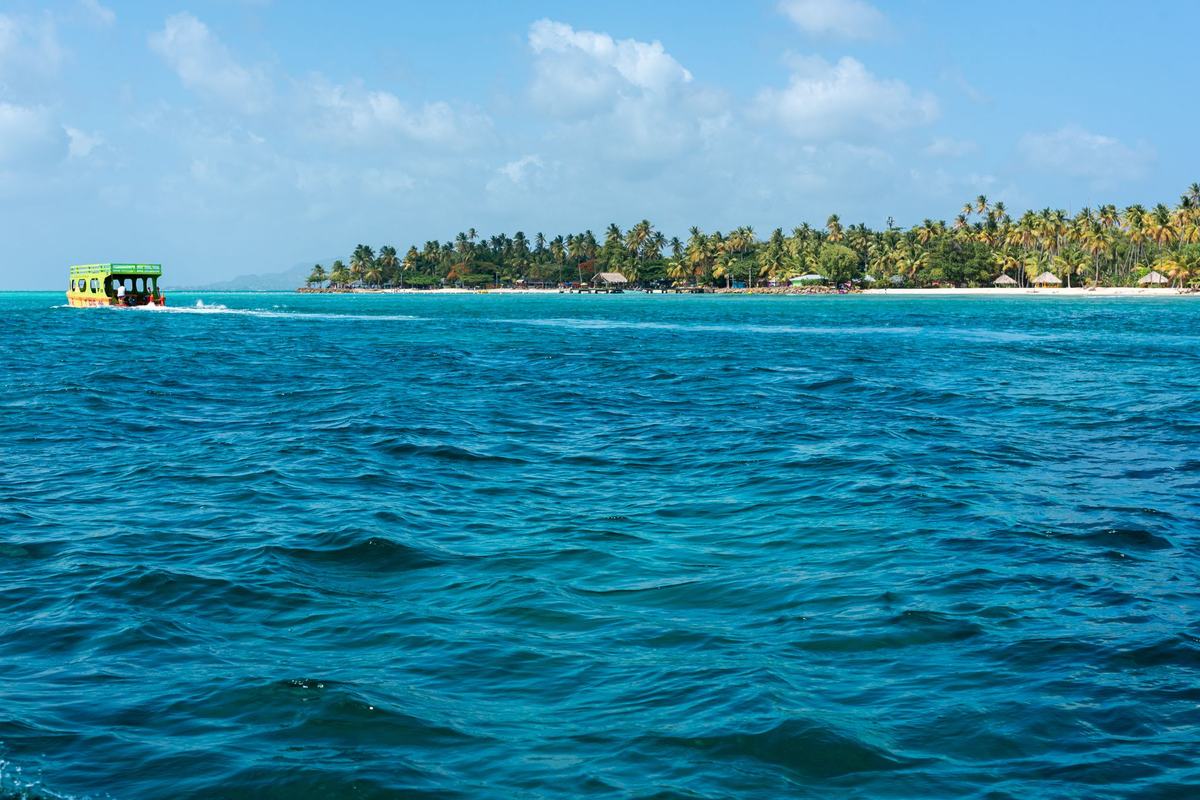
- Capital: Port of Spain (on Trinidad) [1]
- Population: about 1.4 million [2]
- Area: 5,131 square kilometers (1,981 square miles) [1]
- Official language: English (with Trinidadian Creole and Tobagonian Creole spoken everywhere) [1]
- Currency: Trinidad and Tobago dollar (TTD) [1]
- Birthplace of the steelpan, the only acoustic instrument invented in the 20th century [3]
I grew up thinking the Caribbean was one big tourist brochure. White sand, blue water, rum drinks. Then I started reading about Trinidad and Tobago and realized I had no idea what I was talking about. This place is an oil and gas exporter with one of the highest GDPs in the region, throws what's basically the second-biggest Carnival on the planet, and gave the world an entirely new musical instrument made from old industrial drums. It's a Caribbean country that doesn't really act like one, and that's what makes it so interesting.
Two Islands, Two Personalities
The country is exactly what it says on the passport - two main islands, not one. Trinidad is the bigger, busier one, sitting just seven miles off the coast of Venezuela. Tobago is smaller, quieter, sleepier, and lies about 21 miles to the northeast. People who live on Tobago will tell you, with no irony, that they're on island time and Trinidad is where you go to work. Trinidadians will tell you Tobago is where you go to remember why you work.
Geologically, Trinidad used to be part of South America. You can see it in the wildlife - the country has more in common with the Venezuelan rainforest than with the rest of the Caribbean. There are scarlet ibises, ocelots, howler monkeys, and over 470 species of birds packed into a country smaller than the state of Delaware [4]. For a country its size, that's wild.
The Steelpan Was Born Here
Here's the thing about the steelpan: it's the only acoustic musical instrument invented in the 20th century, and it came out of Trinidad in the 1930s and 1940s [3]. The story is that drumming was banned by colonial authorities who didn't like the noise (or, more honestly, didn't like Black culture being loud in public). So musicians moved to bamboo, and when bamboo got banned too, they moved to whatever metal they could find. Biscuit tins. Garbage cans. And eventually, the discarded oil drums lying around the refineries.
Somebody figured out you could hammer different sections of the drum head into different pitches. Then somebody else built a whole chromatic scale into one drum. By the 1950s there were full steel orchestras playing classical music, calypso, and original compositions. Today the national instrument has a Panorama competition every Carnival season where steel bands of 100+ players compete in front of audiences that scream like it's a championship boxing match. Which, if you think about it, is exactly what it is.
Carnival Is the Whole Country
Trinidad's Carnival is not a festival. It's a season. It runs roughly from January through Ash Wednesday, and during the final two days the entire country basically shuts down so people can play mas (short for masquerade). Hundreds of thousands of people fill the streets in costumes covered in feathers and beads, dancing for 12+ hours straight to soca music blasted from trucks the size of houses.
It's the second-biggest Carnival in the world after Rio, and it's the cultural template that exported itself everywhere. Notting Hill Carnival in London, Caribana in Toronto, Labor Day Carnival in Brooklyn - all of them descend from Trinidad's. The music genres of soca and chutney soca were invented here too. So was calypso, the music that gave Harry Belafonte his career and that everybody else in the world thinks of as generically "Caribbean".
Pitch Lake: The Largest Natural Asphalt Deposit on Earth
This is the kind of fact I had to look this up twice. There is a literal lake of asphalt in southern Trinidad, near the town of La Brea. It covers about 100 acres, goes down 250 feet at its deepest point, and contains roughly 10 million tons of natural asphalt [5]. People walk on it. They dig it out and ship it around the world. The asphalt that paved parts of Buckingham Palace and the runways at LaGuardia Airport in New York came from this lake.
Sir Walter Raleigh stopped here in 1595 and used the stuff to caulk his ships. Locals have known about it forever. It's a UNESCO Tentative List site and it's one of only a handful of natural asphalt lakes anywhere on Earth. And nobody talks about this, but it's also weirdly beautiful in person, with little pools of fresh water scattered across the black surface where rainfall collects and small fish somehow live.
The Food Is Not What You Expect
Caribbean food, in the American imagination, means jerk chicken and rice and beans. Trinidadian food is a totally different conversation. The country has a population that's roughly 35% of African descent, 35% of Indian descent (the descendants of indentured workers brought from India after slavery was abolished), and a mix of Chinese, Portuguese, Lebanese, and Indigenous heritage on top of that [2]. The food reflects all of it.
Doubles is the unofficial national dish - two pieces of fried flatbread (bara) wrapped around curried chickpeas (channa), topped with tamarind sauce and pepper. People eat it for breakfast on the side of the road, standing up, for about four Trini dollars. Roti, pelau, callaloo, bake and shark, pholourie, aloo pie - the menu reads like a culinary Venn diagram of West Africa, India, and the Caribbean overlapping in one tiny country. Even the Chinese food in Trinidad has its own distinct flavor that doesn't taste like Chinese food anywhere else in the world.
Oil, Gas, and a Different Kind of Caribbean Economy
Most Caribbean economies run on tourism. Trinidad and Tobago runs on hydrocarbons. The country is one of the largest exporters of liquefied natural gas in the Western Hemisphere, and oil and gas account for a huge share of GDP and government revenue [6]. This gives Trinidad an economic profile that looks more like a small Gulf state than a typical island nation.
That wealth has built a country with paved highways, decent infrastructure, and a per-capita income well above most of its neighbors. It's also created its own challenges - economic dependence on commodity prices, environmental concerns, and the slow project of diversifying into other industries. But it explains why Trinidad doesn't feel like a tourist destination first. It's a working country. The cruise ships dock at Port of Spain, but most visitors never see the parts of the island where the actual economy happens.
Frequently Asked Questions
What is Trinidad and Tobago famous for?
Trinidad and Tobago is famous for inventing the steelpan, hosting one of the world's largest Carnival celebrations, and being the birthplace of calypso and soca music. It's also one of the wealthiest Caribbean nations thanks to its oil and natural gas industry, and it has remarkable biodiversity for a country its size.
Is Trinidad and Tobago one country or two?
Trinidad and Tobago is one country made up of two main islands plus several smaller ones. Trinidad is the larger, more populous island where the capital Port of Spain is located. Tobago is smaller, more rural, and known for its beaches and coral reefs. Both islands share one government and one passport.
What language do they speak in Trinidad and Tobago?
The official language is English. In daily life, most people speak Trinidadian Creole or Tobagonian Creole, both English-based creoles with influences from African languages, French, Spanish, and Hindi. Hindi, Spanish, and Chinese are also spoken by various communities across the islands.
Where is Trinidad and Tobago located?
Trinidad and Tobago is the southernmost country in the Caribbean, located in the southern Caribbean Sea just off the northeastern coast of Venezuela. Trinidad sits only about seven miles from the South American mainland, which is why it shares wildlife and geology with Venezuela rather than the other Caribbean islands.
What is the currency of Trinidad and Tobago?
The currency is the Trinidad and Tobago dollar, abbreviated TTD or TT$. It has been the official currency since 1964 and is issued by the Central Bank of Trinidad and Tobago. The exchange rate has been relatively stable, typically around 6.7 to 6.8 TTD per US dollar in recent years.
Sources
- The World Factbook: Trinidad and Tobago
- Central Statistical Office of Trinidad and Tobago
- UNESCO: The Steelpan, National Instrument of Trinidad and Tobago
- BirdLife International: Trinidad and Tobago Country Profile
- UNESCO Tentative List: Pitch Lake of La Brea
- U.S. Energy Information Administration: Trinidad and Tobago Country Analysis