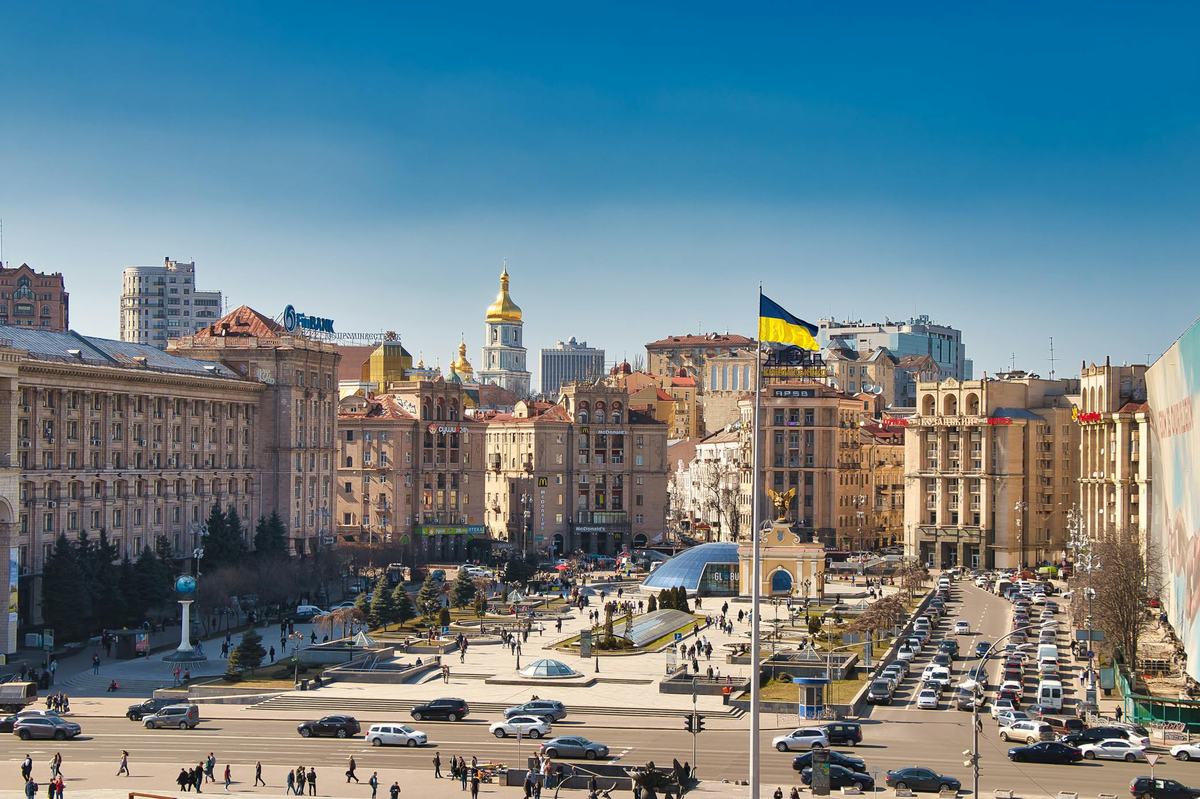
- Capital: Kyiv [1]
- Population: about 38 million (2022 estimate, post-displacement figures vary) [2]
- Area: 603,628 square kilometers, the largest country entirely within Europe [1]
- Official language: Ukrainian [1]
- Currency: Hryvnia (UAH) [1]
- Distinguishing claim: Ukraine holds roughly a quarter of the world's chernozem, the fertile black soil that made it a global breadbasket [3]
I grew up thinking of Europe as a tight little patchwork of small countries you could drive across in a day. Then I pulled up a map of Ukraine and stared at it for a while. It is bigger than France. It is bigger than any country that sits fully inside Europe's borders. And the more I read, the more I realized I had been carrying around a cartoon version of a place that is genuinely vast, deeply old, and stubbornly its own.
Here is the thing about Ukraine. The headlines of recent years have flattened it into a single story, and the country deserves a wider frame. So this is the wider frame. Geography, food, language, the strange wonderful corners that do not make the news.
A Country Built on Black Soil
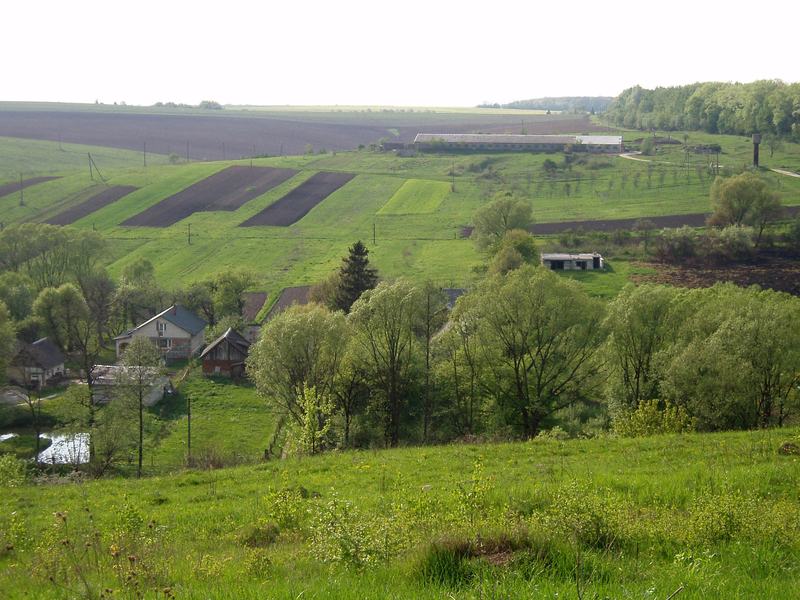
If you have ever driven across Iowa or eastern Montana and felt the land flatten out into something that looks like it was poured from a pitcher, you already have a sense of Ukraine's heartland. The country sits on top of one of the great soil deposits of the planet. Chernozem, which translates plainly to "black earth", is a dark, organic-rich topsoil that can run a meter deep in places. Ukraine holds about a quarter of the world's reserves of it [3].
That single fact explains a lot. It explains why Ukraine has been one of the top wheat, corn, and sunflower oil exporters on the planet for decades [4]. It explains why empires kept fighting over it. It explains why Ukrainian villages have grain motifs woven into their embroidery and why a wheat sheaf shows up on the country's coat of arms and in folk art everywhere. The land made the culture, then the culture made the land back.
Sunflowers, by the way, are not just a postcard image. Ukraine is consistently the world's largest producer of sunflower oil, often supplying close to half the global market in a given year [4]. Back home in Montana, a sunflower field is a pretty roadside surprise. In Ukraine it is the horizon.
.jpg)
Kyiv Is Older Than Most European Capitals
Kyiv was already a serious city when Paris was still figuring itself out. The traditional founding date is 482 CE, though the urban core grew dramatically in the ninth and tenth centuries under the Kyivan Rus, a federation of East Slavic principalities that ran from the Baltic to the Black Sea [5]. By the time of Prince Volodymyr the Great in 988, Kyiv was the capital of one of the largest states in medieval Europe and had just adopted Christianity in a mass baptism in the Dnipro River.
Walk through Kyiv today and you can feel that depth. The Saint Sophia Cathedral, finished in the eleventh century, still has original mosaics on its interior walls [6]. The Kyiv Pechersk Lavra, a monastery complex built into a hillside above the Dnipro, has a network of catacombs where monks have been buried since the eleventh century. Both sites are UNESCO World Heritage listed [6].
I had to look this up twice, because it surprised me. The Kyiv Metro's Arsenalna station is the deepest in the world, at 105.5 meters below the surface. The escalator ride down takes about five minutes. It was built that deep partly because of the local topography along the right bank of the Dnipro, and partly because Soviet planners designed deep metros to double as bomb shelters [7].
The Carpathians and the Wooden Churches
Most people picture Ukraine as flat. Most of it is. But head west, toward the Polish, Slovak, and Romanian borders, and the country wrinkles upward into the Carpathian Mountains. The highest peak, Hoverla, tops out at 2,061 meters [1]. It is not the Rockies, but the Carpathians have their own personality, full of beech forests, mountain meadows, sheep cheese, and a culture that feels almost separate from the rest of the country.
The Hutsuls live in these mountains. They are an ethnic group with their own dialect, their own embroidery patterns, and a musical tradition built around a long wooden horn called the trembita that can be three meters long. The Hutsul villages dot the slopes, and many of them still have wooden churches that were built without a single nail. Sixteen of these tserkvas, scattered across the Polish and Ukrainian sides of the Carpathians, are UNESCO World Heritage sites [8]. They are made of horizontal logs, topped with onion or pyramidal roofs covered in shingles, and they look like they grew out of the forest floor.
A Language That Refused to Disappear
Ukrainian is a Slavic language, related to Russian and Belarusian but distinct from both. It has its own grammar, its own literary tradition, and a beautiful soft musicality that comes from a lot of palatalized consonants. The poet Taras Shevchenko, who lived in the early nineteenth century, is to Ukrainian what Shakespeare is to English, only with the added weight that he was writing in a language the Russian Empire actively tried to suppress [9].
In 1863 and again in 1876, imperial decrees banned the printing of books in Ukrainian. The language survived in kitchens, in church basements, in folk songs, and on the pages of writers who simply refused to stop. Today Ukrainian is the official state language, and after decades of bilingualism, the share of citizens who use Ukrainian in daily life has grown substantially [9].
A small thing that delighted me. Ukrainian has a softer-sounding alphabet than Russian, with letters like і and ї and є that give the written language a distinct visual rhythm. If you have ever tried to learn Cyrillic, Ukrainian is a good place to start, because the sound-letter correspondence is more consistent than in some of its neighbors.
Food, Borscht, and a Quiet UNESCO Victory
Ukrainian food is what happens when serious farmland meets a long winter. Borscht, the deep-red beet soup, is the national dish. Every family has a recipe, every region has a variation, and arguing about borscht is a competitive sport. In 2022, UNESCO inscribed "the culture of Ukrainian borscht cooking" on its list of intangible cultural heritage in need of urgent safeguarding [10]. Which, if you think about it, is a strange honor for a soup, until you understand that food is identity, and identity was under threat.
Beyond borscht, the table runs deep. Varenyky are stuffed dumplings, usually with potato, cheese, cherry, or sauerkraut. Salo is cured pork fat, eaten in thin slices on dark rye bread with a slice of raw garlic, which sounds rough until you try it on a cold morning. Holubtsi are cabbage rolls stuffed with rice and meat. Honey shows up everywhere, because beekeeping is a national passion. Ukraine is one of the top honey producers in Europe [4].
Frequently Asked Questions
Is Ukraine the largest country in Europe?
Ukraine is the largest country located entirely within Europe, at 603,628 square kilometers. Russia is larger overall but spans both Europe and Asia. Ukraine's land area is bigger than France, Spain, or Germany.
What is the capital of Ukraine?
The capital of Ukraine is Kyiv, a city of roughly three million people located on the Dnipro River. Kyiv is one of the oldest cities in Eastern Europe and was the center of the medieval Kyivan Rus state from the ninth to thirteenth centuries.
What language do people speak in Ukraine?
The official state language is Ukrainian, an East Slavic language related to but distinct from Russian and Belarusian. Russian is widely understood as a second language, and the share of citizens using Ukrainian in daily life has grown substantially since independence in 1991.
What food is Ukraine famous for?
Ukraine is famous for borscht, a beet-based soup recognized by UNESCO as intangible cultural heritage in 2022. Other staples include varenyky (stuffed dumplings), holubtsi (cabbage rolls), salo (cured pork fat), and a strong beekeeping tradition that makes Ukraine one of Europe's top honey producers.
Why is Ukraine called the breadbasket of Europe?
Ukraine sits on roughly a quarter of the world's chernozem, the deep fertile black soil ideal for grain. The country is among the world's largest exporters of wheat, corn, and sunflower oil, supplying close to half of the global sunflower oil market in a typical year.
Sources
- The World Factbook: Ukraine
- United Nations Population Division: Ukraine
- FAO Soils Portal: Chernozems
- OECD-FAO Agricultural Outlook: Ukraine
- Encyclopaedia Britannica: Kyivan Rus
- UNESCO World Heritage: Kyiv: Saint-Sophia Cathedral and Related Monastic Buildings, Kyiv-Pechersk Lavra
- Kyiv Metropoliten: Arsenalna Station
- UNESCO World Heritage: Wooden Tserkvas of the Carpathian Region in Poland and Ukraine
- Encyclopaedia Britannica: Ukrainian language
- UNESCO Intangible Cultural Heritage: Culture of Ukrainian borscht cooking