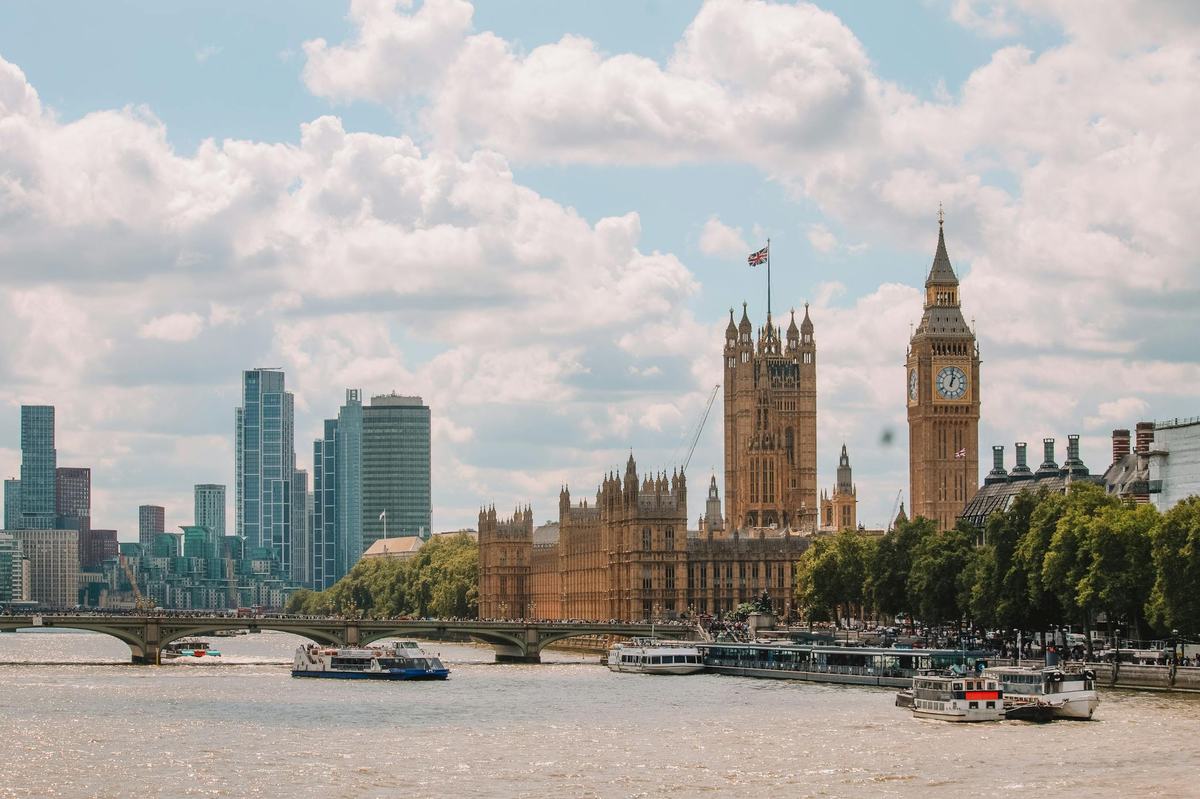
- Capital: London, population around 9 million in the city proper and about 14 million in the greater metro area, the largest urban region in western Europe [1]
- Total population: roughly 68 million across England, Scotland, Wales, and Northern Ireland [2]
- Area: 243,610 square kilometers, smaller than the state of Oregon but supporting more than 15 times the people
- Official language: English, with Welsh, Scottish Gaelic, Irish, Scots, and Ulster Scots all holding official or recognized status in their home regions [3]
- Currency: pound sterling (GBP), the oldest currency still in continuous use anywhere in the world
- The UK is not one country but four, joined into a single state with one monarch, one parliament at Westminster, and four very different ideas of what Britishness means [4]
I used to think the United Kingdom and England were the same thing. A lot of Americans do. Then in college a professor from Glasgow pulled out a napkin and drew four overlapping circles, England, Scotland, Wales, and Northern Ireland, and explained that calling a Scotsman English is roughly the equivalent of calling a Texan a Yankee. Maybe worse. The napkin lecture lasted twenty minutes and I left it folded in a notebook for years.
The UK is one country made of four countries, and once you see that, almost everything about the place starts making more sense.
The Geography Is Smaller Than You Think
The whole United Kingdom would fit inside Oregon with room to spare. From the southern coast of England to the northern tip of Scotland is about 600 miles, roughly the drive from Portland to Salt Lake City. And yet inside that space you get the chalk cliffs of Dover, the Lake District peaks, Welsh slate valleys, Scottish highlands, the entire literary geography of Thomas Hardy, the Brontes, and Walter Scott, plus more than 6,000 islands counted off the coast. Most of those islands are uninhabited rocks, but around 130 have people on them.
You're never more than 70 miles from the sea anywhere in the UK. For somebody who grew up landlocked in Montana, that's a strange thing to internalize. The country is essentially a long coastline with some hills and cities in the middle.
Four Countries, One State
England is the biggest by far, with about 56 million of the 68 million total population. Scotland comes next at around 5.5 million, then Wales at 3.1 million, then Northern Ireland at 1.9 million. They share a monarch and the UK parliament, but Scotland, Wales, and Northern Ireland each have their own devolved assemblies that handle a lot of local matters. Scotland has its own legal system, its own school structure, and prints its own banknotes (which English shopkeepers sometimes look at with mild suspicion).
The flag everyone knows, the Union Jack, is actually three flags stacked on top of each other. The cross of St. George for England, the cross of St. Andrew for Scotland, and the cross of St. Patrick representing Ireland. Wales is missing from the design entirely, a sore point that comes up in Cardiff more often than the rest of the country realizes.
The Capital That Outgrew Its Walls
London started as a Roman trading post called Londinium around 50 AD, and the city walls the Romans built still trace the edge of what's now called the City of London, the original square mile. The modern metro area has spread roughly 30 miles in every direction since then. Big Ben, the clock tower most people picture when they hear London, is technically named the Elizabeth Tower. Big Ben is just the largest bell inside it. I had to look this up twice.
London also has the oldest underground railway in the world, opened in 1863, which Londoners call the Tube and complain about constantly. The deepest stations sit around 192 feet below street level. During World War II, those deep stations doubled as bomb shelters. Some platforms still have markings showing where the bunk beds went.
A Parliament Older Than Most Countries
The Parliament at Westminster traces its origins to a council called by King Edward I in 1295, which historians treat as the first recognizable English parliament. That makes the institution older than most modern nations [4]. The current building is younger, rebuilt after a fire in 1834, but the procedure inside is full of survivals: a ceremonial mace placed on the table before sessions begin, a doorkeeper who slams the door of the Commons in the face of the monarch's representative every time a new parliament is opened, a Speaker who is physically dragged to the chair by colleagues to reenact the medieval reluctance of MPs who, for centuries, sometimes lost their heads for delivering bad news to the king.
The House of Lords still has hereditary members. Not as many as there used to be, but enough that some seats in the legislature still pass through bloodlines. The monarch has not refused royal assent to a bill since 1708.
Tea, Pubs, and the National Tempo
Brits drink about 100 million cups of tea every day, which works out to roughly 1.5 cups per person, every person, every day. Tea arrived in England in the 1660s from China and India, and within a century it had become the national drink, partly because boiling the water made it safer than the local groundwater. The English habit of milk in tea probably started for practical reasons - hot tea cracked the cheap porcelain cups that working families could afford, and a splash of cool milk first kept them intact.
The pub is the other piece of national infrastructure. There are roughly 45,000 of them across the UK, often built into spaces that used to be coaching inns or village halls. Some of the oldest claim continuous service going back 800 or 900 years. The Old Trip to Jerusalem in Nottingham says it has been serving since 1189, the year Crusaders set out under Richard the Lionheart, though the records are murky. Either way, a pint in a pub like that comes with the feeling that you're part of a very long line.
The Weather, Which Is Less Dramatic Than Its Reputation
Here's the thing about British weather. London actually gets less annual rainfall than New York, Sydney, or Miami, around 23 inches a year. It just spreads that rain across a lot more days, often as a fine drizzle that locals call "mizzle". The reputation for grim weather is really a reputation for cloudy days. The country sits on the same latitude as Hudson Bay in Canada but stays warm because of the Gulf Stream, which is why palm trees grow in Cornwall.
Snow in southern England is rare enough that a serious snowfall basically shuts down rail networks. In Scotland it's a different story. The Cairngorms get proper winter weather, and Ben Nevis, the highest peak in the UK at 4,413 feet, holds snow late into spring.
Inventions, Exports, and the Sheer Cultural Footprint
The UK has produced more Nobel laureates per capita than almost any country in the world. The list of things invented or first developed there is genuinely strange in its scope: the steam engine, the railway, the World Wide Web (Tim Berners-Lee in 1989), penicillin, the jet engine, the television, the telephone (with Alexander Graham Bell working in Scotland), the bicycle, the lawn mower, the computer (Alan Turing's machines at Bletchley Park), modern football, rugby, cricket, golf, and tennis.
Then there's the cultural exports. The English language itself, spoken by more than a billion people, including most of the science and aviation worlds. Shakespeare. The Beatles. James Bond. Sherlock Holmes. Harry Potter. The BBC. The country punches harder than its population would suggest, and a lot of that comes from being a small place with a very long memory.
Frequently Asked Questions
Is England the same as the United Kingdom?
No. England is one of four countries that make up the United Kingdom, alongside Scotland, Wales, and Northern Ireland. The UK is the sovereign state. England is the largest of its constituent countries with about 56 million people. Great Britain refers to the island holding England, Scotland, and Wales.
What is the capital of the United Kingdom?
London is the capital of the United Kingdom and has been the seat of English and then British government since the Romans founded Londinium around 50 AD. The city has about 9 million residents and a metropolitan area of roughly 14 million, the largest in western Europe.
What language do people speak in the United Kingdom?
English is the dominant and official language, used in government and business throughout the country. Welsh is co-official in Wales, Scottish Gaelic and Scots are recognized in Scotland, and Irish and Ulster Scots are recognized in Northern Ireland. Regional accents vary enormously over short distances.
What is the currency of the United Kingdom?
The currency is the pound sterling (GBP), symbolized as the pound sign. It is the oldest currency in continuous use anywhere in the world, with roots going back more than 1,200 years. Scotland and Northern Ireland issue their own banknotes, which are legal currency throughout the UK.
Does the United Kingdom have a king or a president?
The UK is a constitutional monarchy with King Charles III as head of state and a prime minister as head of government. The monarch's role is largely ceremonial. Real political power sits with parliament at Westminster and the prime minister, currently leader of the largest party in the House of Commons.
Sources
- Office for National Statistics: Population of Cities and Regions
- Office for National Statistics: UK Population Estimates
- UK Government: Recognised Regional and Minority Languages
- UK Parliament: A Brief History of Parliament
- Historic Royal Palaces: London and the Tower of London
- British Library: Tea in British History