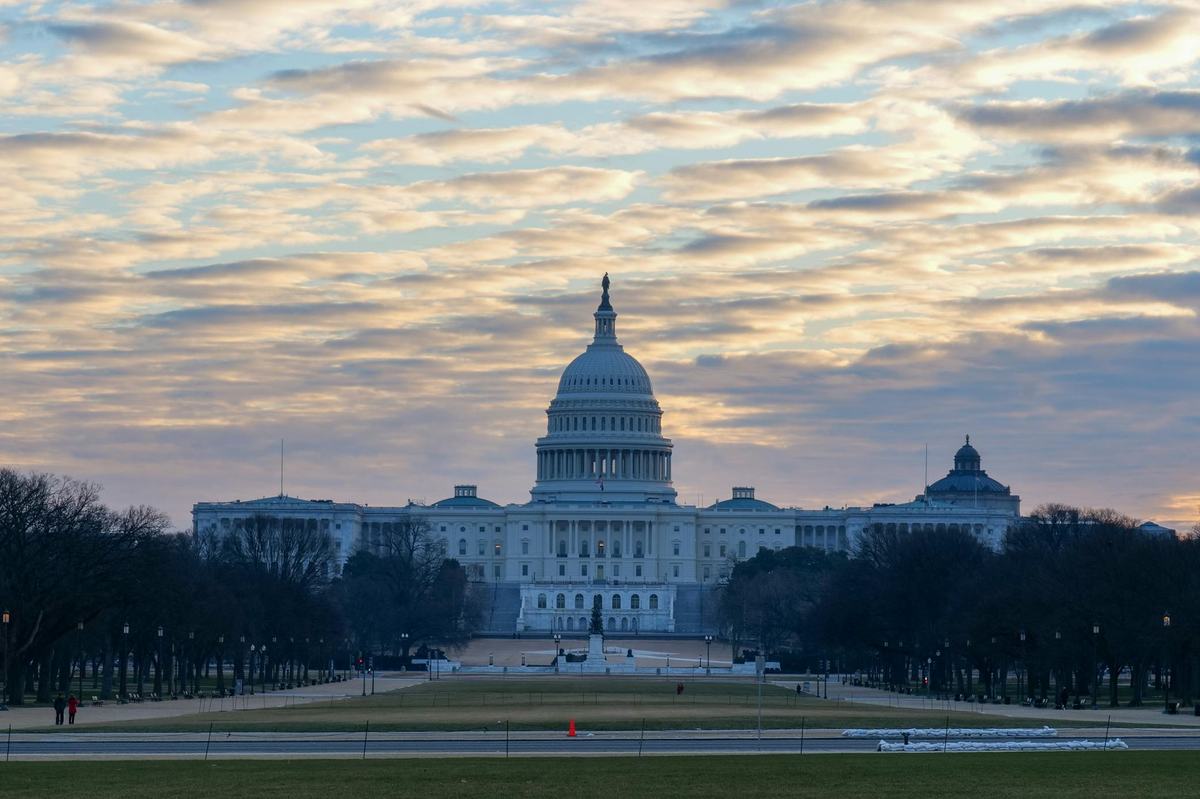
- Capital: Washington, D.C., a federal district of about 700,000 residents that isn't part of any state [1]
- Population: roughly 335 million, the third most populous country on Earth after India and China [1]
- Area: 9.83 million square kilometers across 50 states, six time zones, and the longest international border in the world (with Canada) [2]
- Official language: none at the federal level. English is dominant; over 67 million people speak a language other than English at home [3]
- Currency: United States dollar (USD), the world's primary reserve currency
- Mammoth Cave in Kentucky is the longest known cave system on the planet, with more than 426 miles of surveyed passages and counting [4]
I grew up in a town of 800 people in eastern Montana, surrounded by wheat fields that ran past the curve of the earth. Now I live in Portland, in a neighborhood where three different languages get spoken on my block before breakfast. Both of those places are the United States. That's what makes this country impossible to summarize in a paragraph and why every fact I write here is going to feel partial.
Here's something to start with. If you drove from the easternmost tip of Maine to the westernmost point in mainland Alaska, you'd cover roughly 5,500 miles. You'd cross six time zones. You'd pass through tundra, desert, rainforest, prairie, swamp, and mountains tall enough to grow their own weather. And you'd still be in the same country.
A Federation of 50 Very Different Places
The United States is technically 50 states, one federal district, and five inhabited territories, plus several smaller territories no one lives on full-time. Each state runs its own laws, taxes, license plates, school systems, alcohol rules, and definition of what counts as a hot dog. Moving from Oregon to Texas is, in some real ways, like moving between two countries that share a passport.
This was the whole point. The founders set up the country so that most decisions would happen at the state level, with the federal government handling defense, currency, mail, and a short list of other things. Two and a half centuries later, the federal role has expanded a lot, but the basic structure still holds. California has stricter car emissions rules than the federal minimum. Mississippi has different liquor laws than Massachusetts. Vermont was an independent republic before it joined the union in 1791, and Texas was its own country for nine years before joining in 1845.
Alaska, by the way, is about twice the size of Texas, which itself is bigger than France. Alaska was bought from Russia in 1867 for $7.2 million. The Treasury draft is on display at the National Archives. Adjusted for inflation, that's about $160 million today, which works out to roughly $100 per square mile.
The Geography Is Bigger Than the Story
Most people picture America as cities and highways, but more than 80 percent of the country is rural land or wilderness. The National Park Service manages 63 designated national parks plus hundreds of national monuments, seashores, and historic sites. Yellowstone, established in 1872, was the first national park in the world [5]. Half of it sits on top of a supervolcano caldera, which is one of those facts you read once and then think about every time you visit.
The Grand Canyon is a mile deep and 277 miles long. The Mississippi-Missouri river system is the fourth longest in the world. Death Valley holds the record for the hottest air temperature ever reliably measured on Earth, 134°F in 1913. And Hawaii's Mauna Kea, measured from its base on the seafloor to its summit, is taller than Everest by nearly a mile. Most of it is just underwater, which doesn't usually count in the rankings.
Back home in Montana, you can drive for two hours and not see another car. That kind of empty space is harder to grasp from inside a city, but it's most of the country by area.
A Population That Keeps Changing Shape
The U.S. population is around 335 million, but the more interesting number is where they live. Roughly 83 percent of Americans live in metropolitan areas. About half live in just nine states. The Northeast corridor from Boston to Washington holds around 50 million people in a strip you can drive through in a day.
The country has always been built around immigration, and that hasn't slowed down. Roughly 14 percent of current residents were born somewhere else, the highest share in over a century. New York City alone has more than 800 languages spoken in it, which linguists call the most linguistically diverse city in human history. There are neighborhoods in Queens where you can find a Tibetan grocery, a Bukharian Jewish bakery, and a Colombian arepa stand within a single block.
There's no official national language. English is the de facto one, but several states have made Spanish co-official in practice, and there are courtrooms that operate routinely in Vietnamese, Mandarin, Korean, and Tagalog depending on the city.
The Economy Is Genuinely Hard to Describe
The U.S. economy is the largest in the world by nominal GDP, around $28 trillion, which is roughly a quarter of all economic activity on the planet [6]. California by itself, if it were a country, would be the fifth largest economy in the world, ahead of India. Texas would be ninth.
Some of this comes from natural resources. The country produces more oil than Saudi Arabia, more natural gas than Russia, and more corn than any other country. Some of it comes from finance, the dollar being the world's reserve currency since the 1944 Bretton Woods agreement. And a lot of it, in the last 40 years, has come from the software industry. The five largest companies in the world by market cap are all American tech firms, which is a fact that wouldn't have been true at any point before about 2010.
What this means in daily life is harder to pin down. Median household income is around $80,000. The cost of healthcare in the U.S. is roughly twice the average among other wealthy countries. And the income gap between the top 1 percent and the bottom 50 percent is the widest it's been in modern times. The whole country runs on these contradictions.
Roads, Cars, and the Shape of Daily Life
The interstate highway system was authorized in 1956 and now stretches over 48,000 miles. It was originally pitched partly as defense infrastructure, on the theory that you'd need to evacuate cities quickly in a war. The actual effect was to remake American daily life around the car. Suburbs that didn't exist in 1955 became the dominant form of housing. Drive-throughs got invented. The mall was born and, more recently, has been dying.
There are around 290 million registered vehicles in the United States, nearly one for every adult. The average American drives about 14,000 miles a year. And nobody talks about this, but in most American cities outside the Northeast and the West Coast, walking somewhere for groceries isn't really a thing you can do. The country was rebuilt for the car between roughly 1945 and 1975, and most of it has never been redesigned since.
Sports, Movies, and the Cultural Exports
American sports are weird in that the four biggest ones (football, baseball, basketball, hockey) are mostly only played at the professional level by Americans and Canadians. The Super Bowl draws about 120 million American viewers, and the halftime show has somehow become a global cultural event in its own right.
Movies are different. Hollywood has been the largest film industry in the world by revenue since the 1920s, and American movies and TV are watched in basically every country with electricity. The Library of Congress, by the way, is the largest library in the world by collection size, holding around 173 million items including 41 million books across 470 languages [7]. It also has the original copyright deposits of nearly every American film and song made in the last hundred years.
Frequently Asked Questions
What is the capital of the United States?
Washington, D.C., is the capital of the United States. It is a federal district that is not part of any state, established in 1790 along the Potomac River. The city has about 700,000 residents and is home to the White House, the Capitol Building, and the Supreme Court.
How many states are in the United States?
The United States has 50 states. The original 13 colonies became states between 1787 and 1790. Hawaii was the most recent addition, becoming the 50th state in August 1959, about seven months after Alaska. The country also has one federal district and five inhabited territories.
What is the largest city in the United States?
New York City is the largest city in the United States by population, with about 8.3 million residents in the five boroughs and roughly 19 million in the greater metropolitan area. Los Angeles is second, and Chicago is third. The largest by land area is Sitka, Alaska.
Is English the official language of the United States?
The United States has no official language at the federal level. English is the de facto national language and is spoken by about 78 percent of residents at home. Spanish is the second most common language, spoken by over 41 million people. Some individual states have declared English official.
What currency does the United States use?
The United States uses the U.S. dollar (USD), divided into 100 cents. The dollar has been the world's primary reserve currency since the 1944 Bretton Woods Agreement and is used in roughly 60 percent of all international transactions. U.S. paper currency has not changed size or basic design since 1929.
Sources
- United States Census Bureau: Quick Facts
- United States Geological Survey: Geography of the United States
- American Community Survey: Languages Spoken at Home
- National Park Service: Mammoth Cave National Park
- National Park Service: Yellowstone National Park History
- Bureau of Economic Analysis: Gross Domestic Product
- Library of Congress: About the Collections