- Capital: Port Vila, on the island of Efate [1]
- Population: roughly 320,000 [1]
- Area: about 12,189 square kilometers spread across 80 islands [1]
- Official languages: Bislama, English, and French [2]
- Currency: Vanuatu vatu (VUV) [1]
- Distinguishing claim: home to the Nagol land diving ritual on Pentecost Island, the cultural ancestor of modern bungee jumping [3]
Most people couldn't find Vanuatu on a map. That's probably exactly how they like it. I had to look this up twice when I first read that one of the smallest countries in the Pacific is also one of the most linguistically dense places on the entire planet. More than a hundred living languages for a population smaller than Anchorage, Alaska. That math broke my brain for a second.
A Country Made of Eighty Islands
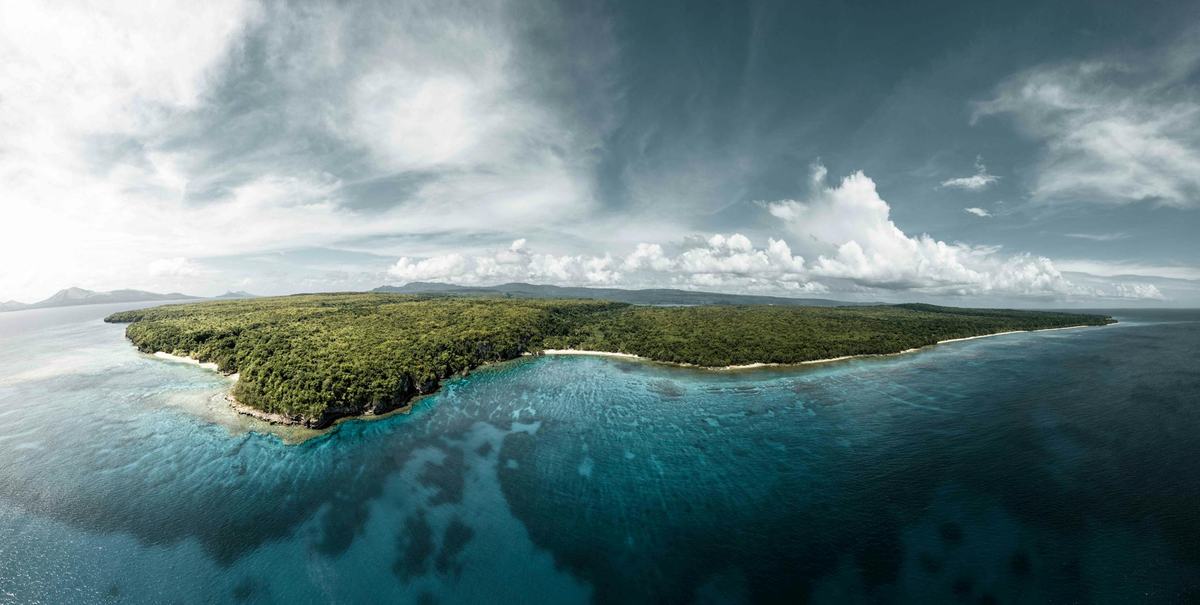
Vanuatu sits about 1,750 kilometers east of northern Australia, scattered across the South Pacific in a rough Y shape. The country is made up of around 80 islands, and 65 of them are inhabited [1]. The biggest is Espiritu Santo. The most populated is Efate, which holds Port Vila, the capital. If you flew over the country in a small plane, you'd see green ridges dropping straight into reef water, volcanic cones still smoking, and stretches of ocean where there's nothing for hundreds of miles in any direction.
The islands are volcanic in origin, part of the Pacific Ring of Fire, and several of the volcanoes are still very much awake. Mount Yasur, on the island of Tanna, has been erupting more or less continuously for hundreds of years. It's one of the few volcanoes in the world where you can walk right up to the rim and watch lava get thrown into the sky. Back home in Montana, the closest thing we have to that kind of geological theater is Yellowstone, and even there you watch from a boardwalk a safe distance away.
More Languages Than Anywhere Else, Per Person
Here's the thing about Vanuatu that nobody talks about: it has the highest density of languages per capita of any country on Earth. Researchers count more than 100 indigenous languages still spoken today, plus the three official ones [2]. That's roughly one language for every 3,000 people. For comparison, the United States, with about a thousand times the population, has nowhere near that ratio of distinct living languages.
The reason is geography. Each island, and often each valley within an island, developed its own tongue over thousands of years of relative isolation. Trade and travel happened, but slowly enough that language drift went unchecked.
To stitch this all together, Vanuatu uses Bislama, an English-based creole that emerged in the 1800s during the labor trade. Bislama is the lingua franca, the language that gets you from a Tanna village to a Port Vila market without anyone needing a translator. It's also a joy to read. The national motto translates to "Long God yumi stanap" - "In God we stand".
Land Diving, the Original Bungee Jump
On Pentecost Island, men have been doing something for centuries that the rest of the world only caught onto in the 1980s. It's called Nagol, or land diving. They build wooden towers up to 30 meters tall, tie carefully measured vines around their ankles, and jump headfirst, aiming to brush the soft, tilled earth with just their hair or shoulders [3]. The vines are calculated to stop them inches from the ground. There's no margin for error, and no second chance if the vine length is wrong.
This ritual is tied to a good yam harvest and to the proving of courage. It's also the direct inspiration for the modern bungee jump. A New Zealander named A.J. Hackett saw footage of the Pentecost divers, scaled the idea up with elastic cord and bridges, and turned it into a global tourism industry. The Pentecost ritual still happens, every April through June, with vines, not rubber.
A Young Country, Old Cultures
Vanuatu only became independent in 1980, which makes it younger than I am. Before that, it was jointly administered by Britain and France in a strange arrangement called the New Hebrides Condominium, where both colonial powers ran parallel systems for everything: two police forces, two school systems, two legal codes, two postal services [1]. People joked it was the "pandemonium", not the condominium. When independence came, the new country had to build a single system out of the wreckage.
What's striking is how strong traditional culture stayed through all of that. The Ni-Vanuatu, as the people are called, still organize life around the village chief system, kastom (traditional law), and ceremonial exchange. The economy outside the cities runs heavily on subsistence agriculture - taro, yams, kava, and fishing.
Speaking of kava: in Vanuatu, kava is taken seriously. It's a mildly sedative drink made from the root of the kava plant, and there are dedicated nakamals (kava bars) in nearly every village. The Vanuatu strain is among the strongest in the Pacific, and the etiquette is specific: drink your shell in one go, then sit quietly with the feeling.
On the Front Line of Climate Change
Vanuatu has become one of the most vocal small-island nations on climate. It's also one of the most disaster-prone countries in the world by some risk indexes - cyclones, earthquakes, tsunamis, and volcanic eruptions all threaten regularly. In 2023, the Vanuatu government led a United Nations resolution asking the International Court of Justice to clarify countries' legal obligations on climate change [4]. A nation of 320,000 people putting climate accountability on the world's highest court is a quiet kind of audacity.
Frequently Asked Questions
Where is Vanuatu located?
Vanuatu is an archipelago in the South Pacific Ocean, about 1,750 kilometers east of northern Australia and northeast of New Caledonia. It consists of around 80 islands stretched in a Y shape across roughly 1,300 kilometers of ocean.
What language do they speak in Vanuatu?
Vanuatu has three official languages: Bislama, English, and French. Bislama, an English-based creole, is the most widely spoken and serves as the common tongue. The country also has over 100 indigenous languages, the highest density per capita in the world.
Is Vanuatu a safe country to visit?
Vanuatu is generally considered a safe destination for tourists, with low crime rates compared to many countries. The main risks are natural ones: cyclones during the November to April season, plus seismic and volcanic activity. Travelers should check government advisories before visiting.
What is Vanuatu famous for?
Vanuatu is best known as the cultural origin of bungee jumping through the Nagol land-diving ritual on Pentecost Island. It's also famous for active volcanoes like Mount Yasur, its extreme linguistic diversity, kava ceremonies, and its leadership on climate change at the United Nations.