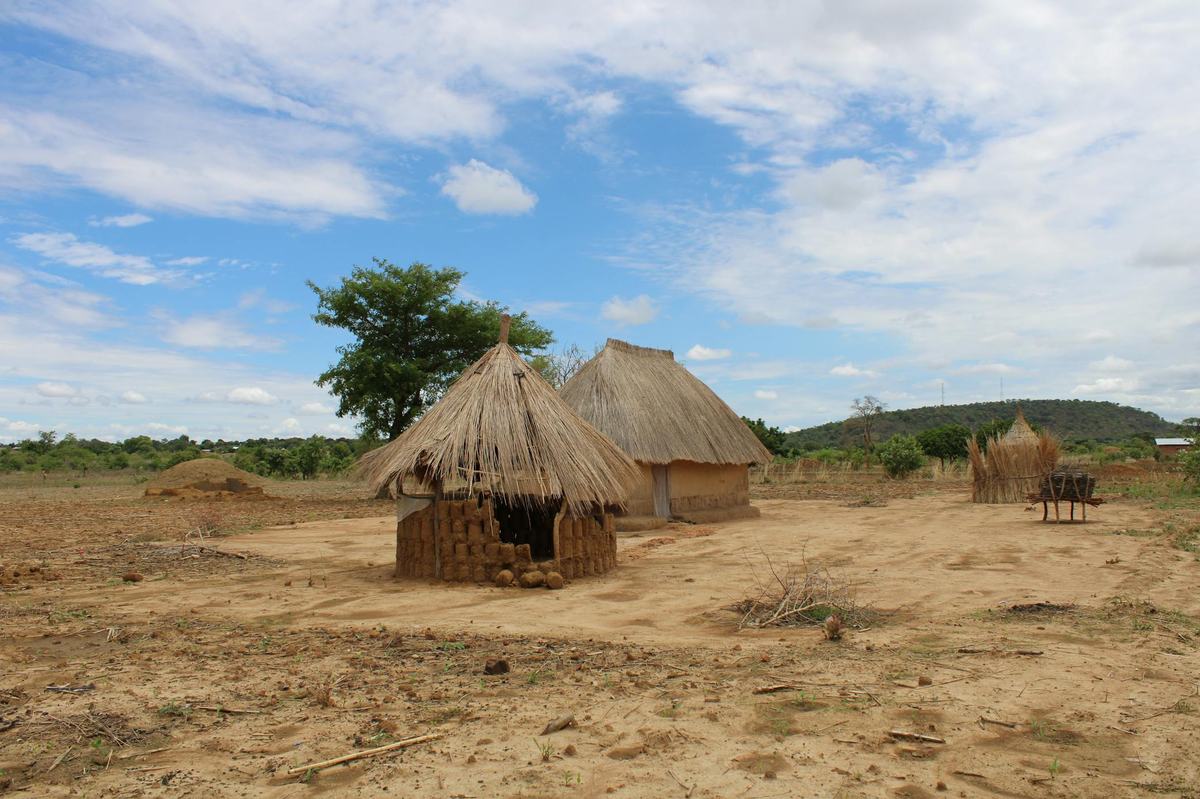
- Capital: Lusaka [1]
- Population: about 20.6 million (2024 estimate) [2]
- Area: 752,618 km² (290,587 sq mi) [1]
- Official language: English, with 72 other recognized languages spoken across the country [1]
- Currency: Zambian kwacha (ZMW) [1]
- Home to Victoria Falls, one of the seven natural wonders of the world, which Zambia shares with Zimbabwe along the Zambezi River [3]
I grew up thinking waterfalls were things you drove to and took a picture of. Then I read about Mosi-oa-Tunya, which translates to "the smoke that thunders", and I had to sit down for a minute. Zambia has a waterfall so loud and so large that the spray it kicks up forms its own permanent cloud, visible from twenty-five miles away. That waterfall has shaped pretty much everything about the country, from where people live to where the borders ended up to what tourists actually come to see. But Zambia is a lot more than one famous landmark, and the more I read about it, the longer my list of things I didn't know got.
The Smoke That Thunders
Victoria Falls sits on the Zambezi River, right on the border between Zambia and Zimbabwe, and it is not the tallest waterfall in the world, nor the widest. What it is, by a lot of measures, is the largest single sheet of falling water on the planet [3]. The falls are about 5,604 feet wide and 354 feet tall, and during peak flow in March and April the river dumps something like 500 million liters of water over the edge every minute. The mist plume can rise 1,300 feet into the air and is visible from a small airplane miles away.
The Scottish missionary David Livingstone reached the falls in 1855 and named them after Queen Victoria, but the local Kololo people had been calling them Mosi-oa-Tunya for centuries. UNESCO recognized the whole site as a World Heritage Site in 1989 [3]. On the Zambian side, you can do something nobody should probably be allowed to do, which is swim in Devil's Pool, a natural rock basin right at the lip of the falls during the dry season. People sit there with their legs dangling over a 300-foot drop. I looked at the pictures for a long time before I closed the tab.
Copper Built Half the Country
Zambia is one of the world's largest copper producers, and for most of the 20th century the entire national economy ran on it [4]. The Copperbelt, a stretch of mining towns in the north running along the border with the Democratic Republic of the Congo, was developed in the 1920s and 1930s by British and South African mining companies. At its peak, Zambia produced around 12 percent of the world's copper. The metal funded the railways, the schools, the hospitals, and most of the infrastructure that still exists today.
The trouble with a one-commodity economy is that when prices drop, the whole country feels it. In the 1970s, when copper prices collapsed, Zambia went into a long economic decline that took decades to climb out of. Mining is still the backbone of exports, and new investment from Chinese and other international companies has pushed production back up. The country also has significant reserves of cobalt, emeralds (some of the highest quality in the world come from the Kafubu fields), and a growing renewable energy sector built around hydropower from the Zambezi [4].
A Country With Seventy-Three Languages
English is the official language, a holdover from British colonial rule, but it's the home language of almost nobody. Zambia recognizes 72 other languages spoken across its territory, with seven of them treated as official regional languages: Bemba, Nyanja, Tonga, Lozi, Lunda, Kaonde, and Luvale [1]. Bemba is the most widely spoken, especially in the Copperbelt and the north. Nyanja is the language of the capital, Lusaka, and the southeast.
Turns out, this kind of multilingualism is normal in much of Africa, but Zambia is a particularly clean example of how it works in daily life. A Zambian might speak their mother tongue at home, a regional language at the market, and English at work or school, all without thinking much about it. Code-switching mid-sentence is so common that linguists have built academic careers studying it. Radio stations broadcast in multiple languages on the same day, and the national news on ZNBC is delivered in seven of them in rotation.
The Largest Mammal Migration on Earth
Here's the thing nobody talks about when they list African wildlife spectacles. Every year, from late October to December, about ten million straw-colored fruit bats descend on a small patch of evergreen forest in Kasanka National Park, in central Zambia [5]. It is the largest mammal migration anywhere on the planet, by sheer number of individuals. The bats come from across central Africa to feed on wild fruit, and they pack into roosting trees so densely that the branches sometimes snap under the weight.
When they take off at dusk, the sky over the forest goes dark for several minutes. The whole event happens in an area of forest smaller than 250 acres, which makes the density even more absurd. Nobody fully understood the scale of it until researchers started counting them in the 2000s. Kasanka is one of the smallest national parks in Zambia and one of the least visited, but for those few months of the year it hosts more biomass on the wing than anywhere else.
Walking Safaris Were Invented Here
Most African safaris involve a Land Cruiser, a guide with binoculars, and a strong belief that you should stay in the vehicle. Walking safaris work differently. You actually walk through the bush, on foot, with an armed scout and a guide, looking for animals at ground level. The whole concept was developed in Zambia, specifically in South Luangwa National Park, by a conservationist named Norman Carr in the 1950s [6]. Carr believed that the best way to understand the bush was to walk through it, the way the people who had lived there for thousands of years always had.
South Luangwa is now one of the best wildlife parks in Africa, with one of the highest concentrations of leopards anywhere. The Luangwa River, which forms the park's spine, supports massive populations of hippos and crocodiles. Walking safari camps are still spread along its banks, and the practice has spread to other parks across Africa. The thing about being on foot is that everything changes. The animals look bigger. The silences last longer. You notice the tracks and the smell of the soil and the small details that get lost from the back of a truck.
Frequently Asked Questions
What is Zambia most famous for?
Zambia is most famous for Victoria Falls, which it shares with Zimbabwe along the Zambezi River [3]. It is also known for its copper mining industry, the walking safari tradition pioneered in South Luangwa National Park, and the massive annual fruit bat migration in Kasanka National Park.
Is Zambia a safe country to visit?
Zambia is generally considered one of the safer countries in southern Africa for tourists, with stable politics and a long record of peaceful elections [1]. Standard precautions apply in urban areas, particularly Lusaka, where petty theft can occur. The main safari and tourism regions report very low crime against visitors.
What language do they speak in Zambia?
English is the official language of Zambia and is used in government, education, and business [1]. Most Zambians also speak at least one of the 72 indigenous languages, with Bemba, Nyanja, Tonga, and Lozi being the most widely spoken. Code-switching between English and local languages is common in daily conversation.
What currency is used in Zambia?
The currency of Zambia is the Zambian kwacha (ZMW), introduced in 1968 to replace the Zambian pound [1]. The kwacha was redenominated in 2013, when three zeros were removed from the value. US dollars are accepted at many safari lodges and tourist sites, though kwacha is required for most local purchases.
What is the capital of Zambia?
The capital of Zambia is Lusaka, located in the south-central part of the country at about 1,279 meters above sea level [1]. It became the capital in 1935, replacing the earlier colonial capital of Livingstone near Victoria Falls. Lusaka is home to around 3 million people and is the economic and political center of the country.