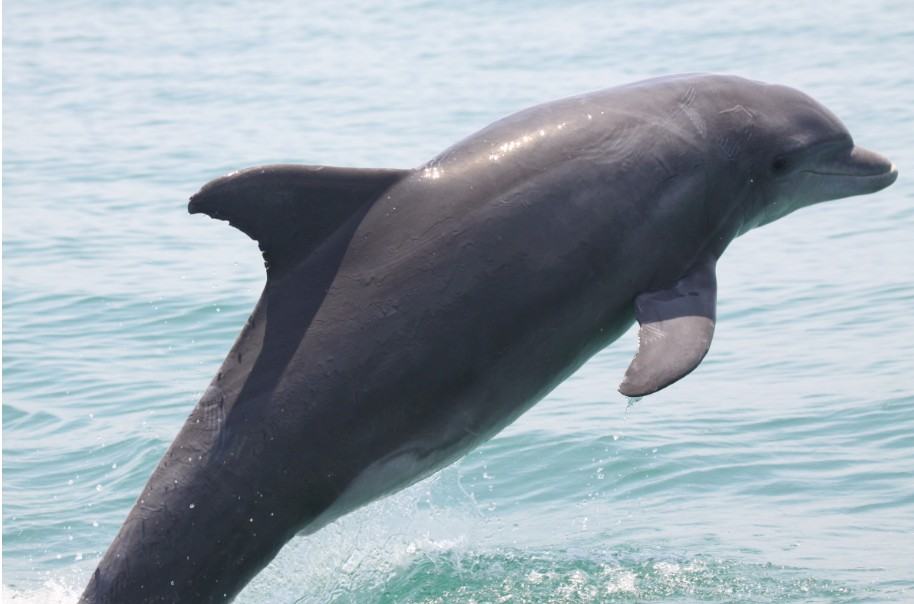
Dolphins have a reputation for being clever, which is the sort of thing people say about an animal without ever quite explaining what they mean. So I went looking for the specifics. It turns out the clever bits are stranger and more useful than the postcard version suggests. Here are a few things about dolphins that tend to make a room go quiet.
They Are Not Fish
This trips up nearly every eight-year-old I teach. Dolphins are mammals, not fish [1]. They breathe air, they are warm-blooded, they give birth to live calves, and they feed those calves milk. A fish breathes underwater through gills and never has to surface. A dolphin does. Which means that, unlike a fish, a dolphin can drown. It is a mammal that simply decided the sea was the better address.
Breathing Is a Decision
Here is the part that stopped me. Dolphins do not breathe automatically the way we do [2]. Every single breath is a conscious choice. They surface, open the blowhole on top of the head, take a breath, and close it again. For an animal that lives underwater, forgetting to breathe would be a serious problem. So they never fully switch off, which leads rather neatly to the next fact.
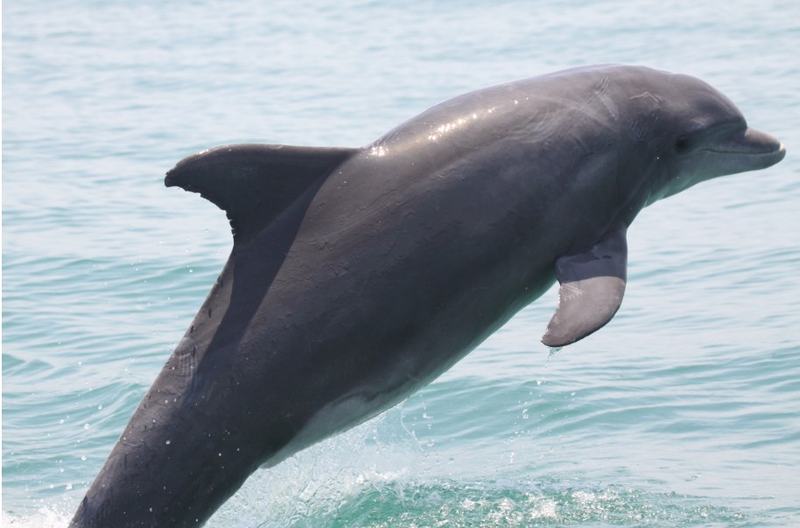

Sleeping With Half a Brain
Because a dolphin has to remember to breathe, it cannot afford to go fully unconscious. So it sleeps one half of its brain at a time [2]. One half rests while the other stays awake to keep it surfacing and watching for trouble. The opposite eye usually stays open too. As it turns out, sleeping with one eye open is not just an expression - a dolphin does it every single night, then swaps sides.
Seeing With Sound
Dolphins hunt using echolocation. They send out a stream of clicks, then listen to the echoes bouncing back off whatever is around them [3]. From those echoes they can work out shape, distance, size, and even whether something is hollow or solid. In murky water, where eyes are close to useless, a dolphin can effectively "see" a fish hiding in the sand. My kids would love this: it is basically a superpower, and it runs on clicking.
They Have Names
This one genuinely surprised me. Each dolphin develops its own signature whistle, a unique sound that works rather like a name [4]. They use it to introduce themselves and to call out to one another across open water. Even more oddly, dolphins can copy the signature whistle of a friend, which looks a great deal like one dolphin calling another by name. (Yes, really.)


Calves Stay for Years
A dolphin calf sticks close to its mother for a long time, often three to six years, swimming in her slipstream and learning the trade [1]. Mothers teach their young where to find food and how to hunt it. In some populations, females even pass down specific tricks, like carrying a sea sponge on the snout to protect it while rooting about on the seabed. A skill handed from mother to daughter, which is about as close to school as the ocean gets.
Built for Speed
Dolphins are fast. Common bottlenose dolphins can cruise comfortably and put on bursts of around 30 kilometres per hour when they need to [1]. They save effort by riding the pressure waves in front of boats and big whales, a trick called bow-riding that lets them get pushed along for free. Anyone who has watched them surf a ship's wake knows they appear to do it partly for the fun of it. And yet nobody can quite prove that last bit.
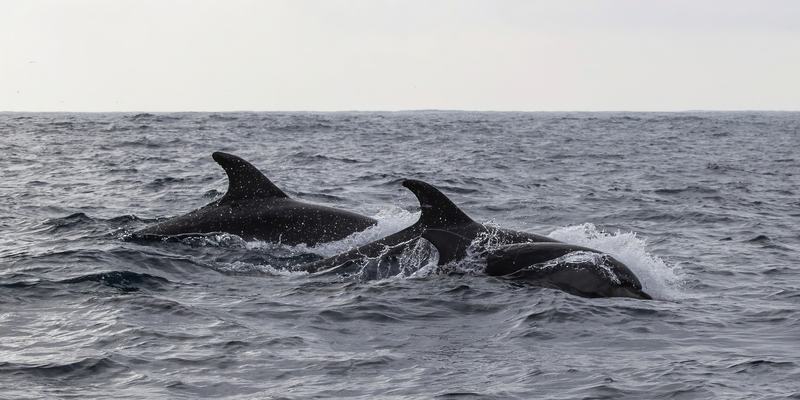

They Live in Pods
Dolphins are deeply social and live in groups called pods, which can number from a handful to several hundred [1]. They hunt together, herding fish into tight balls to make them easier to catch, and they look after one another. Injured or sick dolphins are sometimes supported at the surface by podmates so they can breathe. For an animal that has to think about every breath, having friends nearby is not sentiment. It is insurance.
Frequently Asked Questions
Are dolphins fish or mammals?
Dolphins are mammals. They breathe air through a blowhole, are warm-blooded, give birth to live young, and feed their calves milk. Fish breathe underwater through gills and lay eggs. Dolphins must surface regularly to breathe, which is why they cannot stay underwater indefinitely.
How do dolphins sleep without drowning?
Dolphins rest one half of the brain at a time while the other half stays awake. This lets them keep surfacing to breathe and stay alert to danger. The opposite eye usually stays open. After a while they switch sides, resting the other half of the brain.
Do dolphins really have names?
Effectively, yes. Each dolphin develops a unique signature whistle that functions like a name, used to identify itself and call to others. Studies show dolphins can copy a companion's signature whistle, which appears to be one dolphin addressing another directly.
How do dolphins use echolocation?
Dolphins produce rapid clicks and listen to the echoes that bounce back from objects around them. From these echoes they judge the shape, size, distance, and density of prey, even in dark or murky water. It allows them to hunt where eyesight alone would fail.