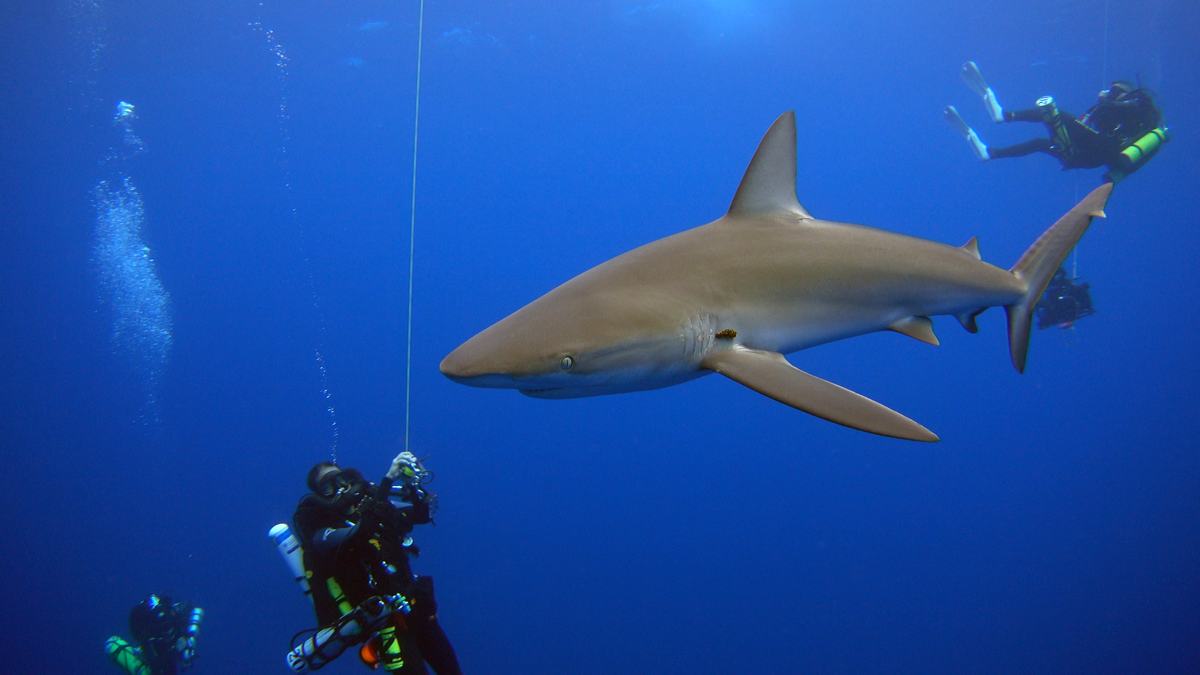
If you asked my Year 4 class to draw a shark, you would get a grey torpedo with too many teeth and a very determined expression. Fair enough. But the real animal is stranger than the drawing. Sharks have been swimming since before there were trees, before there were dinosaurs, and they have quietly kept going ever since. Here is what actually makes them tick.
Older Than Trees
Sharks turned up in the fossil record roughly 450 million years ago, which is a hard number to picture [1]. So try this. Trees came later. Land plants had barely worked out how to stand up when sharks were already patrolling the seas [1]. They also predate the dinosaurs by well over 100 million years. Five mass extinctions have come and gone, taking most of life with them each time, and sharks simply carried on. Which, fair enough.
A Skeleton With No Bones
Here is the one that surprises my class every time. Sharks have no bones at all. Their whole skeleton is made of cartilage, the same bendy stuff in the end of your nose [2]. It is lighter than bone, which helps them stay up in the water, and it flexes rather than snaps. This is also why shark fossils are usually just teeth. Cartilage rarely survives the millions of years, but the teeth are practically indestructible.

Teeth on a Conveyor Belt
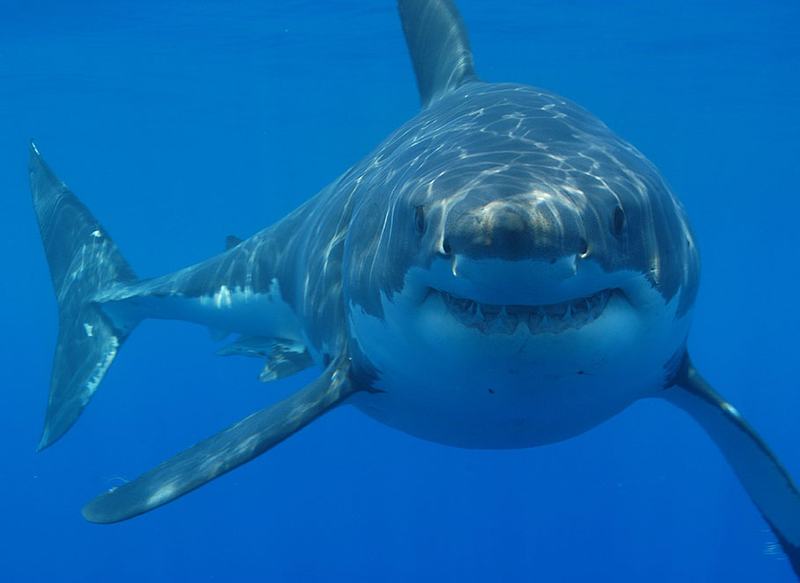
A shark never has to worry about losing a tooth, because there is always another one behind it. Their teeth sit in rows, and when a front one falls out, the row behind rolls forward to replace it [3]. Some sharks get through tens of thousands of teeth in a lifetime [3]. Imagine the tooth fairy's expenses. The teeth are not rooted in a jawbone the way ours are, which is exactly why they drop out so easily and get replaced so fast.
They Can Sense Electricity
Every living thing gives off a faint electrical field when its muscles move, including a fish hiding under the sand. Sharks can feel it. Their snouts are dotted with tiny jelly-filled pores called the ampullae of Lorenzini, which detect these minute electrical signals [4]. It means a shark can find a heartbeat it cannot see. Nobody warned me about this the first time I read it, and I have thought about it in the bath ever since.
The Biggest Fish in the Sea
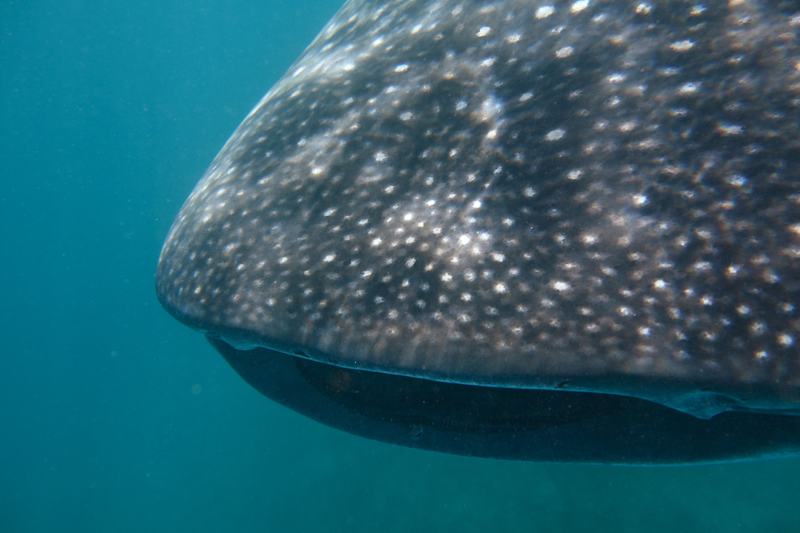
The largest fish alive is a shark, and it eats some of the smallest food in the sea. The whale shark grows to around 12 metres, with the biggest reliably measured near 18 metres, and it feeds almost entirely on plankton and tiny fish [5]. It is a filter feeder, harmless to people, and about as menacing as a very large bus. So the biggest shark of all is essentially a gentle giant with a hoover for a mouth.

Some Live for Centuries
The Greenland shark is the longest-lived vertebrate we know of. Researchers dating one large female estimated her age at somewhere between 272 and 512 years, with a best guess around 390 [6]. That means a shark swimming today could, in theory, have been born before the first electric light [6]. They grow about a centimetre a year in the cold, dark Arctic water, and they take their time about everything, including growing up.
Not the Villains
Sharks are far more sinned against than sinning. Fatal shark bites on humans number only a handful each year worldwide, while people kill an estimated 80 to 100 million sharks annually, largely for their fins [7]. That is a lopsided rivalry. Many species are now threatened as a result. It is worth remembering when the music from a certain 1975 film starts playing in your head. The shark, on balance, has more to fear from us.
Small Enough for Your Hand
Not every shark is a giant. The dwarf lanternshark, found in the deep waters off South America, reaches only about 20 centimetres long, small enough to hold in one hand [8]. It also glows in the dark, using light-producing organs on its belly, probably to blend in against the faint light from above [8]. So somewhere in the ocean right now is a shark the size of a pencil, quietly glowing. My kids would love this.
Frequently Asked Questions
Do sharks have to keep swimming to stay alive?
Some do, but not all. Species like the great white rely on swimming to push water over their gills, so they cannot fully stop. Others, such as nurse sharks, can pump water over their gills while resting on the seabed, so they lie still quite happily.
How many types of shark are there?
There are more than 500 known shark species, ranging from the tiny dwarf lanternshark to the enormous whale shark. They live in every ocean, from warm shallow reefs to the freezing deep sea, and a few can even survive in rivers and freshwater lakes.
Are sharks really dangerous to people?
Very rarely. Most sharks have no interest in humans, and fatal bites are extremely uncommon, averaging under ten worldwide each year. You are far more likely to be harmed by everyday things like road traffic. Sharks generally avoid people rather than seek them out.
Why do sharks have so many teeth?
Sharks lose teeth constantly because they are not fixed into a jawbone the way human teeth are. To cope, they grow replacement teeth in rows that move forward like a conveyor belt, so a fresh tooth is always ready when an old one drops out.
Sources
- The origin of sharks - Natural History Museum
- Sharks - Smithsonian Ocean
- Shark teeth and jaws - Florida Museum of Natural History
- Sharks: sensory systems - Smithsonian Ocean
- Whale shark - World Wildlife Fund
- Eye lens radiocarbon reveals centuries of longevity in the Greenland shark - Science
- Sharks - International Union for Conservation of Nature
- Dwarf lanternshark - Florida Museum of Natural History