If you asked my Year 4 class what a skunk does when it is frightened, every hand would go up and every child would say the same word. And they would be right, more or less. But the interesting bit is what comes first. A skunk does not want to spray you. Spraying is expensive, slow to reload, and rather rude. So before it resorts to chemistry, a skunk gives you a full and honest warning. Most animals do not read it. That is their problem, not the skunk's.
The Warning Comes First
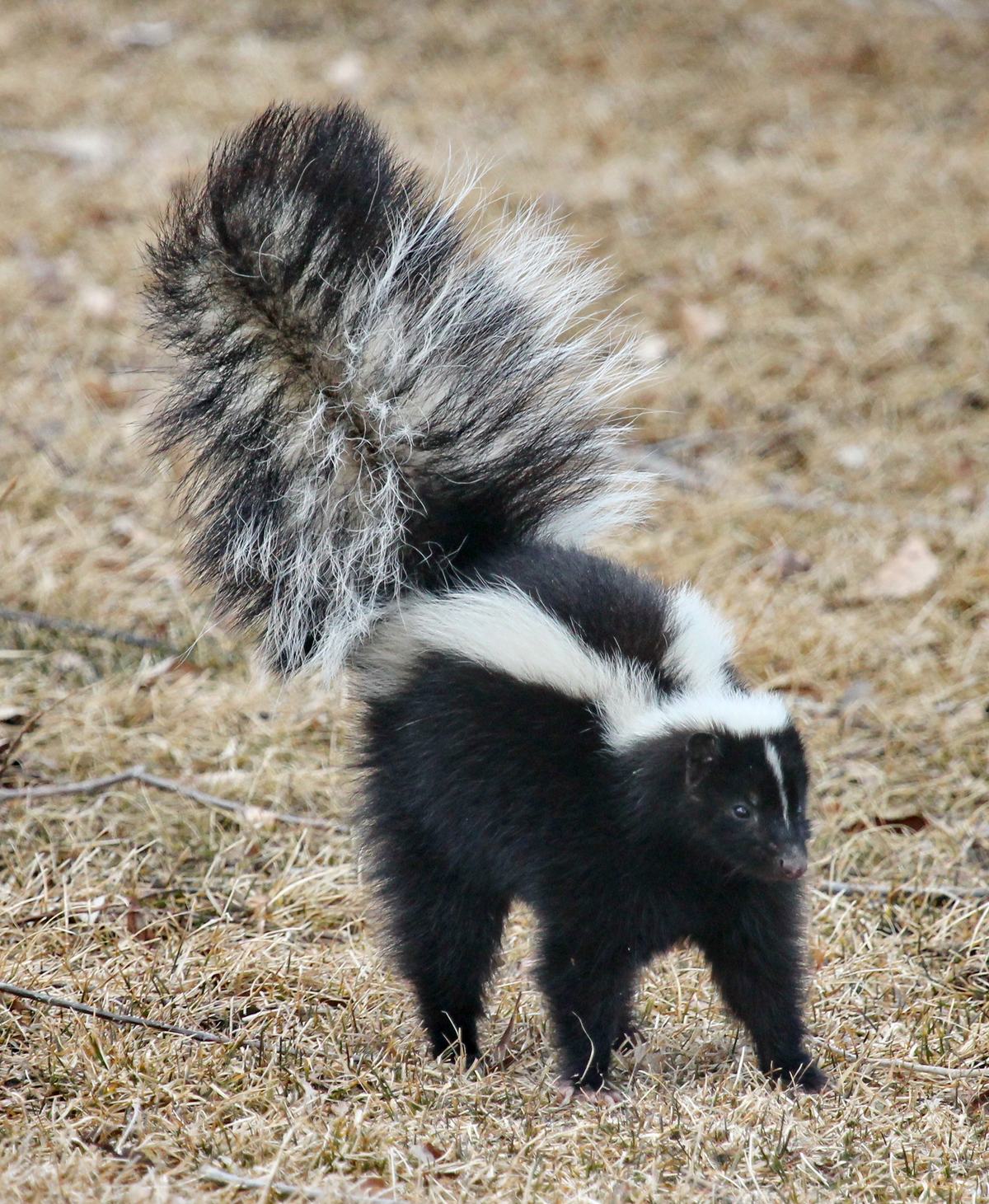
A cornered skunk puts on a show before it fires. It stamps its front feet, hisses, arches its back, and hoists that famous tail like a flag [1]. The whole performance is a plea: please go away, I do not want to do this. A striped skunk will usually only spray once every other option has failed. If you have ever been sprayed, the skunk almost certainly told you first. You simply were not fluent in skunk.

What the Smell Is Made Of
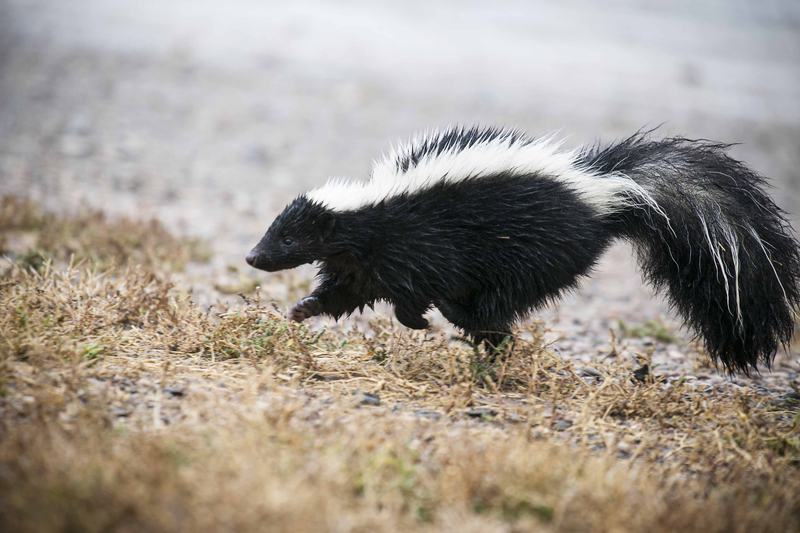
The spray comes from two glands under the tail, and its power lies in a group of sulphur compounds called thiols [2]. Thiols are the same family of molecule that makes rotten eggs and bad breath so memorable, which tells you what you are dealing with. Our noses are exquisitely tuned to them. A skunk needs only a whisper of the stuff to clear a room, a garden, and possibly a postcode. It is chemistry doing the work of a much larger animal.
Only About Six Shots
Here is the part that explains the good manners. A skunk does not carry an endless supply. Its glands hold enough for roughly five or six sprays, and once emptied they can take over a week to refill [3]. For that whole time the skunk is walking around effectively unarmed. So it hoards its ammunition the way I hoard the good biscuits at school. All that stamping and hissing is not politeness for its own sake. It is a creature trying very hard not to waste a limited resource.
The One Predator Who Does Not Care
You would think a defence this good would leave a skunk with no enemies. Almost. The great horned owl hunts skunks regularly, and gets away with it for one simple reason: owls have a famously poor sense of smell [4]. The spray that terrifies every fox and coyote in the county means nothing to a bird that cannot smell it. So the skunk's masterpiece of chemical warfare has one glaring hole in it, and it comes silently, from above, at night.

Not Actually a Weasel
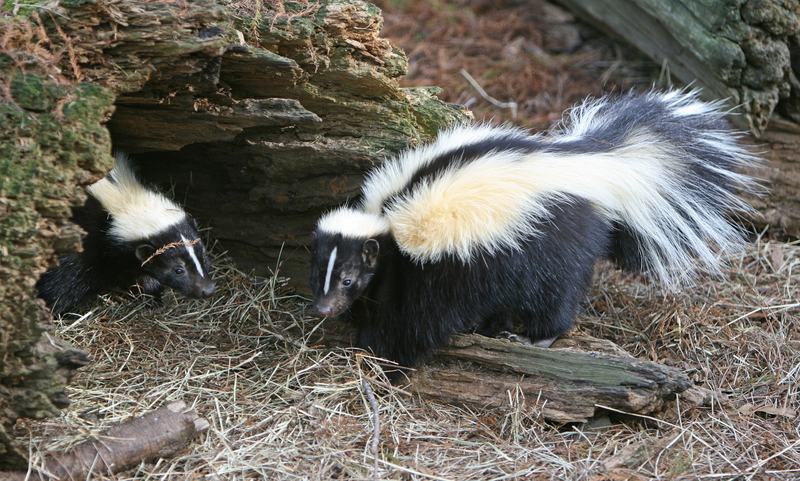
For a long time skunks were filed away as a branch of the weasel family. Then in the late 1990s, DNA evidence sorted them out, and skunks were given a family of their own: Mephitidae, from the Latin for "bad smell" [5]. The name is not subtle. It means the badgers, otters and weasels a skunk vaguely resembles are only distant cousins. The stripes, the swagger, the chemistry: all of it evolved on a separate branch of the tree. Skunks, as it turns out, are originals.
The Handstand Trick
The striped skunk stamps and sprays from all fours, but its smaller relative, the spotted skunk, has flair. When truly alarmed it does a handstand, balancing on its front paws with its tail and back end waving in the air, and can even spray from that inverted pose [5]. It is a genuinely acrobatic threat display, and it makes the animal look bigger and considerably more unhinged. My kids would love this. Frankly, so do I.
Built for the Nose, Not the Eyes
Skunks live by scent. They have a keen sense of smell and snuffle through soil and leaf litter hunting for grubs, beetles and worms [1]. Their eyesight, by contrast, is dreadful. A skunk is very short-sighted and struggles to see much beyond about three metres [1]. This is partly why so many end up flattened on roads: a skunk genuinely may not see a car coming until it is far too late. Marvellous nose. Terrible eyes. A common trade in the animal world.
Rather Useful in the Garden
For all the drama, skunks are quiet workers on your behalf. They are omnivores with a strong appetite for the insects and grubs that chew through lawns and crops, and they will happily hoover up beetles, larvae and rodents [1]. A skunk passing through your garden at dusk is usually there for the pests, not the bins. Give it space, do not corner it, and the arrangement suits everyone. You get fewer grubs. The skunk keeps its six precious shots.
Frequently Asked Questions
How far can a skunk spray?
A skunk can spray its scent accurately up to about three metres, or roughly ten feet [1]. The fine mist can drift a good deal further on the wind. Skunks aim for the face of a threat, which is why the smell is so hard to escape once it lands.
Do skunks run out of spray?
Yes. A skunk holds only enough for about five or six sprays before its glands are empty, and refilling them can take more than a week [3]. During that time the animal has no chemical defence, which is why it relies on warnings first and sprays only as a genuine last resort.
What smells worse to a skunk's predators?
Most predators are driven off by the spray, but the great horned owl is not [4]. Owls have a very weak sense of smell, so the skunk's main defence simply does not register. This makes the owl one of the few animals that hunts skunks on a regular basis.
Are skunks and weasels related?
Only distantly. Skunks were once grouped with weasels, but DNA studies in the late 1990s placed them in their own family, Mephitidae [5]. They share some habits and body shapes with weasels and badgers through distant common ancestry, but they are not close relatives.
Sources
- Living with wildlife: Skunks - Washington Department of Fish and Wildlife
- Ask Smithsonian: What Makes Skunk Spray Smell So Terrible? - Smithsonian Magazine
- Skunk Spray Toxicosis: An Odiferous Tale - dvm360
- Predator vs. Prey: Striped Skunk vs. Great Horned Owl - Missouri Department of Conservation
- Mephitidae (skunks and stink badgers) - Animal Diversity Web