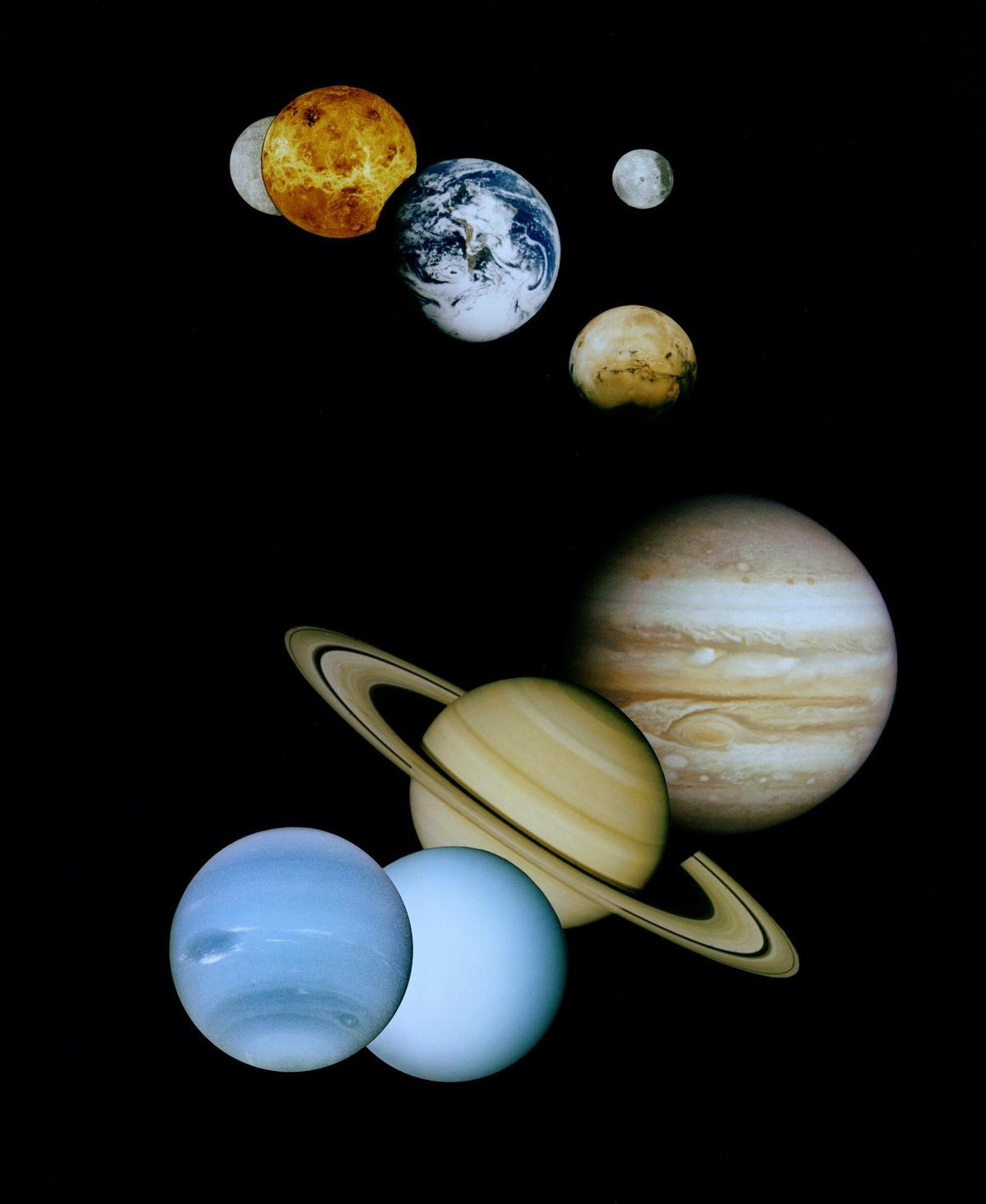
Picture the Solar System and you probably picture planets: eight worlds lined up around a star. But by mass, that picture is almost entirely wrong. The Sun accounts for 99.86% of everything the Solar System contains — planets, moons, belts, and all the rest are essentially rounding error stacked around one enormous ball of hydrogen and helium.
That imbalance is the key to understanding the Solar System as a single structure rather than a list of planets. It formed as one collapsing cloud, it organizes itself into distinct zones defined by the Sun's gravity and its outward-blowing wind, and it is still being mapped in real time by a decades-old spacecraft edging toward interstellar space. This is the whole system, zoomed out.
Born From a Collapsing Cloud
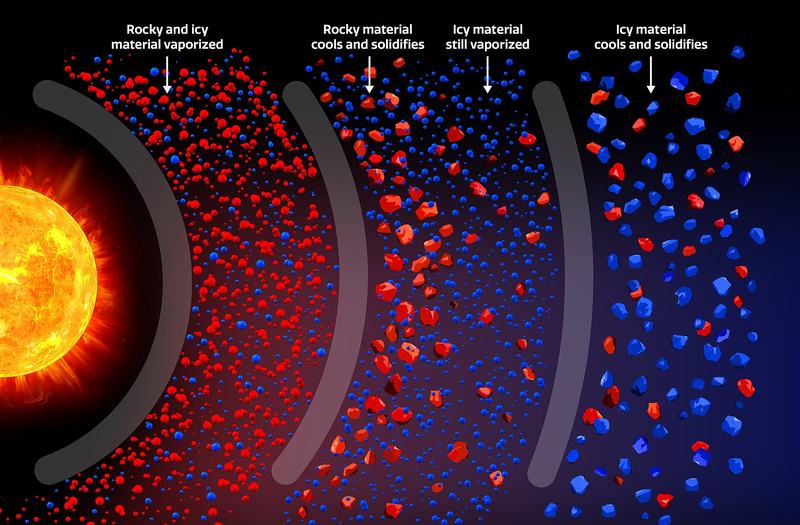
The Solar System's formation began about 4.6 billion years ago with the gravitational collapse of a small part of a giant molecular cloud. Most of the collapsing mass gathered at the center and became the Sun, while the leftover material flattened into a disk that later assembled into planets, moons, asteroids, and everything else now orbiting the Sun. Every object in the system, from Jupiter down to the smallest comet, is debris from that single event.
.jpg)
The model behind this picture, the nebular hypothesis, is older than you might expect: it was first worked out in the 18th century by Emanuel Swedenborg, Immanuel Kant, and Pierre-Simon Laplace, more than a century before anyone could observe a protoplanetary disk directly. Modern telescopes have since confirmed the basic shape they proposed — as the young Sun's nebula spun faster, it flattened into a disc roughly 200 AU across with a hot, dense protostar at its center. That disc's inner, hotter regions built the rocky planets; its cooler, outer reaches built the gas and ice giants, a split that still defines the Solar System's layout today.
One Star, Almost All the Mass
The 99.86% figure is the single most important number for understanding scale here. It means that once you subtract the Sun, whatever is left has to divide up the sliver that remains. Even that sliver is lopsided: the four giant planets — Jupiter, Saturn, Uranus, and Neptune — claim 99% of everything not in the Sun, with Jupiter and Saturn alone accounting for more than 90% of that remainder.
Which leaves almost nothing for everything else. The four terrestrial planets, every dwarf planet, every moon, every asteroid, and every comet combined add up to less than 0.002% of the Solar System's total mass. Earth, home to all known life, is a fraction of a fraction of a fraction of the system it belongs to.
A Layout Unlike Most Other Star Systems
That stark split between small terrestrial planets and giant gas planets, with nothing in between, is not the norm elsewhere in the galaxy. Among the planetary systems astronomers have surveyed, intermediate-sized planets — both rocky and gaseous — are typical. The Solar System is uncommon for having a "gap" where such worlds might be, sitting between the size of Earth and Neptune, whose radius is 3.8 times as large. There is no planet in our system that fills that middle ground.
It is a useful reminder that "normal" is relative: the arrangement that produced Earth is, by current evidence, something of an outlier among planetary systems in general.
Beyond the Planets: Belts and Clouds
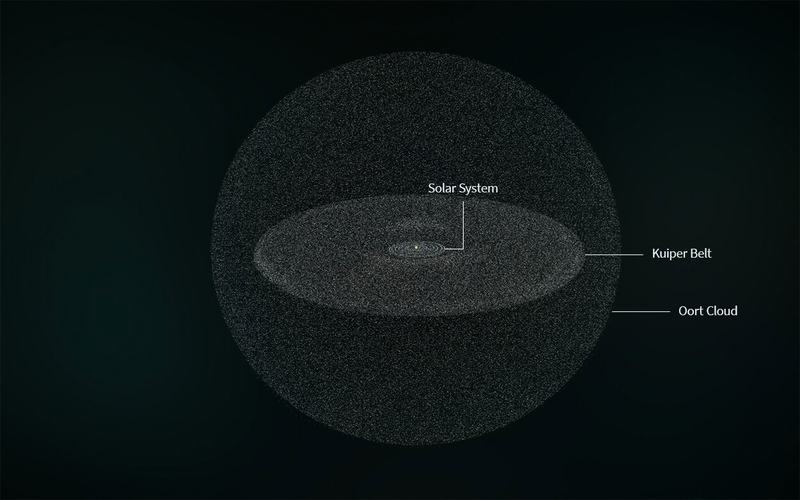
Past Neptune, the system does not simply end — it thins out into two more zones. The Kuiper belt holds an estimated 100,000-plus objects wider than 50 km, yet all of that material adds up to only a tenth to a hundredth of Earth's mass. It is a crowd in number, not in bulk.
.jpg)
Farther out still is the Oort Cloud, a shell of icy debris — some pieces bigger than mountains — that is thought to be thick, extending from about 5,000 to 100,000 astronomical units from the Sun, reaching as far as 1.6 light-years away. To put that distance in perspective: Voyager 1, the probe currently nearest to the Oort cloud of any spacecraft, is expected to take another 300 years just to reach its inner edge — and thousands more to cross it entirely. The Solar System's outer boundary, in other words, is not a line so much as a scale that dwarfs anything humans have built.
The Sun's Bubble: The Heliosphere
The Sun does not just dominate the system by mass — it also carves out a bubble in space with its outward-streaming solar wind. That bubble, the heliosphere, has an overall shape that resembles a comet: roughly spherical out to about 100 AU on the sunward side, but tail-shaped on the far side, trailing for several thousand AU as the "heliotail."
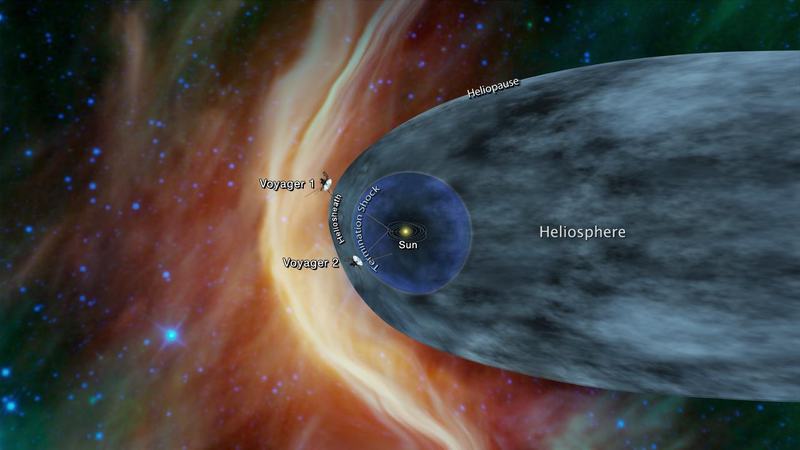

Inside that bubble, the solar wind first slows abruptly at the termination shock, believed to sit 75 to 90 astronomical units from the Sun; Voyager 1 crossed it in 2004, and Voyager 2 followed in 2007. Beyond that lies the heliopause, the true edge where the Sun's influence gives way to interstellar space. Voyager 1 crossed it on 25 August 2012, when it measured a sudden forty-fold increase in plasma density — the clearest possible sign it had left the Sun's bubble behind.
Voyager 1 and the Edge of Human Reach
Voyager 1 was launched on 5 September 1977, with a mission built for exactly this: study the outer Solar System, then keep going into the interstellar space beyond the Sun's heliosphere. As of March 2026, it sits at a distance of 172.59 AU from the Sun, making it the most distant human-made object from Earth.
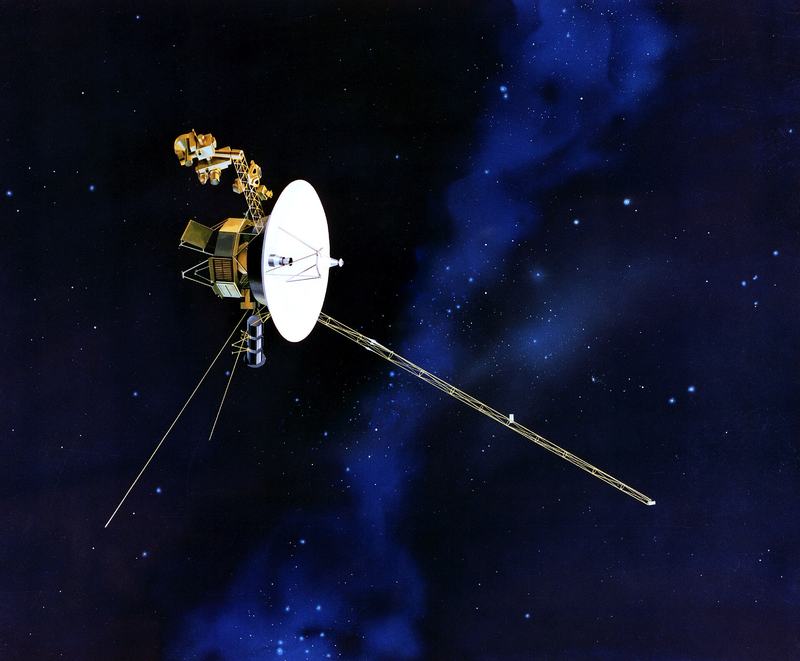

It is not alone in that role for long. Voyager 1 and Voyager 2 are the only spacecraft to have left the Solar System so far, but three others — Pioneer 10, Pioneer 11, and New Horizons — are on trajectories that will eventually carry them into interstellar space too. All five are part of a much larger effort: more than 300 robotic spacecraft from many nations have explored destinations beyond Earth's orbit, a tally that includes flybys, orbiters, landers, and rovers sent to nearly every zone of the system described above.
A Solar System on the Move
None of this sits still. The whole Solar System — Sun, planets, belts, and clouds together — orbits the center of the Milky Way galaxy at about 515,000 mph (829,000 kph), taking roughly 230 million years to complete a single lap. Every dinosaur, every ice age, and all of recorded human history have happened during a tiny fraction of one such orbit.
And the neighborhood keeps changing even at the galactic scale: the Sun is currently traveling through the Local Interstellar Cloud, a clump of warm gas a few parsecs across, itself sitting inside the Local Bubble, a roughly 100-parsec-radius region of hot, low-density gas. The heliosphere, the belts, the planets, and the Sun that anchors them all are, in the end, one structure moving together through a much larger galaxy.