If you asked my Year 4 class how an animal with no teeth manages dinner, they would look worried on its behalf. Then someone would suggest soup. The anteater has a better answer, and it involves a tongue that would not fit in this sentence.
Four Species, One Odd Family
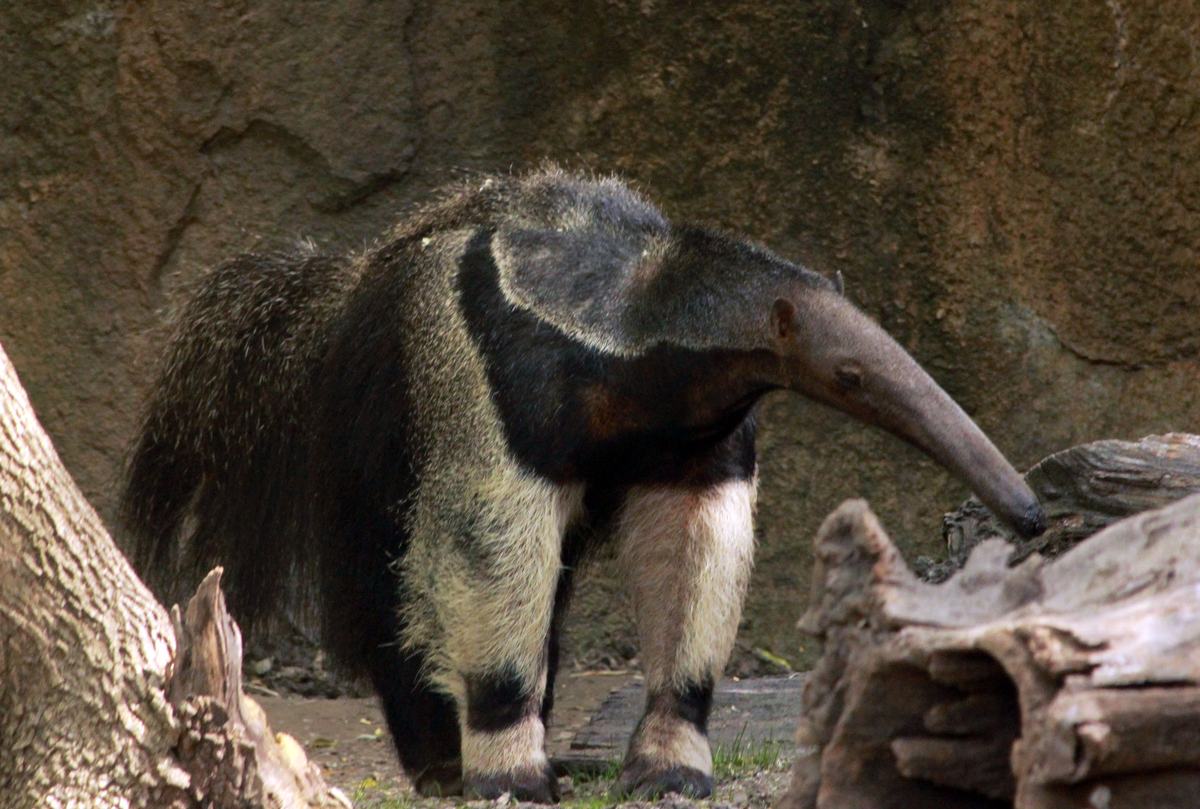
"Anteater" covers four living species: the giant anteater, the silky anteater, and two tamanduas [1]. They sit in the order Pilosa, which makes sloths their closest relatives [1]. So the animal built for slow hanging about and the animal built for hoovering up ants share a branch of the tree. (Somehow that tracks.) The giant anteater is the headline act, reaching around two metres from nose to tail tip [4][6].
A Tongue Longer Than Its Head
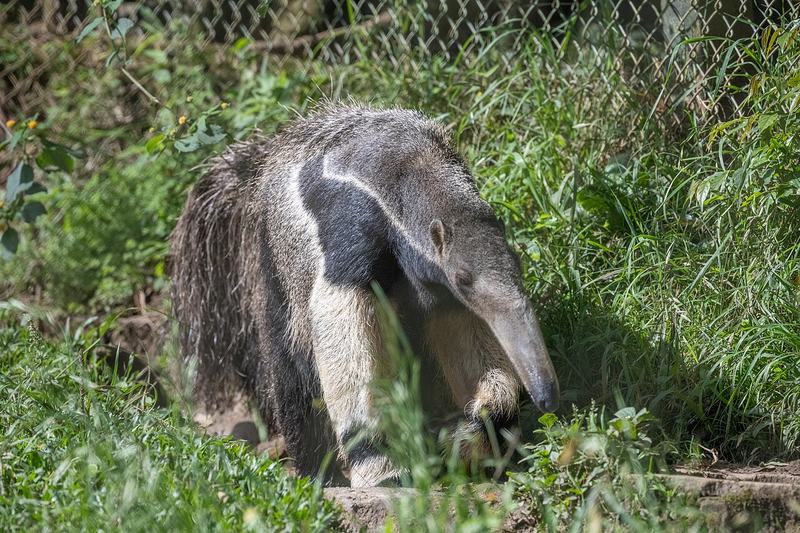
Here is the party trick. A giant anteater's tongue can stretch to about 60 centimetres, which is longer than its own skull [2]. It is anchored not in the mouth but back near the breastbone, which is why it can reach so far. The tongue is thin, coated in sticky saliva, and covered in tiny backward-facing spines. Ants go in. Ants do not come back out.

It Flicks 150 Times a Minute
The tongue does not lick so much as machine-gun. A feeding giant anteater can flick it in and out roughly 150 times a minute, which is about two and a half times a second [2]. It has to be quick. Anteaters do not destroy a nest; they take a few hundred insects and move on before the soldiers mount a proper defence. A tidy diner, in other words. (Which, fair enough.)
No Teeth Whatsoever
An anteater has no teeth at all, not a single one [1]. It cannot chew, so it does not bother. Instead it swallows its prey whole and lets a muscular stomach do the grinding, helped along by grit and the ants' own formic acid [3]. My kids found this deeply unfair until I pointed out that the anteater never once has to visit a dentist. The mood in the classroom shifted.
Thirty Thousand Ants Before Bedtime
A giant anteater can put away up to 30,000 ants and termites in a single day [4]. That sounds enormous, and it is, but it is spread across many small raids rather than one heroic feast. The maths still lands: an animal with no teeth, eating insects one flick at a time, somehow clears a five-figure total daily. And yet it manages on a diet most predators would consider a snack.

One of the Coldest Mammals Going
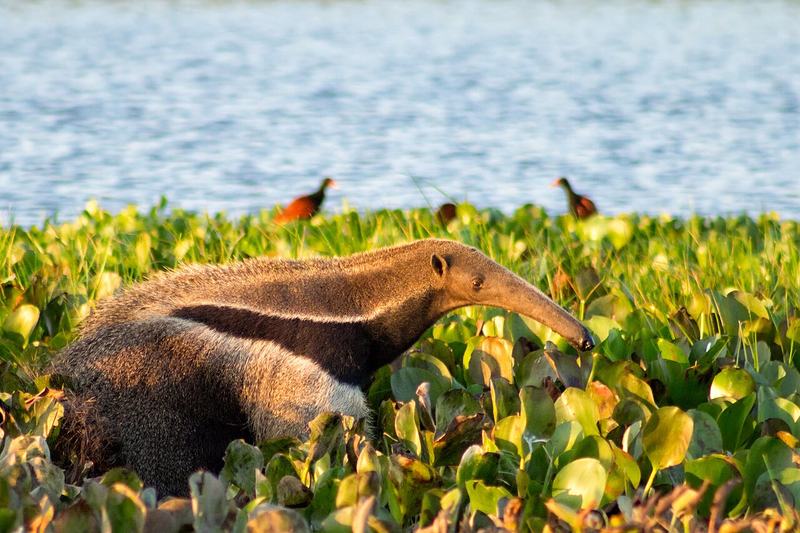
Most mammals run at around 37 degrees. The giant anteater sits closer to 33, one of the lowest body temperatures recorded in any mammal [3]. A low-energy diet of ants buys a low-energy body. It is the same reason sloths run cool. Being a bit chilly, it turns out, is simply cheaper to run. Nobody warned me about this before I started reading up on them.
Walking on Its Knuckles
Anteater front claws are enormous, ideal for tearing open a termite mound and awkward for everything else. So the animal tucks its claws in and walks on the sides of its fists, knuckles down [4]. It looks like a slow, shuffling apology. Those same claws are not just for digging, though. A cornered giant anteater will rear up and strike, and it can see off a jaguar or a puma [2].
Brilliant Nose, Useless Eyes
The anteater's eyesight is poor, and it more or less does not care. Its sense of smell does the heavy lifting, reportedly around 40 times sharper than ours, which is how it locates a nest buried in soil or a rotten log [2]. Picture a creature navigating the world almost entirely by nose, ignoring the scenery, following a scent map we cannot even perceive. (Yes, really.)
Frequently Asked Questions
Do anteaters really have no teeth?
Correct, anteaters have no teeth at all [1]. They flick up ants and termites with a long sticky tongue and swallow them whole. A muscular stomach then grinds the food using swallowed grit, so chewing is simply not part of the process.
How long is an anteater's tongue?
A giant anteater's tongue can extend to about 60 centimetres, longer than its own head [2]. It is rooted near the breastbone rather than in the mouth, and it can dart in and out around 150 times a minute while the animal feeds.
Are anteaters dangerous?
Usually no, but they can defend themselves. A cornered giant anteater rears up and slashes with large front claws, and it is capable of fending off big cats such as jaguars and pumas [2]. In the wild they prefer to avoid trouble and simply walk away.
Are anteaters endangered?
The giant anteater is listed as Vulnerable on the IUCN Red List [5]. Habitat loss, road deaths, and fires are the main threats across its range in Central and South America, and populations are thought to be declining.