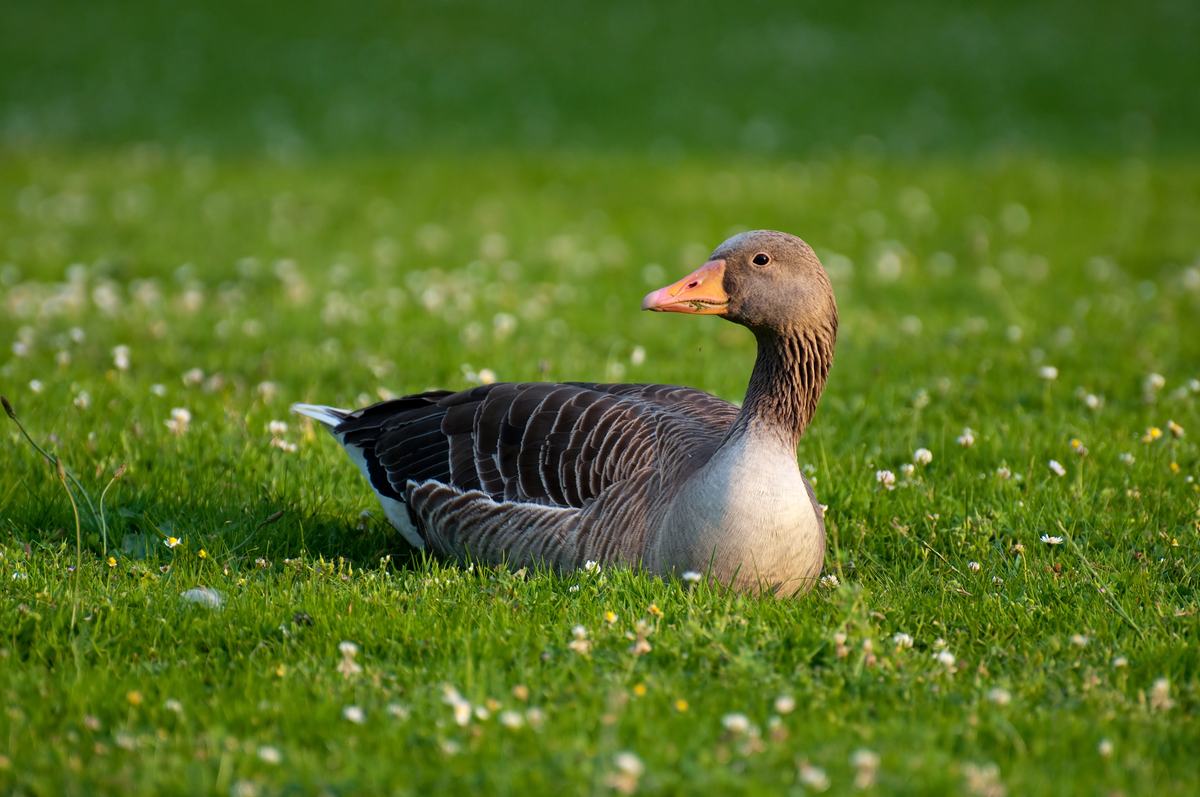
Ask my Year 4 class what a goose does and you get one answer, delivered with feeling: it chases you. Fair enough. But the honking bird guarding the village green is also a long-distance athlete, a devoted parent, and the reason a Roman hill did not fall in a single night. The goose is a good deal more interesting than its reputation for bad temper.
They Fly in a Letter V
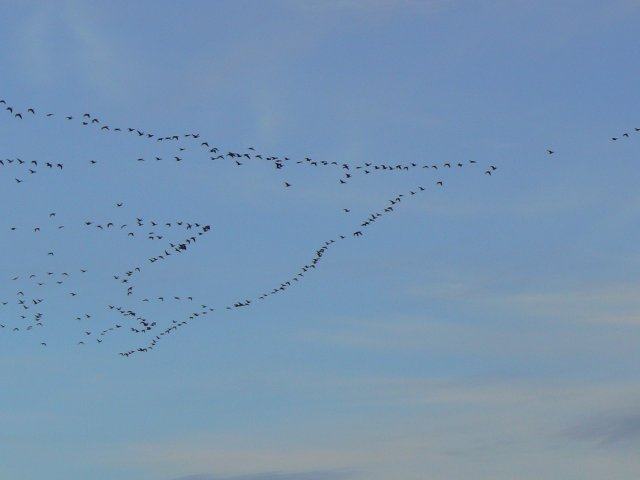
Geese really do fly in that neat V, and it is not for show. Each bird sits just behind and to the side of the one in front, riding the swirl of air peeling off its wingtips. That little lift means less flapping, and less effort, for everyone except the leader. So the birds take turns at the front, dropping back to rest when they tire. Researchers reckon a flock flying together covers far more ground than any single goose could manage alone.

Every Farm Goose Began Wild
Most of the big white geese you meet on a farm trace back to one wild bird: the greylag. It is the chunky grey goose you see on European lakes and rivers, and people have kept and bred its descendants for thousands of years. (Chinese farm geese come from a different species, the swan goose.) So the goose hissing at you by the pond and the one destined for a Christmas table are, near enough, the same bird in different outfits.
Goslings Adopt the First Thing They See
Newly hatched goslings will bond with the first moving thing they meet, then follow it everywhere. Usually that is mum. Sometimes it is a scientist. The Austrian researcher Konrad Lorenz famously ended up with a line of greylag goslings trailing after him, because he was the first thing they saw after hatching. The behaviour is called imprinting, and it won him a share of a Nobel Prize. Ducklings do it too, but geese commit with real enthusiasm.
The Geese That Saved Rome
According to Roman legend, geese once saved the city. In 390 BC the Gauls crept up the Capitoline Hill at night while the guards, and even the dogs, slept through it. The sacred geese kept in Juno's temple did not. They set up such a racket that the defenders woke and threw the attackers back. Geese have worked as living alarms ever since. One Scottish whisky distillery kept a flock of guard geese on duty for decades. Loud, alert and impossible to bribe.
Those Spikes Are Not Teeth
Look inside a goose's bill and you will spot rows of sharp points along the edges, with more of them on the tongue. They look exactly like teeth. They are not. Birds have no true teeth at all. These are tomia, hard ridges made of cartilage, and they work rather like a bread knife for grass. A goose grips a blade, tugs, and tears it clean. Useful, given that a goose spends much of the day eating grass and little else.
They Pair Up and Stay
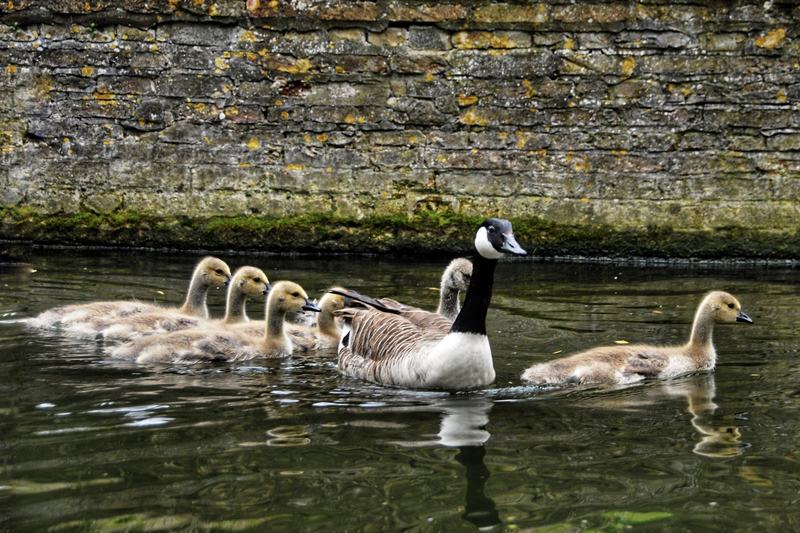
Geese are romantics, in their own way. Most pair off with a single mate and stay together year after year, sometimes for life. If one dies, the survivor may drop to the bottom of the flock's pecking order for a while before finding a new partner. Both parents raise the young, and the goslings can walk, swim and feed themselves within a day of hatching. They still stick close to their parents for months afterwards. (Yes, really.)

A Month Spent on Foot
Once a year, after breeding, geese lose all their flight feathers at the same time. For roughly a month they simply cannot fly. This is why you sometimes see a flock loitering on the water in high summer, sticking close to safety and looking faintly stranded. They time it for when the goslings cannot fly yet either, so the whole family is grounded together. New feathers grow in, and off they all go.
Over the Roof of the World
The bar-headed goose makes the rest look like amateurs. It migrates straight over the Himalayas, crossing passes above 5,000 metres in air so thin a person would struggle to stay conscious. Rather than climbing once and gliding, it hugs the mountains in a sort of roller coaster, rising and dropping with the land to save energy. It is one of the highest-flying birds on Earth, and it makes the crossing twice a year.
Frequently Asked Questions
Why do geese fly in a V?
Geese fly in a V to save energy. Each bird catches lift from the wingtip of the one ahead, so it can flap less and glide more. The lead bird works hardest, so the flock keeps swapping the front position as birds tire.
Do geese really mate for life?
Most geese form long-term pair bonds and often stay with the same mate for life. Both parents help raise the goslings. If a mate dies, the survivor usually pairs up again after a period, rather than staying alone for good.
Are geese aggressive?
Geese can be aggressive, especially when guarding a nest or goslings. Hissing, wing-spreading and chasing are warnings meant to drive a threat away rather than to harm it. Outside the breeding season, most geese are far calmer.
What do geese eat?
Geese are mostly grazers. They eat grass, roots, leaves and grain, using the serrated edges of the bill to grip and tear plants. Growing goslings also take small insects and other tiny creatures for extra protein.
Sources
- Canada Goose Life History - Cornell Lab of Ornithology
- Graylag Goose Overview - Cornell Lab of Ornithology
- Imprinting - Encyclopaedia Britannica
- Konrad Lorenz - Encyclopaedia Britannica
- How Bar-Headed Geese Scale the Himalayas - Scientific American
- Origins, Timing and Introgression of Domestic Geese Revealed by Whole Genome Data - National Library of Medicine