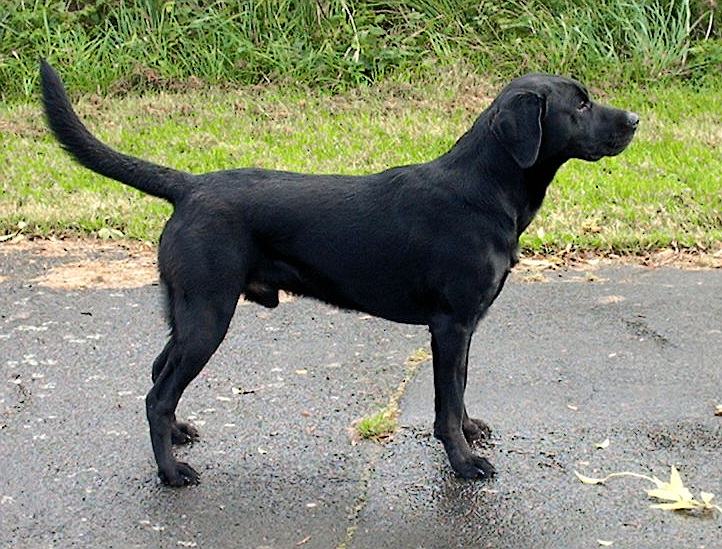
If you asked my Year 4 class who was here first, dogs or farms, they would guess farms. Cities, tractors, the lot. They would be wrong. Dogs were curled up next to us long before anyone planted a single field. We have been sharing our fires, our scraps, and our sofas with them for a very long time, and they have spent all of it quietly learning to read us.
Older Friends Than Farming
Dogs were the first animal we ever domesticated, and they beat agriculture to it by thousands of years. The evidence points to dogs splitting from wolves at least 15,000 years ago, and some studies push that back beyond 30,000. That means people were welcoming dogs to the fire while still hunting and gathering for supper. No farms, no villages, no leads. Just a wolf that edged a little closer and decided we were worth the risk.
A Nose That Reads the Air
A dog's nose is its main way of understanding the world, and it is absurdly good at the job. Dogs have around 300 million scent receptors in their noses. We have about six million, which is, frankly, embarrassing. The part of a dog's brain devoted to smell is proportionally far larger than ours too. Where we see a room, a dog reads a full report of everyone who has been in it.

Smelling in Stereo
Here is the part nobody warned me about. A dog can smell separately with each nostril. Each side sends its own signal to the brain, so a dog works out not just what a scent is but which direction it came from. It is a bit like how our two ears help us place a sound. This is why a dog on a trail swings its head side to side. It is not confused. It is triangulating.
They Watch Our Faces
Dogs are unusually good at reading human gestures, and this may be their real superpower. Point at something and a dog will look where you point. That sounds trivial, until you learn that chimpanzees, our closest relatives, largely cannot do it. Somewhere across those thousands of shared years, dogs learned to follow our eyes, our hands, and our moods. They watch us far more closely than we tend to watch them.
Puppy Dog Eyes Are Real
That heart-melting look your dog gives you is not your imagination, and it is not an accident. Dogs have evolved a small muscle above the eye that wolves simply do not have. It lets them raise their inner eyebrows, which makes their eyes look bigger and more infant-like. Research suggests dogs make this exact expression more often when a human is looking at them. In other words, they have grown a face designed to work on us.

Every Nose Is One of a Kind
We have fingerprints. Dogs have nose prints. The pattern of ridges and bumps on a dog's nose is unique to each animal, and it does not change over its life. Some kennel clubs have used nose prints for identification in the same way we use a signature. So the next time a wet nose presses against the window, remember you are looking at the canine equivalent of a passport photo.
They Dream, Probably About You
Watch a sleeping dog and you may see the paws twitch, the whiskers flicker, a muffled little woof. Dogs go through REM sleep, the same stage in which humans do most of their dreaming. We cannot ask them what they dream about, of course. But given how much of their waking life revolves around us, the smells we bring home, and the walk we keep promising, it is a fair guess we feature quite a lot.
Not Colour-Blind, Just Different
The old idea that dogs see only in black and white is wrong. Dogs do see colour, just a smaller slice of it than we do. They see the world mostly in blues and yellows, and struggle to tell red from green. So that bright red ball you throw onto the grass? To your dog it may blend right in. Which explains a great deal about why they sniff for it rather than look.
Frequently Asked Questions
How long have dogs been domesticated?
Dogs are the oldest domesticated animal, splitting from wolves at least 15,000 years ago, with some genetic studies suggesting more than 30,000. This means dogs lived alongside people during the hunter-gatherer era, long before farming, permanent settlements, or livestock existed.
How much better is a dog's sense of smell than a human's?
A dog's sense of smell is far sharper than ours. Dogs have roughly 300 million scent receptors compared with about six million in humans, and a much larger share of the brain devoted to processing smell. This lets them detect odours in tiny concentrations we cannot perceive at all.
Can dogs really understand human pointing?
Yes. Dogs can follow a human pointing gesture to find hidden food or objects, a skill that even chimpanzees mostly lack. Researchers believe this ability developed during domestication, as dogs that could read human cues had a clear advantage living alongside people.
Are dogs colour-blind?
Dogs are not fully colour-blind, but they see fewer colours than humans. They perceive the world mainly in blues and yellows and cannot easily distinguish red from green. Their vision is closer to that of a person with red-green colour blindness than to a black-and-white photograph.
Do dogs dream?
Most likely, yes. Dogs experience REM sleep, the phase linked to dreaming in humans, and often twitch, paddle their legs, or make soft noises while asleep. While we cannot confirm the content, their brain activity during sleep strongly resembles the pattern associated with dreaming.
Sources
- American Kennel Club: How Dogs Use Smell to Perceive the World
- National Geographic: Domestic Dog
- PNAS: Evolution of facial muscle anatomy in dogs (Kaminski et al., 2019)
- Current Biology: Asymmetric tail-wagging responses by dogs (Quaranta et al., 2007)00885-5)
- Smithsonian Magazine: How Dogs Became Our Best Friends
- Wikipedia: Dog