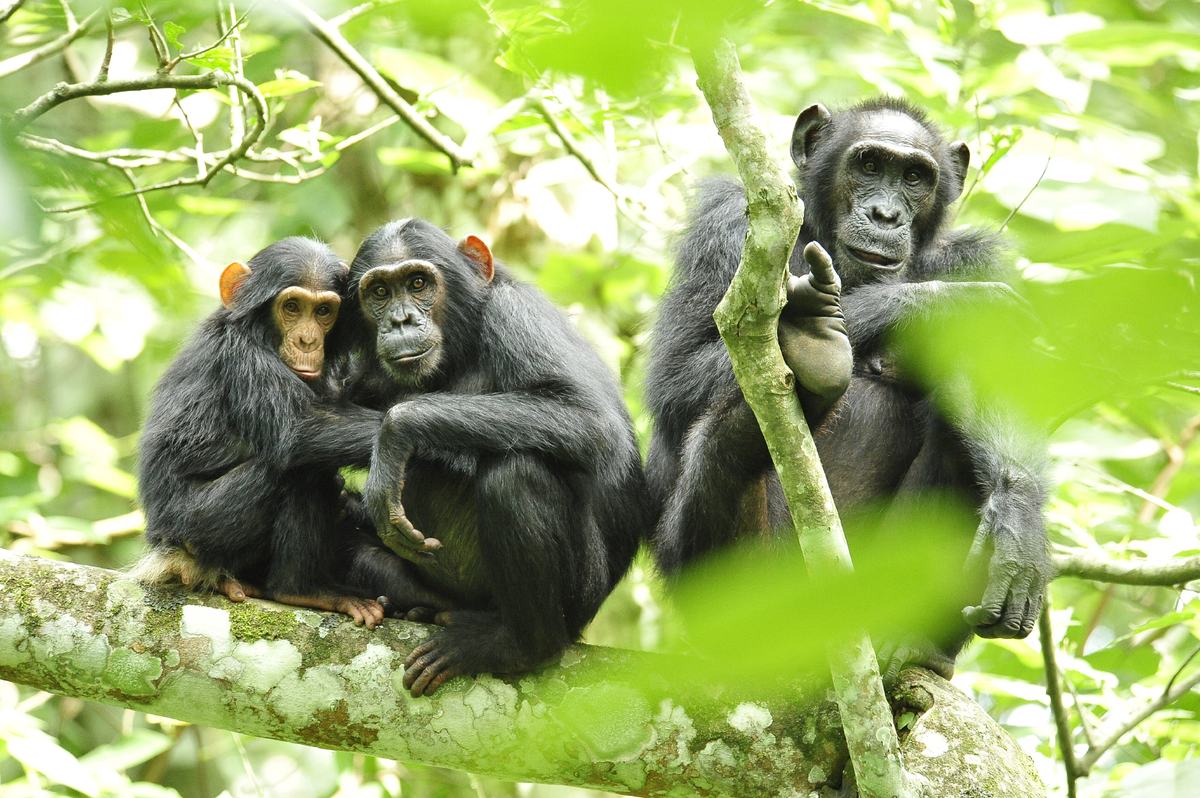
Ask my Year 4 class what a chimpanzee is, and someone will say 'a small hairy person'. They are not entirely wrong. Chimpanzees are our closest living relatives, and the longer you watch them, the harder that fact is to shake off.
Nearly Family
Chimpanzees share roughly 98.8 per cent of their DNA with us. That last one per cent or so covers a great deal, including brains and language and the whole business of writing articles about chimpanzees. But it also means that, genetically, a chimp is closer to you than it is to a gorilla. Which, fair enough, takes a moment to sink in.
Toolmakers of the Forest
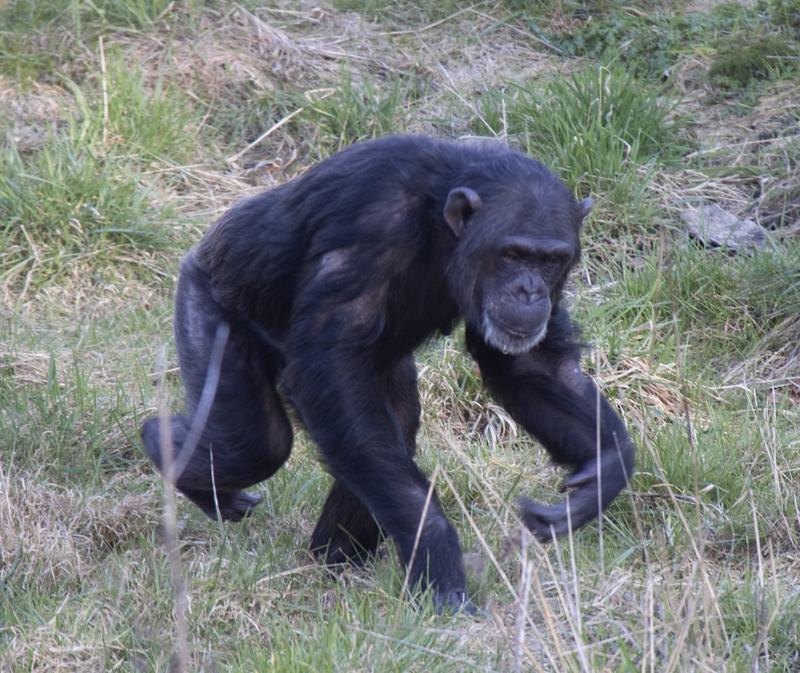
Chimpanzees make and use tools, and they are fussy about it. They strip the leaves off a twig to fish termites out of a mound. They crack nuts open with a stone hammer and a stone anvil. Some dip for ants; others fold a leaf into a sponge to soak up drinking water. Jane Goodall first watched termite fishing in 1960, and it quietly rewrote what we thought only humans did.
.jpg)
A New Bed Every Night
Every evening, a chimpanzee builds a bed. They bend and weave branches into a springy nest high in a tree, usually a fresh one each night. Nobody reuses last night's nest if they can help it, which is more than I manage with my washing. The nests keep them off the ground, away from leopards and damp, and each one takes only a few minutes to make.
Not Just a Fruit Diet
You might picture chimps munching bananas all day. Mostly they eat fruit, leaves, and insects, but they also hunt. Groups of males will corner red colobus monkeys in the canopy, working together with unsettling coordination. Afterwards they share the meat, and who gets a piece often depends on friendships and favours owed. It is one of the few times a chimp queue looks almost polite.
Strong, But Not Superhuman
Chimpanzees are stronger than us, though the internet oversells it. You may have read that they are five to eight times stronger. Careful muscle studies put it closer to one and a third times, pound for pound. Their muscle fibres are built more for force than for endurance. So a chimp would win an arm wrestle, comfortably, but it is not bending steel bars. Still, do not offer one your hand.
Different Groups, Different Habits
Chimpanzees have culture, in the proper sense. What a group knows and does gets passed from mother to child and neighbour to neighbour. One community cracks nuts with stones; another, only a few hundred miles away, never learned the trick and never bothers. They have different grooming styles and different ways of fishing for ants. Move a chimp from one forest to another, and it would have to learn the local customs.
The Chimp Who Went to Space
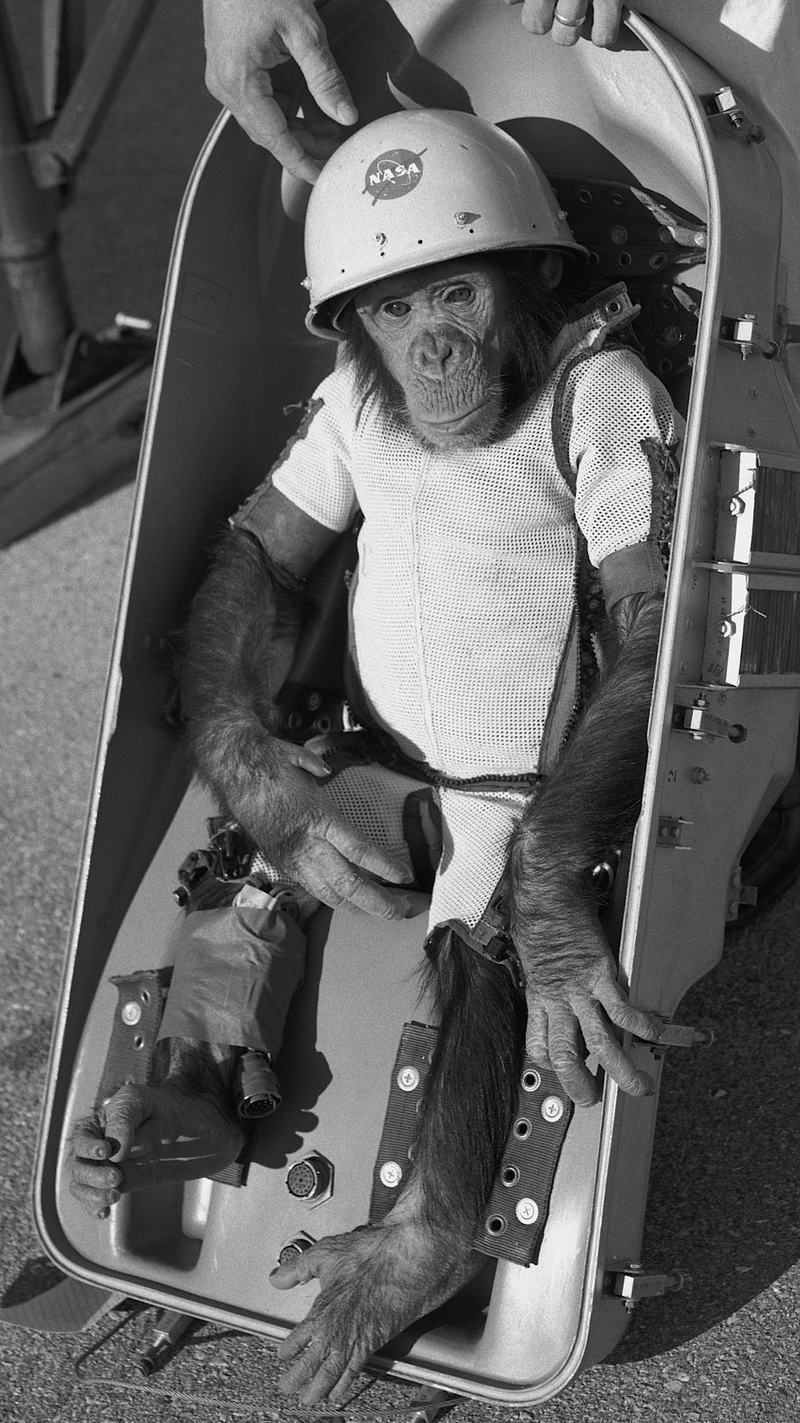
In January 1961, a chimpanzee named Ham was strapped into a Mercury capsule and launched on a suborbital flight. He had been trained to pull levers when he saw a light, and he did his job in weightlessness, which was rather the point. Ham came back safe, lived for years afterwards at zoos, and proved a human astronaut could follow. He is buried under a plaque, which few chimps can claim.
.jpg)
Faces They Know
Show a chimpanzee a mirror, and after a while it works out that it is looking at itself, not a rival. It will use the mirror to inspect a spot it cannot otherwise see. That flicker of self-recognition is rare in the animal world. Chimps also read each other's faces closely, and one chimp at a Japanese institute, named Ayumu, beat university students at a rapid number-memory test. Somehow.
A Species Under Pressure
Wild chimpanzees are in trouble. They are listed as endangered, with numbers falling from habitat loss, disease, and hunting. A century ago there may have been a million; now the estimate is a few hundred thousand, spread across a shrinking patch of Africa. They breed slowly, roughly one baby every five years, which makes losses hard to recover from. Watching one, that feels like something worth minding.
Frequently Asked Questions
How much DNA do chimpanzees share with humans?
Chimpanzees share roughly 98.8 per cent of their DNA with humans, making them our closest living relatives alongside bonobos. The small remaining difference accounts for major traits such as language and brain development. Humans and chimps split from a common ancestor around six to seven million years ago.
Do chimpanzees really use tools?
Yes. Chimpanzees fish for termites with stripped twigs, crack nuts with stone hammers, and soak up water with chewed-leaf sponges. Different communities use different tools, and youngsters learn by watching the adults. Because tool use varies by region, it is strong evidence of learned, cultural behaviour rather than instinct alone.
Are chimpanzees endangered?
Yes. Chimpanzees are classified as endangered by the IUCN. Their populations are declining because of habitat loss, poaching, and infectious disease. Estimates suggest a few hundred thousand remain in the wild across western and central Africa, down sharply from a century ago.
How strong is a chimpanzee compared with a human?
A chimpanzee is stronger than a human of similar size, but not by the five to eight times often claimed. Research measuring muscle performance found chimps around 1.35 times more powerful, pound for pound. Their muscle fibres favour force over endurance, which suits climbing and grappling.
Sources
- Chimpanzee - National Geographic
- About Chimpanzees - the Jane Goodall Institute
- Chimpanzee - Smithsonian's National Zoo
- Chimpanzee - World Wildlife Fund
- Initial sequence of the chimpanzee genome and comparison with the human genome - Nature
- Chimpanzee super strength and human skeletal muscle evolution - PNAS