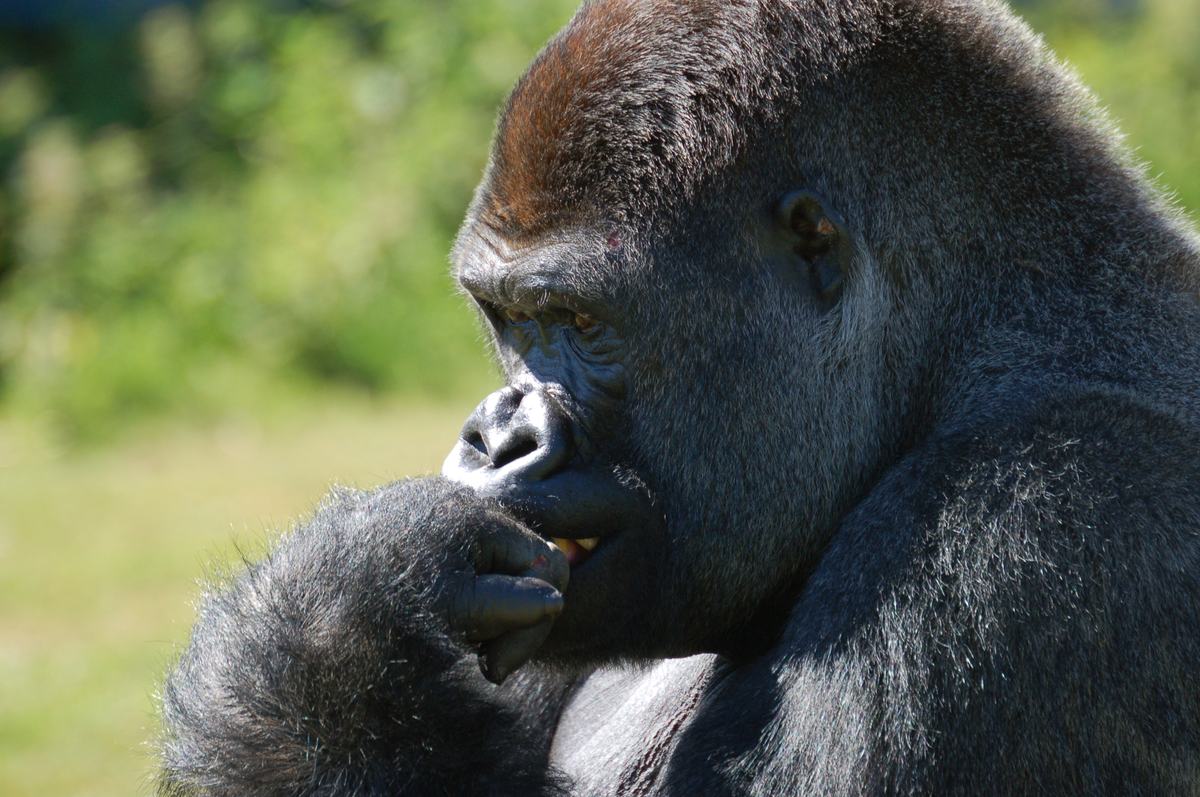
Ask my Year 4 class to describe a gorilla and you get chest-beating, roaring, and a general sense of menace. Then I show them a photo of one dozing in a nest of leaves with a toddler on its back, and the room goes quiet. Gorillas are the largest primates alive, and also among the calmest. Here is what actually goes on behind the frown.

Our Not So Distant Cousins
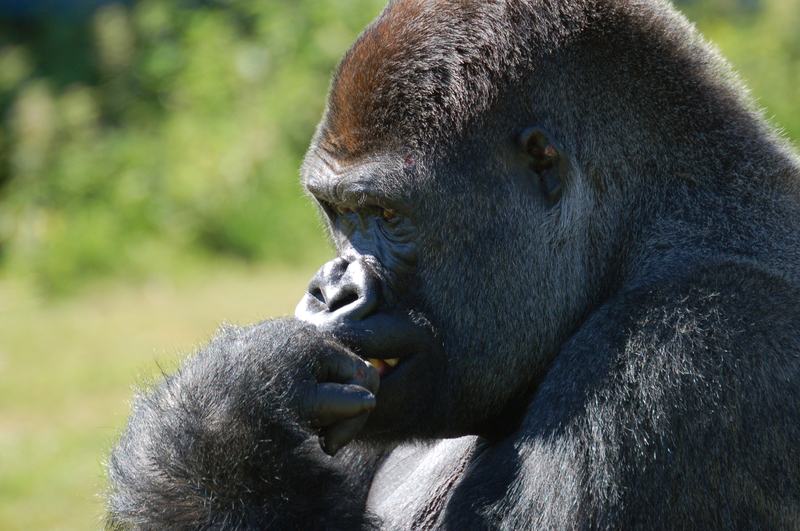
Gorillas share around 98 percent of their DNA with us. That is close enough that they catch many of the same illnesses, sit and think in similar ways, and show the sort of family squabbles you would recognise from any school run. They are not our direct ancestors (chimpanzees are a touch closer to us), but they are firmly in the family album. When you look a gorilla in the eye, quite a lot looks back.
What the Silver Actually Means
A "silverback" is not a species. It is a job title that comes with age. Male gorillas grow a saddle of silver-grey hair across the back and hips somewhere around twelve years old, and the biggest silverback leads the group. He decides where they travel, settles arguments, and stands between the family and trouble. The rest of the time he is remarkably patient. Toddlers climb him like furniture and he lets them.
Big, Yet Strictly Vegetarian
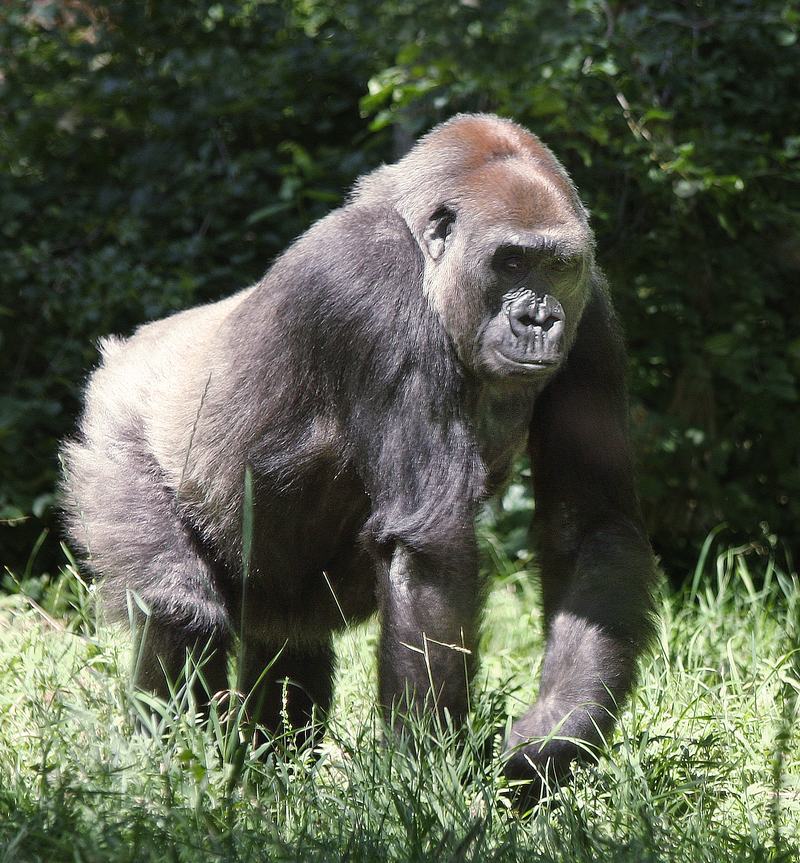
An adult male can weigh up to about 180 kilograms, which is more than two of me. All of that is built on leaves, stems, shoots, and the odd bit of fruit. A wild gorilla can eat 18 kilograms of plants in a day, mostly greenery. The famous muscle runs on salad. They barely drink, either, because their leafy diet is so full of water that a river is often surplus to requirements.

Everyone Gets a Fresh Bed
Gorillas build a new nest every single night, weaving branches and leaves into a springy platform on the ground or low in a tree. They do not reuse them. Fresh bedding, every evening, no exceptions. Researchers can count a group and even guess ages by the size and layout of abandoned nests the next morning. It is, when you think about it, a rather good hygiene routine, and better than some student flats I have visited.
Nose Prints Instead of Fingerprints
Here is the one my class never forgets. Every gorilla has a unique pattern of wrinkles and nostril shape on its nose, as individual as our fingerprints. Field researchers photograph and sketch these "nose prints" to tell one gorilla from another across years of study. No two match. So the next time someone tells you all gorillas look alike, you may correct them, politely, on behalf of the noses.
The Chest Beat Is Honest
The chest-beating you picture is real, and it is not empty theatre. A gorilla cups its hands and drums its chest to send a low, booming signal across the forest. Research has shown that bigger males produce lower-frequency beats, so the sound honestly advertises size. Rivals can size each other up without a fight, and a fight avoided is exactly the point. It is boasting, yes, but boasting with useful information attached.
They Hum at Mealtimes
Gorillas hum and sing while they eat. Genuinely. When the food is good, they produce a low, rumbling hum and a sort of tuneless song, a bit like someone happily muttering over a roast dinner. Researchers think it helps keep the group together and signals contentment, a way of saying all is well, keep eating. My kids adored this one. We spent a whole lunchtime humming into our sandwiches.
Catching Our Colds
Because gorillas are so like us, they can catch our respiratory infections, and a human cold can be serious for a wild gorilla with no immunity. This is why responsible trekking programmes keep tourists several metres back and ask them to wear masks. It sounds fussy. It is not. Protecting a gorilla sometimes means nothing more dramatic than staying home when you are ill, which is a conservation act anyone can manage.
Counting the Last Ones
All four gorilla subspecies are endangered, and two are critically endangered, threatened by habitat loss, disease, and poaching. There is a bright thread, though. Mountain gorillas, once expected to vanish, have climbed back above a thousand animals thanks to decades of hard protection. It is slow, unglamorous work by rangers and vets and local communities. And it is working, which is the best sort of fact to end on.
Frequently Asked Questions
Are gorillas dangerous to humans?
Gorillas are generally shy and peaceful, and they avoid people rather than attack them. A silverback may charge or beat his chest to warn off a perceived threat, but this is a bluff meant to prevent a fight. Serious incidents are rare, especially where visitors keep a respectful distance.
What do gorillas eat?
Gorillas are mainly herbivores, eating leaves, stems, shoots, bark, and fruit, with the occasional insect. An adult male can consume up to 18 kilograms of vegetation a day. They rarely need to drink, because their plant-heavy diet already contains a great deal of water.
How strong is a silverback gorilla?
A silverback is estimated to be several times stronger than an adult human, easily bending thick branches and stems. Precise figures are hard to measure and often exaggerated online. What is clear is that a mature male combines that strength with a calm temperament and uses it mostly for protection.
Are gorillas endangered?
Yes. All gorilla subspecies are endangered, and eastern and western lowland gorillas are critically endangered. Mountain gorillas remain endangered but have slowly increased to more than a thousand individuals through intensive conservation. Habitat loss, poaching, and disease remain the main threats.