If you asked my Year 4 class to point at a monkey, half of them would point at a gorilla. Fair enough. The two look related, and cartoons have never once helped. But a gorilla is an ape, and the difference is not fussy science. It usually comes down to one thing, and that thing is a tail. Monkeys are a huge, clever, wildly varied group, so let us sort out what they actually are.
Apes Are Not Monkeys
Here is the quick rule. Most monkeys have tails. Apes, meaning gorillas, chimps, orangutans and us, do not. There are other clues (apes are generally larger, and their molars carry a different pattern of cusps), but the tail does most of the work in a playground argument. So the next time someone calls a chimpanzee a monkey, you may correct them gently. Or not, depending on how the day is going.
Two Great Branches
Monkeys split into two big groups, and geography drew the line. Old World monkeys live across Africa and Asia: think macaques, baboons and mandrills. New World monkeys live in Central and South America: think spider monkeys, capuchins and marmosets. Altogether there are more than 260 species, which is a lot of monkey. Their noses even differ. Old World nostrils sit close and point down. New World nostrils sit wide apart and face outward.

The Fifth Limb
Only some New World monkeys have a prehensile tail, meaning a tail that grips. Spider monkeys, howlers and woolly monkeys can hang from theirs, hoover up fruit with both hands, and treat the tail as a spare arm. The underside is often bare and ridged, a bit like a fingertip, for a better hold. Old World monkeys never evolved this trick. Their tails are for balance and signalling, which is useful, just less dramatic.
From Kettle-Sized to Colossal
The smallest monkey is the pygmy marmoset, which is roughly the length of a school ruler once you ignore the tail and weighs about as much as a bar of soap. I saw one at a zoo and genuinely mistook it for a large moth at first. The largest is the mandrill, a heavy, forest-floor giant with a face painted in blue and red. Same broad family. Wildly different postcards.
Monkeys That Use Stone Tools
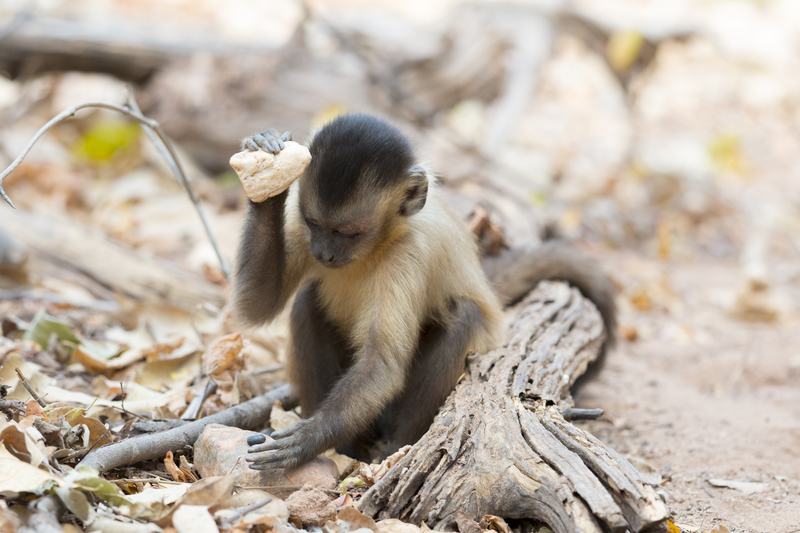
Bearded capuchins in Brazil crack hard palm nuts using stones. They choose a flat rock as an anvil, pick a heavy stone as a hammer, place the nut just so, and strike. Young capuchins take years to get the knack, practising on nuts they cannot yet open. Archaeologists have even dug up their old stone tools, some centuries old. It is one of the clearest cases of tool use outside the apes, and it is genuinely impressive to watch.

A Word For Eagle, A Word For Snake
Vervet monkeys have something close to words. Researchers found they give different alarm calls for different predators. One call means eagle, and the group looks up and dives for cover. Another means leopard, and they race up into the trees. A third means snake, and they stand tall and scan the ground. Play a recording with no predator in sight and they still react correctly. The call itself carries the meaning, which is a very human sort of trick.
Pockets In Their Cheeks
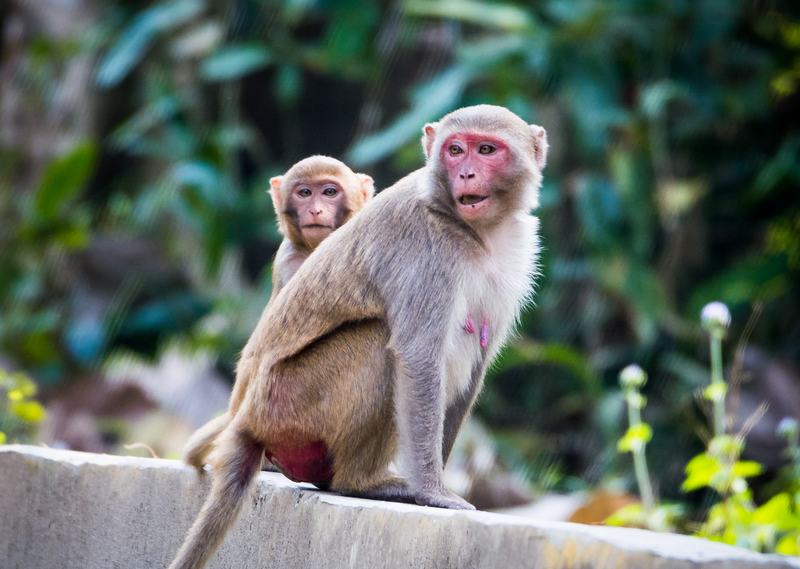
Many Old World monkeys, macaques especially, have cheek pouches. They can stuff food into these stretchy pockets, carry it somewhere safer, and chew later in peace. A hungry macaque at a temple can look, briefly, as though it has swelled to twice its face size. The pouches hold close to a stomachful in some species. It is the primate version of doing a supermarket sweep and eating in the car park.
The Loudest Voice In The Forest
Howler monkeys are among the loudest land animals alive. Their call carries for miles through dense forest, a low roar that sounds far bigger than the animal making it. The secret is a hollow, enlarged bone in the throat, the hyoid, which works like a natural amplifier. Males call at dawn to tell rival groups exactly where they are, saving everyone a fight. I have heard a recording, and it does not sound like a monkey. It sounds like weather.
The Monkey Who Took Its Own Photo
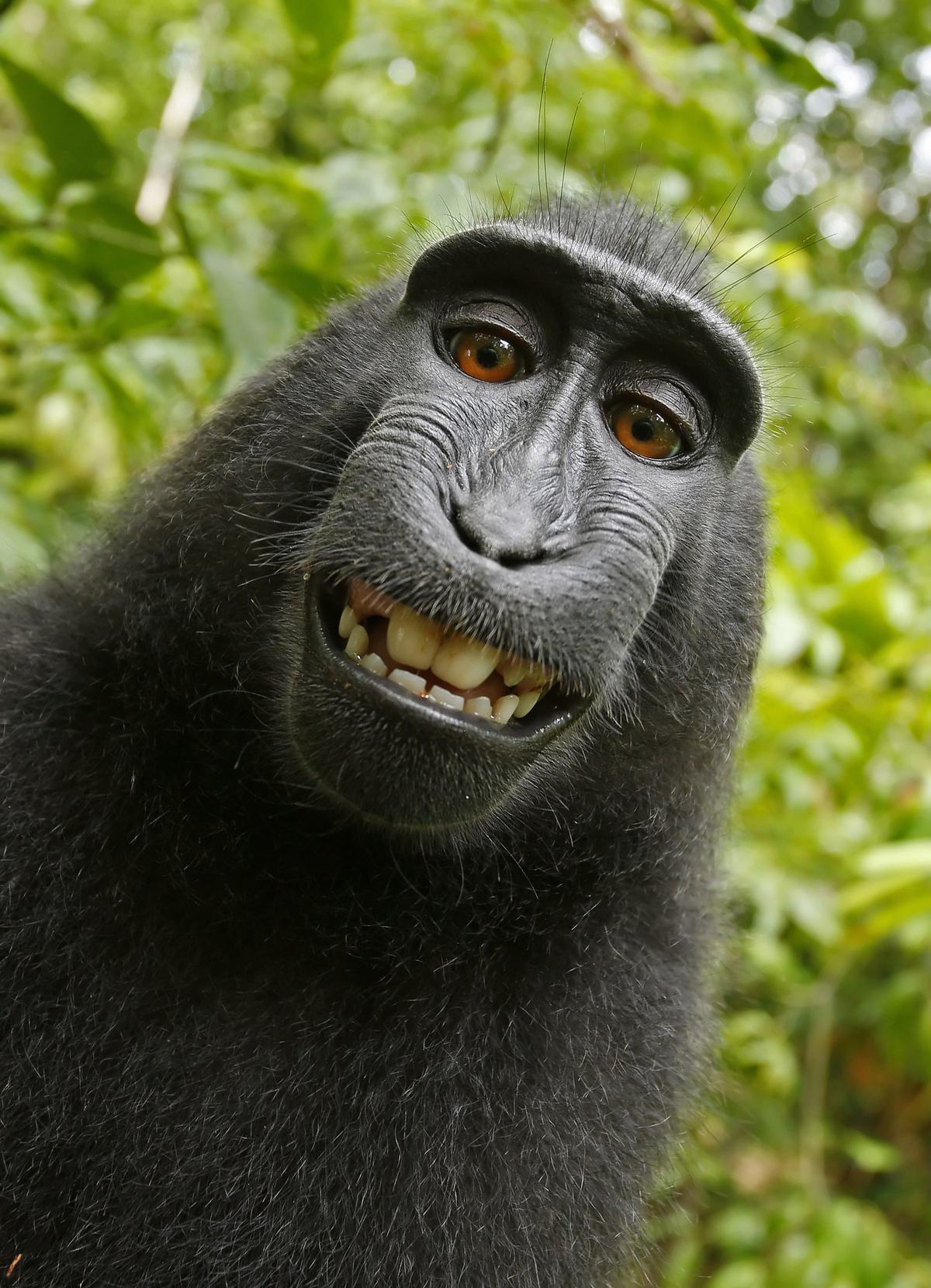
In 2011 a crested black macaque in Sulawesi grabbed a wildlife photographer's camera and pressed the shutter, producing a now famous grinning self-portrait. It sparked a long legal tangle over who could own a photo taken by a monkey. The answer settled on nobody, because copyright law protects work made by people. So the image sits in the public domain, which is why you can see it at the top of this very article. The monkey, as far as we know, has no complaints.
Frequently Asked Questions
Are monkeys and apes the same thing?
No. Monkeys and apes are different groups of primates. The simplest difference is the tail: most monkeys have one, while apes such as gorillas, chimpanzees and orangutans do not. Apes also tend to be larger and have bigger brains relative to body size.
How many species of monkey are there?
There are more than 260 known species of monkey. They fall into two broad groups, Old World monkeys from Africa and Asia, and New World monkeys from Central and South America. New species are still occasionally described by scientists today.
Which monkey is the smallest?
The pygmy marmoset is the smallest monkey, measuring around 14 to 16 centimetres in body length, not counting the tail. It weighs roughly 100 grams. It lives in the rainforests of the western Amazon basin and feeds largely on tree sap and gum.
Do all monkeys have prehensile tails?
No. Only some New World monkeys, such as spider, howler and woolly monkeys, have a prehensile tail that can grip. Old World monkeys do not have prehensile tails at all, and use their tails mainly for balance and communication rather than holding on.
Can monkeys really use tools?
Yes. Bearded capuchin monkeys in Brazil use stone hammers and anvils to crack open hard nuts, and some macaques use tools too. This behaviour is learned over years and passed between generations, making it one of the best studied examples of tool use beyond the great apes.
Sources
- Old World vs New World Monkeys: Key Differences - Born Free
- Prehensile Tail in New World Monkeys - Encyclopaedia Britannica
- Monkey Responses to Three Different Alarm Calls - Science
- Vervets Revisited: Alarm Call Structure and Context Specificity - Scientific Reports
- Old World Monkey - New World Encyclopedia
- Shutter-Happy Monkey Grabs Photographer's Camera - The Guardian