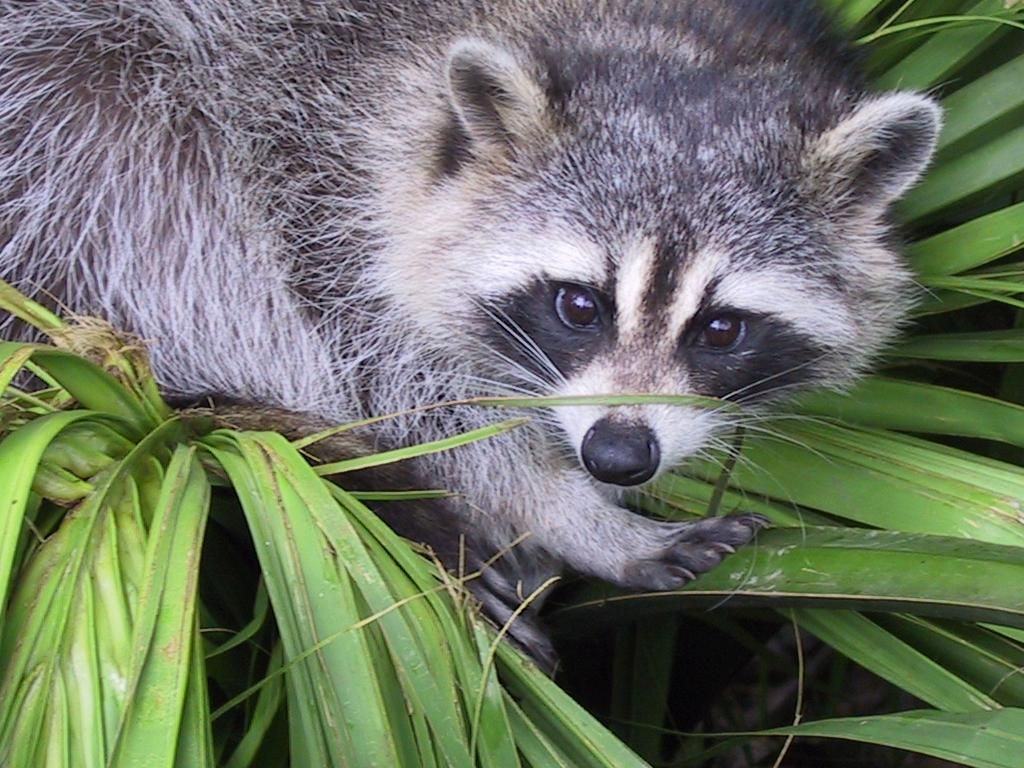
I once watched a raccoon in Toronto work at a rubbish bin lid with the sort of focus normally reserved for A-level exam candidates. It lost, that time. The city had spent real money on bins the raccoons could not open [1]. But the raccoon did not seem embarrassed. It simply came back the next night. That is the thing about raccoons: they treat a locked box as a personal invitation.
Their Hands Do the Looking
A raccoon's front paws are the star of the show. They are packed with nerve endings, and a surprisingly large share of the animal's sensory brain is given over to touch rather than sight [2]. In practice this means a raccoon can identify an object, judge its weight, and decide whether it is food without ever really looking at it. Blindfold a raccoon and it barely notices. Cover its hands and it is lost.

Why They Dunk Their Food
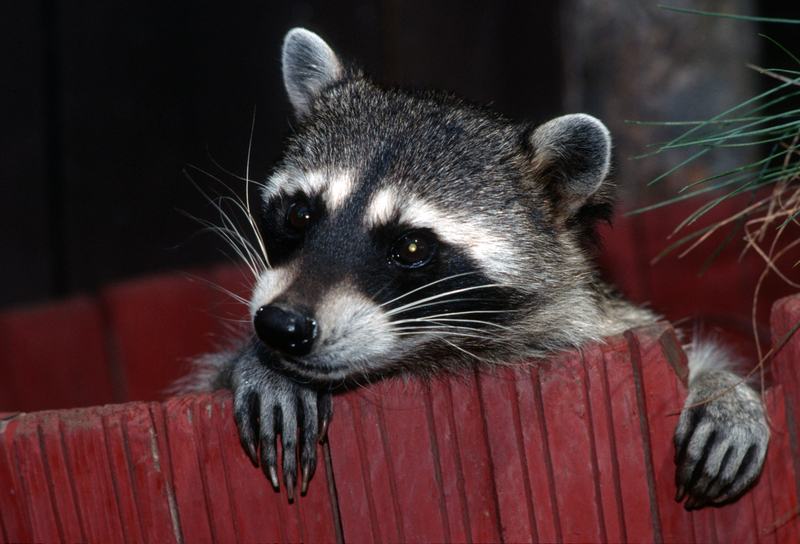
The raccoon's scientific name is Procyon lotor, and "lotor" is Latin for "washer" [3]. People assumed they were tidying their dinner. They are not. When a raccoon dunks and rolls food in water, it is reading it. Wetting the paws seems to sharpen the sense of touch, so the water is less a sink and more a pair of reading glasses [2]. Take away the water and they will still do the rolling motion on dry land. Old habits.
The Mask Is Not Just a Look
That black mask across the eyes is doing a job. The dark fur is thought to cut down glare, rather like the strips American footballers paint under their eyes, which helps a night-hunting animal pick out detail in low light [4]. It also happens to make every raccoon look like it is halfway through a heist. That part is free.
Mostly a Black-and-White World
For an animal so switched on, raccoon eyesight is fairly ordinary. They are thought to be largely colourblind and see the world mostly in shades of grey [4]. This is not a great loss to them. When your hands can identify a grape in muddy water, you do not need to admire its colour first. Their eyes are built for night, not for a paint chart.

Lock-Pickers With Long Memories
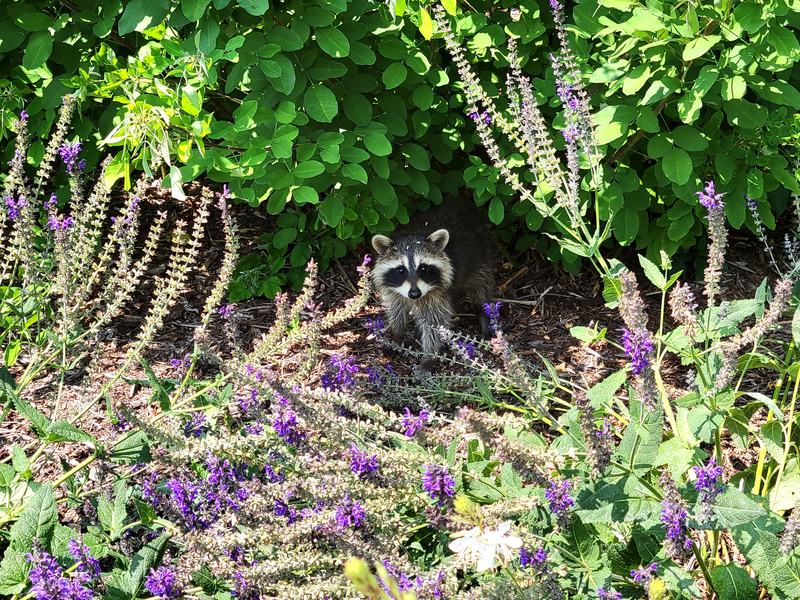
Raccoons are properly clever, and we have known this for over a century. In a 1907 study, a psychologist set raccoons a series of latches and catches to open, and they worked through most of them [5]. More impressively, they remembered the solutions long afterwards. That is the uncomfortable bit for anyone with a bird feeder. A raccoon that beats your defences once does not forget how it did it.
Built to Climb Down Headfirst
Most animals that go up a tree have to reverse back down, bottom first, which is undignified. Raccoons can rotate their hind feet a full 180 degrees, so the claws still grip when they walk down the trunk head first [4]. It is a small anatomical trick that makes them look far more relaxed on a fence post than they have any right to be.
City Living Suits Them
Raccoons are native to North America but have made themselves thoroughly at home in towns and cities, and have been introduced to parts of Europe and Japan too. Globally they are listed as Least Concern, which is polite conservationist for "doing absolutely fine" [6]. Bins, lofts, chimneys, storm drains: to a raccoon these are simply new sorts of hollow tree, and its hands were ready for all of them.
Frequently Asked Questions
Do raccoons really wash their food?
Not exactly. Raccoons dunk and handle food in water, but they are feeling it rather than cleaning it. Water appears to heighten the sensitivity of their paws, helping them examine what they are about to eat. They perform the same rolling motion even when no water is available.
Are raccoons dangerous to humans?
Raccoons usually avoid people and are not aggressive by nature. The main concern is disease, as they can carry rabies and roundworm. It is best not to feed or handle wild raccoons, and to keep bins secured so they do not become reliant on human food.
How long do raccoons live?
In the wild, most raccoons live only two to three years, largely due to traffic, predators, and disease. In captivity, where those threats are removed, they can reach 20 years. City raccoons tend to fare somewhere in between.
Can raccoons see in colour?
Raccoons have poor colour vision and are thought to see mostly in shades of grey. Their eyes are adapted for night activity rather than colour detail. They rely far more on their highly sensitive sense of touch to identify objects and food.
Sources
- Toronto's raccoon-resistant green bins - CBC News
- Raccoon - Smithsonian's National Zoo and Conservation Biology Institute
- Raccoon - Encyclopaedia Britannica
- Raccoon - National Geographic
- The Raccoon: A Study in Animal Intelligence - The American Journal of Psychology
- Procyon lotor - IUCN Red List of Threatened Species