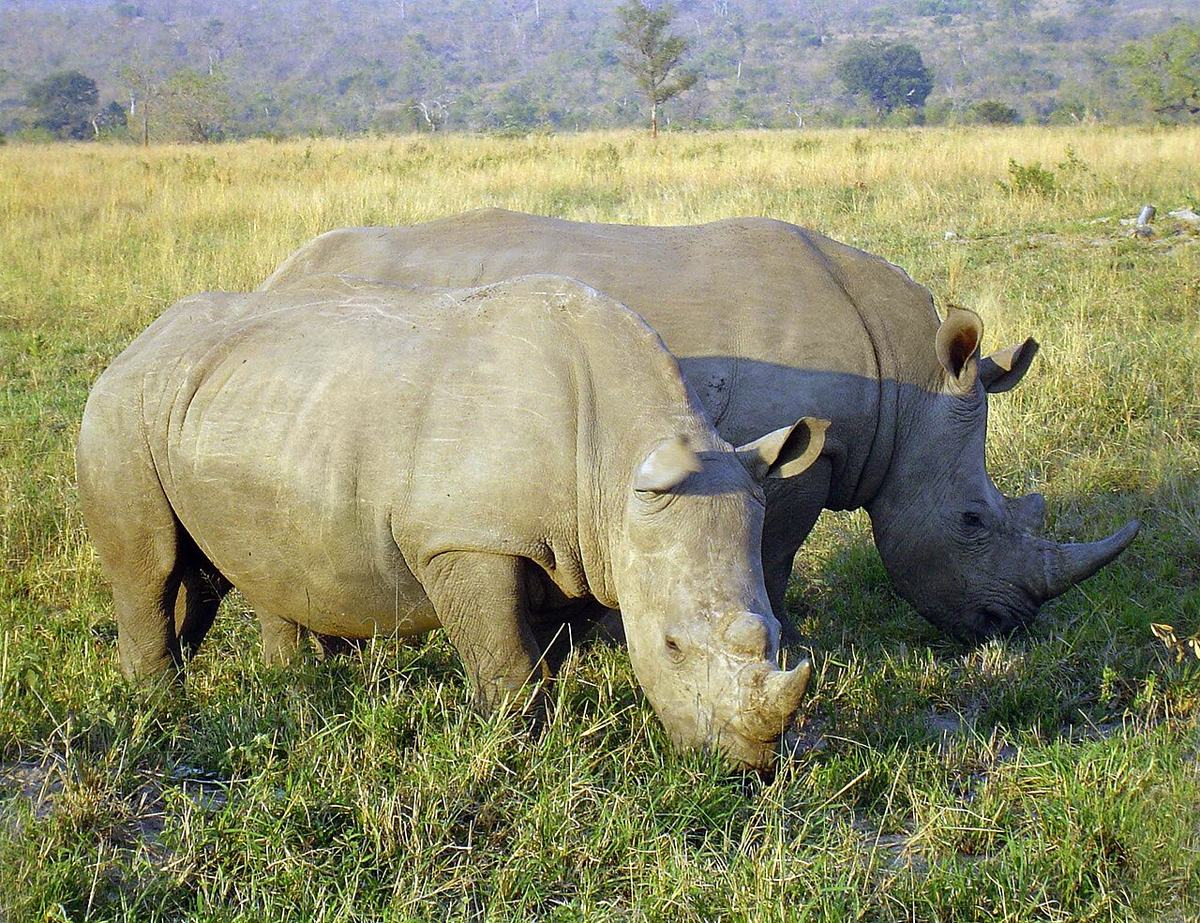
If you asked my Year 4 class to describe a rhinoceros, they would say big, grey, angry, and armed. Three of those are fair. The fourth is a misunderstanding, because the rhino is not really armed at all, at least not in the way you would think. The famous horn is not a bone and not a tusk. It is made of the same stuff as your fingernails. The rhino is a two-tonne animal wearing a very impressive hairstyle on its face, and it cannot see well enough to appreciate it.
The Horn Is Made of Hair
Here is the fact that surprises everyone. A rhino's horn is made of keratin, the same protein found in hair, fingernails, and horses' hooves [1]. There is no bone inside it and no core. It is closer to a tightly packed clump of hair than to a cow's horn or an elephant's tusk. If a horn breaks off, it can slowly grow back, because it keeps growing throughout the animal's life. All of which makes the trade in rhino horn even sadder, since people are killing a two-tonne animal for something chemically similar to a haircut.
Five Species, Not One
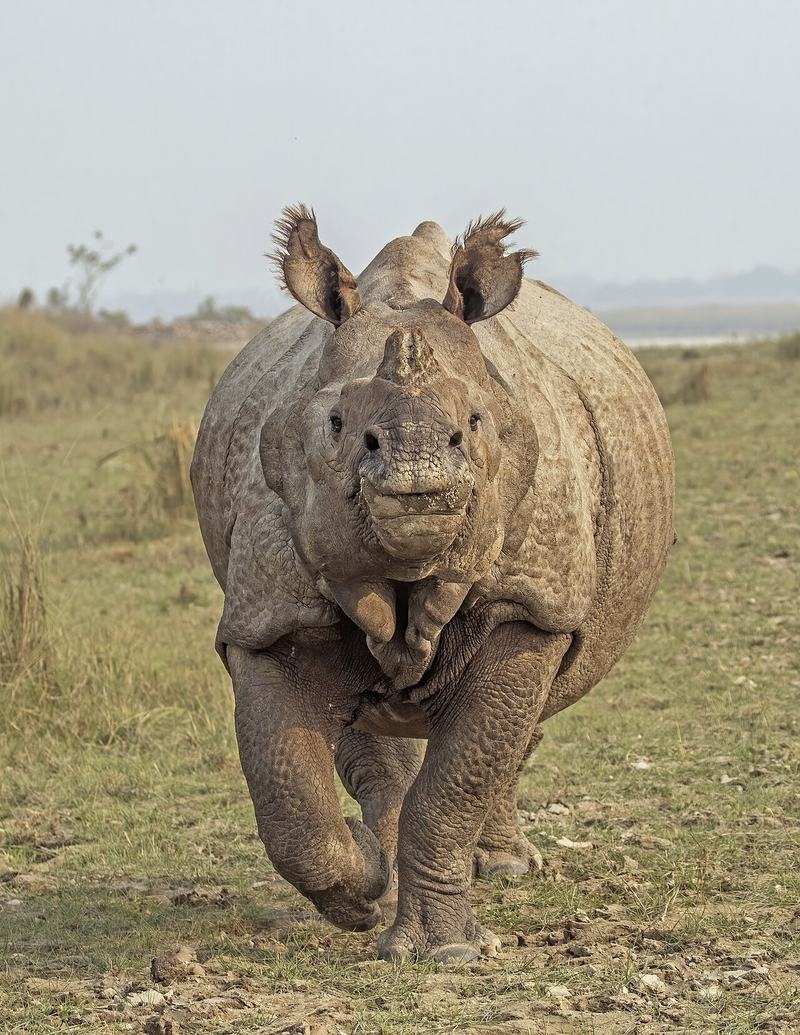
There is no single rhino. There are five living species, and they are a mixed bunch [2]. Two are African, the white rhino and the black rhino, and both have two horns. Three are Asian, the Indian, the Javan, and the Sumatran, and the first two of those carry just one horn. The Sumatran is the smallest, the hairiest, and the closest living relative of the extinct woolly rhino. So when someone says "rhino", it is worth asking which one, because they range from tank-like giants to shaggy forest dwellers.
 1.jpg)
Neither White Nor Black
The white rhino is not white and the black rhino is not black. Both are grey [3]. The best guess for "white" is that it comes from a mix-up over an older word describing the animal's wide, flat lip, which got heard as "white". Once one was named white, the other became black to tell them apart. The lip is the real difference. The white rhino has a broad square mouth for cropping grass, while the black rhino has a pointed, grasping lip for pulling leaves off shrubs. Two rhinos, two lunches, and two badly chosen names.
Built Like a Tank, Sees Like a Mole
A rhino can weigh over two tonnes and charge at around 50 kilometres per hour, which is faster than you can run [2]. What it cannot do is see where it is going. Rhino eyesight is genuinely poor, and a rhino may struggle to make out a person standing still just 30 metres away [4]. It makes up for this with an excellent sense of smell and sharp hearing, its ears swivelling like little radar dishes. The charging, then, is often a nervous animal reacting to a noise or a scent it cannot place. Which, fair enough.
The Skin Is Thick but Sensitive
Rhino skin can be up to a couple of centimetres thick, and on the Indian rhino it folds into great plates that genuinely look like riveted armour [2]. You would think an animal so armoured would be tough all over. It is not. The skin sunburns, and it gets bitten by insects, which is why rhinos spend so much time wallowing in mud. The mud dries into a crust that works as sunscreen and insect repellent in one. So the fearsome tank of the savannah is, on a hot day, essentially wearing a spa mud mask for entirely practical reasons.

Birds Ride Along for Dinner
Where there are rhinos, there are often small birds perched on their backs. These are oxpeckers, and the arrangement suits both parties [3]. The birds eat ticks, flies, and other parasites off the rhino's hide, getting a meal while the rhino gets a cleaning. There is a bonus, too. The birds are jumpy, and when danger approaches they take off with a loud alarm call, which gives the short-sighted rhino a warning it could not have managed on its own. In parts of Africa the oxpecker is nicknamed the "rhino's guard". A fair title.
A Group Is Called a Crash
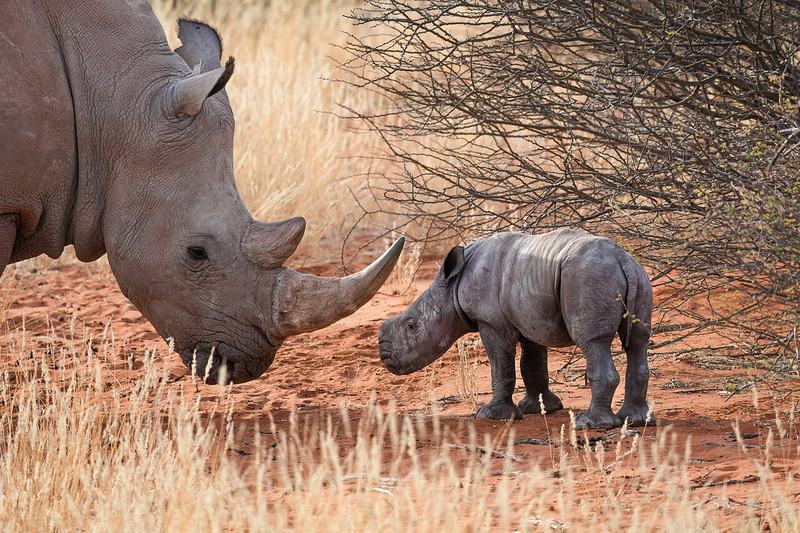
The collective noun for rhinos is a "crash", which sounds like a joke but is the real term [3]. White rhinos are the most social of the species and can gather in these small groups, often females with their young. Black rhinos, by contrast, tend to be more solitary and short-tempered, keeping to themselves. A newborn rhino calf can weigh as much as a grown man within its first weeks, and white rhino calves run ahead of their mothers, while black rhino calves follow behind. Even the babies keep to their species' style.
Older Than You Would Guess
Rhinos are ancient. Their family has been around for tens of millions of years, and prehistoric relatives included Paraceratherium, a hornless giant thought to be one of the largest land mammals that ever lived [2]. Closer to our own time, the woolly rhino roamed Ice Age Europe alongside mammoths, and early humans painted it on cave walls. So the animal shuffling across a modern reserve is the last chapter of a very long story, and it is a story we are now at risk of ending early.
Most Are in Serious Trouble
This is the part I cannot dress up. Three of the five rhino species are Critically Endangered, and the numbers are stark [5]. Fewer than 50 Javan rhinos survive, and the Sumatran rhino is down to a similarly tiny population. The northern white rhino is functionally extinct, with only two females left alive and no males. Poaching for horn is the main driver, along with habitat loss. The southern white rhino is the one good-news story, brought back from near extinction by decades of protection, which is proof that the work is worth doing.
Frequently Asked Questions
What is a rhino horn actually made of?
A rhino horn is made of keratin, the same protein found in human hair and fingernails. It has no bone or hard core inside it and grows continuously throughout the animal's life. If it breaks off, it can slowly grow back, unlike an elephant's tusk, which is made of ivory.
Why are white and black rhinos both grey?
Both white and black rhinos are grey, and the names do not describe colour. "White" is thought to come from a misheard older word for the white rhino's wide, flat lip. "Black" was then applied to the other African species to tell the two apart, despite them being much the same shade.
How bad is a rhino's eyesight?
Rhino eyesight is genuinely poor. A rhino may not clearly make out a still person standing about 30 metres away. It relies instead on a strong sense of smell and sharp hearing, using its swivelling ears to track sounds. Sudden charges are often a reaction to a scent or noise it cannot identify.
How many rhino species are there?
There are five living rhino species. Two are African, the white rhino and the black rhino, and three are Asian, the Indian, Javan, and Sumatran rhinos. They vary widely in size, number of horns, and habitat, from open grassland grazers to shaggy forest dwellers.
Are rhinos endangered?
Three of the five rhino species are Critically Endangered. Fewer than 50 Javan rhinos remain, and the Sumatran rhino is similarly scarce. The northern white rhino is functionally extinct. The southern white rhino is the exception, recovered from near extinction through long-term conservation efforts.