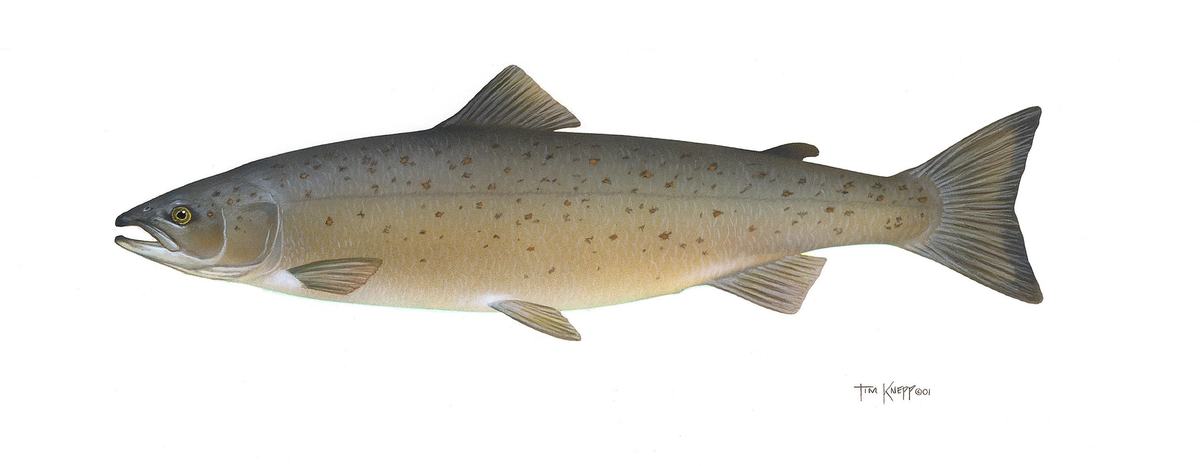
If you asked my Year 4 class where a fish is born, they would say the sea. Fair enough. Most are. Salmon are the odd ones out. They begin life in a cold freshwater stream, swim out to spend years in the ocean, then turn around and come back to the exact river they hatched in. Not the right sort of river. The actual one. Here is how they manage it, and a few other things nobody warned me about.
Born in Rivers, Raised at Sea
Salmon are what scientists call anadromous, which is a long word for a simple life plan: hatch in fresh water, grow up in salt water, return to fresh water to breed [1]. A young salmon spends its first months in a stream, then heads downriver to the sea, where the real feeding happens. It may travel thousands of kilometres across open ocean before the urge to go home kicks in. Most fish never attempt this. Salmon do it twice, in opposite directions.
The Long Swim Home
Here is the part that gets me. A salmon can find the single stream it was born in, years later, from somewhere out in the North Atlantic or Pacific [1]. It does this mostly by smell. As a youngster it imprints on the exact chemical signature of its home water, then follows that scent back upriver, turning at the right forks [3]. To reach the coast in the first place, there is good evidence salmon read the Earth's magnetic field like an internal map [3]. A fish with a compass and a nose.
Turning Red for the Occasion
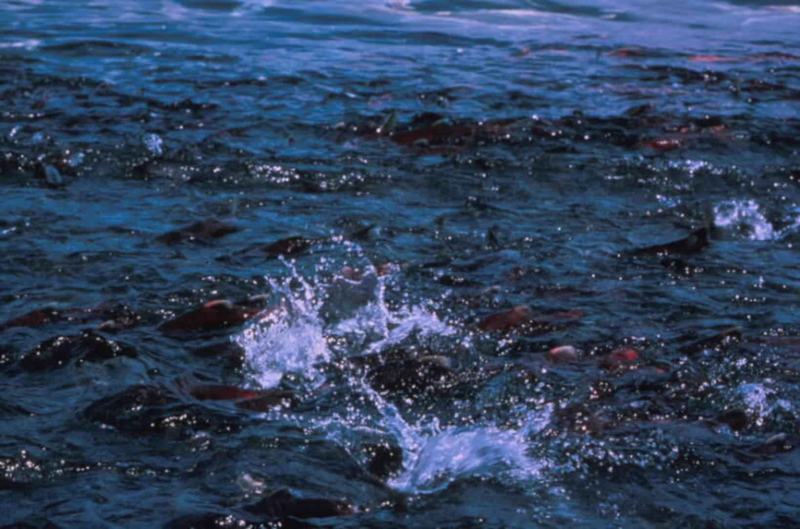
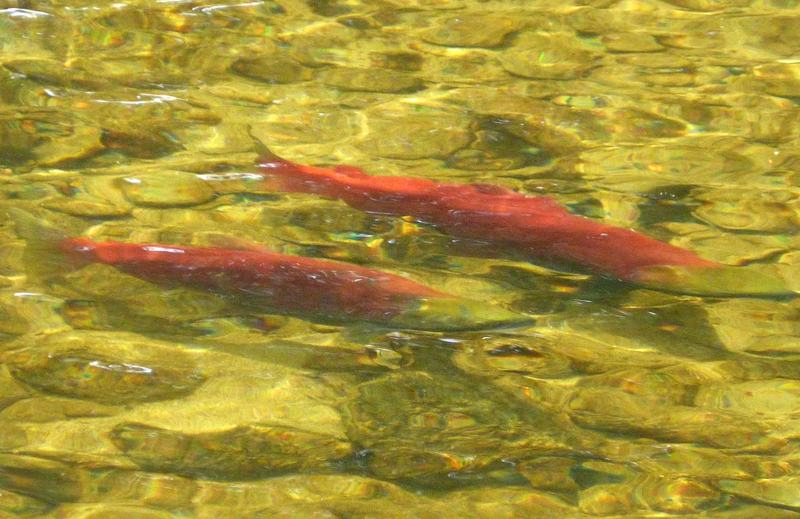
Ocean salmon are sleek and silver. Then they head upstream to spawn and change completely. Sockeye salmon go a deep, alarming red, and the males grow a hooked jaw called a kype [2]. It is not a costume choice. The colour and the strange face are breeding signals, put on for the last leg of the journey. By the time a salmon reaches the gravel bed where it will lay eggs, it looks almost nothing like the fish that left the sea.

They Stop Eating to Get There
Once a salmon leaves the sea and enters its home river to spawn, it stops eating altogether [2]. The whole journey upstream, sometimes hundreds of kilometres against the current, is fuelled entirely by fat stored at sea. Everything goes into getting home and breeding. There is nothing left over for lunch. Which explains why a spawning salmon looks so worn out by the end. It has, quite literally, spent everything it had.
One Trip for Some, Not All
For most Pacific salmon, spawning is a one way ticket. They breed once and die soon after, their bodies giving out from the effort [2]. Atlantic salmon are the exception: some survive, drift back to sea, and return to spawn a second or even third time [1]. So the tragic salmon story you may have heard, swim home, breed, die, is true for the Pacific ones. The Atlantic sort occasionally get a repeat performance.
Leaping Up Waterfalls
The name "salmon" comes from a Latin word often linked to leaping, and the fish earn it [1]. To get past waterfalls and rapids on the way upstream, salmon fling themselves clean out of the water, clearing drops of up to around three metres [1]. They use the churning plunge pool at the base of a fall to launch, timing the jump off the upward surge. I watched one on a Scottish river once. It missed, tried again, and made it. Persistent, salmon.

The Pink Comes From Dinner
Salmon flesh is famously pink, and that colour comes straight from their food. Salmon eat krill and other small crustaceans packed with a pigment called astaxanthin, which tints the muscle [4]. No astaxanthin, no pink. Farmed salmon are simply fed the pigment so their flesh matches the wild sort. So the salmon's signature colour is really just a very tidy example of you are what you eat.
Kings of the Family
Not all salmon are the same size. The Chinook, also called the king salmon, is the giant of the group and can weigh well over 45 kilograms [2]. That is a fish heavier than most of my Year 4 pupils. At the other end, a spawning sockeye might be a few kilograms. Same rough life story, wildly different scale. Somehow the little ones make the same impossible journey home as the big ones.
Feeding the Forest
Here is a lovely one to end on. When Pacific salmon die after spawning, their bodies do not go to waste. Bears and birds haul carcasses into the woods, and the nutrients they carried back from the ocean end up feeding the trees along the riverbank [5]. Scientists can actually detect ocean-derived nitrogen in the wood of forests near salmon rivers [5]. A fish, it turns out, can help grow a forest. And yet we mostly think of it as a sandwich.
Frequently Asked Questions
Why do salmon swim upstream?
Salmon swim upstream to reach the freshwater streams where they were born and lay their eggs there. Breeding in clean gravel-bottomed streams gives their eggs the cold, oxygen-rich water they need. The fish navigate back to their exact home stream mainly by smell.
Do all salmon die after spawning?
Most Pacific salmon, such as sockeye and Chinook, die shortly after spawning once. Atlantic salmon are different: a portion survive, return to the sea, and can come back to spawn again in later years, though many still do not make it.
Why is salmon flesh pink?
Salmon flesh is pink because of astaxanthin, a natural pigment in the krill and crustaceans they eat. The pigment builds up in their muscle and tints it. Farmed salmon are given astaxanthin in their feed so their flesh matches the colour of wild fish.
How do salmon find their home river?
Salmon find their home river largely by smell. As young fish they memorise the unique chemical scent of their birth stream, then follow it back upriver as adults. Evidence suggests they also use the Earth's magnetic field to navigate across the open ocean.
How far can a salmon leap?
Salmon can leap roughly three metres out of the water to clear waterfalls and rapids on their way upstream. They launch from the churning water at the base of a fall, using its upward surge for extra height, and will try repeatedly until they clear the obstacle.