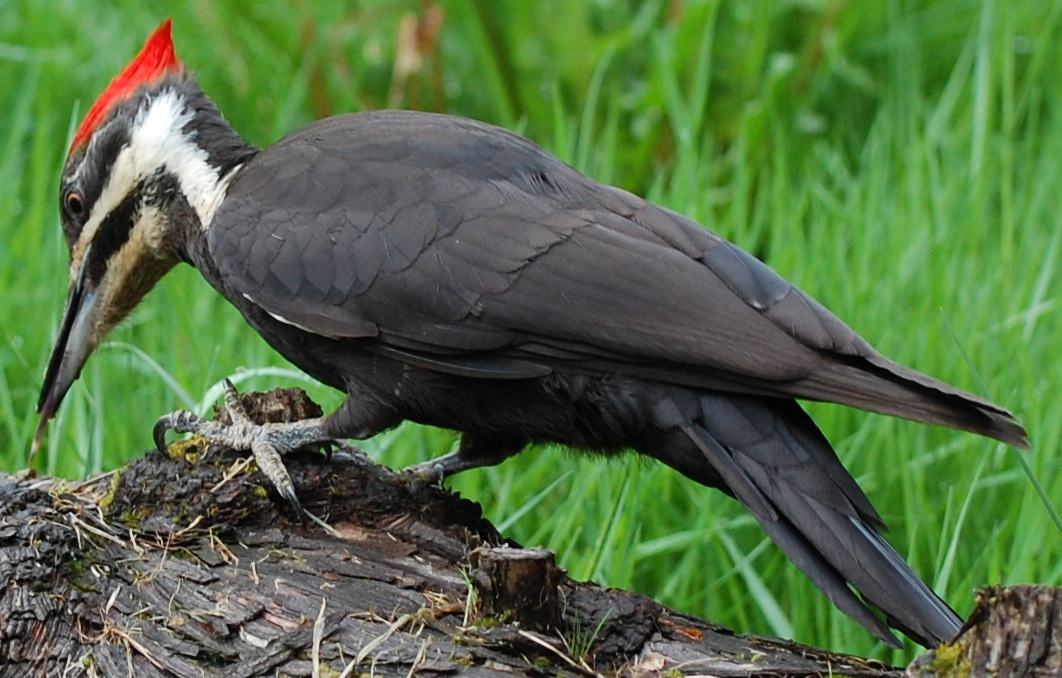
If you asked my Year 4 class why a woodpecker hammers a tree, they would say "to find food". Half right. It also hammers to send messages, to dig a home, and sometimes just to tell other woodpeckers to clear off. What none of them guessed is the truly odd bit: the tongue. It is so long it has to be stored wrapped around the inside of the skull. (Yes, really.) Here is what makes these birds worth a proper look.
A Tongue That Wraps Round the Skull
A woodpecker's tongue is far too long to sit tidily in its mouth. So it doesn't. The tongue is anchored by a bony structure called the hyoid apparatus, which curves back from the base, wraps around the rear of the skull, runs up over the top of the head, and finishes between the eyes [2][6]. When the bird isn't using it, the tongue is essentially coiled inside its own head. Unroll it and it can reach a third past the beak tip to hook grubs out of tunnels.

Twenty Strikes a Second
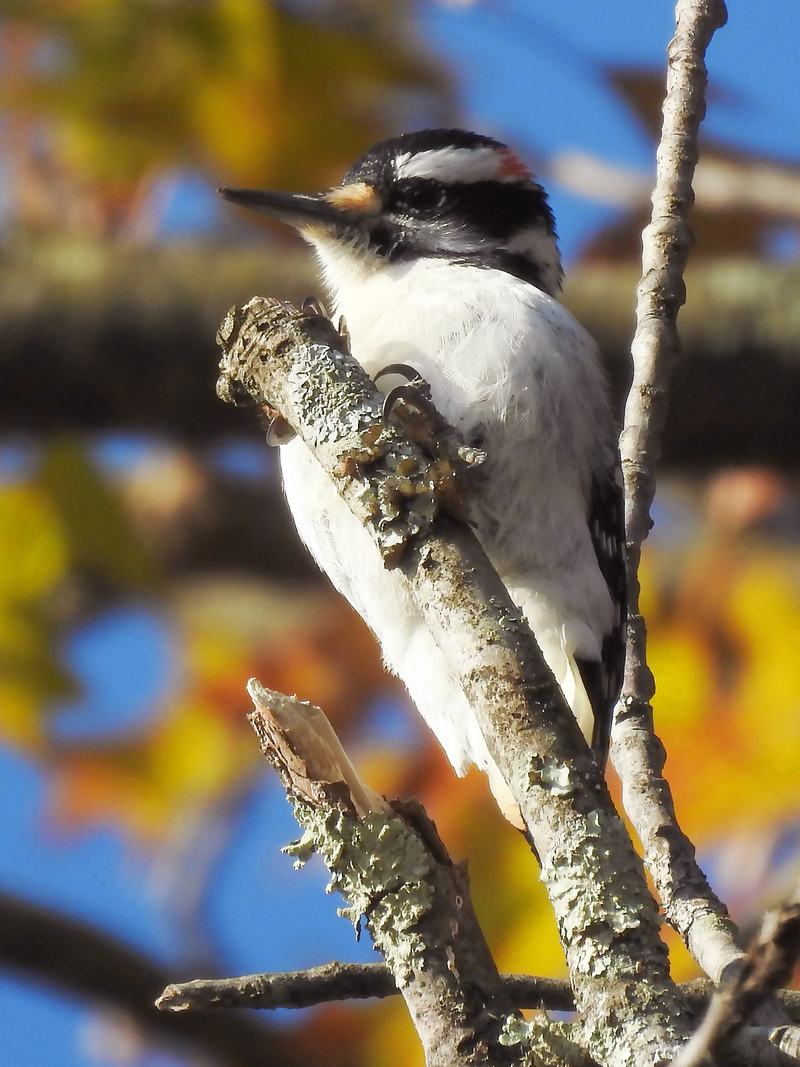
A woodpecker can strike wood up to twenty times a second [1]. Each blow slams its head from roughly seven metres per second to a dead stop in about four thousandths of a second, which works out at decelerations of well over a thousand times the force of gravity [1]. If a footballer took a knock like that, we would call an ambulance. The woodpecker does it a few thousand times a day and then goes to bed.
Why Their Brains Stay Intact
For years the tidy story was that the tongue's wrap acted like a seatbelt for the brain. Newer research is less sure [1]. It now looks as though the protection comes from plainer physics: the brain is small, it is packed tightly against the skull, and each impact is over almost instantly [1]. A small brain hit very briefly simply doesn't have room to slosh about. Not glamorous. But it means woodpeckers really don't get headaches.
Feet Built for Vertical Living
Most birds perch. Woodpeckers climb. Their secret is zygodactyl feet, meaning two toes point forward and two point back, giving them a grip like a set of crampons on a tree trunk [3]. They also press stiff, pointed tail feathers against the bark as a prop, turning themselves into a little tripod. It is why a woodpecker can hang sideways on a vertical trunk, hammering away, and look entirely relaxed about it.
The Drumming Is a Message
Not all of that racket is about food. Woodpeckers also drum: fast, rhythmic bursts on a resonant surface, chosen for how loudly it carries [3]. This is communication, not feeding. A drumming woodpecker is marking its patch and advertising for a mate, the way a songbird uses song. It also explains why one might pick your metal gutter or a hollow fence post. Louder is better, and your house makes a splendid drum.

The Woodpecker With a Pantry
The acorn woodpecker of the Americas is a hoarder of impressive commitment. A family drills thousands of little holes into a single "granary" tree and jams one acorn into each, then defends the lot [4]. The largest granary on record held around fifty thousand acorns [4][5]. Better still, they keep a running inventory: as an acorn dries and shrinks, they shift it to a snugger hole so it doesn't fall out. My kids would love this.
Nearly Everywhere, in Nearly Every Wood
There are somewhere around 240 woodpecker species, all in the family Picidae, and they turn up almost everywhere trees do [3]. The two big exceptions are Australia and Antarctica, where you will not find a single one [3]. They range from the sparrow-sized piculets to crow-sized giants. Wherever there is bark to probe and dead wood to drill, some version of this bird has usually moved in.
The Sticky, Barbed Tip
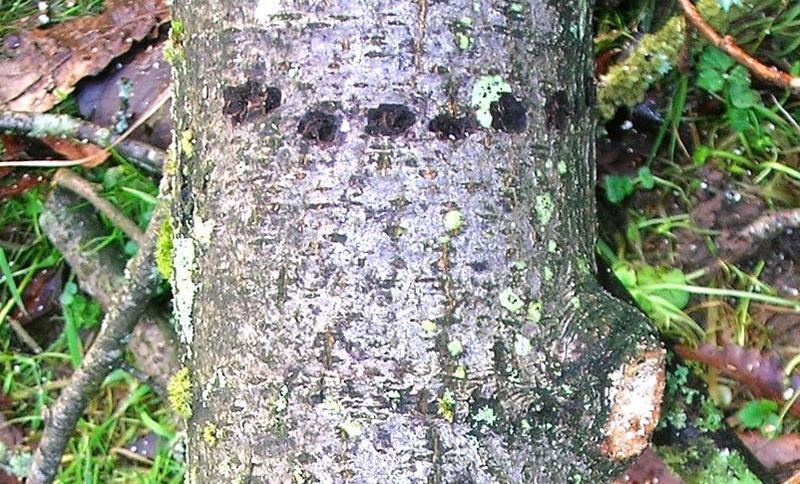
The far end of that remarkable tongue is not just long, it is kitted out for the job. In many species the tip is barbed and coated in sticky saliva, so an insect deep inside a tunnel gets speared, glued, and reeled in [2]. Sapsuckers, a type of woodpecker, take a different route entirely: they drill neat rows of wells and lap up the sap that seeps out, which is exactly what the drill holes in the photo above are for.
Frequently Asked Questions
Do woodpeckers get headaches or brain damage?
No, woodpeckers do not get headaches from pecking. Their brains are small, tightly packed against the skull, and each impact lasts only a few thousandths of a second, which prevents injury. Research now credits this physics rather than the older idea that the tongue cushions the brain.
Why do woodpeckers peck on houses and metal?
Woodpeckers often peck or drum on houses, gutters, and metal to communicate, not to feed. Drumming on a loud, resonant surface carries their signal further, helping them mark territory and attract mates. A metal downpipe simply makes a louder drum than a tree.
What do woodpeckers eat?
Most woodpeckers eat insects, especially wood-boring grubs and ants, which they extract with a long, sticky tongue. Many also take fruit, nuts, and tree sap. The acorn woodpecker stores thousands of acorns in a shared "granary" tree to eat through winter.
How many species of woodpecker are there?
There are roughly 240 species of woodpecker in the family Picidae. They live on every continent except Australia and Antarctica, ranging from tiny piculets to crow-sized birds, wherever there are trees with bark to probe and wood to drill.
Sources
- Built to Peck: How Woodpeckers Avoid Brain Injury - The Cornell Lab Bird Academy
- The Amazing Secrets of Woodpecker Tongues - American Bird Conservancy
- Woodpecker - Encyclopaedia Britannica
- Storing Food: The Granaries of Acorn Woodpeckers - The Cornell Lab Bird Academy
- Acorn Woodpecker - Audubon Field Guide
- Structural Analysis of the Tongue and Hyoid Apparatus in a Woodpecker - PubMed