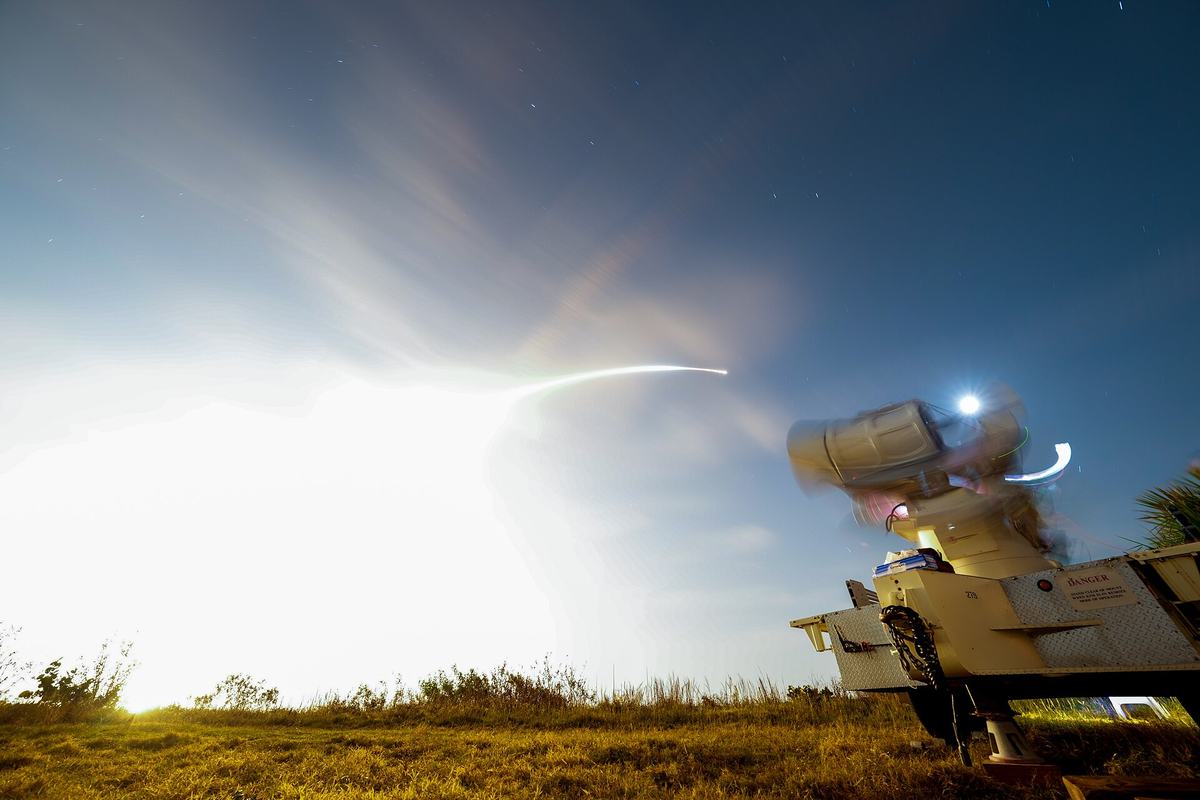
Before a single astronaut can set foot on the Moon under NASA's current Artemis plan, the mission architecture calls for at least 15 separate rocket launches, all just to refuel the lunar lander waiting in orbit. That number rarely shows up in the highlight reel of a launch broadcast, but it says more about how hard this return trip really is than any shot of a rocket lifting off a pad.
Artemis is NASA's campaign to put astronauts on the Moon again, closing a gap that has lasted since 1972, with the agency planning for the crew to include the first woman ever to walk on the lunar surface. Getting there again, more than five decades later, has turned into a far bigger engineering puzzle than the original Moon landings ever were.
The pieces of that puzzle include a new rocket, a capsule that already has flight hours behind it, and a small space station built to spend most of its life with nobody aboard. Together they explain why "going back to the Moon" is a much more complicated sentence than it sounds.
Fifty Years to the Day
When the Artemis I capsule finally splashed down, the date was no coincidence: it touched down exactly 50 years to the day after Apollo 17, the last mission to put a crew on the lunar surface. NASA did not have to look that far back for flight-tested hardware, though. Orion, the capsule at the heart of Artemis, had already logged a trip to space years earlier — a flight in December 2014, riding a different rocket, flown purely to check whether its heat shield could survive a return from deep space.
That gap between a capsule with a head start and a rocket still years from ready tells you where most of the Artemis delays actually came from. Orion was largely proven technology; the vehicle meant to carry it was not.
The Rocket, the Escape Hatch, and a Capsule With Some Mileage
The rocket that eventually lifted Orion off the pad is the Space Launch System, and its first stage leans on hardware NASA already trusted: four RS-25 engines, the same engine family that powered the space shuttle fleet for three decades.
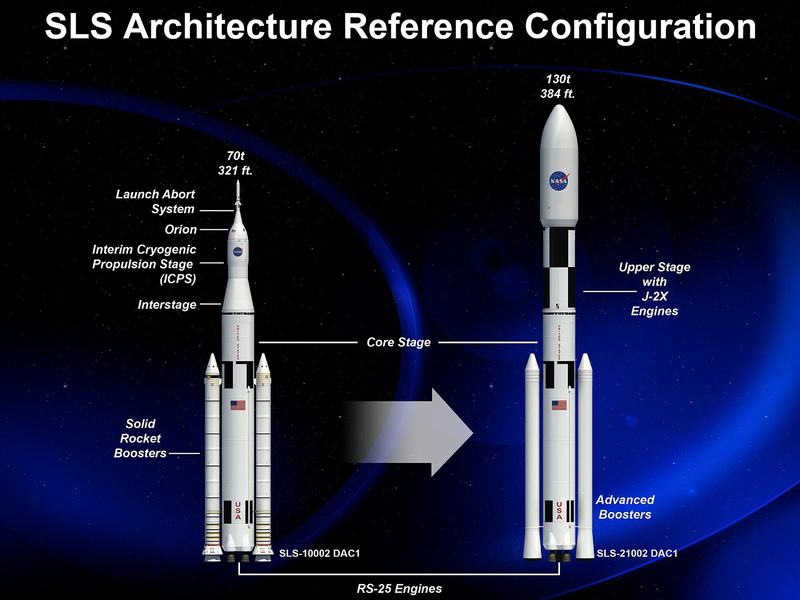

On paper, the SLS is the most powerful rocket ever cleared to carry a human crew, generating 39 meganewtons of thrust at liftoff — more than any other crewed launch vehicle in history. Raw thrust is not the whole story, though. Once you factor in how much mass it can actually push toward the Moon, SLS delivers roughly 27 metric tons on a lunar-bound trajectory, only about half of what the Apollo-era Saturn V could carry in its 48.6-metric-ton payload. A bigger engine does not automatically mean a bigger delivery.
Before any of that power gets used on a crewed flight, NASA tests the exit plan first. The Ascent Abort-2 test was designed around one specific worst case: whether Orion's launch escape system can pull the capsule and its crew clear of the SLS if something fails during the moment of ascent when the spacecraft is under its heaviest aerodynamic stress.
A Space Station Built to Fly Empty
Once Orion reaches lunar space, the plan calls for it to dock at the Gateway, a station designed to become the first international outpost ever built in orbit around the Moon.
Gateway will be modest by orbital-outpost standards — about 20 metres long, next to the roughly 50 metres of the International Space Station — yet it is still designed to let a crew live aboard it for stretches of up to three months at a time.
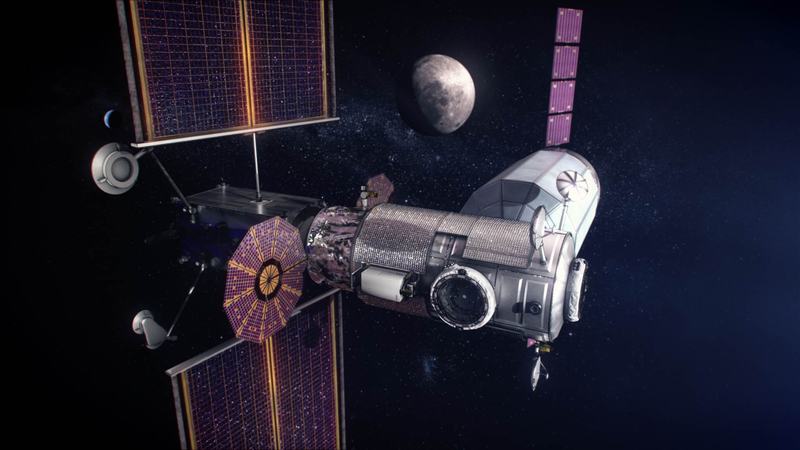

Most of the time, though, nobody will be home. Gateway's own path around the Moon puts it roughly 1,000 times more distant from Earth than a station in low Earth orbit, and the outpost is being engineered to run unattended for long stretches, including handling its own upkeep through robotic systems while it waits for the next crew to arrive.
A Six-Day Loop, Not a Circle
Gateway will not simply circle the Moon, either. Its planned halo orbit is a stretched, six-and-a-half-day ellipse that swings as close as 7000 km to the lunar surface before looping back out to roughly 70 000 km away into deep space.
That odd shape solves a real problem: most rockets simply lack the power to fly straight from Earth down to the lunar surface and back in a single trip. Gateway is meant to work as a relay point instead — reach the station first, then make a separate, smaller hop down to the surface and back up again.
The first two modules due to form the station are NASA's power and propulsion element and a habitation module called HALO, which is also set to carry a communications relay called Lunar Link plus a pair of European instruments built to monitor radiation.
Why One Moon Landing Needs 15 Launches
That fifteen-launch figure from the opening comes down to how the current lunar lander gets its fuel. Instead of launching already full, the lander is designed to be topped off after reaching orbit, which means a separate tanker rocket has to fly, dock, and hand over propellant — repeatedly — before any crew climbs aboard. At least 15 of those launches are required just to refuel the lander for one crewed landing attempt, which makes the actual descent to the surface look almost simple next to everything that has to happen in orbit beforehand.
Partners and Price Tags
None of this comes cheap, and none of it comes from NASA working alone. Artemis-related programs are projected to cost roughly $93 billion across fiscal years 2012 through 2025, with each of the first Artemis launches priced at an estimated $4.1 billion.
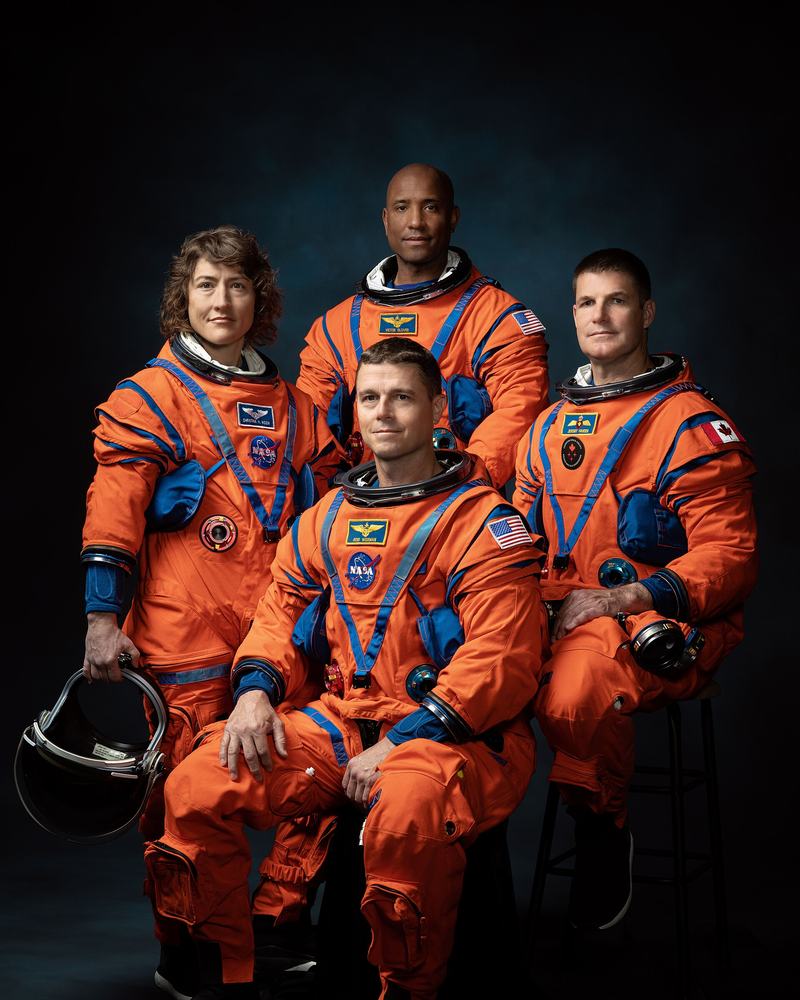

To spread both the cost and the workload, NASA has signed the nonbinding Artemis Accords, which spell out principles for peaceful cooperation in space, with Canada and Japan among the signatories, alongside at least 18 other participating countries. The Artemis II crew reflects that partnership directly, flying together as one of the program's most visible international results so far.
What Twenty Years on the ISS Taught NASA
A lot of the confidence behind Artemis traces back to a much closer laboratory. NASA notes that a trip to the Moon covers roughly 1,000 times the distance of a trip to a space station in low Earth orbit, a jump that turns every life-support and navigation margin into something far less forgiving.
That experience is not just a confidence boost — it has directly reshaped hardware plans. Nearly 20 years of continuous life-support operations aboard the space station have let engineers redesign the systems planned for future Mars missions with a 36% reduction in mass, weight that would otherwise have to be launched at enormous expense.