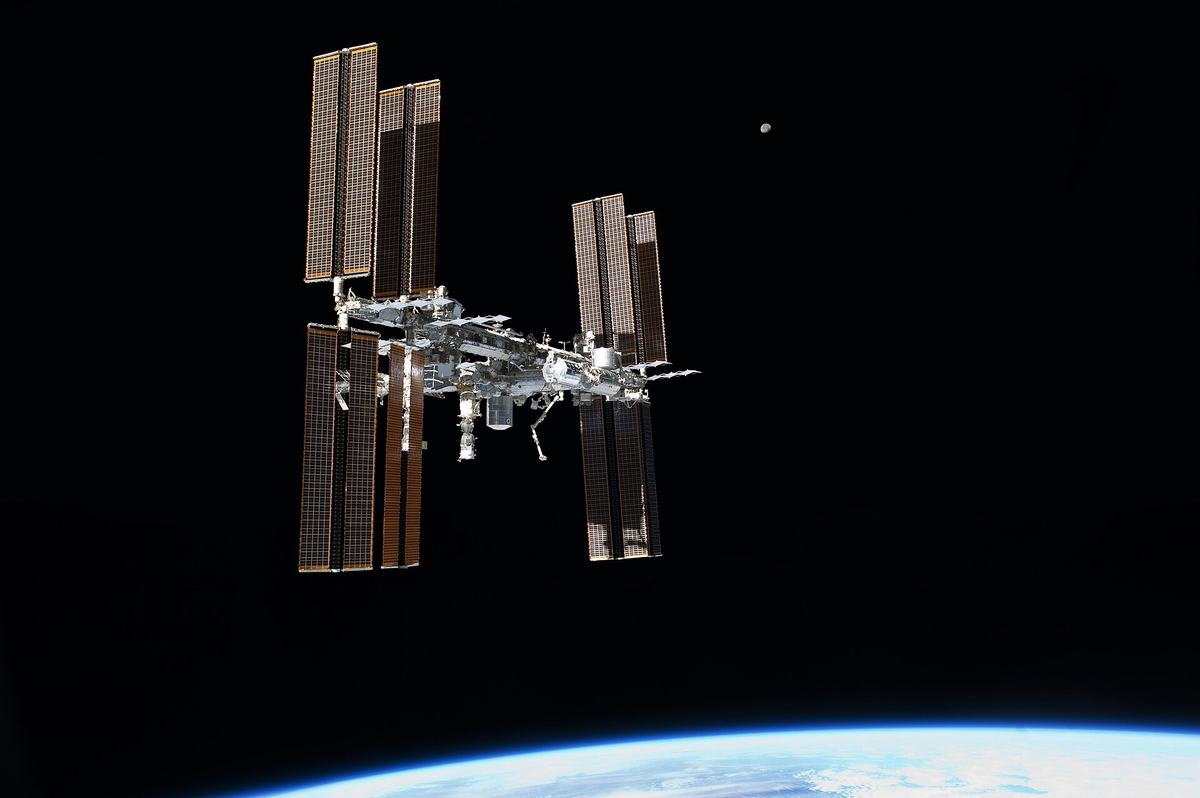
No human being has gone more than a few hours without a colleague living somewhere above the clouds since November 2000. That is when the first long-term crew moved into the International Space Station, and the lights have stayed on ever since — the longest unbroken run of people living off-planet in history.
The ISS is not a single spacecraft but a patchwork of modules launched separately by five space agencies and bolted together in orbit over more than a decade. What started as a bare two-module shell has grown into a football-field-sized laboratory that circles the planet 16 times a day. Here is what makes it stranger, bigger, and pricier than most people realize.
A Neighborhood That Never Sleeps
Nobody has switched off the lights and locked the door since November 2000, when full-time habitation began — every single day since has had at least one person sleeping, eating, and working somewhere inside it. Tallied up, that streak now runs to 25 years and 253 days — still the longest continuous human presence beyond Earth ever recorded.
Keeping that streak alive took planning nobody had fully tested before: rotating crews, resupply ships, and enough redundancy that a single mission delay would never leave the station empty. It is the reason the ISS, rather than any Apollo mission or space shuttle flight, holds the record for sustained human presence in space.
Quarters Bigger Than a Six-Bedroom House
Despite floating in a vacuum, the interior does not feel cramped. NASA describes the station's living and working space as larger than a six-bedroom house, complete with six sleeping berths, two bathrooms, a gym, and a bay window offering a 360-degree view of Earth.
That gym is not a lifestyle perk. Microgravity lets muscle and bone waste away far faster than gravity-bound aging ever would, so astronauts are required to exercise at least two hours every day just to come home able to walk unassisted.

Faster Than a Rifle Bullet, Sixteen Times a Day
Seven crew members typically live aboard the station at once, hurtling through orbit at roughly five miles per second. At that speed, one full lap of Earth takes about 90 minutes.
Multiply that out and the numbers get almost absurd: in a single 24-hour stretch, the ISS circles the planet 16 times, which means its crew watches 16 sunrises and 16 sunsets before a single Earth day is over. Anyone timing their sleep schedule by the view out the window would never get a full night's rest.
Solar Wings Wider Than an Airbus A380
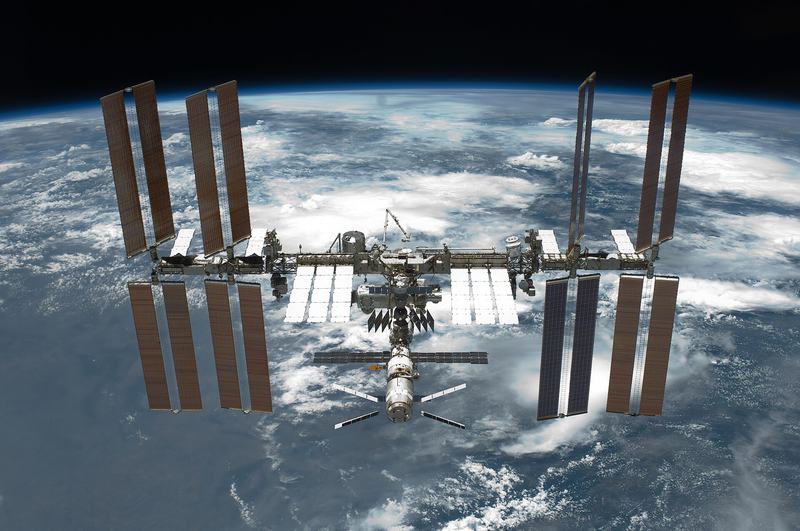
The station's solar arrays, which charge its batteries and power everything from life support to laptops, stretch 356 feet (109 meters) from tip to tip — wider than the wingspan of the Airbus A380, the largest passenger jet ever built, at 262 feet (80 meters).
The rest of the structure is similarly outsized. The main truss that the arrays and radiators hang from runs 108 m wide, and the pressurized modules strung along it add up to about 74 m of habitable length, stretching to roughly 88 m whenever a cargo ship is parked at a docking port.
Built From a Bare Two-Module Shell
The station's story starts small. Russia's Zarya module, launched aboard a Proton rocket on 20 November 1998, was the very first piece placed in orbit — an uncrewed cargo and power module with nowhere yet for anyone to sleep.
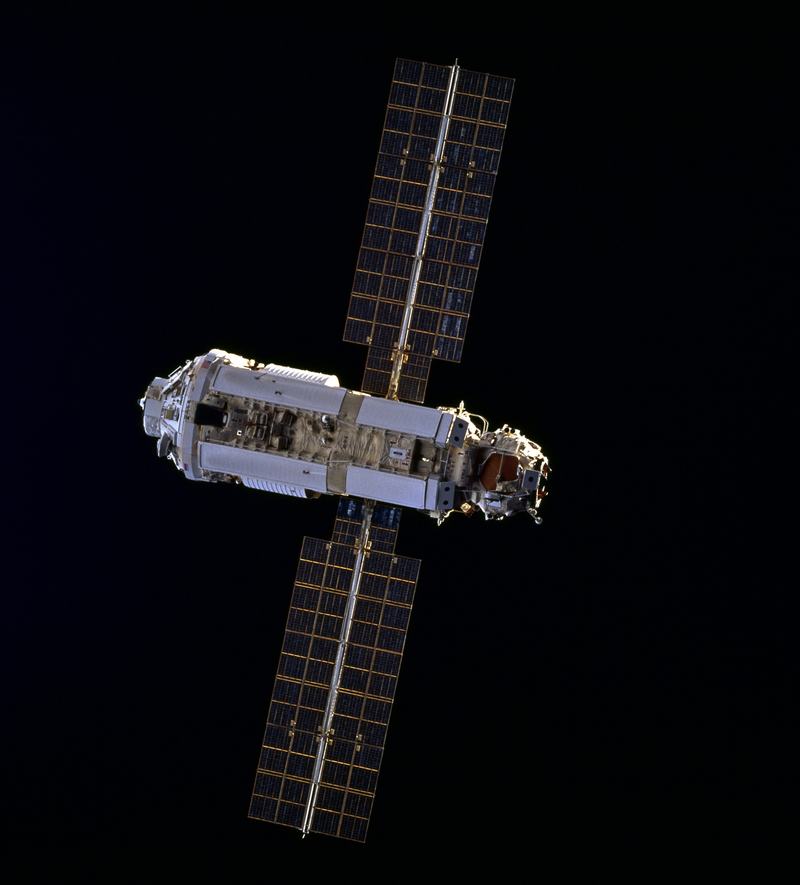

For a year and a half, that two-module shell sat empty, waiting. Everything changed in July 2000, when the Russian module Zvezda arrived and gave the outpost the life-support capacity to keep up to three people aboard permanently, setting the stage for the first resident crew a few months later. Finishing the job took over 40 separate assembly flights, carrying pieces up from launch sites around the world until the station reached its current footprint.
A Robotic Arm With Seven Elbows
Assembling a structure that large in orbit needed a crane, and the station got one of the most capable ever built: Canadarm2. Fully extended, the Canadian-built arm reaches 17.6 m (58 ft) and bends at seven separate motorized joints, letting it "walk" hand-over-hand across the station by releasing one end and gripping a new anchor point further along.
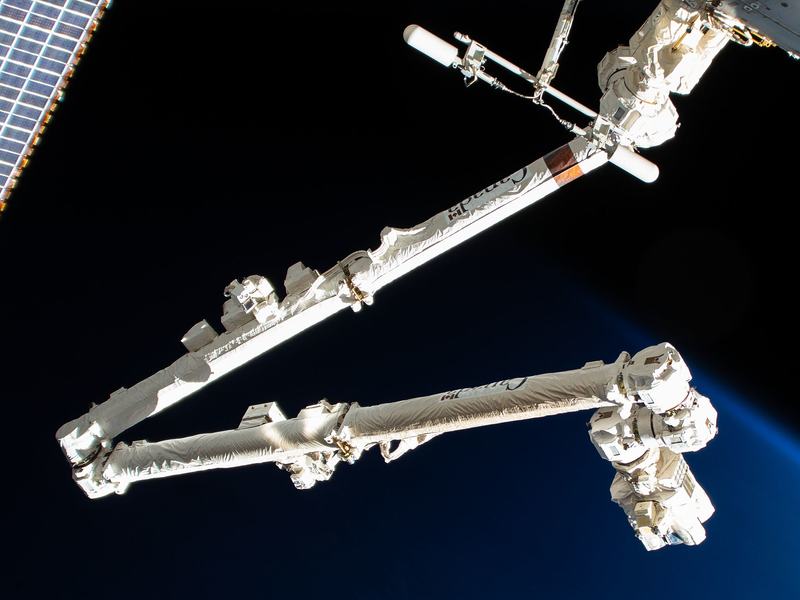

Astronauts have ridden on its end anchored to a foot restraint during spacewalks, using it as a mobile work platform to reach spots no handhold could get them to. Without it, much of the station's later assembly and today's cargo-ship captures simply would not be possible.
Europe's Own Room in Orbit
Not every module came from the United States or Russia. Europe's Columbus laboratory was attached to the station in February 2008, giving European researchers a permanent, dedicated space for experiments after years of development.
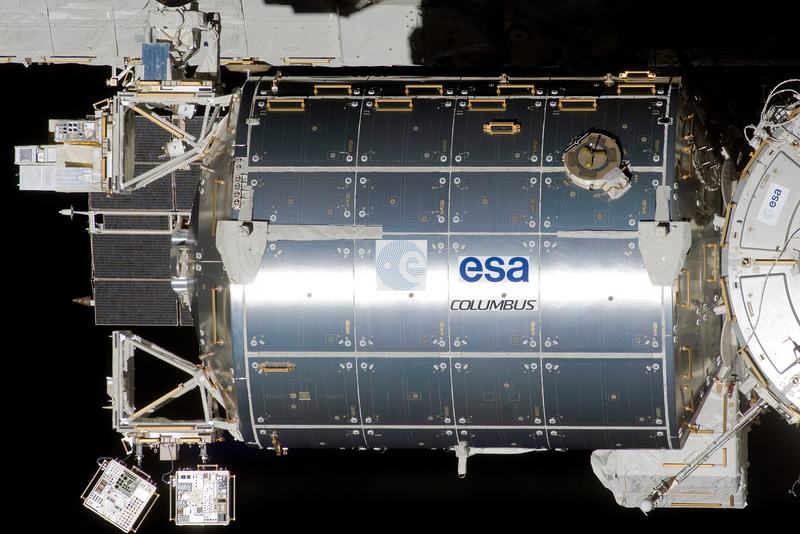

The American side of the station grew the same way, piece by piece. In mid-February 2001, the shuttle mission STS-98 delivered the Destiny research module at a cost of $1.4 billion — a single addition that pushed the station's total mass past that of Russia's old Mir station for the first time.
The Priciest Build in Human History
None of this came cheap. The ISS is considered the most expensive object ever built, with a price tag around $150 billion — dwarfing Skylab's $2.2 billion and Mir's $4.2 billion, the two space stations that came before it. Five space agencies from 15 countries share that bill, along with the operating costs, which is part of why the partnership has held together for so long: no single nation could easily walk away from an investment that size.
Records Set in Orbit
All those years of continuous crews have produced some remarkable personal milestones. Roscosmos cosmonaut Oleg Kononenko holds the record for the most cumulative time spent in space, having logged nearly 1,111 days aboard the ISS across five separate long-duration missions — roughly three full years of a career spent off-planet.
The science conducted up there has set records too. The largest scientific payload ever mounted outside the ISS is the Alpha Magnetic Spectrometer, a particle physics experiment bolted to the outside of the station after launching on STS-134 in May 2011.