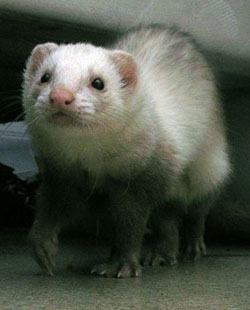
If you handed a ferret to my Year 4 class, the first thing they would notice is that it pours. A ferret does not walk across a table so much as flow across it, like a furry draught excluder with opinions. The second thing they would notice is that it is asleep. Ferrets have lived alongside people for a very long time, and they have used that time to perfect the nap.
Little Thieves By Name
The word "ferret" comes from the Latin "furittus", meaning "little thief" [1]. Anyone who has kept one will tell you the name earned itself. Ferrets pocket keys, socks, teaspoons, and the occasional TV remote, then stash the loot somewhere under the sofa. (My cousin found her missing car keys three weeks later, tucked behind the skirting board.) They are not being naughty, exactly. Hoarding small shiny things is just what the wiring tells them to do.
Tamed For The Rabbit Run
Ferrets are not wild animals gone soft. They are a domesticated form of the European polecat, tamed more than two thousand years ago to flush rabbits out of their burrows [1]. The job even has a verb: "ferreting". You send the ferret down the hole, the rabbit bolts out the far end, and everyone goes home for tea. It is one of the older working partnerships between people and a small carnivore, and it is still done in parts of Britain today.

A Business Of Ferrets
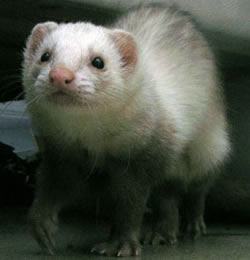
A group of ferrets is called a "business" [1]. (Yes, really.) Some people spell it "busyness", which is arguably more honest, because a pile of ferrets is mostly chaos with fur on. They wrestle, they burrow into trouser legs, they fall asleep mid-pounce. The collective noun sounds like a boardroom and behaves like a nursery. My kids would love this, mostly so they could describe the classroom at wet playtime as "a business of children".
The Weasel War Dance
When a ferret gets excited it does something called the "weasel war dance": a frantic sideways hopping, back arched, mouth open, often paired with a soft clucking noise known as "dooking" [2]. It looks like a threat. It is the opposite. The dance means the ferret is delighted and wants to play. They sometimes get so carried away that they bump into the furniture and simply carry on. Nobody warned me about this the first time I saw one.
Built Like A Draught Excluder
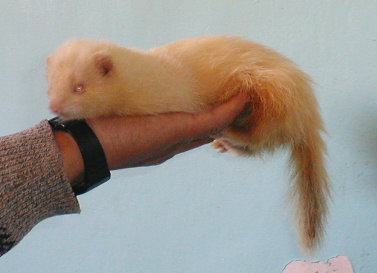
A ferret's body is long, low, and remarkably bendy. That tube shape is not an accident. It is exactly the right shape for chasing prey down a narrow burrow, which is what the polecat ancestor did for a living [1]. The flexible spine lets a ferret turn around in spaces barely wider than itself. It also lets it sleep folded into shapes that look mildly concerning until you notice, with some relief, that it is still breathing.

Sixteen Hours Of Sleep, Minimum
Ferrets sleep a great deal, commonly fourteen to eighteen hours a day [2]. They are crepuscular, most active around dawn and dusk, which quietly suits anyone who works office hours. The rest of the time they are dead to the world. New owners sometimes panic at how deeply a ferret sleeps, a state nicknamed "dead sleep", where the animal can be lifted without stirring. It is normal. It is just very, very committed napping.
The Ferret That Cleaned A Particle Accelerator
In 1971, engineers at what is now Fermilab in Illinois had a problem: they needed to clean grit out of a long, narrow vacuum pipe too tight for a person [3]. So they hired a ferret. Her name was Felicia, she cost thirty five dollars, and she ran through the piping trailing a string so a cleaning swab could be pulled through behind her [3][4]. Ferrets have long been used to thread cables and swabs through tight ducts. Right shape, right job.
Meat And Nothing But
Ferrets are obligate carnivores, which means their bodies run on meat and struggle with much else [2]. They have a short, fast gut and cannot digest plant fibre well, so fruit and vegetables do them no favours at all. In the wild the polecat eats rabbits, rodents, and birds, and a pet ferret needs the same high-protein, high-fat diet. Offer one a biscuit and it will look at you the way I look at a maths worksheet on a Friday afternoon.
Frequently Asked Questions
Are ferrets legal to keep as pets?
In most of the United States, yes, but not everywhere. Ferrets are banned as pets in California and Hawaii, and some cities require permits [5]. The bans exist mainly over fears that escaped ferrets could establish wild populations. Elsewhere they are legal and popular, so always check local rules first.
How long do ferrets live?
Pet ferrets usually live around six to ten years [2]. A proper meat-based diet, a clean home, and regular vet checks all help. They are prone to certain health problems as they age, including adrenal disease, so older ferrets benefit from closer attention and earlier visits to the vet.
What is a baby ferret called?
A baby ferret is a "kit" [1]. An adult female is a "jill" and an adult male is a "hob". Litters usually contain several kits, born tiny, deaf, and blind. They grow quickly and are weaned within a couple of months, by which point they are already causing trouble.
Do ferrets smell?
Ferrets have a natural musky odour from their scent glands, though it is fairly mild [2]. Most pet ferrets are neutered, which reduces it further. Regular washing of bedding does far more good than bathing the ferret itself, since over-bathing can actually make the smell stronger, not weaker.