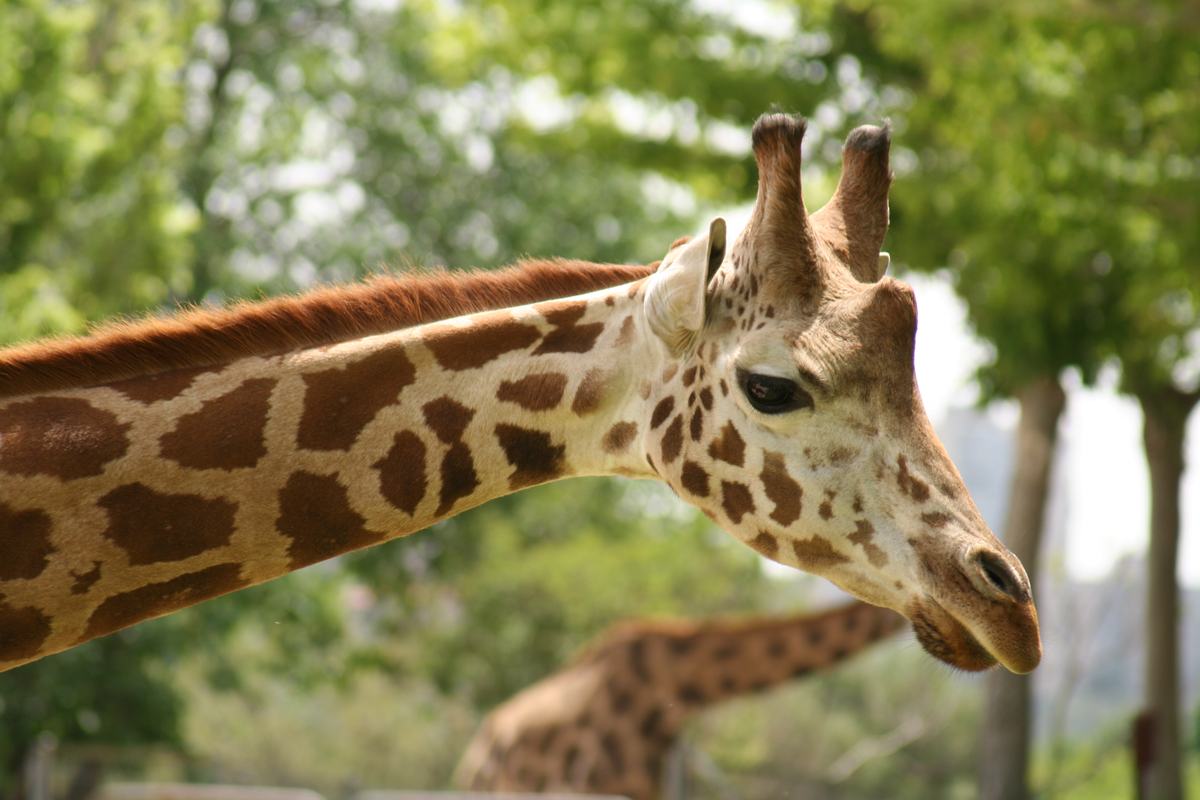
If you asked my Year 4 class how many bones are in a giraffe's neck, they would guess big. Hundreds, probably. The real answer disappoints them every time, then delights them. It is seven. The same number you have in yours. Each one is just enormously long. That is the giraffe in a nutshell: familiar parts, stretched to a scale that makes gravity work overtime.
Seven Bones, Same as Us
A giraffe's neck can be over two metres long, yet it holds the same seven cervical vertebrae found in almost every mammal, from mice to whales. The bones are simply supersized, some as long as your forearm. This is one of those facts that sounds made up and is not. Evolution did not add pieces. It stretched the ones already there, which is a much stranger trick when you think about it.
A Tongue the Length of a Ruler
A giraffe's tongue is around 45 centimetres long, which is a school ruler and a bit more. It is also a dark bluish purple, and the leading theory is that the colour works like sunscreen, protecting the tongue during long days of reaching into thorny acacia trees. The tongue is prehensile, so it wraps around branches and strips leaves neatly past the spikes. Watching one eat is oddly delicate for such a large animal.
Built to Beat Gravity
Pumping blood up to a head two metres above the heart takes serious pressure. A giraffe's blood pressure is roughly twice a human's, driven by a heart that can weigh around 11 kilograms. The tricky part is the other direction. When a giraffe lowers its head to drink, the blood should rush down and cause chaos. Instead, valves in the neck veins and tight skin on the legs act like a pilot's anti gravity suit. Clever plumbing, all of it.
.jpg)
They Barely Sleep
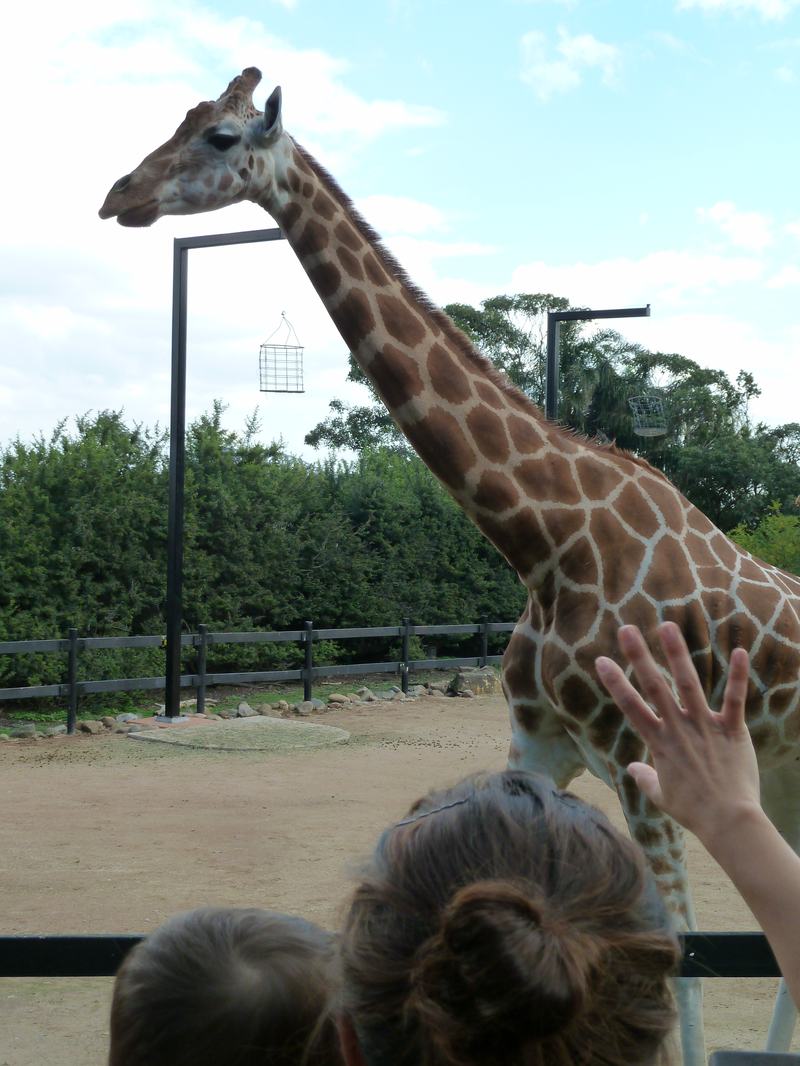
Giraffes are among the lightest sleepers in the animal kingdom. In the wild they often get by on around 30 minutes to a couple of hours of sleep across a day, frequently taken standing up in short bursts of a few minutes. Lying fully down leaves them slow to rise and exposed to predators, so most of their rest is done on their feet. As it turns out, being enormous and edible is not restful.
Those Horns Are Not Horns
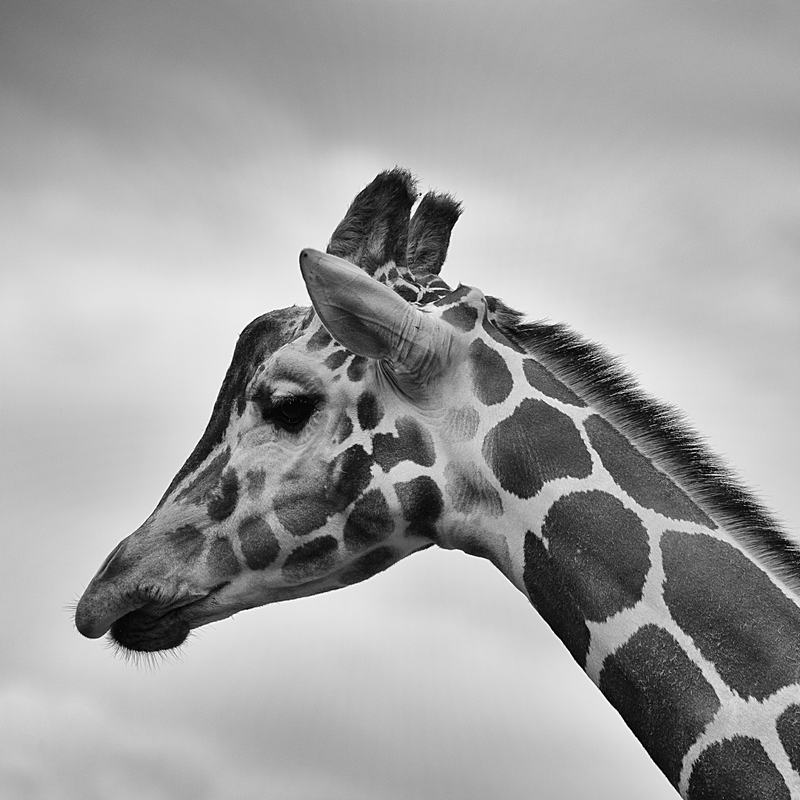
The two knobs on a giraffe's head are called ossicones. They are not horns and not antlers. They start life as cartilage and slowly harden into bone, fusing to the skull, and stay covered in skin and fur throughout. You can often tell males from females by them: males tend to have bald tops from years of sparring, while females keep their tufts. A small detail, but a reliable one.
A Two Metre Drop at Birth
A giraffe gives birth standing up, which means a newborn calf falls roughly two metres to the ground on arrival. It sounds alarming and it is not gentle, but the drop helps snap the umbilical cord and prompts the calf to start breathing. Within an hour the calf is usually standing, and within a day it can run. Nobody warned me about this the first time I saw the footage. The mothers seem entirely unbothered.
.jpg)
Sparring With Necks
Male giraffes settle disputes by necking, which is exactly what it sounds like. They stand side by side and swing their heavy heads and necks at each other like slow, powerful clubs, aiming the bony ossicones at the opponent's body. Most contests are more shoving match than brawl, and the loser usually just walks off. Occasionally a blow can knock a rival off his feet. For an animal this graceful, it is a surprisingly blunt way to argue.
Patterns Like Fingerprints
No two giraffes share the same coat pattern. The blotches are as individual as fingerprints, and researchers use them to identify animals in the wild without tagging. The patches are not just decoration either. Underneath each one runs a network of blood vessels that helps release body heat, so the coat doubles as a cooling system. Calves also tend to inherit patch shapes from their mothers, which makes family resemblances trackable.
They Hum in the Dark
For years people assumed giraffes were more or less silent. Then researchers recording zoo giraffes at night picked up a low humming sound at around 92 hertz, right at the edge of what humans can hear. It happens mostly after dark, and scientists still are not certain what it is for, though communication is the leading guess. A humming giraffe at midnight is not the image most people carry around. And yet.
Frequently Asked Questions
How tall is a giraffe?
Adult giraffes stand about 4.5 to 5.5 metres tall, with males taller than females. That makes them the tallest living land animal. Much of the height is neck and legs, each of which alone can be taller than an adult human.
What do giraffes eat?
Giraffes are browsers that feed mainly on leaves, shoots, and buds, with a strong preference for acacia trees. Their height lets them reach foliage other herbivores cannot. An adult can eat tens of kilograms of leaves a day and gets most of its water from that food.
How long do giraffes live?
In the wild giraffes typically live around 20 to 25 years. In zoos, with steady food and veterinary care, they often reach their late twenties. Predation on young calves is high, so many do not survive their first year.
Are giraffes endangered?
Some are. Overall giraffe numbers have fallen sharply over recent decades due to habitat loss and poaching, a decline conservationists call a silent extinction. Certain populations are listed as critically endangered, while others remain more stable, depending on the region and subspecies.