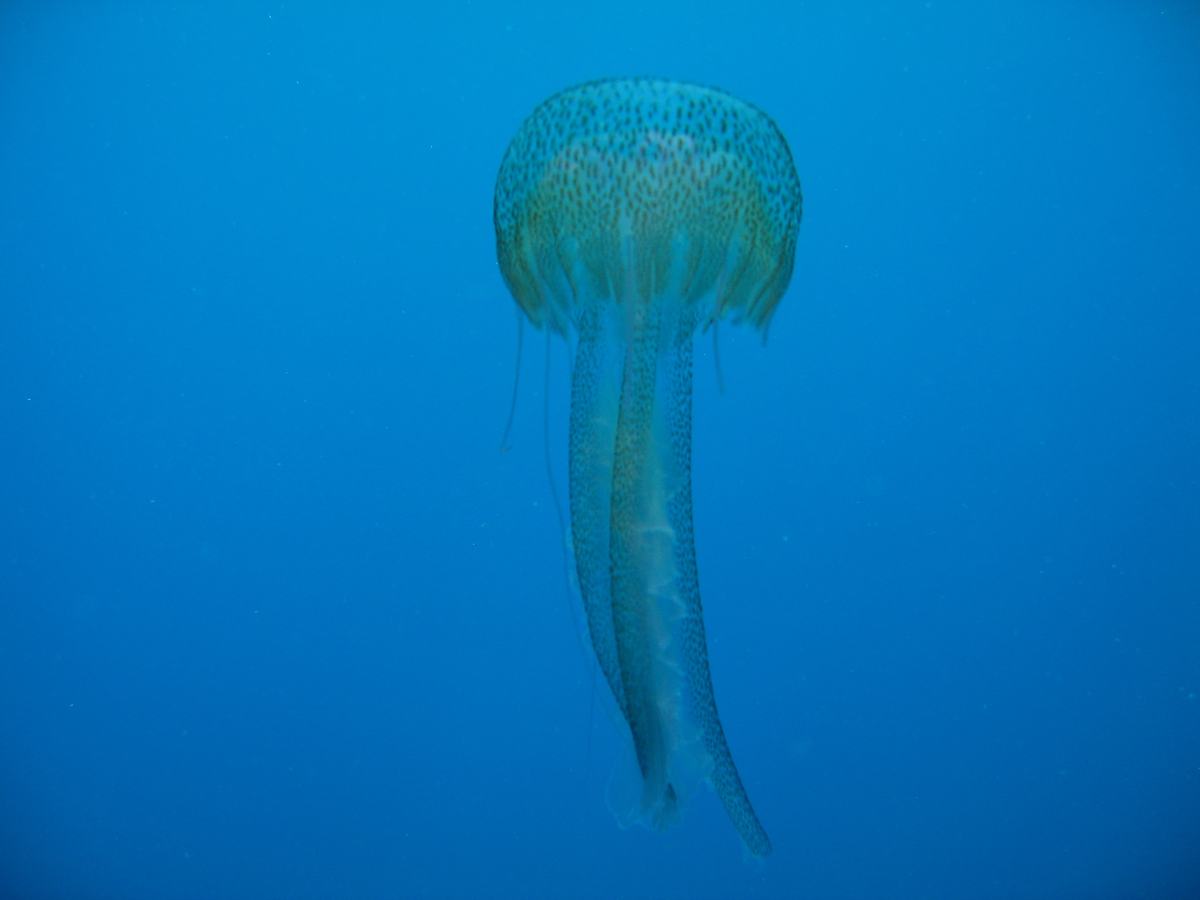
Jellyfish have no brain. No heart, no bones, no blood either. Which raises the obvious question of how something that is 95 percent water, older than the dinosaurs, and quietly running large parts of the ocean, manages any of it at all. My Year 4 class find this deeply unfair. So, on reflection, do I.
No Brain, No Problem
A jellyfish has no brain and no central nervous system [1]. Instead it runs on a loose web of nerves called a nerve net, spread through the whole body, which senses light, touch and chemicals in the water [1]. There is no thinking going on. There is just a bell that pulses, tentacles that trail, and a creature that has somehow managed all of this for a very long time without once needing a sit down.
Older Than the Trees
Jellyfish have drifted the oceans for at least 500 million years [1]. That puts them ahead of the dinosaurs, ahead of trees, and comfortably ahead of almost everything else you could name. They were here long before backbones were fashionable. As it turns out, being a soft bag of water that floats about and eats things has been a winning strategy for longer than most animal groups have existed at all.
Mostly Water, Barely There
A jellyfish is about 95 percent water [1]. Take one out of the sea and leave it on the sand, and it more or less evaporates, leaving a faint sticky patch and very little else. They have no shell, no skeleton and no obvious front or back. It is one of the reasons we have so few good jellyfish fossils. There simply is not very much of them to leave behind in the first place.

The Sting Is Automatic
Jellyfish sting using tiny cells called nematocysts, scattered across their tentacles [1]. Each one is a coiled, venom-tipped thread that fires like a harpoon the instant it is touched [1]. The jellyfish does not decide to sting you. It cannot; there is no brain to decide with. The cells simply go off on contact. Worse, a tentacle torn loose, or a jellyfish washed up dead on the beach, can still sting for quite a while afterwards.
Twenty-Four Eyes and No Head
The box jellyfish is one of the more alarming members of the family. It carries some of the most potent venom of any marine animal [2], and it has 24 eyes arranged around its bell [2]. Some of those eyes have proper lenses, rather like ours. What it does not have is a brain to assemble all those views into a single picture. Nobody has fully worked out how it sees. And yet, somehow, it manages perfectly well.
The One With the Longest Tentacles
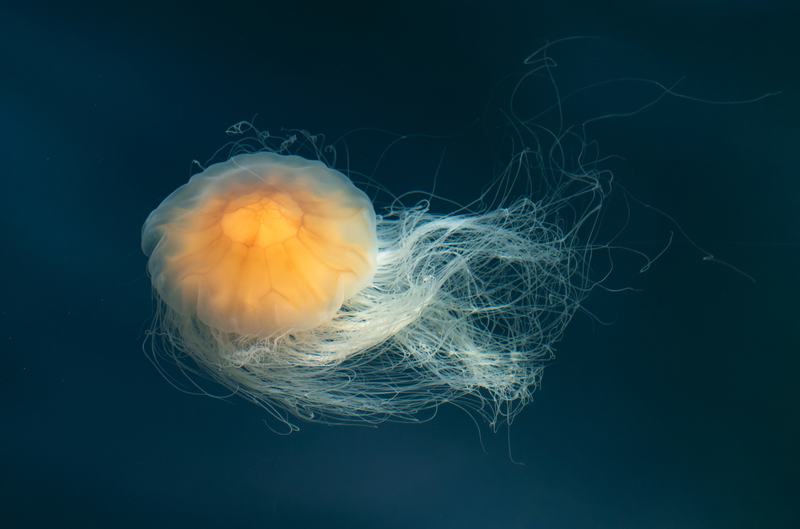
The lion's mane jellyfish is the giant of the group. One specimen that washed ashore had tentacles measured at around 37 metres [2], which is longer than a blue whale and not far off a swimming pool lane and a half. Most are far smaller, thankfully. But the record holder trailed a curtain of stinging threads longer than almost any animal on Earth. (I saw a modest one off the Scottish coast once. It was quite enough.)

The Jellyfish That Cheats Death
There is a species, Turritopsis dohrnii, that appears to sidestep dying of old age [3]. When it is injured or badly stressed, instead of perishing it can wind its own life cycle backwards, turning from an adult medusa back into an immature polyp, and then simply start again [3]. Biologists have nicknamed it the immortal jellyfish. It is tiny, about the size of a fingernail, and it is quietly rewriting what we thought the rules of dying were.
The Ones That Glow
Many jellyfish make their own light, a trick called bioluminescence. One of them, the crystal jelly, produces a green fluorescent protein that turned out to be extraordinarily useful [4]. Scientists learned to attach it to other cells as a glowing tag, lighting up processes inside living bodies that had been invisible before. The work earned a Nobel Prize in Chemistry in 2008 [4]. A brainless drifter, as it happens, helped illuminate the inner workings of the human body.
Jellyfish Have Been to Space
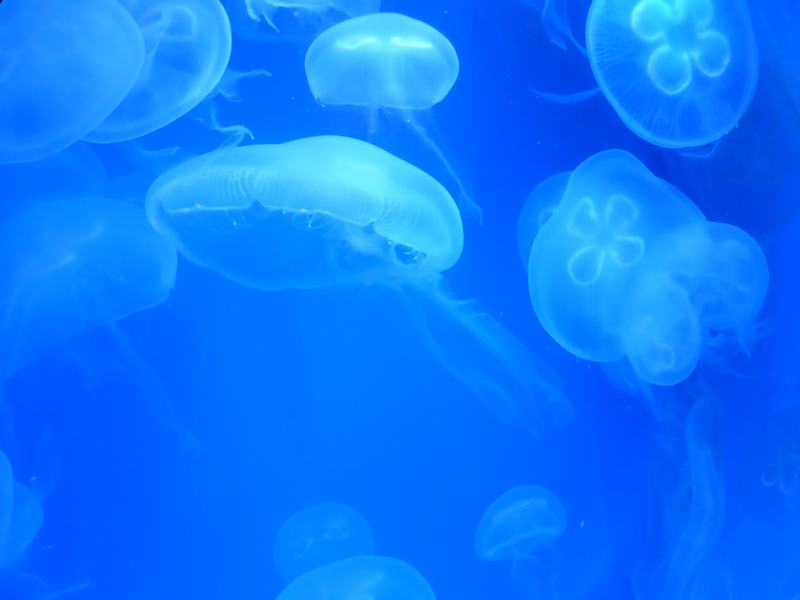
In 1991 NASA sent 2,478 moon jellyfish polyps into orbit aboard the Space Shuttle Columbia, to see how they would develop without gravity [5]. They bred enthusiastically; by the time the shuttle came home there were roughly 60,000 of them [5]. The catch: the space-born jellyfish struggled to swim properly once back on Earth, pulsing in a confused, clumsy sort of way [5]. Growing up without gravity, it turns out, leaves you a little unsure which way is up.
When Jellyfish Shut Down a Nuclear Plant
In 2013 a huge bloom of moon jellyfish clogged the cooling water intake at the Oskarshamn nuclear plant in Sweden, forcing operators to shut down one of the world's largest reactors [6]. It was not even the first time; the same plant had the same trouble back in 2005 [6]. A creature with no brain, no plan and no particular malice occasionally brings an entire nuclear reactor to a gentle halt. Which, fair enough.
Frequently Asked Questions
Are jellyfish actually fish?
No. Despite the name, jellyfish are not fish. They are invertebrates with no backbone, brain or bones, and they belong to a group called cnidarians, related to corals and sea anemones. Fish have skeletons and gills, while jellyfish have neither, so the shared name is really just a coincidence of shape.
Can a jellyfish sting you when it is dead?
Yes. A jellyfish washed up on the beach, or even a single tentacle broken off from the body, can still sting for some time. The stinging cells fire automatically on contact, with no signal from the animal, so a dead or stranded jellyfish is always best left completely untouched.
What should you do if a jellyfish stings you?
Rinse the area with seawater, not fresh water, and carefully lift off any tentacles with tweezers or a gloved hand. Vinegar can help with the stings of some species. Most stings are painful but minor, though you should seek medical help if the reaction is severe or breathing is affected.
How long do jellyfish live?
Most jellyfish live less than a year, and many only a few months. One species, Turritopsis dohrnii, is the striking exception: it can revert to an earlier life stage instead of dying of old age, which is how it earned the nickname the immortal jellyfish.