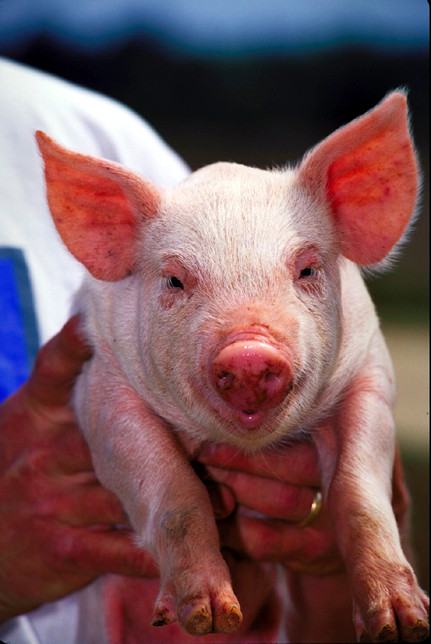
If you asked my Year 4 class to rank farm animals by cleverness, the pig would land somewhere near the bottom, just above the fence post. They would be wrong. By most sensible measures the pig is the brightest animal on the farm, and quite possibly brighter than the family dog. It also carries a reputation for filth it mostly does not deserve. Here is the pig, properly introduced.
Clever Enough for Video Games
In 2021 a team of researchers handed four pigs a joystick and a computer screen. The pigs, two named Hamlet and Omelette and two named Ebony and Ivory, learned to nudge the joystick with their snouts to steer a cursor into a target. Get it right, get a snack. They scored well above chance, which means they understood that moving the stick moved the thing on the screen. That is a task usually set for primates. (My kids would love this.)
They Cannot Actually Sweat
Sweat like a pig? Bit of a slander, that. Pigs have very few working sweat glands, so they cannot cool themselves the way we do. This is why they wallow. A good coat of mud holds water against the skin and releases it slowly, cooling the pig for hours, far longer than plain water would. So a pig in mud is not being grubby. It is being sensible about the weather.
Mirrors and a Little Deduction
Give a pig five hours alone with a mirror and something interesting happens. In a Cambridge study, pigs that had time to work the mirror out were then shown food reflected in it but hidden behind a barrier. Seven of eight walked away from the mirror and straight round to the food. Pigs new to mirrors just looked behind the glass. The clever ones had grasped that a reflection is information, not another pig.
A Nose That Finds Buried Treasure
A pig's snout is a precision instrument. Their sense of smell is keen enough that pigs have long been used to hunt truffles, sniffing out the fungus growing centimetres underground. There is a reason it works so well: truffles give off a compound close to a chemical male pigs produce, so a sow will dig for one with real enthusiasm. The tricky part, historically, was stopping her eating the prize first.
Cleaner Than Their Reputation
Left to their own devices, pigs are surprisingly tidy. They pick one corner well away from where they sleep and eat, and use it as a toilet. Piglets sort this out within days of birth. The muddy image comes from the wallowing and from cramped conditions, not from the animal's own preferences. Given room, a pig keeps a cleaner house than several people I could name.

Mothers Who Sing to Supper
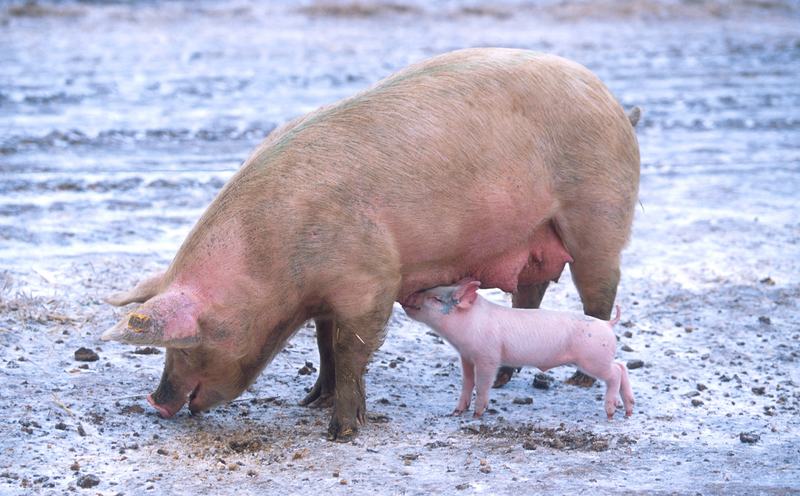
Sows are chatty mothers. A nursing sow grunts in a steady rhythm while her piglets feed, a sort of dinner bell that keeps the litter latched on. Piglets learn their mother's voice quickly and can recognise their own names too. Pigs in general have a wide vocabulary of grunts, squeals and barks, each meaning something slightly different. It is less noise than conversation, if you know how to listen.

From Wild Boar to Farmyard
Every farm pig descends from the wild boar, Sus scrofa. People began domesticating them about nine thousand years ago, and, oddly, in two places at once: eastern Anatolia and, separately, China. The two lineages later mingled when Asian pigs were brought to Europe in the 1700s and 1800s to improve the local stock. So the pink pig dozing in a British field has ancestors from opposite ends of a continent.
Pigs in the Operating Theatre
Pigs have quietly saved a great many human lives. Because a pig's heart is close to ours in size and structure, pig heart valves have been used to replace failing human ones for decades. They spare the patient a lifetime of blood thinners, though they do wear out after ten to fifteen years. It is a strange sort of debt we owe the pig, and one most people never stop to think about.
Frequently Asked Questions
Are pigs really as intelligent as dogs?
Yes, and by some measures more so. Pigs solve puzzles, use mirrors to locate hidden food, and have learned to operate a joystick-controlled video game. Researchers rank their problem-solving alongside dogs and young children, which makes them one of the more cognitively capable domestic animals.
Why do pigs roll in mud?
Pigs roll in mud to cool down, because they have very few functional sweat glands. Mud holds moisture against the skin and evaporates slowly, cooling them for hours. It also shields against sunburn and biting insects, so wallowing is practical rather than dirty behaviour.
Are pigs clean animals?
Given enough space, yes. Pigs choose a toilet area well away from where they sleep and eat, and piglets learn this within days of birth. Their dirty reputation comes from mud wallowing and cramped conditions, not from any natural preference for filth.
What did pigs evolve from?
Domestic pigs descend from the Eurasian wild boar, Sus scrofa. Humans domesticated them around nine thousand years ago, independently in eastern Anatolia and in China. The separate lineages later interbred when Asian pigs were introduced to European herds in the 18th and 19th centuries.
Sources
- Acquisition of a Joystick-Operated Video Task by Pigs (Sus scrofa) - Frontiers in Psychology
- Pigs learn to understand mirrors - Phys.org
- Do pigs sweat? - Live Science
- The origin of the domestic pig: independent domestication and subsequent introgression - Genetics
- How did wild boar become farmyard pigs? - The Conversation
- How to Choose Different Types of Heart Valves - Cleveland Clinic