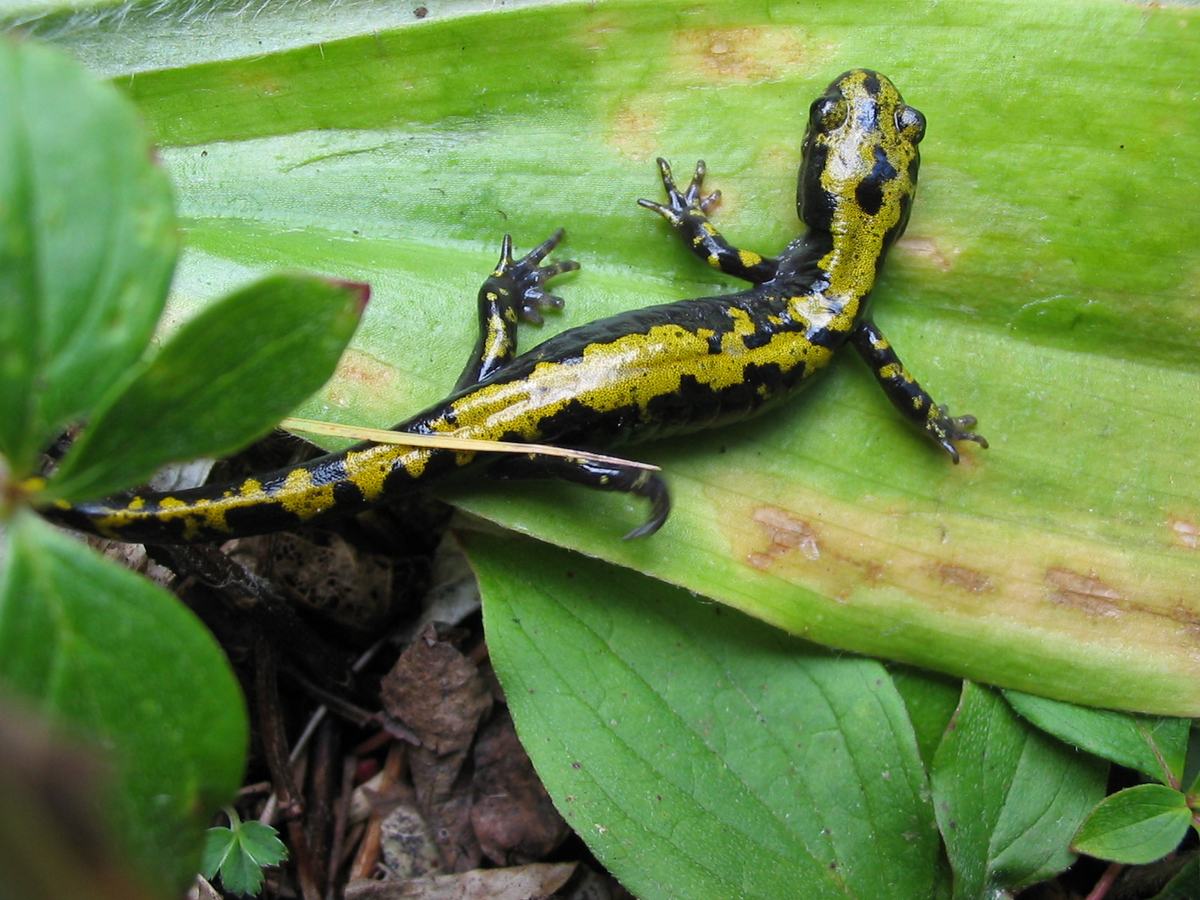
If you showed my Year 4 class a salamander, half of them would say lizard and feel very confident about it. They would be wrong, and I would enjoy telling them so. A salamander is an amphibian, closer to a frog than to anything with scales. It just happens to have kept its tail and four little legs, which fools everyone. There are more than 700 species of them [1], and most are up to something odd.
Not a Lizard, Whatever It Looks Like
Let us clear this up first. Lizards are reptiles: dry, scaly, keen on sunbathing. Salamanders are amphibians with soft, moist skin and no scales at all [2]. Most start life in water as larvae with feathery gills, then move onto land, much like a tadpole becoming a frog. If you spot one, it will be somewhere damp - under a log, beside a pond, never sunning itself on a hot rock. That is the giveaway.
They Regrow Lost Legs
Here is the party trick. Lose a leg, and a salamander grows a new one. A whole new one, with bones, muscle and nerves, in the right place [3]. They can regenerate tails, parts of the eye, sections of the heart, and even bits of the brain [3]. No other four-limbed animal comes close. Scientists study them closely, hoping to work out how, because a human who could do this would never need a plaster again.

Some Breathe Through Their Skin
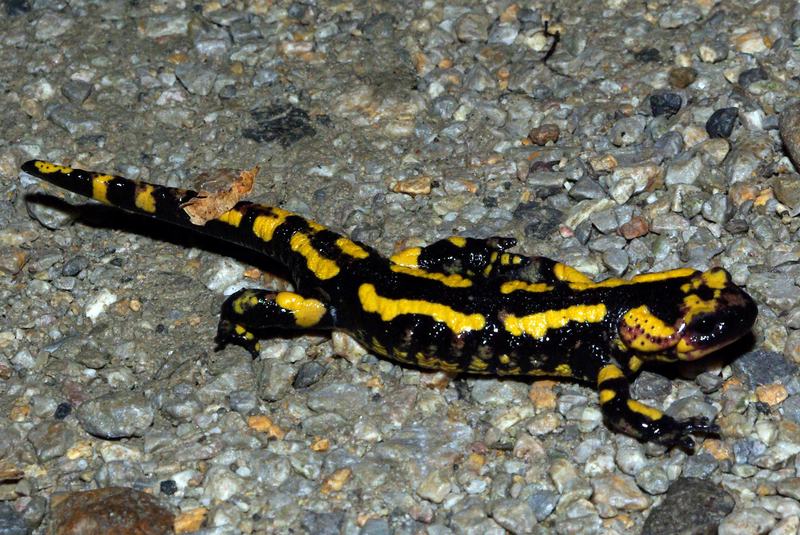
The largest family of salamanders, the lungless ones, have no lungs whatsoever [4]. They breathe entirely through their skin and the lining of their mouth, absorbing oxygen straight across the surface [4]. This only works if the skin stays wet, which is why these salamanders live in cool, damp places and would not last five minutes in a desert. It sounds like a design flaw. It has kept them going for millions of years, so evidently not.
The Axolotl Never Grows Up
The axolotl is the famous one, all frills and a permanent smile. Most salamanders lose their gills and leave the water as adults. The axolotl simply refuses [5]. It keeps its feathery gills, stays in the water, and breeds while still looking like an oversized larva [5]. Scientists call this neoteny, which is a polite word for staying young forever. My kids would love this. Some adults, if I am honest, would too.
One of Them Is Enormous
Say salamander and people picture something that fits in a teacup. The Chinese giant salamander did not get that memo. It is the largest amphibian alive, growing up to around 1.8 metres long [6]. That is taller than me. It lives in cold, fast rivers, breathes through folds of loose skin, and has been on Earth in much the same shape for a very long time. Sadly it is now critically endangered [6], which rather takes the fun out of the fact.

The Fire Myth, and the Real Danger
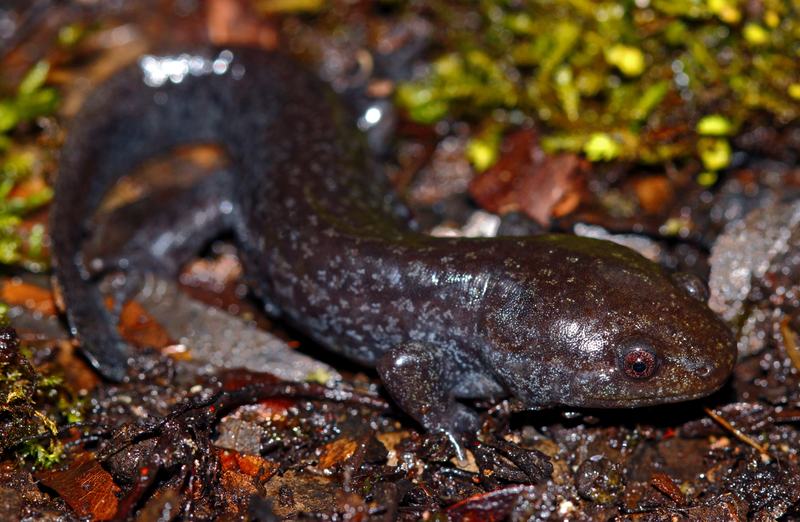
For centuries people believed salamanders were born from fire. The truth is duller and funnier: they liked to hide in damp logs, someone threw the log on the hearth, and out scrambled the salamander, apparently from the flames [7]. What is real is the chemistry. The fire salamander's skin produces a toxin called samandarin, strong enough to deter most predators [7]. Bright yellow markings on black are its way of saying, quite clearly, do not.
Many of Them Live for Ages
For a small, soft creature, a salamander can be surprisingly long-lived. Plenty manage a decade or two. The olm, a pale, blind salamander that lives in the caves of southern Europe, is thought to live for around a century [8]. It spends that century in the dark, barely moving, eating very little. A long life, if not a busy one. Somehow that appeals to me on a wet Tuesday.
Frequently Asked Questions
Are salamanders lizards?
No. Salamanders are amphibians with moist, scaleless skin, while lizards are reptiles with dry scales. Salamanders usually begin life in water as gilled larvae and need damp surroundings, whereas lizards are happy in dry, sunny places. They only look similar because both have tails and four legs.
Can salamanders really regrow limbs?
Yes. Salamanders can regrow lost legs and tails complete with bone, muscle and nerves, and can repair parts of the heart, eyes and brain. This ability is unmatched among vertebrates with backbones and legs, which is why researchers study them so intently.
Are salamanders dangerous to humans?
Not really. Many salamanders produce toxins in their skin as a defence, and the fire salamander's samandarin can irritate, so it is best not to handle them and to wash your hands afterwards. They are not aggressive and pose no threat if left alone.
What do salamanders eat?
Most salamanders are carnivores that eat small invertebrates such as insects, worms, slugs and spiders. Larger species will take bigger prey, including small fish and other amphibians. They tend to hunt at night and in damp conditions, catching food with a quick snap of the jaws.
Sources
- Salamander - Encyclopaedia Britannica
- Caudata: Salamanders and Newts - AmphibiaWeb
- How Salamanders Regenerate Limbs - Scientific American
- Lungless Salamanders (Plethodontidae) - Encyclopaedia Britannica
- Axolotl - National Geographic
- Chinese Giant Salamander - Smithsonian's National Zoo
- Fire Salamander - Encyclopaedia Britannica
- Olm - Encyclopaedia Britannica