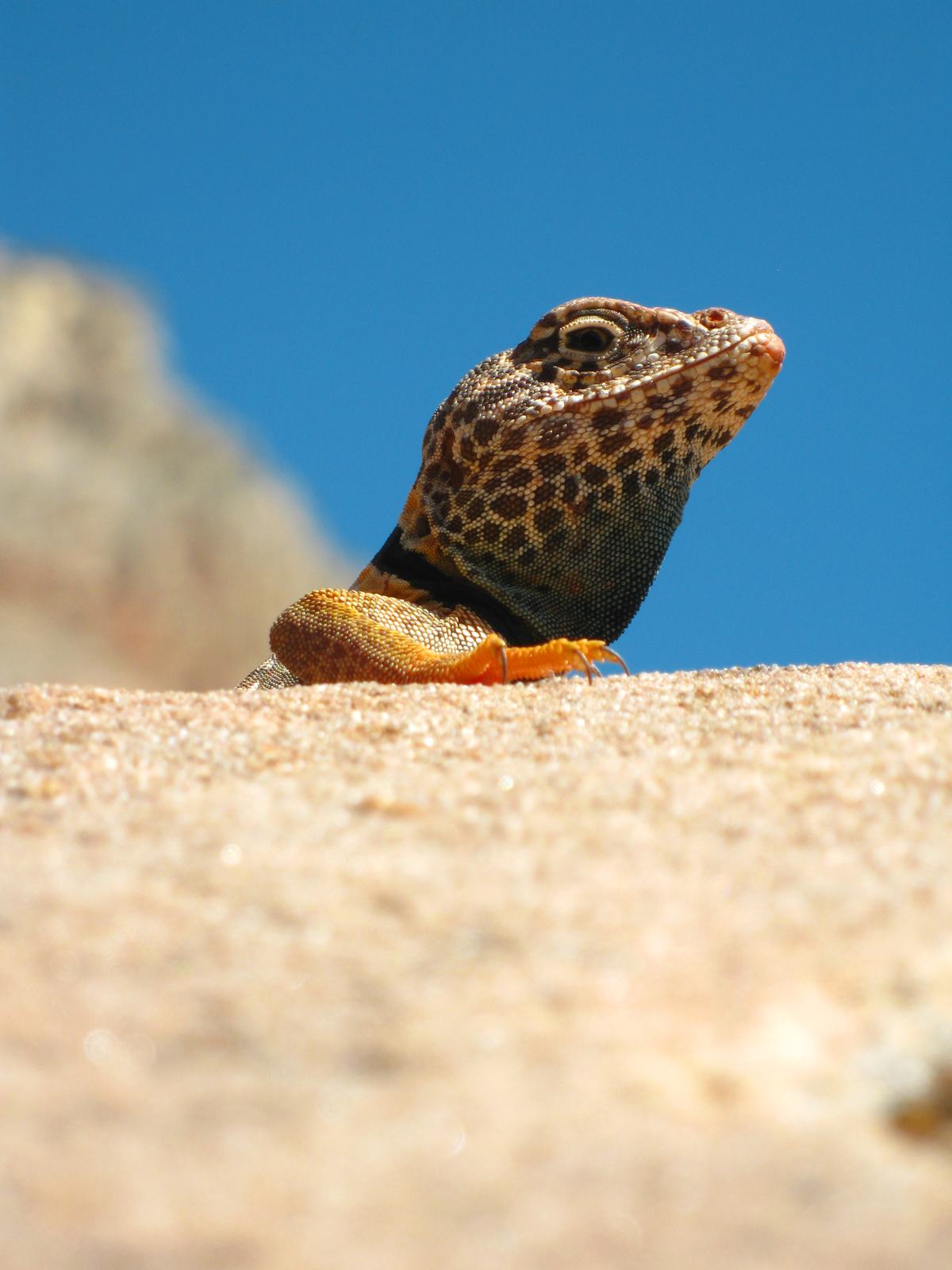
Ask my Year 4 class to name a lizard and you get "dragon", then "dinosaur", then a long pause. Fair enough. Lizards are the quiet middle of the reptile world, easy to walk straight past. But there are more than 7,000 kinds of them [1], and once you start looking, most turn out to be up to something. They bask, they bolt, and a few of them do things I still struggle to believe on a Tuesday.
Thousands of Species, One Big Family
Lizards are the largest group of reptiles by a wide margin, with over 7,000 named species and more described every year [1]. They live on every continent except Antarctica, from rainforest canopies to bare desert rock [2]. Being cold-blooded, they cannot heat themselves from the inside, so they borrow warmth from the sun and shuffle into shade when things get too much [2]. It is less laziness than good management. (My radiator does much the same job for me.)
Tails Built to Detach
Grab many a lizard by the tail and you will be left holding just the tail. This is a trick called autotomy: the tail snaps off at a weak point built for the purpose, then wriggles on its own to distract the predator [2]. The lizard strolls off, lighter but alive. A new tail grows back over weeks or months, though the replacement is usually stumpier and made of cartilage rather than proper bone [2]. Handy once. Not a plan for every week.
Blood From the Eyes
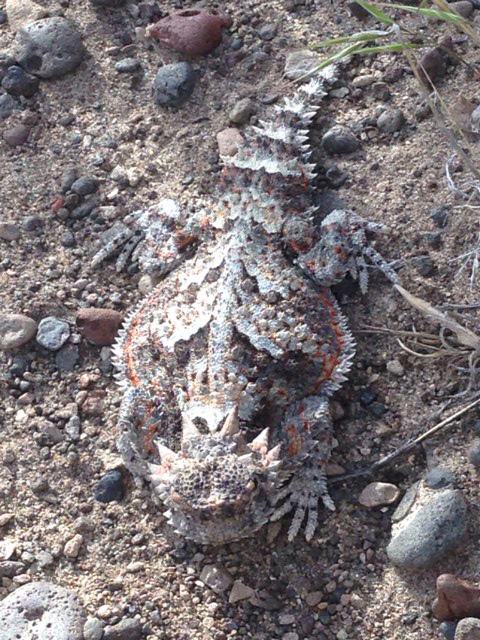
Some things sound made up. The horned lizards of North America can squirt a jet of blood from the corners of their eyes, aimed at a coyote or fox up to a metre or so away [3]. The blood carries a chemical that tastes foul to dogs and their relatives, so the attacker backs off, baffled and unimpressed [3]. It is a last resort, not a party trick. (Yes, really.) I mentioned it to my class and lost the room for a good ten minutes.

The Biggest of the Lot
The Komodo dragon is the largest lizard alive, growing to about three metres long and weighing 70 kilograms or more [4]. It lives on a handful of Indonesian islands and hunts deer, pigs, and the occasional water buffalo. For years people believed its bite killed through dirty, bacteria-laden saliva. As it turns out, the dragon actually has venom glands, which lower a victim's blood pressure and stop the wound clotting [4]. Either way, you would not want to be on the receiving end.
Feet That Stick to Glass
A gecko can run straight up a pane of glass and pause, upside down, on the ceiling. No glue, no suction. Each toe is covered in millions of tiny hairs called setae, and these get so close to the surface that faint molecular forces, the van der Waals forces, hold the foot in place [5]. The grip is strong enough to hang the whole animal from a single toe, yet it releases in an instant [5]. Engineers have been trying to copy it for years, somehow without much luck.
Colour That Shifts
Chameleons are lizards, and rather famous ones. They change colour, but not mainly for camouflage. Much of the shift is down to mood and temperature, driven by layers of tiny crystals in the skin that reflect light differently as the cells stretch [2]. Their eyes move independently, so one can watch you while the other checks the sky, and the tongue can be longer than the body [2]. Not every colourful lizard is a chameleon, mind. Plenty of them just came dressed for the occasion.

A Lizard That Swims the Sea
On the Galapagos Islands lives the marine iguana, the only lizard that feeds in the ocean [6]. It dives into cold water to graze on algae off the rocks, holding its breath and clinging on against the surge. Back on land it has swallowed a lot of seawater with its meal, so it sneezes out the salt in little crystalline sprays, often landing it straight back on its own head [6]. Charles Darwin was not a fan. He called them "imps of darkness".
A Third Eye on Top
Look at the top of many a lizard's head and there is a pale spot sitting between the eyes. This is the parietal eye, sometimes called the third eye [2]. It cannot see shapes, but it does sense light and dark, and it helps the lizard track the time of day, the seasons, and a shadow falling from above [2]. It is wired to the part of the brain that handles daily rhythms. A built-in clock, roughly where a unicorn would keep its horn.
Frequently Asked Questions
Are lizards dangerous to humans?
Most lizards are harmless and will flee long before they think about biting. Only a few pose a real risk to people, such as the Komodo dragon and the venomous Gila monster, and bites are rare. The vast majority are small insect-eaters that would much rather avoid you entirely.
Can lizards really regrow their tails?
Yes. Many lizards can shed their tail to escape a predator and then regrow it. The new tail is usually shorter and supported by cartilage instead of bone, so it never quite matches the original. The process takes weeks to months and costs the animal a lot of energy.
What is the difference between a lizard and a snake?
Most lizards have legs, external ear openings, and movable eyelids, while snakes have none of these. Confusingly, some lizards, such as glass lizards and slow worms, are legless and look much like snakes. The eyelids and ear openings are usually the giveaway.
What do lizards eat?
It depends on the species. Most small lizards eat insects and other invertebrates, while larger ones take mammals, birds, and eggs. Some, such as the marine iguana, are vegetarian and graze on algae or plants. A few big monitors will eat almost anything they can catch.