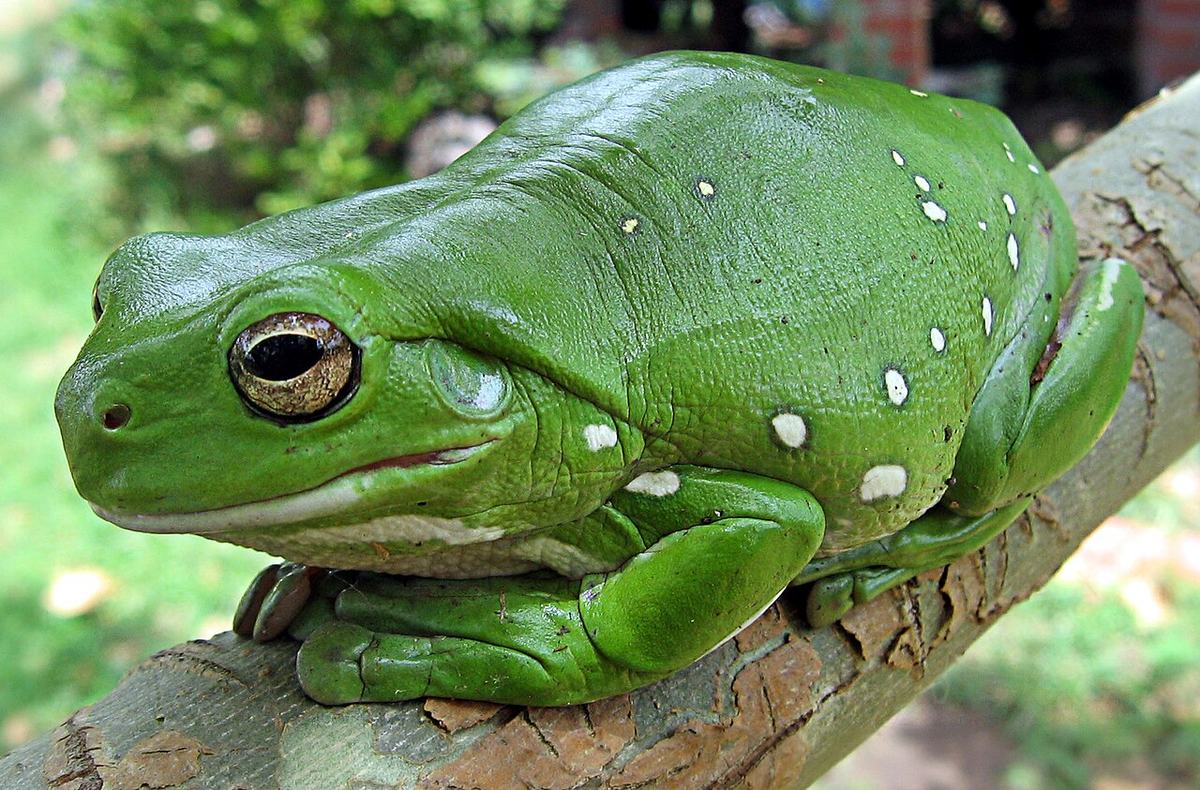
If you asked my Year 4 class to describe a frog, you would get "green", "jumpy", and "slimy", and they would consider the matter closed. Fair enough. But frogs drink through their skin, swallow with their eyeballs, and in one case survive being frozen into a small green ice cube. The green and jumpy part is true. It is also the least interesting thing about them.
More Than Seven Thousand Kinds
Frog is not one animal but thousands. Scientists have described well over 7,000 species of frogs and toads, and new ones still turn up most years [1]. They live on every continent except Antarctica, from rainforest canopies to desert edges. So when someone says "a frog", they are being about as specific as saying "a bird". There is a frog for nearly every damp corner of the world, and quite a few dry ones.
They Drink Through Their Skin
A frog never takes a sip. It cannot, really. Instead it absorbs water straight through its skin, mostly through a specialised patch on its belly and thighs that scientists cheerfully call the "drink patch" [2]. The same thin skin lets a frog take in oxygen, so a frog partly breathes through its body surface too. Handy, but it comes at a price: whatever is in the water goes in as well, which is why frogs are such reliable warnings about pollution.
They Blink to Swallow
Here is the one that makes my class gasp. When a frog eats, it pulls its eyeballs down into the roof of its mouth, and those bulging eyes press the food to the back of the throat and help push it down [2]. So a frog does not blink because it is thinking. It blinks because it is having its dinner. Watch one eat sometime and you will see the eyes vanish for a moment with every gulp.

Some Freeze Solid All Winter
The wood frog does something that should not be allowed. As winter closes in, much of the water in its body turns to ice, its heart stops, and its breathing halts [3]. It floods its cells with glucose, a kind of natural antifreeze, so the important bits do not get shredded by ice crystals. Come spring it thaws out, the heart starts again, and off it hops. A frog that dies a little each winter and gets better. Somehow.
The Biggest Frog Is Genuinely Huge
Meet the goliath frog of Cameroon and Equatorial Guinea, the largest frog alive. It can reach around 32 centimetres from nose to outstretched toes and weigh up to about 3.3 kilograms, which is roughly a well-fed newborn baby [4]. It eats insects, crabs, and smaller frogs, and it is strong enough to shift rocks to build its own nesting pools. Not the sort of thing you want landing on your picnic blanket.

Skin That Can Kill
The golden poison frog of Colombia is barely the length of a paperclip and one of the most poisonous animals on Earth. A single frog carries enough toxin in its skin to kill around ten adult humans [5]. It gets its poison from its diet of tiny insects, so frogs raised without those insects are harmless. Its bright yellow colour is not for show. It is a warning, and everything in the forest has learned to read it.
Eyes That Work in the Dark
Frogs may see the world in colour even in near total darkness, which as far as we know no other animal manages [6]. Their eyes carry two kinds of rod cell, the light-sensitive parts most animals use only for dim grey vision, and frogs appear to compare the two to pick out colour when there is almost no light at all. So on a moonless night, when you would be blindly patting the wall for a light switch, a frog is quietly seeing greens and blues.
Frog or Toad
My class always want a clean rule, and the honest answer disappoints them. Toads are simply a type of frog. In everyday use "toad" tends to mean the drier, wartier, shorter-legged ones that plod rather than leap, while "frog" means the smooth, damp, jumpy sort. But there is no strict scientific line dividing them. Every toad is a frog. Not every frog is a toad. My kids find this deeply unfair.
Frequently Asked Questions
Do frogs drink water?
Not with their mouths. Frogs absorb water directly through their skin, mainly through a patch on the belly and thighs. This is also why they are so sensitive to polluted water, since anything dissolved in it passes straight into the body along with the moisture.
Are frogs and toads the same thing?
Toads are a subgroup of frogs, so all toads are frogs but not the reverse. In casual use, toads are the drier, wartier, shorter-legged animals and frogs are the smooth, moist, leaping ones. There is no firm scientific boundary between the two words.
What is the biggest frog in the world?
The goliath frog of West Africa is the largest, reaching about 32 centimetres including its legs and weighing up to roughly 3.3 kilograms. It lives near fast rivers in Cameroon and Equatorial Guinea and is strong enough to move rocks around its nesting pools.
Can frogs really freeze and survive?
Yes. The wood frog can let much of its body freeze in winter, with its heart and breathing stopping entirely. It uses glucose as a natural antifreeze to protect its cells, then thaws and revives when temperatures rise in spring.
Sources
- Amphibian Species Numbers - AmphibiaWeb
- Frogs - National Geographic
- How Do Frogs Survive Winter? - U.S. Geological Survey
- Goliath Frog - San Diego Zoo Wildlife Alliance
- The Power of Poison - American Museum of Natural History
- The Dual Rod System of Amphibians Supports Colour Discrimination at the Absolute Visual Threshold - Royal Society