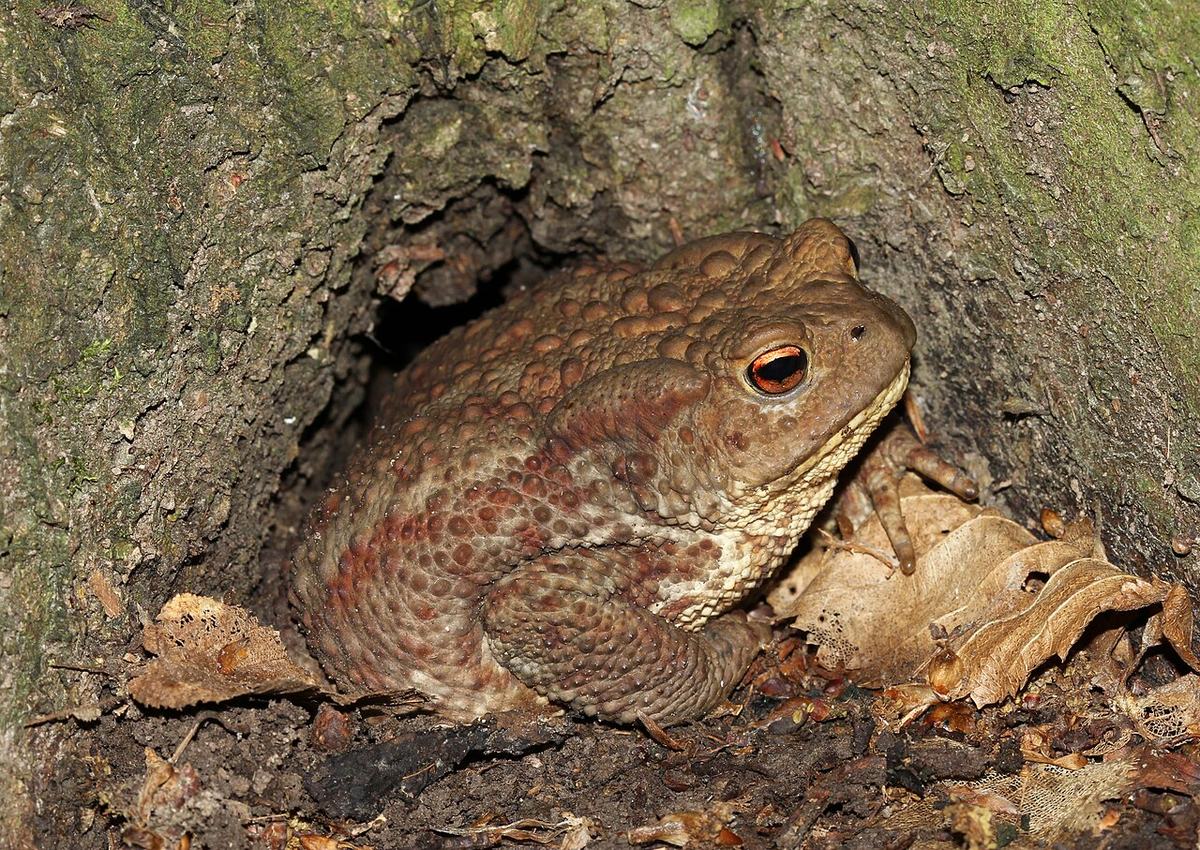
If you asked my Year 4 class to sort a pile of amphibians into frogs and toads, they would do it with total confidence. Smooth and jumpy on one side. Dry and lumpy on the other. They would also, technically, be wrong. A toad is just a frog that went for a different look. Here are a few things about toads that tend to surprise even the grown-ups.
Every Toad Is a Frog
There is no scientific line between frogs and toads. All toads are frogs, sitting inside the same great order (Anura), and most of the animals we call toads belong to a single family, Bufonidae [5]. 'Toad' is really a description, not a category. It means a frog with dry, warty skin and short legs that prefers walking to leaping. So when someone tells you they found a toad, they found a particular kind of frog. (Best not to mention this at parties.)
The Warts Are a Myth
Toad skin looks alarming and does nothing of the sort. Those bumps are not warts, and you cannot catch warts by holding one [5]. Warts in people are caused by a virus that toads simply do not carry. That dry, pebbled skin helps a toad live away from water far longer than a frog can manage. Think of it as the amphibian equivalent of a good waterproof coat, worn at all times, in all weather.
Poison Behind the Eyes
A toad's real defence sits in two bulges just behind its eyes. These are the parotoid glands, and they ooze a milky toxin called bufotoxin when a predator bites down [1]. To a fox or a dog it tastes vile and can make them genuinely poorly, which is rather the point. The toad does not chase or attack. It just tastes so unpleasant that most animals spit it out and remember. Wash your hands after handling one, and keep curious dogs well away.
They Walk, They Do Not Hop
Watch a toad move and you will notice it rarely leaps. Where a frog explodes forward, a toad tends to crawl or make small, businesslike hops [1]. Its back legs are shorter, built for a slow plod through the grass rather than a launch across a pond. This is exactly why toads are so easy to spot on a damp evening. They are the amphibian that strolls. My class find this hilarious, and honestly, so do I.

They Swallow With Their Eyes
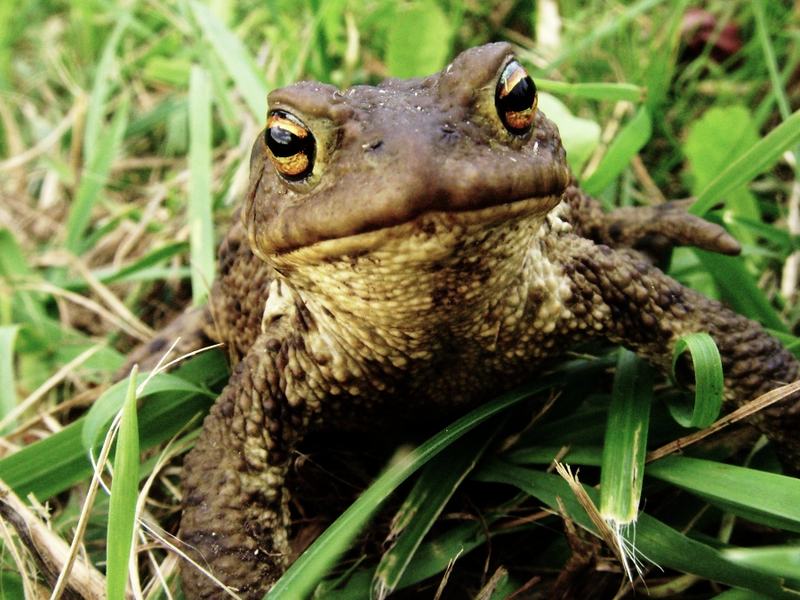
Toads cannot chew, and they have a peculiar trick for getting a mouthful down. When a toad swallows, it pulls its eyeballs down into its head, pressing them against the roof of its mouth to shove the food towards its throat [4]. (Yes, really.) A study on their close froggy relatives found that blocking this eye action made swallowing far less efficient, taking many more gulps per cricket [4]. So the next time a toad blinks slowly over dinner, it is not being polite. It is eating.
The Great Spring March
Every spring, toads set off on a stubborn pilgrimage back to the exact pond where they hatched, sometimes crossing a good stretch of open country to get there [2]. Roads slice straight across these ancient routes, which is why parts of Britain run 'toad patrols': volunteers who carry buckets of toads safely over the tarmac on mild, wet nights [2]. More than two million toads have been ferried across roads this way since 1974. Nobody warned me about this. I now own a bucket.

A Gardener's Quiet Ally
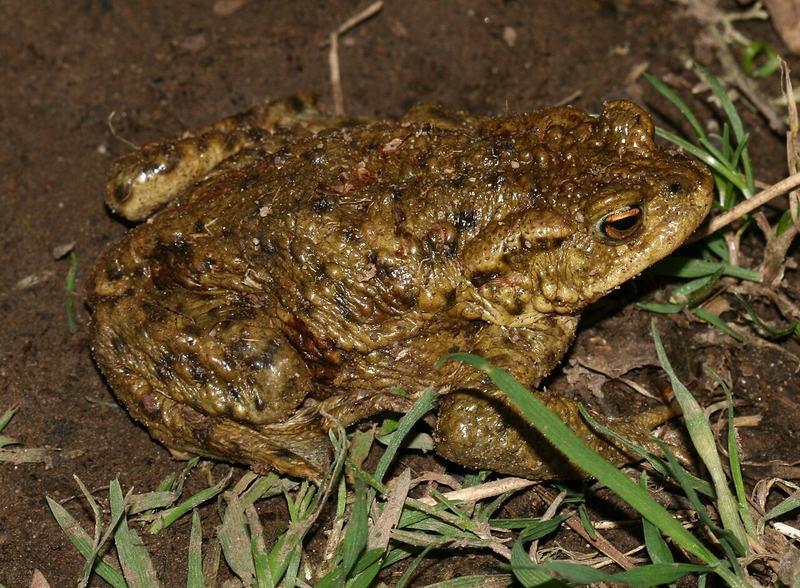
If you have a toad in your garden, keep it. A single toad works steadily through slugs, snails, beetles and other things you would rather not find on your lettuce [1]. It asks for nothing but a damp, shady corner and a little cover to hide under. Gardeners once built small 'toad houses' to tempt them in, and the logic still holds today. A toad is slow, unbothered pest control that never needs charging or feeding.
The Cane Toad Disaster
Toads can also go horribly wrong when moved somewhere new. In 1935, Australia bred a batch of South American cane toads and released around 2,400 of them to eat beetles in the sugar cane [3]. The toads largely ignored the beetles, bred with great enthusiasm, and spread. Their skin is toxic enough to kill predators that try to eat them, so almost nothing stops them. From that first release, cane toads now number in the many millions across northern Australia [3].
Their Numbers Are Falling
For all their toughness, our common toads are struggling. In Britain, common toad numbers have dropped by around 68% over roughly the last thirty years, hit by lost ponds, busy roads and a tidier countryside [6]. It is a quiet decline, the sort you only notice when the spring migration looks thinner than it once did [2]. Digging a small pond, leaving a wild corner, or joining a toad patrol genuinely helps. As it turns out, the humble toad could use a hand.
Frequently Asked Questions
Are toads and frogs the same thing?
Toads are a type of frog, so all toads are frogs but not all frogs are toads. The word 'toad' describes frogs with dry, warty skin and shorter legs, most of which belong to the family Bufonidae. The difference is one of appearance and lifestyle, not a strict scientific split.
Can you get warts from touching a toad?
No. Warts in humans are caused by a virus that toads do not carry, so handling one cannot give you warts. Toads do release mild toxins from glands behind their eyes, so it is sensible to wash your hands afterwards and avoid touching your face in the meantime.
Are toads poisonous?
Most toads are poisonous rather than venomous, meaning they are harmful if eaten, not if they bite. Glands behind the eyes produce a bitter toxin that deters predators. It rarely troubles humans who wash their hands, but it can seriously harm pet dogs that mouth or swallow a toad.
What do toads eat?
Toads eat slugs, snails, insects, worms and other small invertebrates, catching them with a quick, sticky tongue. This appetite makes them genuinely useful garden allies, since they work through many common plant pests. Larger toads will tackle surprisingly big prey for their modest size.
How long do toads live?
Common toads regularly live for several years in the wild, and considerably longer in captivity where they avoid predators and traffic. Their toxic skin helps them reach a decent age. Getting to a breeding pond safely each spring is often the greatest challenge an individual toad faces.
Sources
- Common Toad - The Wildlife Trusts
- Toads on Roads - Froglife
- Introduction of Cane Toads - National Museum of Australia
- Contribution of Eye Retraction to Swallowing Performance - Journal of Experimental Biology
- Ways to Help Frogs and Toads - Natural History Museum
- Two Million Toads and Counting - The Institution of Environmental Sciences