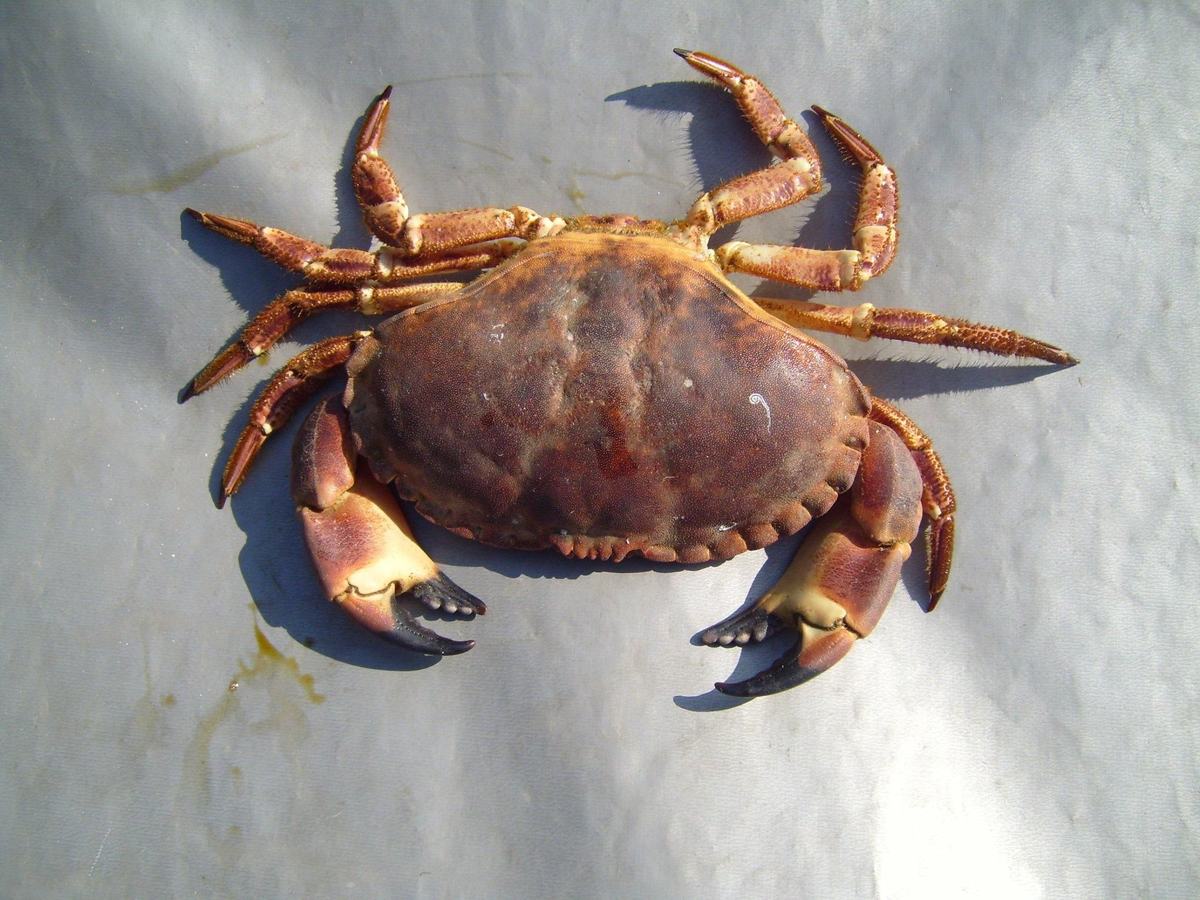
Ask my Year 4 class to draw a crab and you get the same thing every time: a red blob, two big claws, walking sideways. They are not wrong. But a crab is far stranger than the blob suggests. Some climb trees. Some pinch nearly as hard as a lion bites. And the biggest of the lot has legs that would not fit through your front door.
More Than Seven Thousand Species
When we say 'crab' we usually mean a true crab, the group scientists call Brachyura. There are more than 7,000 known species of them [1], from pea crabs the size of a fingernail to the giants further down this page. They live in the sea, in rivers, up mountains, and on dry land. Which is a lot of ground covered by an animal most people only ever meet on a plate.
Why They Walk Sideways
Crabs walk sideways because their legs are built for it. The joints bend outward, not forward, so a sideways scuttle is simply the quickest way to travel [1]. (Try walking with your knees pointing sideways and you will see the logic.) Many crabs can shuffle forwards or backwards when they need to. They just prefer not to. It looks clumsy to us and works beautifully for them.
One Giant Claw for Waving
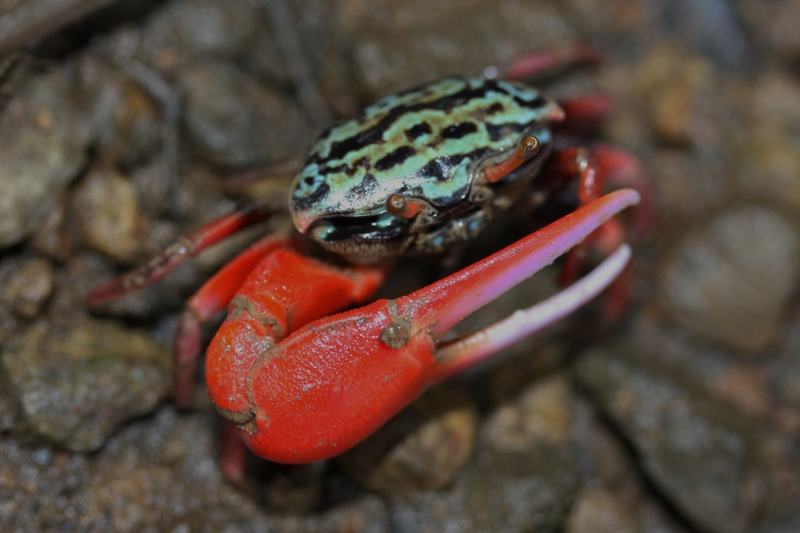
Male fiddler crabs carry one normal claw and one absurdly large one. That single claw can weigh nearly half of the whole crab [2]. He waves it up and down to catch the eye of passing females, and swings it in the odd scuffle with rival males [2]. The females, sensibly, keep two small claws and get on with eating. Nobody warned me quite how theatrical a mudflat could be.

They Taste With Their Feet
A crab tastes the world through tiny sensory hairs, and a great many of them sit on its legs and claws [1]. So when a crab walks across something edible, it is standing on its dinner and sampling it at the same time. It smells through these hairs too, reading chemicals that drift through the water. Handy, when your mouth is tucked underneath you and your feet reach the food first.
Eyes on Little Stalks
Most crabs keep their eyes on the ends of short, movable stalks [1]. They can raise them like tiny periscopes to look around, then fold them flat into grooves in the shell for safety. Because the eyes sit up high and swivel, a crab can watch for danger in almost every direction at once. Some fold them away so neatly you would not know they were there until they pop back up.
The Biggest One Climbs Trees
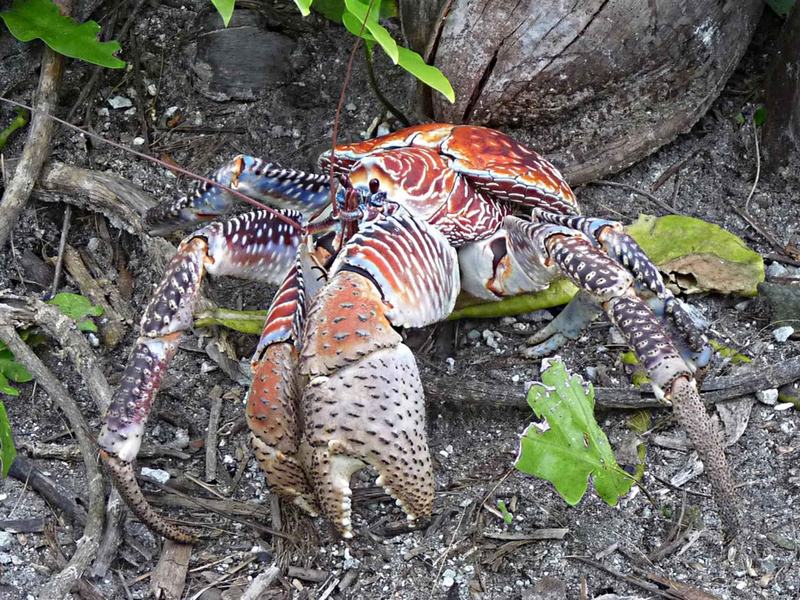
The coconut crab is the largest land arthropod on Earth. A big one weighs around 4 kilograms and stretches over a metre from leg tip to leg tip [3]. It climbs palm trees, cracks open coconuts with its claws, and spends its adult life on land - so committed to dry ground that an adult will drown if held underwater [3]. I have never met one. I would very much like to, from a respectful distance.

A Pinch Like a Lion's Bite
That coconut crab claw is not just for show. When researchers measured the grip of large ones, they worked out a pinching force of around 3,300 newtons [4]. That is roughly the bite force of an adult lion, coming from an animal you could hold in two hands [4]. It is the strongest pinch of any crustacean ever measured. My advice, should you meet one: admire the claws, do not shake hands.
The Long-Legged Giant of the Sea
The Japanese spider crab has the largest leg span of any arthropod alive. Tip to tip, its spindly legs can stretch close to 3.8 metres [5], which is wider than most cars are long. The body itself is modest, only about 40 centimetres across [5]. The rest is all leg. They live in the cold, deep waters off Japan, picking their way along the seabed like very patient stilt-walkers.
They Grow by Ditching Their Shell
A crab wears its skeleton on the outside, which makes excellent armour and a real nuisance when you want to get bigger. The solution is moulting: the crab backs out of its old shell entirely and reveals a soft new one underneath [1]. For a few days it is squashy and defenceless, so it hides. Then the new shell hardens, a size up, and the crab carries on as though nothing happened.
Fifty Million Crabs on the Move
Every year on Christmas Island, tens of millions of red crabs march from the forest down to the sea to breed [6]. There are so many that rangers close roads and build little bridges and tunnels just for them [6]. The island turns red with moving crabs for weeks. It is one of the great wildlife spectacles on the planet, and almost nobody outside Australia has heard of it.
Frequently Asked Questions
Why do crabs walk sideways?
Crabs walk sideways because their leg joints bend outward rather than forward, which makes a sideways scuttle the fastest way to move. Most true crabs are built this way. Many can still move forwards or backwards slowly, but sideways is their natural and efficient gait.
What is the largest crab in the world?
By leg span, the Japanese spider crab is the largest, reaching close to 3.8 metres from claw to claw. By weight and bulk on land, the coconut crab wins, at around 4 kilograms. They hold two different records, one in the sea and one on dry land.
How do crabs breathe out of water?
Crabs breathe using gills, and land crabs keep those gills damp so they can still take oxygen from the air. As long as the gills stay moist, many crabs manage well on land. The coconut crab has special tissue that lets it breathe air directly.
Can crabs regrow their claws?
Yes. If a crab loses a claw or a leg, it can grow a replacement over successive moults. The new limb starts small and reaches full size after several shell changes. This ability helps crabs survive fights, predators, and the occasional narrow escape.
Sources
- Crab - Encyclopaedia Britannica
- Synchronous Waving in Fiddler Crabs: A Review - Current Zoology, Oxford Academic
- Coconut Crabs: The Bird-Eating Giants on Tropical Islands - Natural History Museum
- A Mighty Claw: Pinching Force of the Coconut Crab - PLOS ONE
- Japanese Spider Crab - Smithsonian Ocean
- Red Crab Migration - Christmas Island National Park, Parks Australia