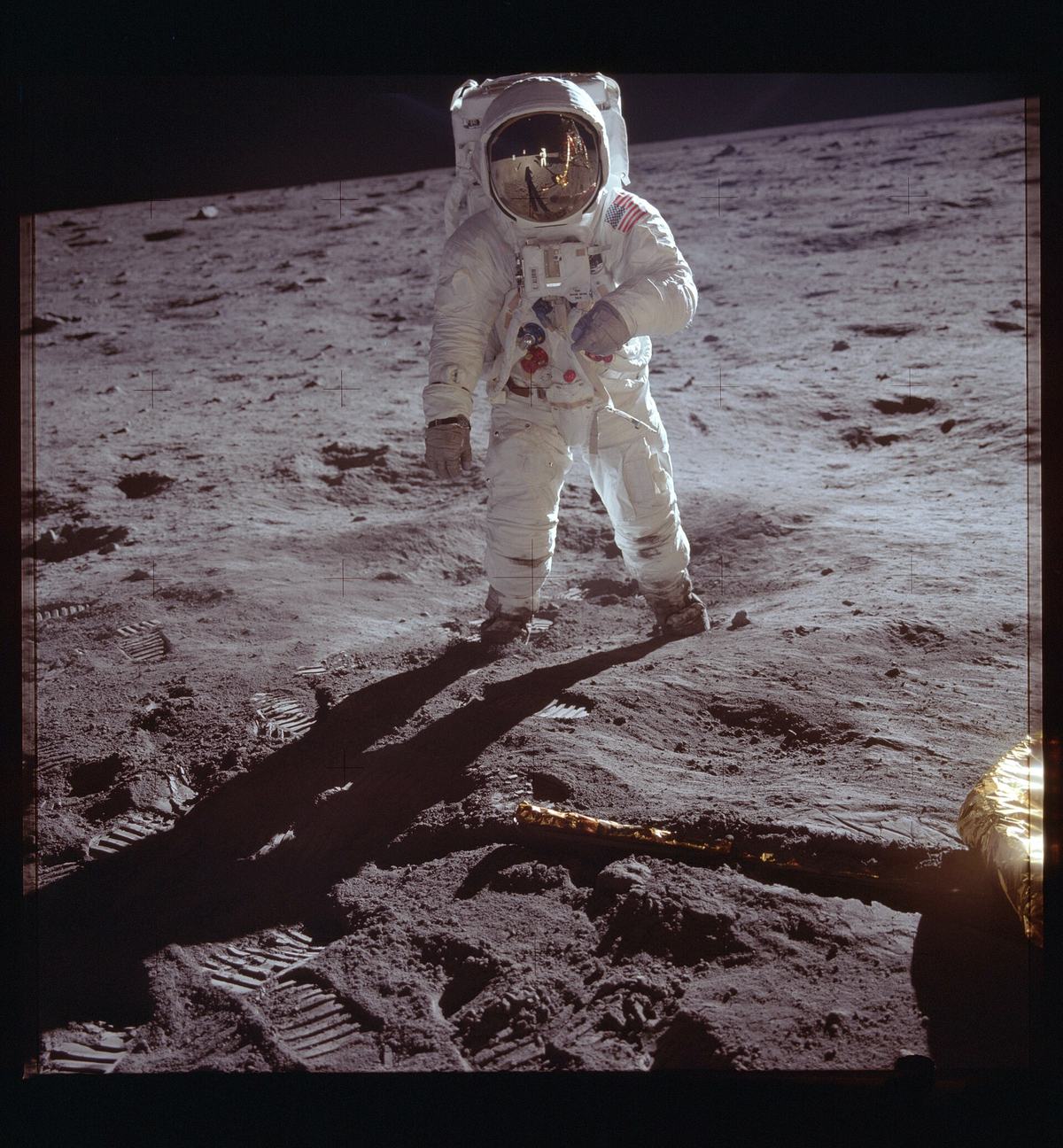
Apollo 11 landed on the Moon on July 20, 1969, but the final minutes were far tighter than the calm television broadcast let on. At 100 feet above the surface, the lunar module had only 90 seconds of propellant left to find a landing spot, and the mission ultimately touched down with less fuel in reserve than most of the missions that followed it, tripping a premature low-fuel warning along the way.
The mission carried Neil Armstrong, Buzz Aldrin, and Michael Collins to the Moon and back, and it turned the first landing there into one of the most closely watched events of the century. What follows isn't the postcard version: it's the computer alarms nobody had rehearsed for, the engineering trade-offs made to keep a thin safety margin from becoming a disaster, and a handful of footnotes about the mission that rarely make the highlight reel.
A Guidance Computer That Wouldn't Stop Interrupting
Five minutes into the descent burn, at 6,000 feet above the Moon's surface, the lunar module's guidance computer began throwing unexpected 1201 and 1202 program alarms. Software engineer Don Eyles traced the cause to a hardware design bug in a 2005 paper, one that had already shown up years earlier during uncrewed testing of the lunar module on Apollo 5.
That the flaw had already surfaced on a robotic test flight, and still rode along on the first crewed landing attempt, says something about how many small, unresolved risks NASA carried into that final descent. The alarms didn't stop the landing, but they did eat into the one resource the crew couldn't get back: time.
Ninety Seconds From an Abort
Time ran straight into fuel. At 100 feet above the surface, the lunar module had only 90 seconds of propellant left to find a landing spot before the crew would have had to abort. When Eagle finally touched down, it carried less fuel in reserve than most of the Apollo missions that followed it, and the low-fuel warning had already tripped early.
That detail is easy to miss in hindsight: every landing after the first one flew with a wider cushion, because NASA had just watched how little margin the very first attempt actually needed.

When Everything Had to Work the First Time
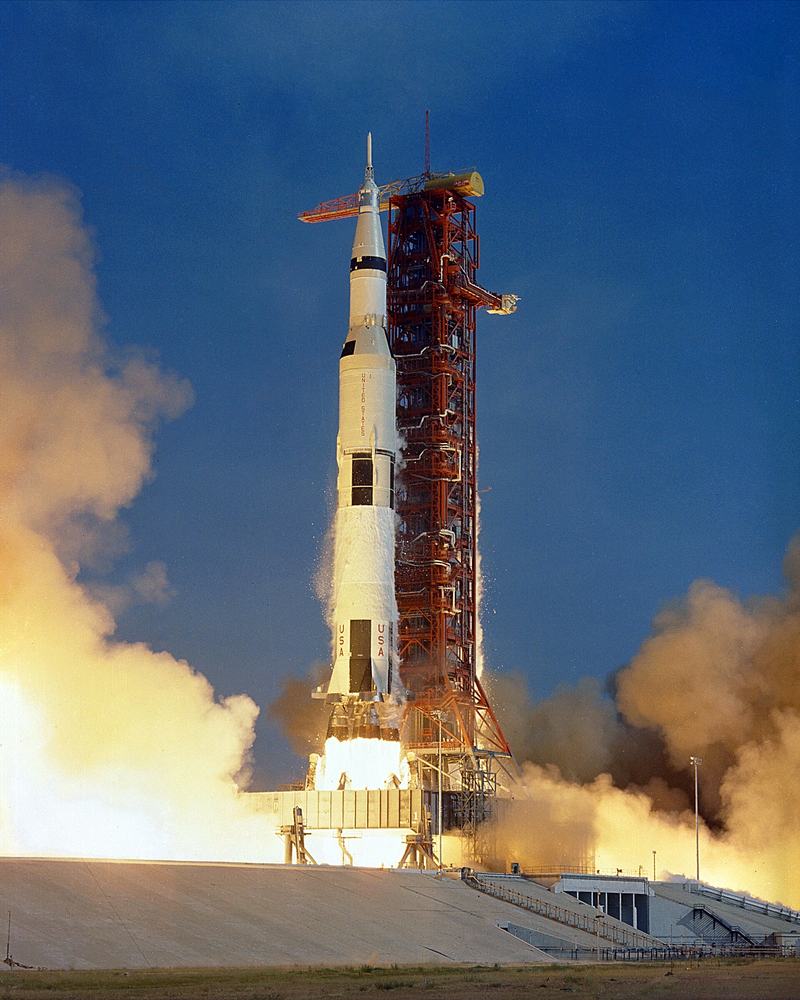
Some of the mission's tightest margins showed up long before launch. While training for Apollo 11, Armstrong found himself punching out of his Lunar Landing Research Vehicle just before the machine went down, a reminder that the hazards of the mission started on a training field, not just in lunar orbit.
That same tolerance for risk shaped how NASA built the mission's computers. Because of strict size, weight, and power limits, the Command and Lunar Modules each flew with only one onboard computer, and it had to work; there was no second unit to switch to if it failed in flight. NASA had argued over who should even build it: in late 1962, Bellcomm recommended IBM, not MIT, to build the computers for Apollo's Command and Lunar Modules, a preference that shows how seriously the agency weighed an unproven approach to spaceflight computing before committing to it.
Two Men on the Surface
Aldrin stepped onto the Moon at 03:15:16 UTC on July 21, 1969, nineteen minutes after Armstrong, while Michael Collins orbited overhead in the command module. Once both men were outside, the task that was supposed to go the smoothest turned out to be one of the fussiest.
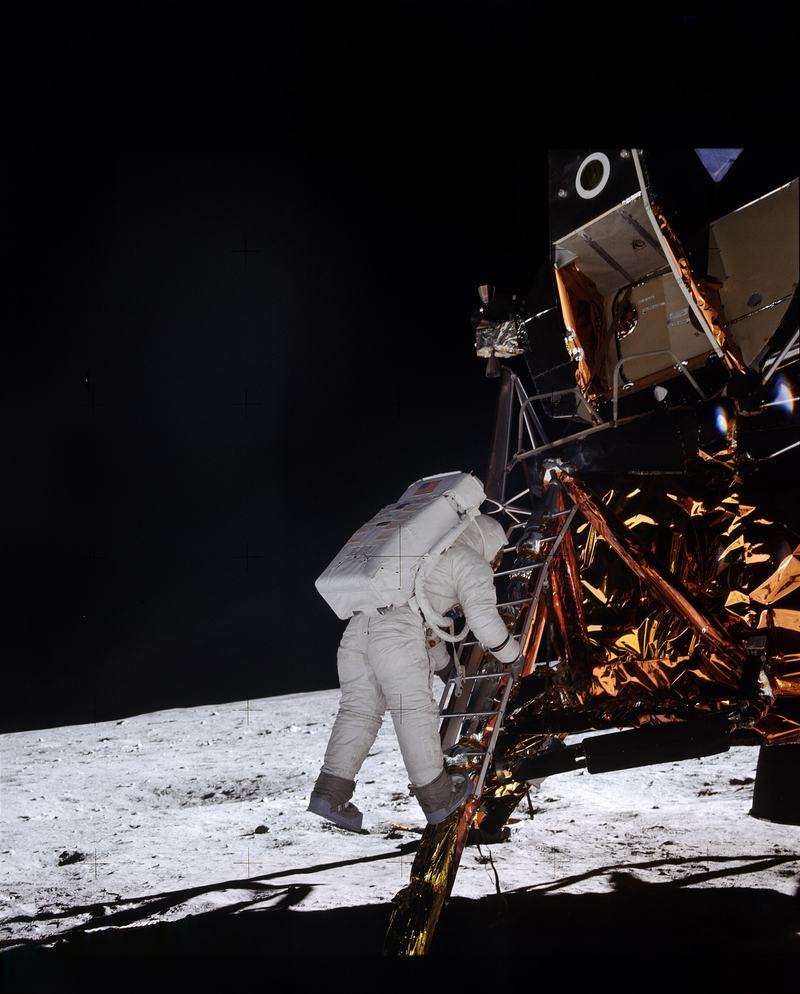

Raising the flag proved harder than planned: the ground was so hard that Armstrong and Aldrin could only push the telescoping pole about 2 inches into the lunar surface. Soon after, Armstrong used the geologist's hammer to pound in core sample tubes, the only time that hammer got used at all on Apollo 11, and even then he could not drive the tubes more than 6 inches deep. Two simple tools meant for routine jobs turned into the moonwalk's most stubborn chores.
The Public Wasn't All Cheering
Apollo 11 wasn't a sure bet back home, either. As early as 1964, when Americans were asked whether the country should go all out to beat the Soviets to the Moon, only 26 percent said yes, meaning most of the country hadn't yet decided the program was worth its cost. Congress needed convincing too: only ten weeks after delivering his Rice University speech, Kennedy spent 30 minutes grilling NASA officials about the program's budget and schedule.
Scientists Who Bet on Robots
Some of the sharpest skepticism came from scientists rather than the public. Critics argued that robotic probes could answer the Moon's genuinely interesting scientific questions for roughly a hundredth of what it cost to send astronauts, an argument made years before anyone had actually tried it at scale. On June 10, ten scientists gave two days of testimony to a Senate panel on aeronautics and space, debating whether Apollo was even worth continuing.
A Legacy in Unexpected Places
Apollo 11's imprint showed up in odd corners of American life long after splashdown. When the US Mint released the Eisenhower dollar coin in 1971, it borrowed the eagle from the mission's patch design for the coin's reverse side, folding the mission into everyday pocket change. Decades later, a historian who set out to rank the 20th century's defining human achievements ended up naming Apollo 11's landing the one thing people would still remember 500 years from now.
Rocks That Rewrote a Little Chemistry
The mission also left a scientific footnote that took decades to fully resolve. Rock samples Armstrong, Aldrin, and Collins carried home led scientists to identify a mineral called armalcolite, a name built from the three astronauts' surnames.
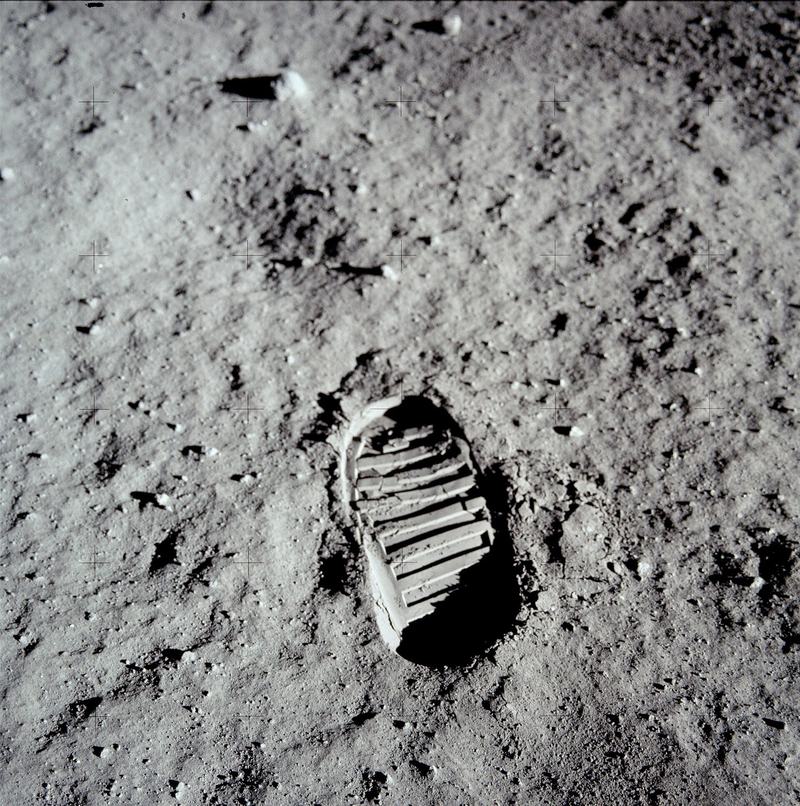

A second mineral pulled from the same samples, tranquillityite, takes its name from the Sea of Tranquillity, where Apollo 11's crew landed in July 1969. Decades later, a Curtin University professor spotted the same mineral in an ordinary rock from Earth under a scanning electron microscope, ending its brief run as something unique to the Moon.