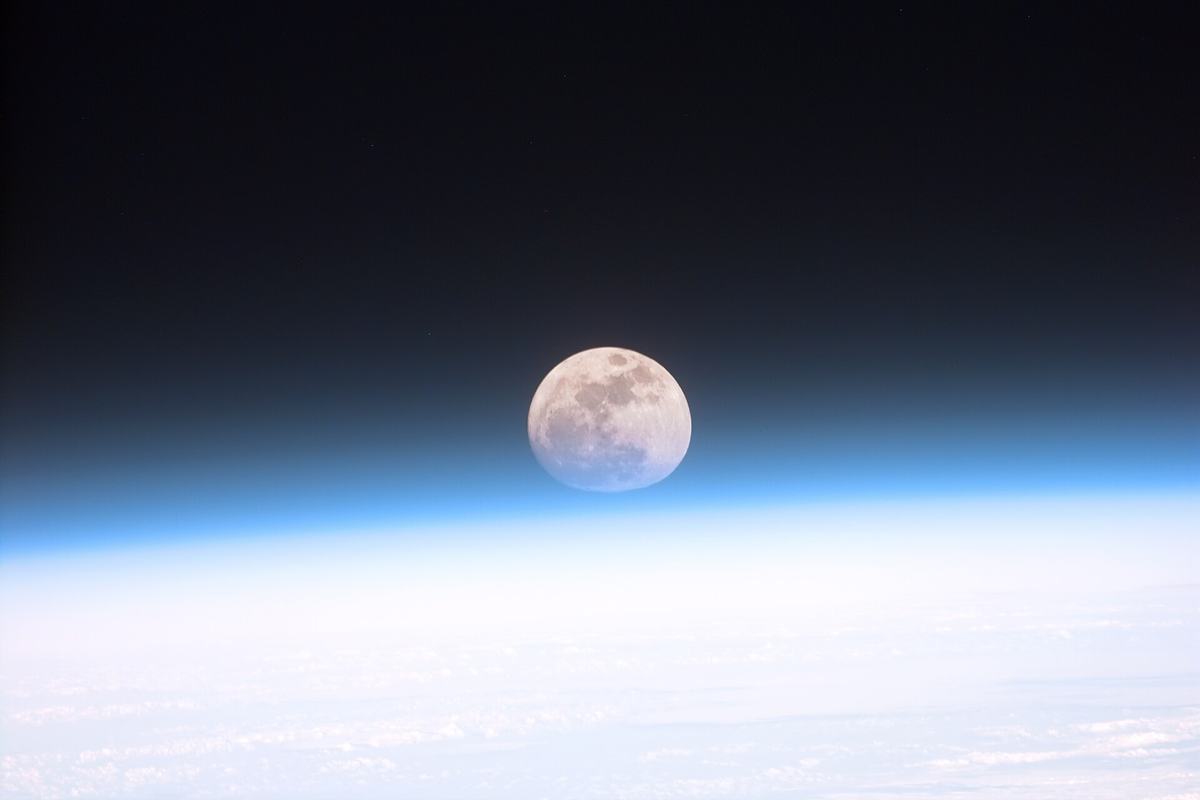
Every year, the Moon edges 38 mm (1.5 in) farther from Earth — about the same rate at which human fingernails grow. It sounds too slow to matter, but multiplied across geological time it has reshaped both worlds, stretching out Earth's day hour by hour while the Moon itself drifts slowly out of reach.
It is also a place of extremes once you look past the familiar view from Earth: a permanently shadowed crater colder than the surface of Pluto, a magnetic field that has all but vanished, and lava flows that erupted far more recently than the Moon's dead, cratered surface would suggest.
The Moon is also the best-documented other world we have. Samples brought back by three different space programs, plus orbiters still flying today, keep changing the picture of how it formed and what it is still quietly doing beneath that gray surface.
The Long Goodbye
That 38 mm-a-year drift is a symptom of tidal friction between Earth and the Moon, and the effect runs both ways. The Moon's pull is gradually slowing Earth's spin: current estimates say this tidal drag, together with the Sun's, has helped lengthen the Earth day from about 6 hours to the current 24 hours over roughly 4.5 billion years.
The slowdown has not been steady, but the trend is clear. 3.2 billion years ago, during the Archean eon, Earth's solar day was only around 13 hours long — just over half of today's. Every one of those extra hours came from the same source: the Moon, quietly stealing Earth's spin and converting it into orbital distance.
Born in a Sideways Collision, Explored by Three Space Programs
The Moon's story likely begins with a collision that only looks gentle in hindsight. In the giant-impact hypothesis, a Mars-sized protoplanet known as Theia — one of a population of similar bodies thought to have existed in the Solar System 4.5 billion years ago — struck the young Earth at a shallow angle of about 45 degrees. Simulations suggest the impactor accelerated from under 4 km/s while still far out to more than 9.3 km/s (5.8 mi/s) at the moment of collision, blasting enough debris into orbit to eventually form the Moon.
Millennia later, humans went to retrieve pieces of that collision under a name with its own origin story. NASA manager Abe Silverstein named the Apollo program after the Greek god at home one evening in early 1960, reasoning that "Apollo riding his chariot across the Sun was appropriate to the grand scale of the proposed program."
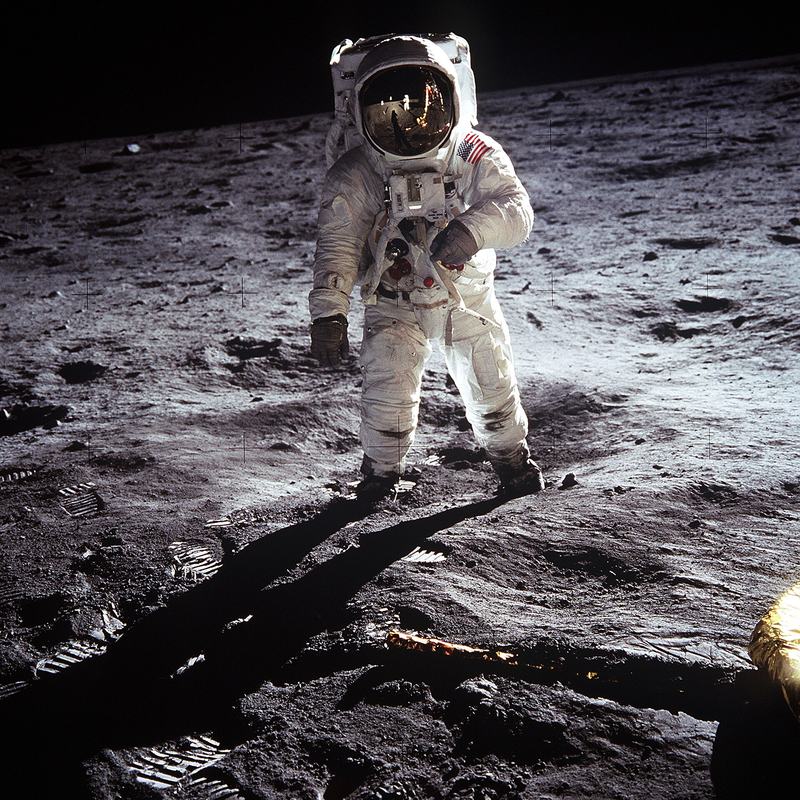

Three space programs eventually brought pieces of the Moon home, at very different scales. Crewed Apollo landings returned 382 kg (842 lb) of lunar rock and soil between 1969 and 1972; three robotic Soviet Luna missions returned a comparatively modest 301 grams (10.6 oz); and in 2020 China's robotic Chang'e 5 returned 1,731 g (61.1 oz) — more than five times the entire Soviet haul, in a single mission.
The Coldest Spot Humans Have Ever Measured
Not every extreme on the Moon comes from impacts or tides. In a permanently shadowed crater near the north pole named Hermite, the Lunar Reconnaissance Orbiter measured a temperature of just 26 K (−247 °C) close to the winter solstice. That is the coldest temperature ever measured anywhere in the Solar System by a spacecraft — colder even than the surface of Pluto.
A Landscape of Record-Breaking Extremes
The Moon's far side hides its most dramatic scar. The South Pole–Aitken basin measures about 2,240 km (1,390 mi) across, making it the largest crater on the Moon and the second-largest confirmed impact crater anywhere in the Solar System. Its floor lies 13 km (8.1 mi) below the rim, reaching a depth of −9.178 km — the lowest point anywhere on the lunar surface.
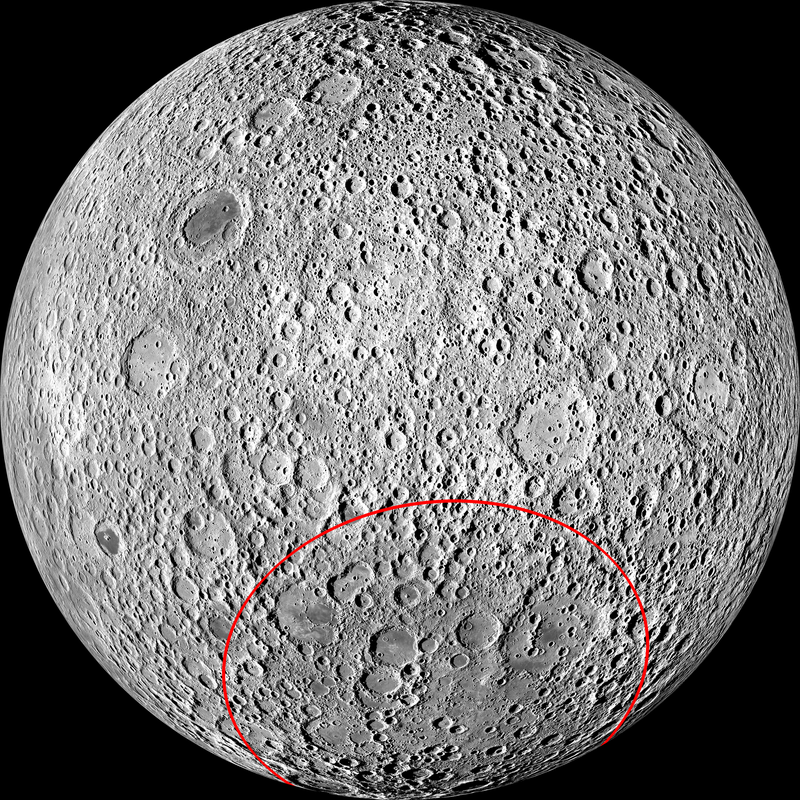

The Moon's highest point sits not far away. The so-called Selenean summit rises 10.629 km (6.605 mi) above the mean surface, and researchers think the same oblique impact that gouged out the South Pole–Aitken basin may have thickened the crust here, pushing it upward rather than down.
The Moon isn't only scarred by its past — it is still quietly changing shape. Networks of fault scarp cliffs across the surface suggest the Moon has shrunk by about 90 meters (300 ft) within just the past billion years, as its interior slowly cools.
Two Faces, Two Different Skins
Stand on Earth and look up, and nearly everything dark you see is lopsided. Almost all of the Moon's lava plains, or maria, sit on the near side: they cover 31% of the near side's surface, compared with just 2% of the hidden far side.
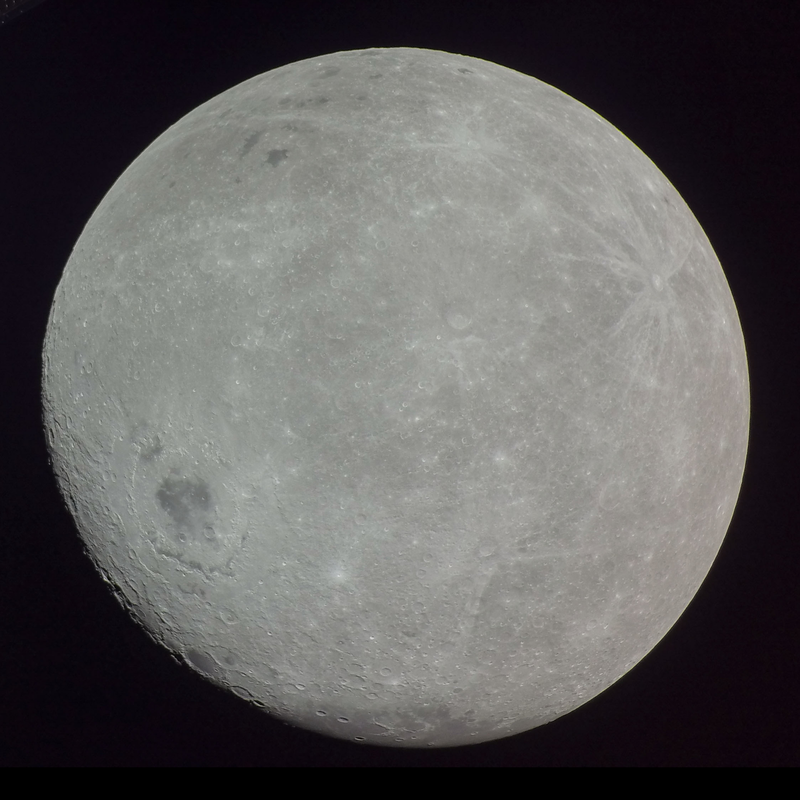

Part of the explanation is buried underground. NASA measurements put the Moon's crust at about 25 miles (40 km) thick on the near side but up to about 37 miles (60 km) thick on the far side — a thicker lid that would have made it harder for magma to break through and flood the surface with lava.
Even on the near side, the pattern breaks down in one place. Most mare lava flowed into low-lying impact basins, but the Moon's single largest expanse of basalt, Oceanus Procellarum, does not correspond to an obvious impact basin at all — a reminder that lava doesn't only follow the map of old impacts.
The Moon's Restless, Quiet Interior
The Moon was not always this magnetically dead. In its earliest era, between about 4.5 billion and 3.56 billion years ago, its magnetic field reached intensities of around 100 microteslas (1 Gauss) — close to the strength of Earth's magnetic field today.
That field has almost entirely disappeared. Today the Moon's external magnetic field measures less than 0.2 nanoteslas, or less than one hundred thousandth of Earth's — a world that once generated a field to rival ours, now barely detectable.
The Moon isn't entirely still, either. Moonquakes are far less common and weaker than earthquakes, but they can last for up to an hour — far longer than any quake on Earth — because the seismic vibrations scatter through the Moon's dry, fragmented upper crust instead of dying out quickly.
Lava That Kept Erupting Far Later Than Expected
The lava itself is chemically unusual. Titanium dioxide can make up as much as 15% of the weight of mare basalt, compared with less than 4% in most basalts found on Earth — a difference that points to a very different chemical history inside the two worlds.
That lava also kept flowing more recently than the Moon's ancient, crater-pocked face suggests. Updated analysis of samples collected by China's Chang'e-5 mission shows that some lunar basalts could be as young as 2.03 billion years old — evidence that volcanic activity on the Moon lasted far longer than its heavily cratered surface would suggest.
Water in the Last Place Anyone Expected It
For decades, "dry as the Moon" was a reasonable description. Then, in October 2020, NASA's Stratospheric Observatory for Infrared Astronomy (SOFIA) confirmed, for the first time, the presence of water on the sunlit surface of the Moon — not hidden away in a permanently shadowed polar crater, but in territory that gets blasted by direct sunlight.
The discovery matters as more than trivia. Water reachable outside the deep-frozen poles would, in principle, be far easier for future missions to locate and use than ice buried in permanent darkness.