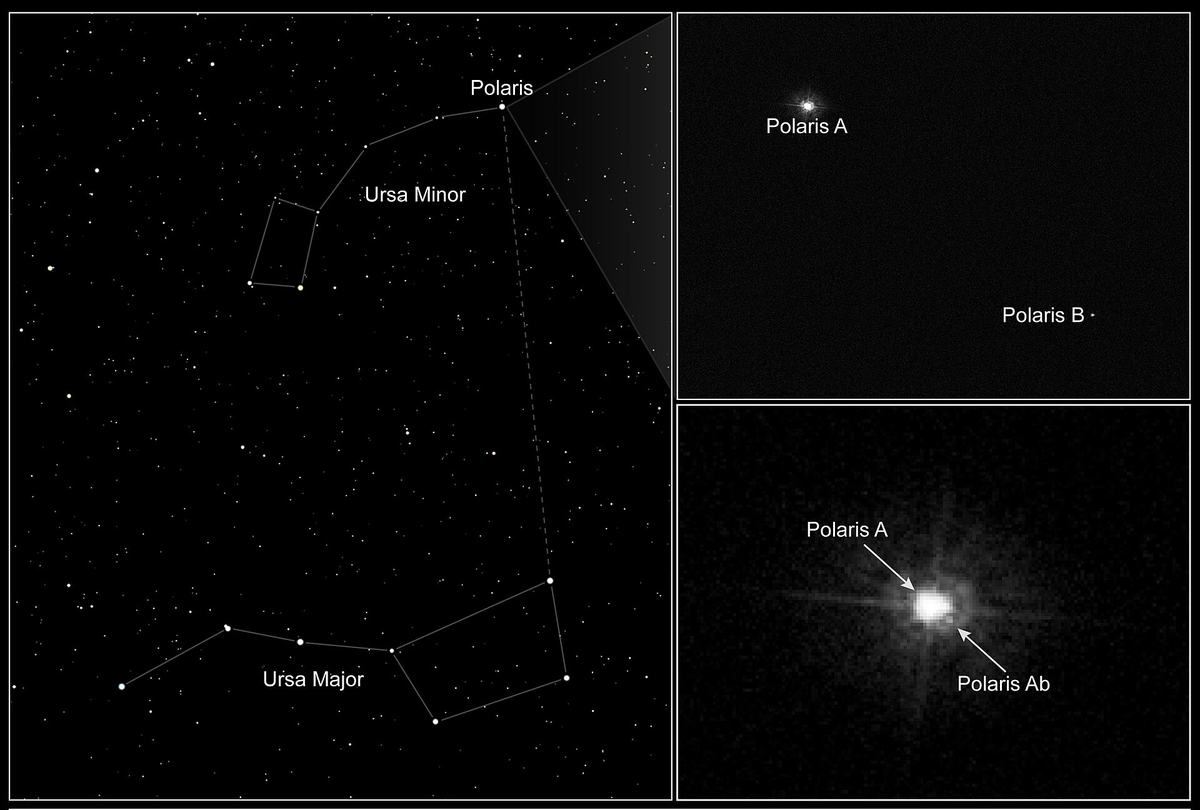
Polaris looks like a single steady point of light hovering over the horizon, but almost nothing about that description holds up. It is actually three stars bound together, it pulses in brightness every few days, and by some measurements it is shining noticeably more intensely than it did in antiquity. None of that stops it from doing the one job it is famous for: sitting so close to the north celestial pole that it barely seems to move while the rest of the sky wheels around it.
That combination of "boring and reliable" on the surface and "genuinely strange" underneath is why Polaris has earned attention from sailors, playwrights, and astrophysicists alike for thousands of years. Here is what actually makes it tick.
A Star That's Not Really Alone
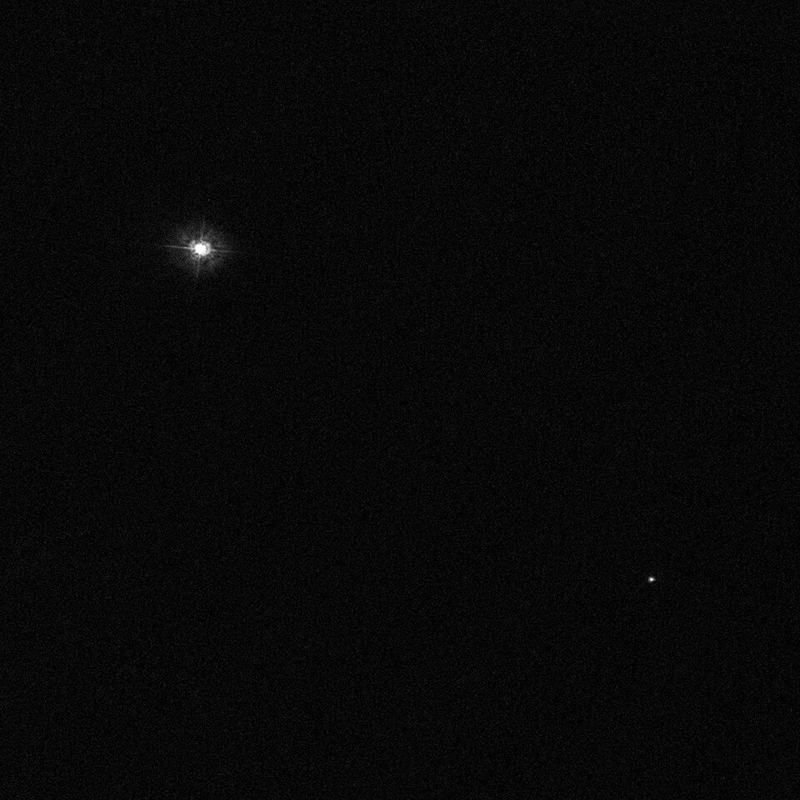
What we call Polaris is really a small family of stars. The dominant member, Polaris Aa, is an aging supergiant with roughly 5.4 times the Sun's mass, and the best current distance estimate — from a reanalysis of Hipparcos satellite data — places it about 432 light-years from Earth. It has two companions: Polaris B, a smaller star of about 1.39 solar masses that circles the system from roughly 2,400 astronomical units out, and Polaris Ab, a 1.26-solar-mass star that orbits so tightly it long escaped direct detection.
That close companion is not just an afterthought. Modern interferometry has measured the gap between Polaris Aa and Ab at its nearest approach as just 6.2 astronomical units, a small fraction of the distance from the Sun to Saturn. Because the supergiant itself is enormous — about 46 times the Sun's radius — the two stars pass within roughly 29 stellar radii of each other, uncomfortably close by stellar standards. In 2024, a team led by astronomer Nancy Evans at the Harvard & Smithsonian used the CHARA optical interferometer array to gather new data on this inner pair, refining decades of prior orbit calculations.
The Star That Keeps Getting Brighter
A study published in the journal Science makes a striking claim: Polaris today shines about 2.5 times brighter than it did when the astronomer Ptolemy catalogued it roughly two thousand years ago, having climbed from third magnitude to second magnitude in the process. That is not a subtle drift — it is a significant shift for a star that, by conventional models, should barely change over a human lifetime, let alone a couple of millennia.
Astronomer Edward Guinan has described this brightening as remarkable, pointing out that if the trend is real, it is roughly a hundred times larger than what standard theories of stellar evolution would predict. Nobody has fully settled why Polaris is behaving this way, which is part of what keeps it interesting to researchers rather than being filed away as a solved problem.
A Pulsing Giant, and the Key to Measuring the Universe
Polaris belongs to a class of stars called classical Cepheid variables, which swell and shrink on a predictable cycle, brightening and dimming as they do. What sets Polaris apart from most other Cepheids is a technical milestone: it is the first classical Cepheid whose mass was ever pinned down directly from its orbital motion around a companion star, rather than estimated indirectly from stellar models.
Cepheids matter far beyond their own bright surfaces. In 1908, astronomer Henrietta Swan Leavitt discovered that these stars' pulsation periods are tied directly to how luminous they truly are, a pattern she noticed while cataloguing a huge number of pulsating stars in the Magellanic Clouds, a pair of dwarf galaxies near the Milky Way. That relationship turned Cepheids into cosmic yardsticks: once astronomers know how bright a Cepheid really is, comparing that to how bright it looks reveals its distance. Polaris being one of these stars, and a nearby, well-studied one, makes it something of a natural laboratory for testing the science that measures the scale of the universe.
Its Crown Is Only Borrowed
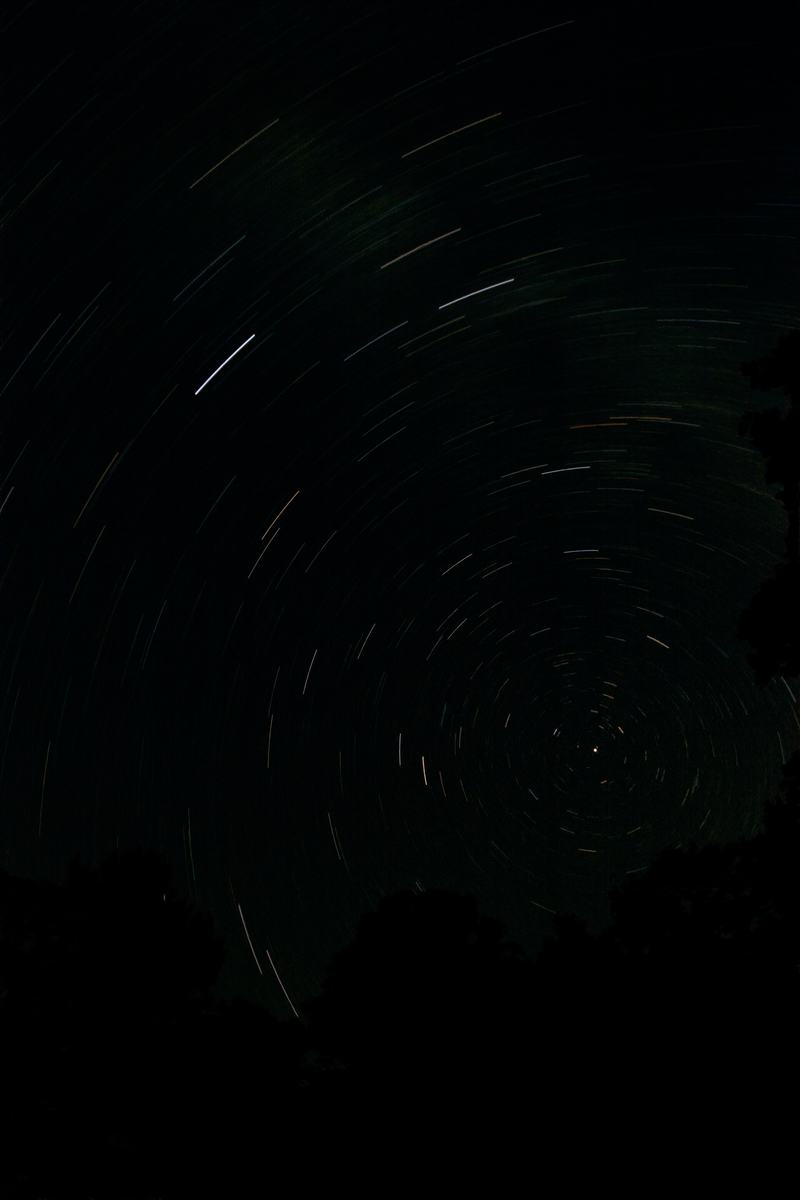

Polaris did not earn the title "North Star" through anything special about the star itself — it is simply a matter of geometry and timing. Earth's axis wobbles slowly over thousands of years, a motion called precession, which drags the point in the sky the axis points toward through a huge circle. Polaris just happens to be the bright star currently sitting near that point.
It has not always held that position, and it will not keep it. Around 2750 BC, the celestial pole was closest to a much fainter star called Thuban, and even in classical antiquity the pole was slightly nearer to Kochab than to Polaris, although still some 10 degrees from either one. Polaris will make its closest pass by the pole, at a separation of about 0.45 degrees, shortly after the year 2100. After that, precession keeps pulling the pole away, and Polaris will eventually go the way of Thuban: a former pole star, no longer special for its position.
A Slow but Measurable Drift
As of 2018, Polaris sat about 0.66 degrees, or 39.6 arcminutes, from the true celestial pole — roughly 1.4 times the apparent width of the full Moon — which means it traces a small circle about 1.3 degrees across every day as Earth rotates. Because it is so close to the pole, its position in the sky's coordinate system is changing unusually fast for a "fixed" star: its right ascension is projected to shift from about 2.5 hours in the year 2000 to a full 6 hours by 2100.
None of this is visible on any human timescale by eye, but it is exactly the kind of detail that separates "the star that marks north" from "the actual, fixed direction of north," which is a subtlety many casual stargazers never learn.
Finding It Without a Telescope
Despite the astrophysics, Polaris remains famous mainly as a wayfinding tool, and that use is refreshingly simple. Anyone can locate it by tracing a line through the two outer stars at the end of the Big Dipper's bowl, often called the Pointers, and following that line for about 30 degrees, roughly three fists held at arm's length, across the sky.
Because Polaris sits within about 1 degree of true north, that single sighting is enough to orient a hiker, sailor, or backyard stargazer without any instruments at all — a low-tech trick that has outlasted every navigational technology invented since.
Centuries of Sailors, Poets, and Skeptics
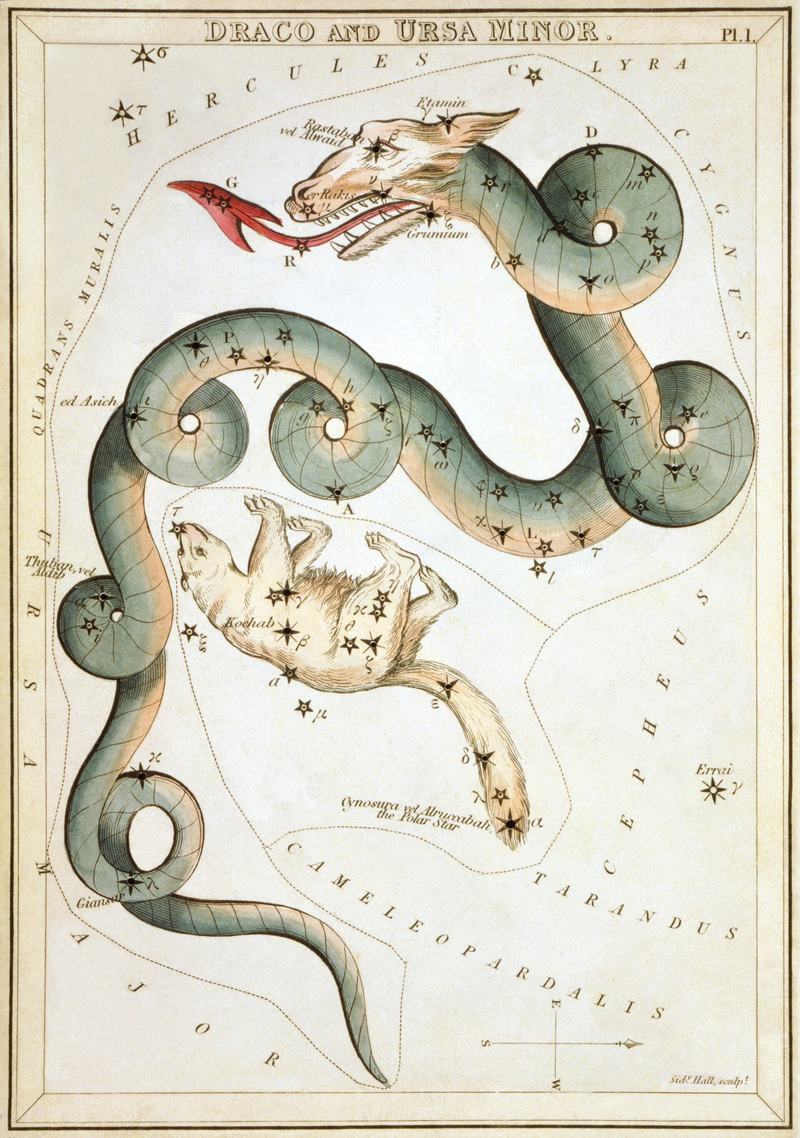

That usefulness is exactly why Polaris shows up so often in history. On his first transatlantic voyage in 1492, Christopher Columbus had to account for the small circle the pole star traces around the true pole rather than treating it as a perfectly fixed marker, an adjustment every careful celestial navigator of his era had to make.
Polaris also shows up in fiction, sometimes inaccurately. Caesar declares in Shakespeare's Julius Caesar, a play written around 1599, that he is as constant as the northern star. The line is dramatically convenient but technically wrong for Caesar's own time: in the first century BC, no single bright star sat reliably at the celestial pole the way Polaris does now, since Polaris had not yet drifted into position.
A Portrait From Hubble
In January 2006, NASA released images captured by the Hubble Space Telescope that, for the first time, showed all three members of the Polaris system in a single view: the bright supergiant Aa, the close companion Ab, and the more distant Polaris B. It turned what had mostly been a story told through orbital calculations and spectroscopy into something astronomers could finally point to directly.
That combination — a star that guides ships, inspires playwrights, and still puzzles physicists trying to explain why it is brightening — is a lot to ask of a single point of light in the night sky. Polaris delivers on all of it, and it will keep doing so for at least another century or two, until the slow turn of Earth's axis quietly hands the job to somebody else.