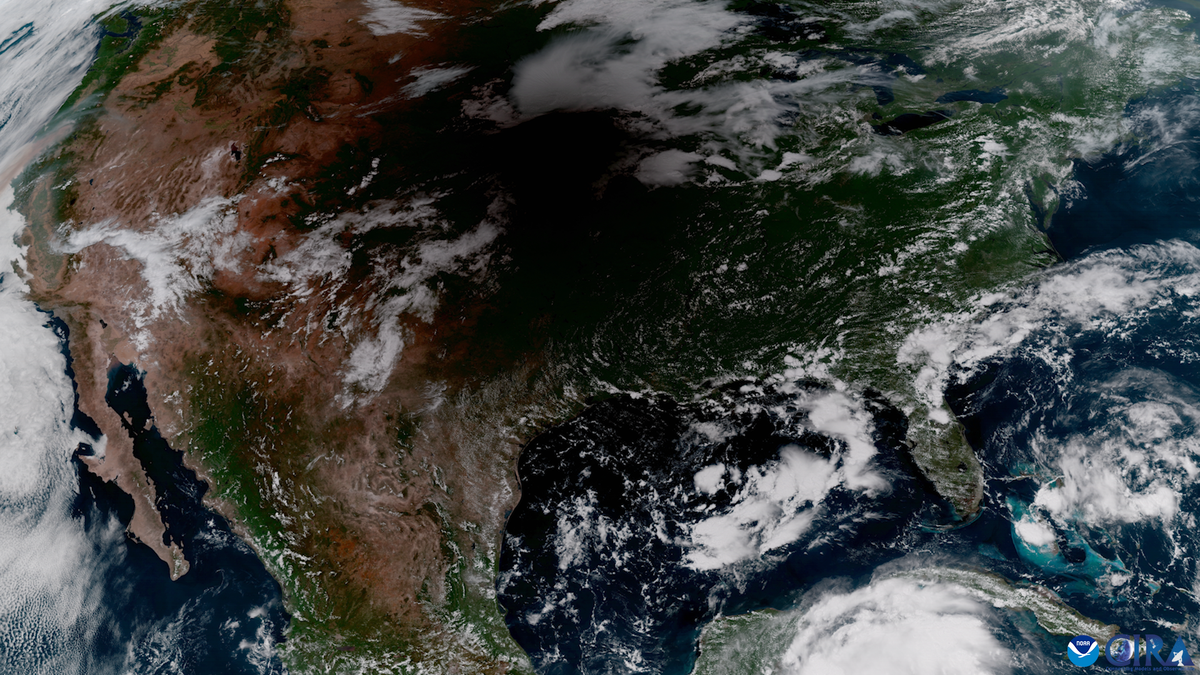
Somewhere on Earth, the Moon blots out the Sun on average every 18 months. Stay in one spot, though, and the wait is much longer: a total solar eclipse returns to the same location only once every 360 to 410 years on average. That rarity is exactly why people fly across continents to stand under the Moon's shadow for a few fleeting minutes.
A solar eclipse happens when the Moon passes directly between the Sun and Earth, throwing a narrow shadow onto the planet's surface. Inside that shadow, day briefly turns to dusk, and the Sun's normally invisible outer atmosphere flashes into view. What follows is what a few centuries of eclipse-watching, and more than a century of eclipse physics, have turned up.
Once in Three Centuries: How Rare (and How Long) Totality Can Be
Even under perfect conditions, totality does not last long. When an eclipse happens with the Moon very near perigee, its closest pass to Earth, the shadow's track can widen to as much as 267 km (166 mi), and totality itself can run past 7 minutes. Real eclipses rarely reach that ceiling: the longest one calculated so far won't occur until July 16, 2186, when totality over northern Guyana will last 7 minutes 29 seconds.
Eclipses like these are predictable centuries in advance because they repeat on a fixed rhythm called the saros. One full cycle covers exactly 223 synodic months, working out to 18 years, 11 days, and 8 hours, alongside close matches to two other lunar rhythms, the draconic and anomalistic months. Knowing that rhythm is what lets astronomers calculate, centuries ahead of time, exactly how long a given town will have to wait for its next glimpse of totality.
The 1919 Eclipse That Rewrote Physics
No eclipse did more for science than the one in 1919. When totality swept over the tropics that year, astronomer Arthur Eddington watched starlight grazing the Sun's edge and found it had bent, exactly as Einstein's still-new theory of general relativity predicted. Months later, on 8 November 1919, the results were announced in London, marking the end of Newton's centuries-old model of gravity and the start of Einstein's.
Albert Einstein, the 40-year-old Berliner behind the idea, became the world's most famous scientist practically overnight. The 1919 measurements themselves weren't perfectly uniform, though: the light-bending recorded at the observation site in Príncipe came in slightly under the predicted value, while the reading from the Brazil site came in slightly over it — a gap critics would point to for decades.
Gravity's Strange Behavior During Totality
Relativity wasn't confirmed just once. Decades later, ESA's Hipparcos satellite, flying from 1989 to 93, tracked starlight with enough precision to deliver the clearest confirmation yet of that same 1919 prediction.
Not everything about eclipses and gravity lines up neatly, though. One study measuring gravity during a total eclipse detected a tiny but real anomaly, a shift of 7.0 ± 2.7 × 10^-8 m/s² in the local pull of gravity, and its authors suggested the result might point to some kind of shielding effect during totality. It is a reminder that even a century after Eddington, a total eclipse still gives physicists a chance to test gravity in ways no laboratory on Earth can.
The Sun's Hidden Crown
A total eclipse is essentially the only time anyone standing on Earth can see the corona, the Sun's outer atmosphere, with the naked eye. It behaves like a strange reversal of how heat normally works: the Sun's visible surface runs around 4500-6000°C, yet the wispy corona above it climbs past a million degrees Celsius, a jump physicists still cannot fully explain.
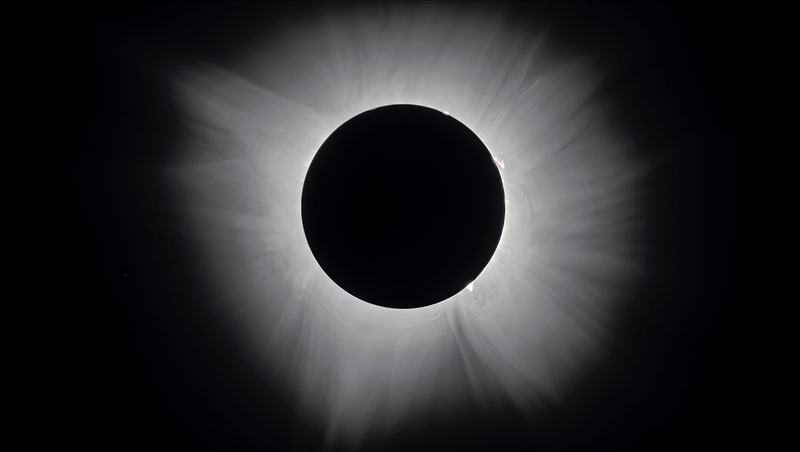

People have been documenting that eerie ring of light for more than a thousand years — the earliest known account of an observed corona comes from Constantinople in AD 968. Because natural totality is so short, the European Space Agency built a way to manufacture more of it: the twin-spacecraft Proba-3 mission flies one satellite in front of the Sun to block it for the other, producing artificial eclipses that add up to 1000 hours of viewing time over two years, far more than any natural eclipse could ever offer.
Beads of Light and the First Eclipse Photograph
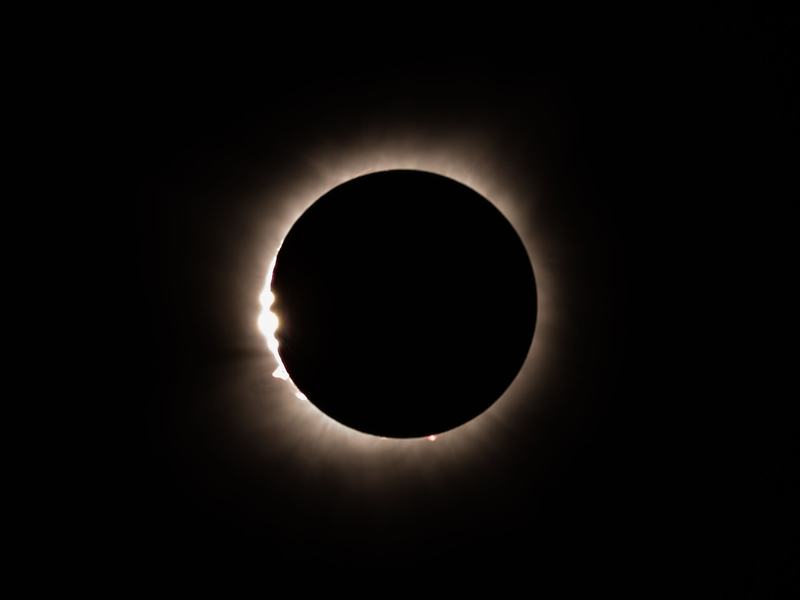
In the seconds before and after totality, sunlight squeezing through valleys on the Moon's jagged limb breaks into a string of bright points. In 1715, decades before anyone coined a name for it, astronomer Edmund Halley became the first person to write down what we now call Baily's beads and the diamond ring effect.

Photography caught up with astronomy more than a century later. The earliest known photograph of a solar eclipse was shot on 28 July 1851 by Julius Berkowski, who used the daguerreotype process, the fragile silver-plate technique behind some of photography's oldest surviving images.
America's 2017 Eclipse, By the Numbers
The most-watched eclipse in recent memory swept coast to coast across the United States in August 2017, its path of totality touching both the Pacific and Atlantic — something that had not happened since 1918.
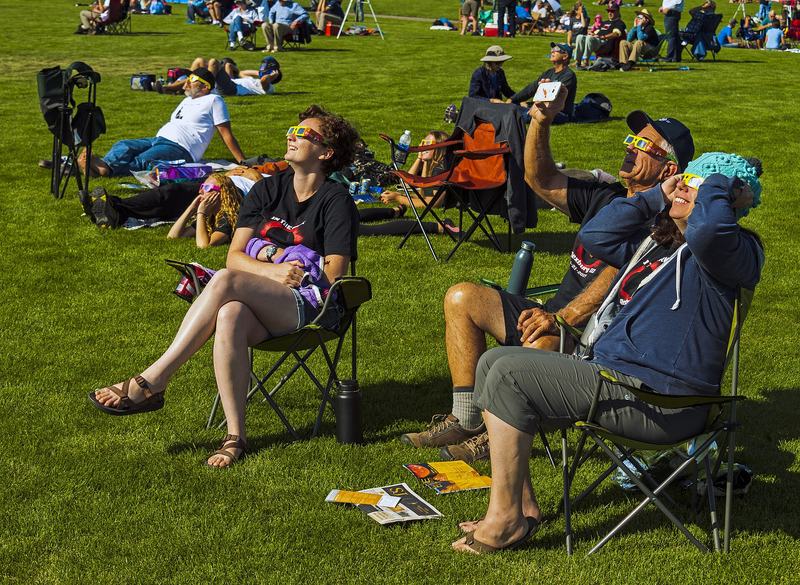

That shadow was enormous: it swept across about 16 percent of the entire area of the United States, though most of that path passed over open ocean rather than land. On the ground, totality lingered longest over Giant City State Park in southern Illinois, just outside Carbondale, holding for 2 minutes 41.6 seconds — the longest stretch any single spot on land experienced that day.