Mercury's orbit slowly swings around the sun, and once astronomers subtract the pull of every other planet in the solar system, Newton's own equations still fall short of the observed swing by 43 arcseconds per century. It sounds like a rounding error. It is actually the crack that eventually forced physicists to rewrite gravity from scratch.
Gravity holds moons in orbit, keeps rivers running downhill, and pins every reader to their chair, yet it took more than a thousand years of guesswork, one Newtonian equation, and a patent clerk's daydream in Bern to get a working description of it. Even then, gravity turned out to be strange enough that its pull between two electrons is only 1 part in 4.17×1042 of the electric repulsion between them — a force so faint at the atomic scale that its dominance over planets and galaxies can feel like a contradiction.
Here is what the record actually shows: who guessed at gravity centuries before Newton, how his law was tested and where it broke, and what replaced it.
Gravity's Long Prehistory
The idea that things fall toward the Earth is old, but the idea that gravity might work the same way everywhere is much older than Newton. The Indian mathematician and astronomer Brahmagupta, writing in 628 CE, described gravity as a pull that draws objects toward the Earth — he called it gurutvakarshan, a term that predates Newton's Principia by more than a thousand years.
Long before anyone could measure gravity precisely, someone had to show that its pull doesn't care how heavy an object is. In 1586, the Flemish physicist Simon Stevin dropped two cannonballs of very different sizes and weights from a tower in Delft and found they hit the ground within a hair of the same moment, a directly observed demonstration that weight alone doesn't decide how fast something falls.
Newton's Equation, Tested in a Basement
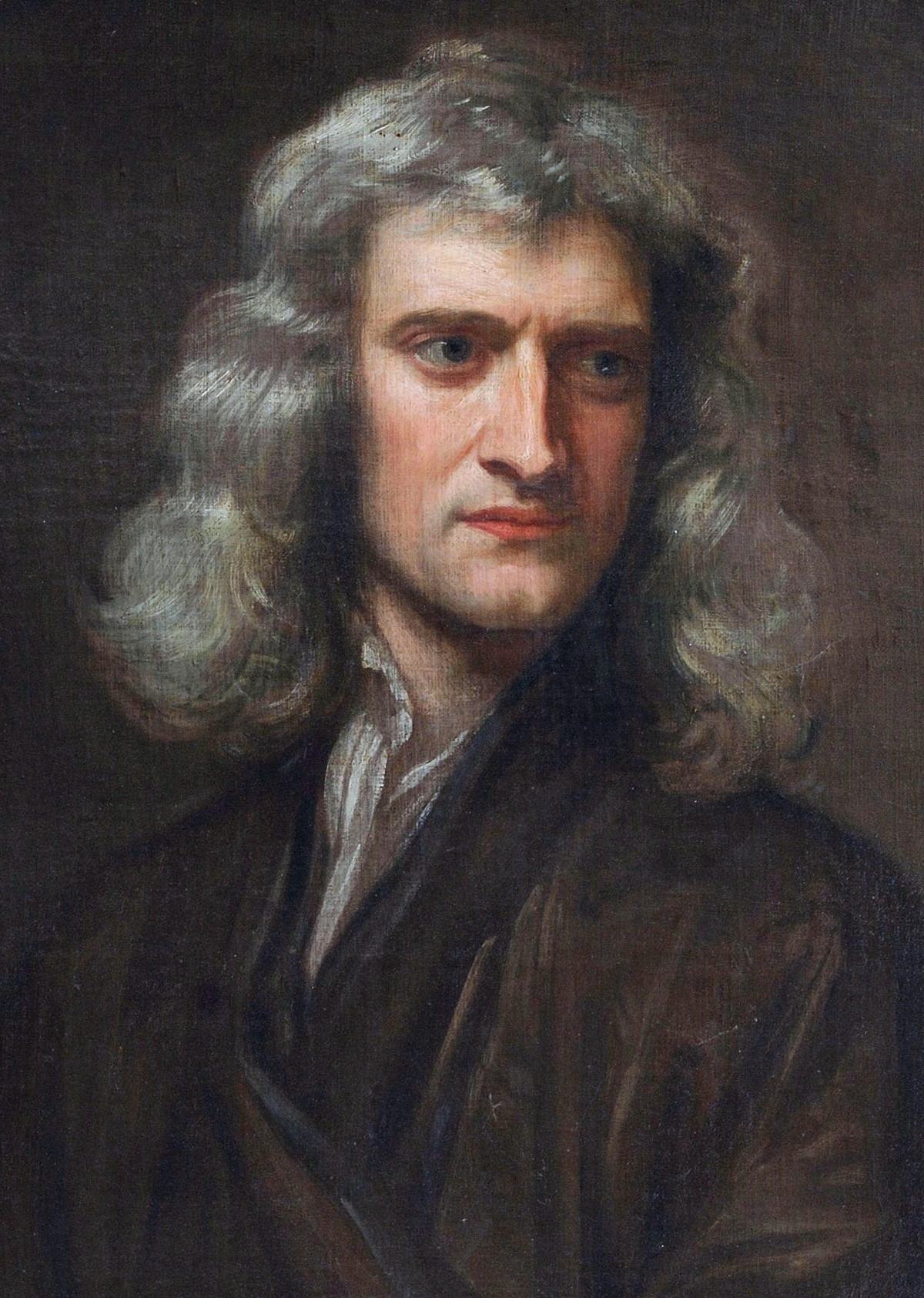
Isaac Newton folded observations like Stevin's into a single law in Philosophiae Naturalis Principia Mathematica, the book he published on 5 July 1687. It reduced gravity to one tidy formula, F = Gm1m2/r², where G is a constant fixed at 6.674×10⁻¹¹ — a number so small that its effect between two everyday objects is nearly impossible to feel.
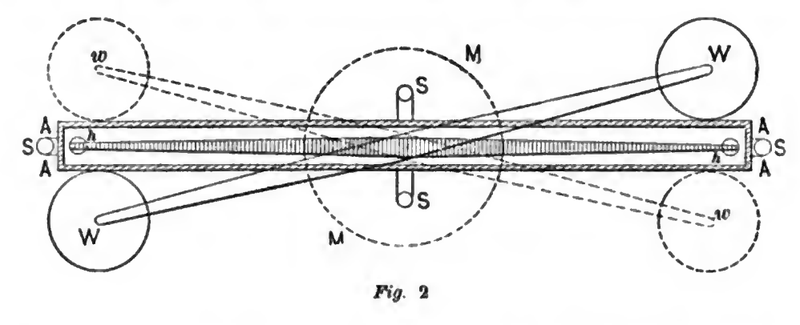

Newton never measured G himself. It took over a century for Henry Cavendish, a British scientist, to run the first laboratory test of Newton's gravitational law: in 1798 he weighed lead spheres against each other to show that the same force pulling planets together also acts between objects on a tabletop.
From a Predicted Planet to an Unexplained Wobble
Newton's law was accurate enough to do something remarkable: find a planet nobody had seen yet. In 1846, John Couch Adams and Urbain Le Verrier, working independently as astronomers, worked out where an unseen body had to be tugging at a neighboring planet's orbit, and a telescope pointed at that patch of sky turned up Neptune within a day.
But the same law produced a small, persistent discrepancy much closer to home. Once the gravitational pull of every other planet is subtracted from Mercury's orbit, Newton's equations still miss the observed swing by 43 arcseconds per century — too small to matter for most purposes, but too large for physicists to shrug off.
Einstein's New Picture of Falling
The fix eventually came from a patent office clerk in Bern. In 1905, Albert Einstein published the paper that introduced special relativity, upending how physicists thought about space and time.
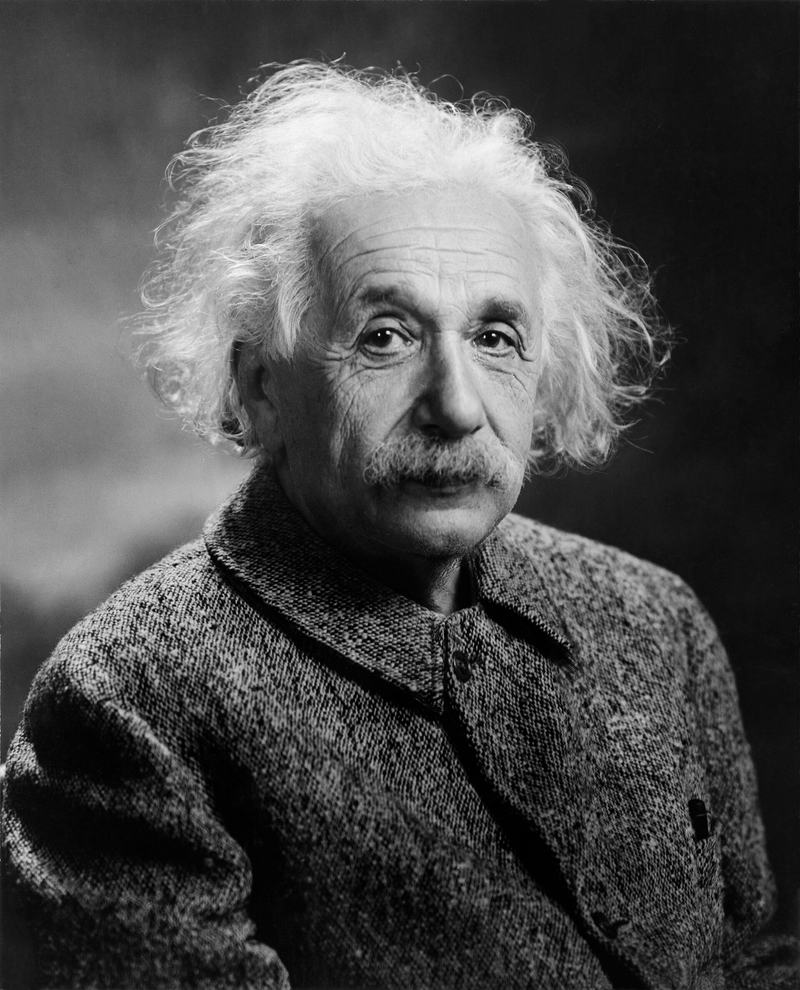

Two years later, he had what he would later call the happiest realization of his life: someone in free fall feels weightless, as though gravity had simply switched off for them. Working that idea through the mathematics took another eight years, and Einstein did not publish his finished general theory of relativity until 1915.
The new theory earned its place almost immediately. Its predictions matched Mercury's odd orbital swing, and they also explained why starlight bends as it passes close to the sun — closing the exact gap Newton's equations could never account for.
Listening for Ripples in Spacetime
General relativity also predicted that massive, accelerating objects should shake spacetime itself, sending out gravitational waves. The first evidence for this came indirectly: astronomers Hulse and Taylor tracked the binary pulsar PSR1913+16, which they had found in 1974, and watched its orbit shrink at exactly the rate that emitting gravitational waves would predict. The discovery won them the 1993 Nobel Prize in Physics.
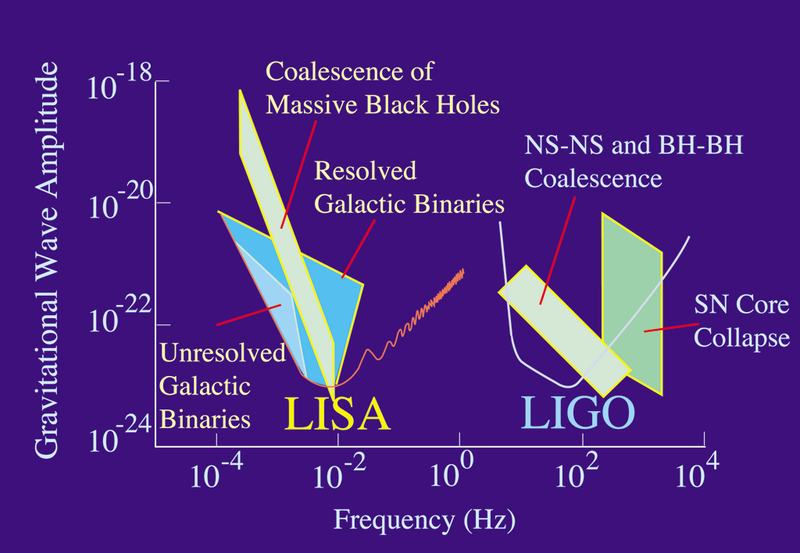

Direct proof waited another generation. The LIGO and Virgo collaborations announced on 11 February 2016 that they had picked up an actual gravitational wave: a signal named GW150914 that arrived on 14 September 2015 at precisely 09:50:45 GMT. It had been produced by two black holes, weighing 29 and 36 times the mass of the sun, spiraling together and merging roughly 1.3 billion light-years from Earth.
Gravity Depends on Where You Stand
Even without leaving the planet, gravity is not one fixed number. Earth's pull varies by about 0.7 percent across its surface, from a low of 9.7639 m/s² atop Nevado Huascarán in Peru, up to a high of 9.8337 m/s² at the Arctic Ocean's surface.
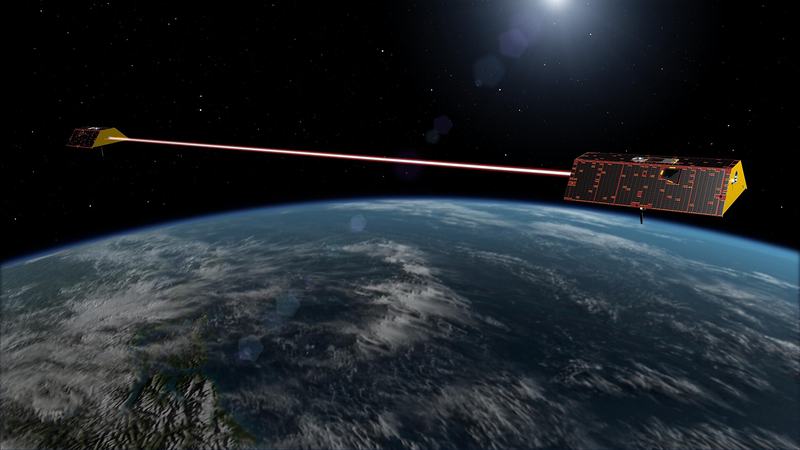

Those bumps and dips show up clearly on satellite gravity maps, credited to the CHAMP and GRACE missions together with the GFZ, NASA, and DLR agencies, which reveal why some patches of Earth pull just a little harder than others. The map circulated widely after being produced in 2005, and an even more sensitive version followed in 2011 as instruments improved.