A pulsar can be no wider than 30 kilometres, yet it spins on its axis hundreds of times every second, hurling out a beam of radio waves — and, less often, higher-energy radiation such as X-rays. Because that beam only reaches Earth when it happens to sweep past, radio telescopes record it as a rapid, regular pulse rather than a steady glow, which is where the name comes from.
Astronomers have now catalogued more than 2,600 of these objects, most of them inside the Milky Way. Far from being a curiosity, that catalogue has become a working scientific toolkit: researchers use pulsars to search for low-frequency gravitational waves, chart the structure of the galaxy, and test Einstein's general theory of relativity under conditions no laboratory on Earth could ever recreate.
What follows is the story of how pulsars were found, the strange records some of them hold, and what decades of watching them tick has taught physicists about gravity itself.
Thirty Metres of Chart Paper a Day
In 1967, Jocelyn Bell Burnell found the first radio pulsars while still working toward her PhD. She was not scanning a screen for the signal — her tracking equipment produced more than 30 metres of pen-and-paper chart recordings every single day, and the strange, steady blips had to be spotted by eye among the noise.


That kind of patient, manual data-sifting is easy to forget once a discovery becomes textbook physics, but it is exactly how an unexplained signal turned into an entirely new class of star.
A Nobel Prize With No Room for Its Discoverer
In 1974, Antony Hewish and Martin Ryle became the first astronomers ever awarded the Nobel Prize in Physics, honoured partly for Hewish's decisive role in bringing pulsars to light. It remains one of astronomy's most debated prizes, because the discovery that made it possible was Bell Burnell's: her find earned that same 1974 Nobel Prize in Physics, yet she herself was not named among the recipients.
The episode has become a standard reference point in conversations about credit in science — not because anyone doubts what she found, but because of who the prize committee chose to reward for finding it.
The Crab Nebula's Frantic Heart
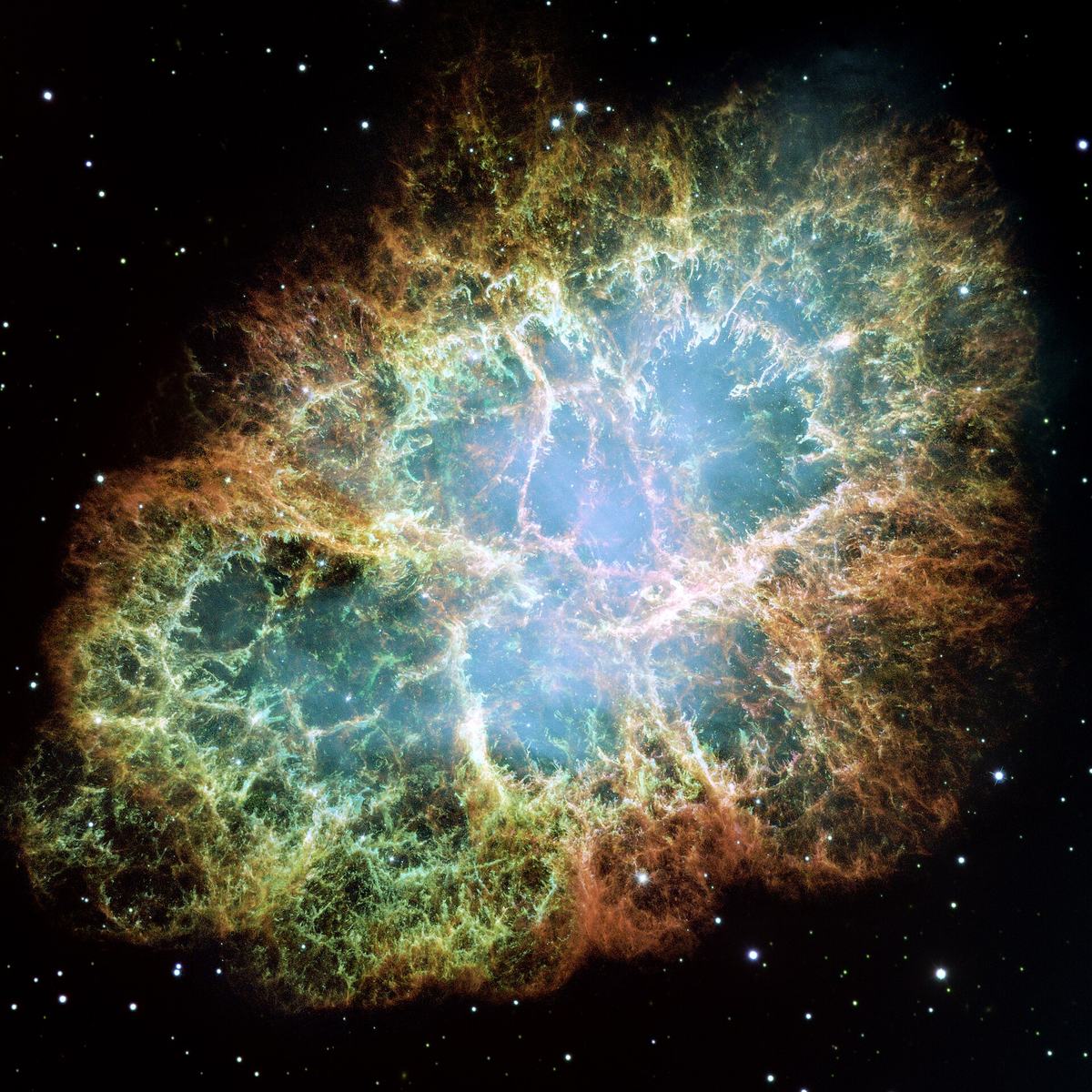
Not every pulsar sits quietly in empty space. The Crab Pulsar occupies the centre of the Crab Nebula, the wreckage of a supernova that observers on Earth watched blaze into view in the year 1054 — centuries before anyone understood what they were seeing.
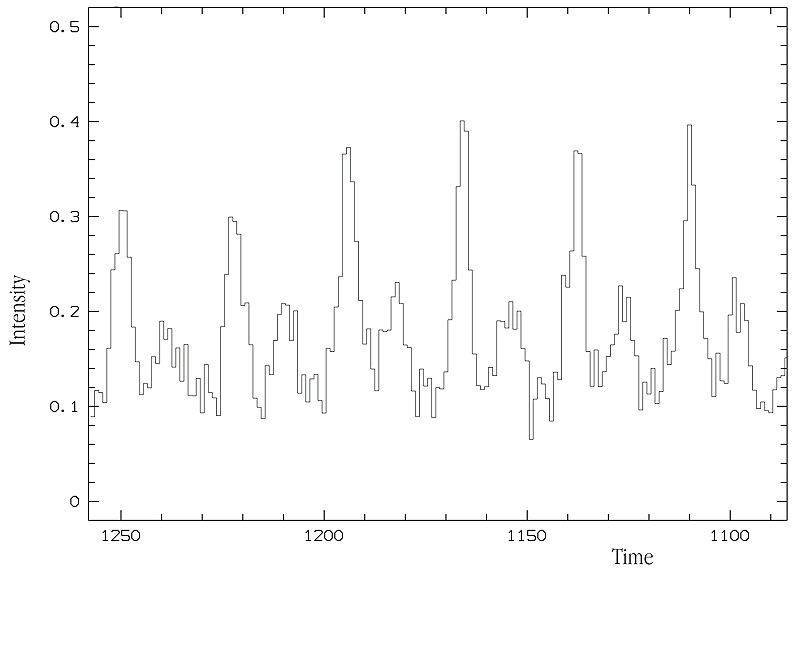

The Crab Pulsar itself is roughly 20 kilometres across, small enough to fit inside a mid-sized city, and it completes one full rotation every 33.392 milliseconds. That works out to its beams sweeping past an observer 29.946 times every second — fast enough that the nebula around it glows and flickers in time with the spin.
A Clock That Ticks 641 Times a Second
Ordinary pulsars are already fast, but a separate class pushes the idea much further. PSR B1937+21 holds a historic title: found in 1982, it was the first millisecond pulsar ever identified, and it spins at roughly 641 rotations per second. Nearly half a century later, it still ranks as the second-fastest among the roughly 200 millisecond pulsars now known — a reminder of just how extreme these objects can get.
Worlds Circling a Dead Star
Pulsars turned out to hide another surprise: planets. In 1992, Aleksander Wolszczan found the first extrasolar planets ever confirmed, orbiting the pulsar PSR B1257+12 — years before anyone detected a planet around a normal, sunlike star.
One of that system's planets, catalogued as PSR B1257+12 b, is remarkably small: its mass comes in just under double that of the Moon, making it still the least massive object ever confirmed beyond the Solar System. Finding any planet at all around a pulsar was startling; finding one that light was almost accidental.
Testing Einstein With a Cosmic Stopwatch
The same year Hewish and Ryle collected their Nobel Prize, physicists Joseph Hooton Taylor Jr. and Russell Hulse had already found something arguably just as important, back in 1974: the first pulsar known to orbit another star, designated PSR B1913+16. Because a pulsar's pulses arrive with clockwork regularity, timing them let physicists measure that binary system with extraordinary precision.
Decades of that timing produced mass estimates of 1.4398 solar masses for the pulsar and 1.3886 solar masses for its companion — figures precise enough to detect a subtle prediction of general relativity. The pair's orbital period is shrinking at 0.997 times the rate that relativity's gravitational-radiation damping predicts, about as close to a perfect match between theory and observation as astrophysics gets.
When a White Dwarf Learns to Pulse
Almost every known pulsar is what astronomers call a neutron star pulsar — but not all of them. In the binary system AR Scorpii, the pulsed light comes not from a neutron star but from a white dwarf: a highly magnetised stellar remnant, with a field strength up to 500 MG, whose spin-down powers the pulses the same way a neutron star's would.
That makes AR Scorpii the first confirmed example of a white dwarf pulsar, stretching the definition of "pulsar" well beyond the object type that gave it a name in the first place.
The Next Generation of Pulsar Hunters
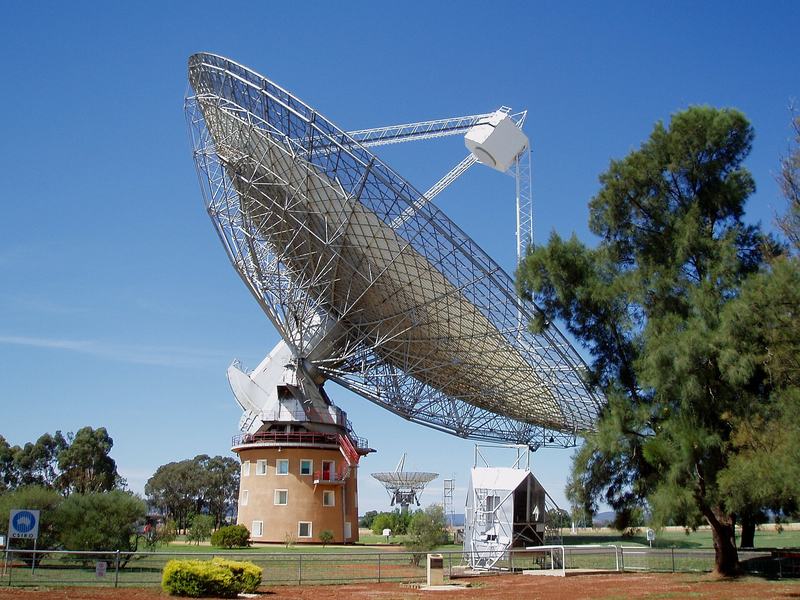

The search for more pulsars keeps growing more capable. Australia's Parkes radio telescope made its first pulsar observation back in 1968 and has since become a national icon, appearing alongside a pulsar image on the first Australian $50 note. More recently, China's FAST radio telescope — its full name the Five-hundred-metre Aperture Spherical Telescope — has become one of the most powerful instruments now scanning the sky for new ones.
Between sensitive new dishes and decades of patient timing data, pulsar science shows no sign of slowing down; the objects that started out as an unexplained pattern on a strip of chart paper have become one of astrophysics's most productive tools.
Sources
- Phys.org: Fifty years ago, Jocelyn Bell discovered pulsars and changed our view of the universe
- arXiv: Timing Measurements of the Relativistic Binary Pulsar PSR B1913+16
- arXiv: Polarimetric evidence of a white dwarf pulsar in the binary system AR Scorpii
- Wikipedia: Pulsar
- Wikipedia: Jocelyn Bell Burnell
- Wikipedia: Crab Pulsar
- Wikipedia: Millisecond pulsar