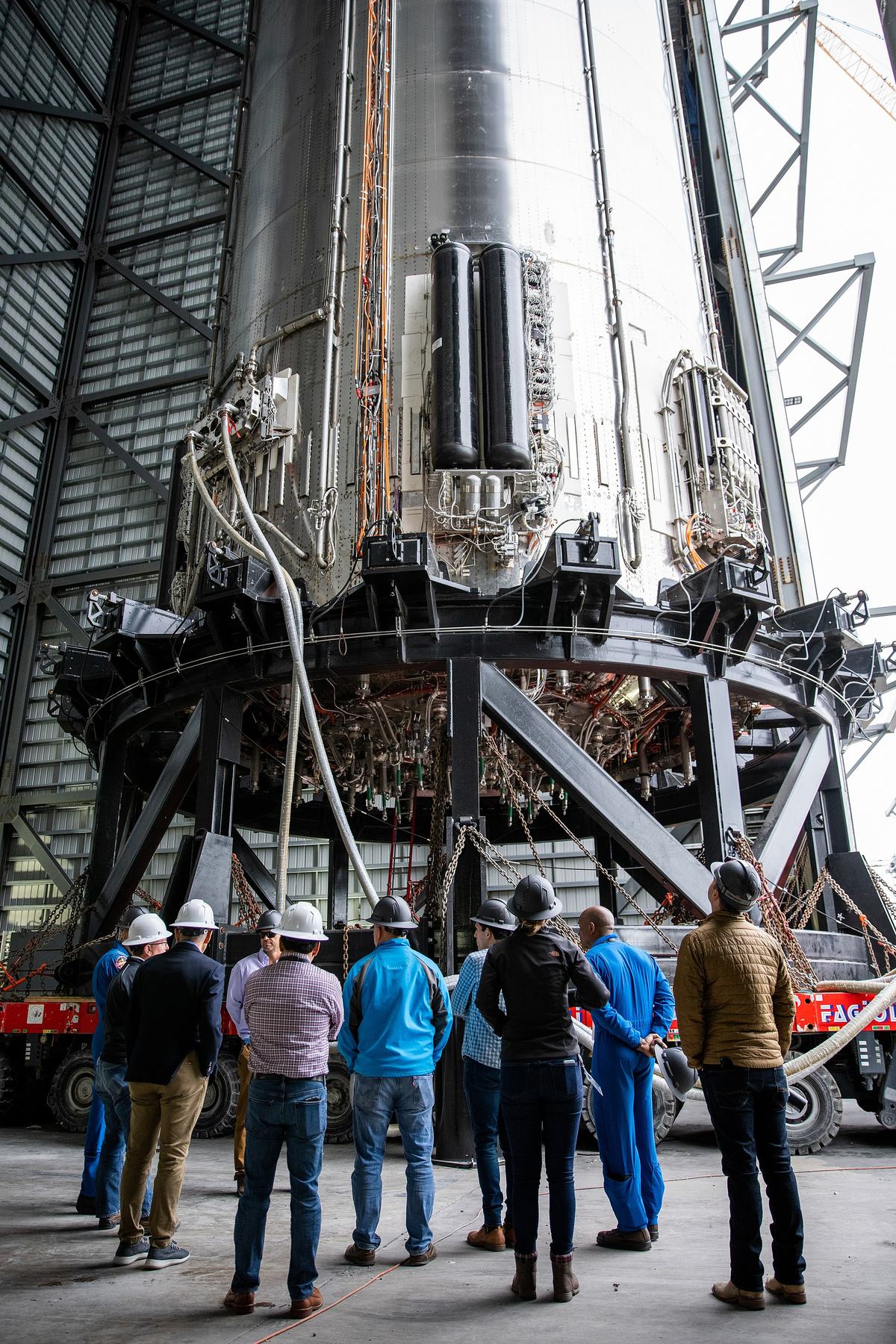
The first time SpaceX ran its Super Heavy booster at full power, it produced more than twice the thrust of the Saturn V's first stage, the rocket that once carried Apollo astronauts toward the Moon. That single comparison says a lot about the scale SpaceX decided to build at with Starship, its answer to the question of what should eventually replace the workhorse Falcon 9.
Starship is the name for the whole two-stage stack: the Super Heavy booster on the bottom, and the Starship upper stage, or "ship," riding on top. Both halves are designed to fly themselves back down and land rather than get thrown away, and the project sits at the center of SpaceX's push toward full reusability and its founder's longer-term goal of sending people to Mars. NASA has separately picked it as one of two lander designs meant to carry astronauts to the lunar surface under the Artemis program.
Getting this far has taken two decades, several redesigns, and no shortage of fireballs along the way. The sections below walk through what the hardware can actually do, how the test flights have gone, and why a giant metal tower has become almost as famous as the rocket itself.
Twice the Muscle of the Saturn V
The numbers behind that Saturn V comparison are specific. The Block 1 version of the Super Heavy booster produced 73.5 meganewtons of thrust in total, just over double the Saturn V's first stage, and SpaceX has already mapped out more for later hardware: 80.8 MN for the Block 3 booster, and as much as 98.1 MN once the Block 4 vehicle flies.
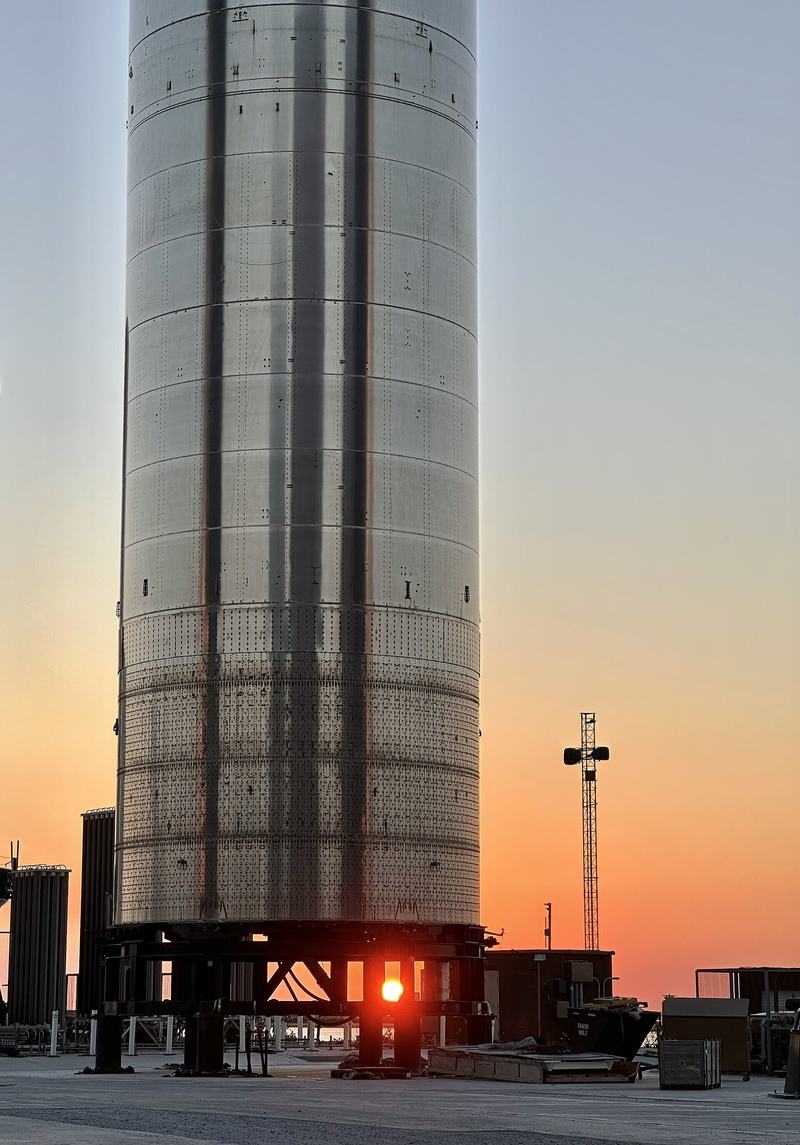

Reaching that kind of thrust means keeping dozens of engines working in sync. On Starship's debut orbital flight, all 33 Raptor engines on the booster kept firing all the way to stage separation, at which point the upper stage pushed itself free using a method called hot-staging instead of waiting for the booster to shut down first. Keeping every engine running cleanly through that handoff, on hardware this new, is one of the harder tricks in multi-engine rocket design.
An Idea Two Decades in the Making
Starship's roots go back further than most people assume. In November 2005, years before SpaceX had even flown its first rocket, the Falcon 1, Elon Musk was already describing a rocket able to carry 100 tonnes to low Earth orbit, an early concept then known as the BFR.
The hardware took over a decade to catch up with the idea. Real flight testing began in 2018 with Starhopper, a squat test tank that looked nothing like today's sleek Starship. It ran through several static engine fires before completing two short, low-altitude hops in 2019, the first time any piece of the Starship program left the ground under its own power.
First Flight, First Sandstorm
The first orbital-class Starship flight test lifted off on April 20, 2023, after an earlier attempt was aborted on April 17. Booster 7 and Ship 24 flew that mission together, and although it ended a few minutes later, it was the vehicle's first real trip off the ground as a complete stack.
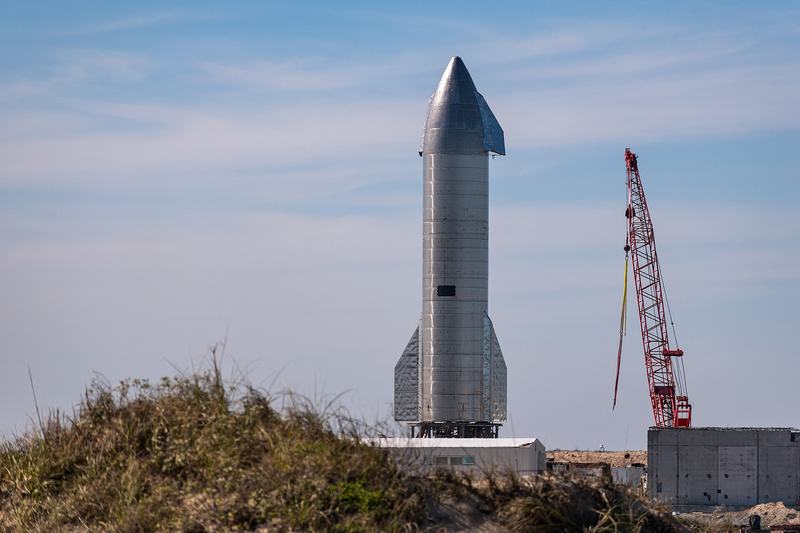

That first launch was memorable for what it did at ground level, too. It threw up so much sand and soil that debris reached communities as far as 10.7 km, about 6.6 miles, from the pad, a blunt demonstration of just how much force a fully fueled Starship stack directs downward on the way up.
The Catch Heard Round the Launch Pad
For more than a year after that first flight, returning boosters came down for propulsive splashdowns in the ocean rather than landings. That changed on October 13, 2024, when Ship 30 and Booster 12 flew together: the booster came back to the launch site and became the first Super Heavy caught out of the air, while the ship splashed down safely in the Indian Ocean.
The catch itself doesn't rely on landing legs at all. It depends on a purpose-built launch tower designed to reach out and grab the returning booster in midair, and Musk's plan for that hardware set an ambitious target from the start: a turnaround of under an hour between flights, with future Starships meant to be caught and reflown the same way. Skipping legs saves weight on every booster built, which matters when the entire point of the design is flying the same hardware again and again.
A Company Town Grows Around the Pad
Starship doesn't launch from a rented pad; it launches from a town SpaceX effectively built around itself. Starbase, Texas, the company's South Texas home base, has been incorporated as its own city in Cameron County, the first new municipality there since Los Indios back in 1995.
That kind of local control matters for an operation that periodically closes public beaches and roads to fly hardware this size, and that keeps expanding launch pads, tank farms, and factory buildings around a single site.
The Engine Nobody Else Had Flown
The engines making all of this possible are Raptors, and they use a design that had barely left the drawing board anywhere else in the world. Before Raptor, only two full-flow staged-combustion designs had ever reached a test stand: a full-scale engine the Soviets built during the 1960s under the RD-270 program, and a powerhead-only rig NASA tested in the mid-2000s, known as the Integrated Powerhead Demonstrator, which never ran as a complete flight engine.
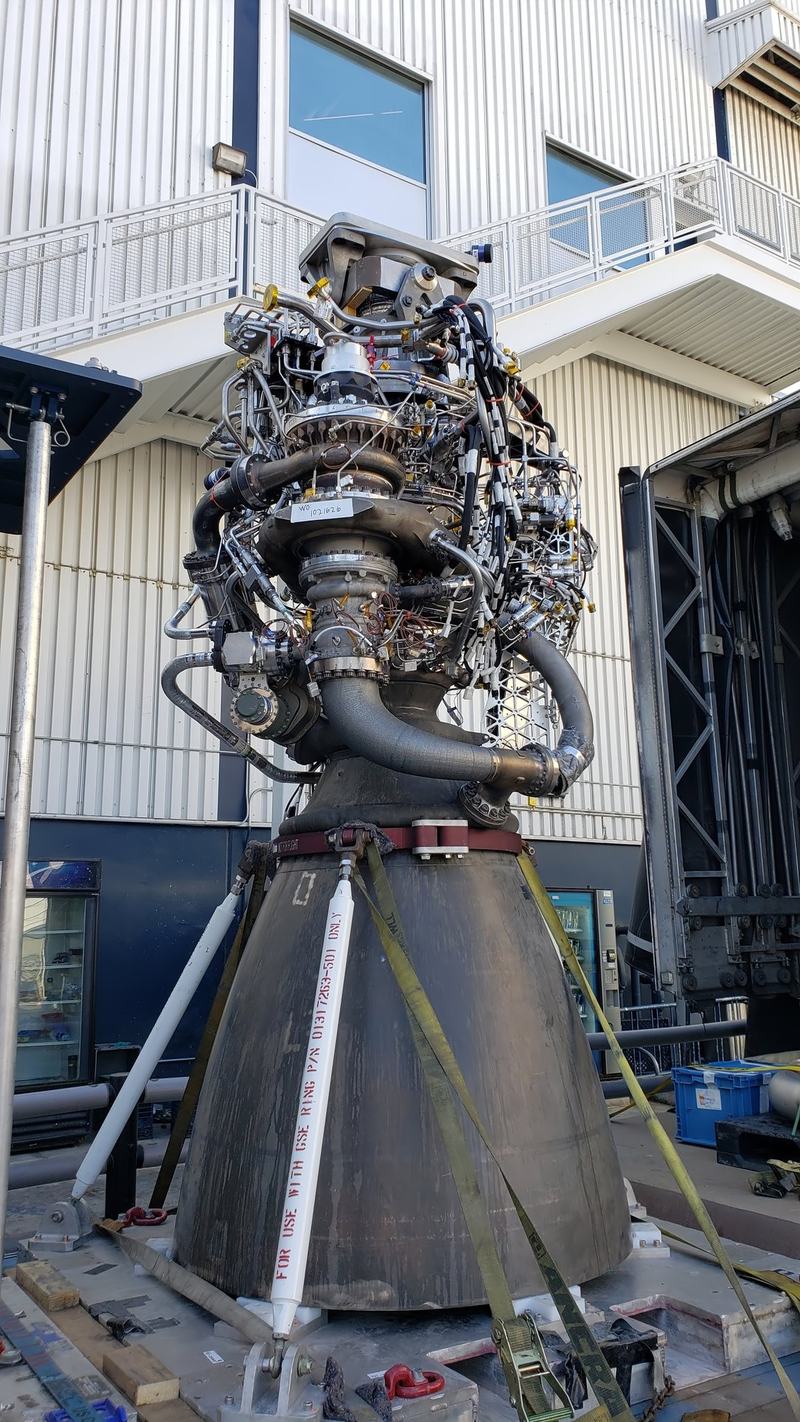

When Musk first discussed Raptor's specifications in public, he described two versions: a sea-level variant rated for 3,050 kN of thrust, and a vacuum-optimized version reaching 3,285 kN once it's operating in space, where the exhaust plume can expand more freely.
The engines have since proven they can fly more than once. On Starship's seventh flight test, a Raptor that had already flown was launched again on Super Heavy Booster 14, powered it through the ascent burn, and was recovered a second time when the tower caught the booster.
A Fleet Still Finding Its Footing
Reusable hardware is only useful if it keeps flying, and Starship's record so far is a mix of both outcomes. As of May 27, 2026, the vehicle had flown 12 times in total, with 7 full successes and 5 failures, a ratio that reflects a program still deep in its test phase rather than routine service.
Part of the reason the count keeps resetting is that "Starship" isn't one fixed vehicle. Block 1 already retired after its early flights, Block 2 flew from flight test 7 through flight test 11 before it, too, was retired, and Block 3 took over starting with flight test 12, with a further Block 4 already in development. Each generation swaps out enough hardware that engineers are effectively re-proving parts of the vehicle every time a new block appears.
Building the Moon Landing NASA Bought
Starship's job isn't limited to Earth-orbit deliveries. The vehicle sits at the center of SpaceX's reusable-launch ambitions and Musk's long-term goal of colonizing Mars, and NASA separately selected it as one of two lander designs for crewed Artemis Moon missions. NASA awarded SpaceX the contract to design, build, and fly a demonstration of that lunar version, called Starship HLS, in April 2021.

The mission plan calls for two or more astronauts to move from the Orion capsule into the Starship lander, spend roughly seven days on the lunar surface, and complete at least five EVAs outside the spacecraft before returning to orbit.
SpaceX isn't NASA's only bet on this. The agency's other Artemis lander, Blue Origin's Blue Moon, comes from a separate contract worth $3.4 billion, a reminder that even NASA is hedging on which reusable Moon lander actually shows up on schedule.