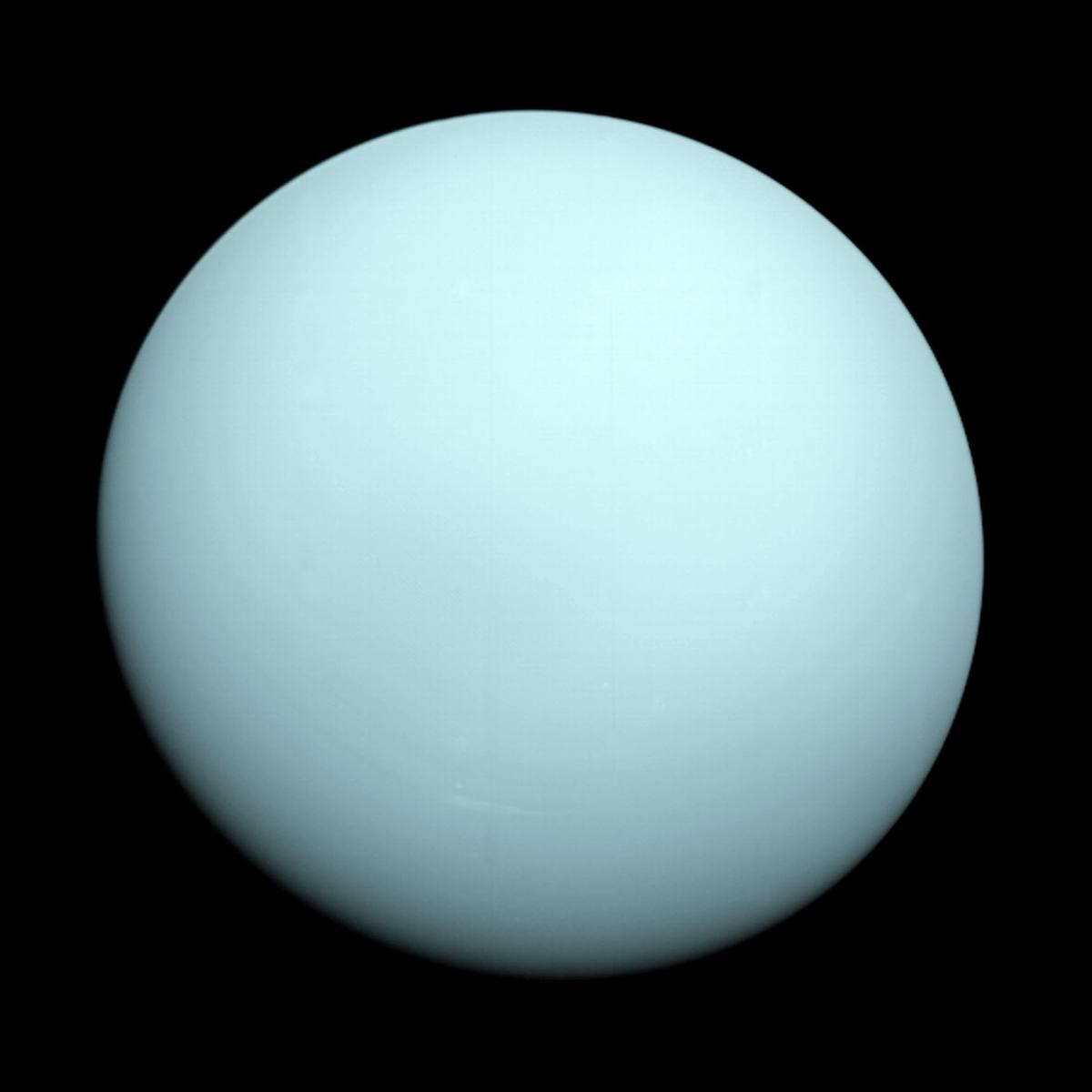
Uranus doesn't just have a tilted axis — it's tipped over so far that it effectively orbits the Sun lying on its side. The planet's axial tilt is 82.23°, with a retrograde rotation period of just 17 hours and 14 minutes.
That's an odd way to spend an 84-year orbit, and it's not the only thing that makes Uranus strange. It's the coldest planet in the Solar System, and it has been visited by a spacecraft exactly once, on a single flyby in 1986 — nearly everything known up close about the ice giant, from its rings to its moons to its magnetic field, traces back to those few days.
A Planet Found by Accident
William Herschel first observed Uranus on 13 March 1781, making it the first planet ever discovered with the aid of a telescope — every planet known before it had been visible to the naked eye since antiquity.
Uranus may actually have been spotted almost 1,900 years earlier and simply misidentified. The Greek astronomer Hipparchus appears to have recorded its position among the stars in 128 BC while compiling his star catalog — one of the four stars he listed at that location doesn't actually exist, but Uranus was sitting at that exact spot in the sky in April of 128 BC. Without a telescope, there was no way for Hipparchus to tell a faint, slow-moving planet apart from one of the fixed stars around it.
A Name Borrowed From the Greeks
The name "Uranus" was proposed in a March 1782 treatise by astronomer Johann Elert Bode, after Ouranos, the Greek god of the sky. It stuck, and it made Uranus an outlier: it is the only one of the eight planets whose English name derives from a figure of Greek mythology. Fittingly, a world only found because of the telescope also broke from the naming pattern set by every planet discovered before it.
Spinning Like a Rolling Ball
NASA describes the effect of that 82.23° tilt simply: it makes Uranus appear to spin sideways, orbiting the Sun like a rolling ball. That sideways spin has bizarre consequences for the planet's calendar. Uranus takes 84 Earth years to complete one orbit of the Sun, and because of the tilt, each of its poles gets around 42 years of continuous sunlight, followed by 42 years of continuous darkness. A season at one of Uranus's poles isn't measured in months — it's measured in decades: half a human lifetime of unbroken day, then half a lifetime of unbroken night, before the cycle turns again.
The Coldest World in the Solar System
The lowest temperature ever recorded in Uranus's tropopause is 49 K (−224.2°C), making it the coldest planet in the Solar System. Part of the reason comes down to internal heat, or the lack of it. Neptune, Uranus's near-twin in size and composition, radiates 2.61 times as much energy into space as it receives from the Sun — meaning it generates plenty of heat of its own, deep inside. Uranus, by contrast, radiates hardly any excess heat at all, so it stays cold instead of venting warmth from its interior the way its near-twin does.
Whatever energy does move through Uranus's atmosphere keeps things far from still: wind speeds there can reach up to 900 kilometers per hour (560 miles per hour), among the fastest winds recorded on any planet.
Thirteen Rings, Barely Visible From Earth
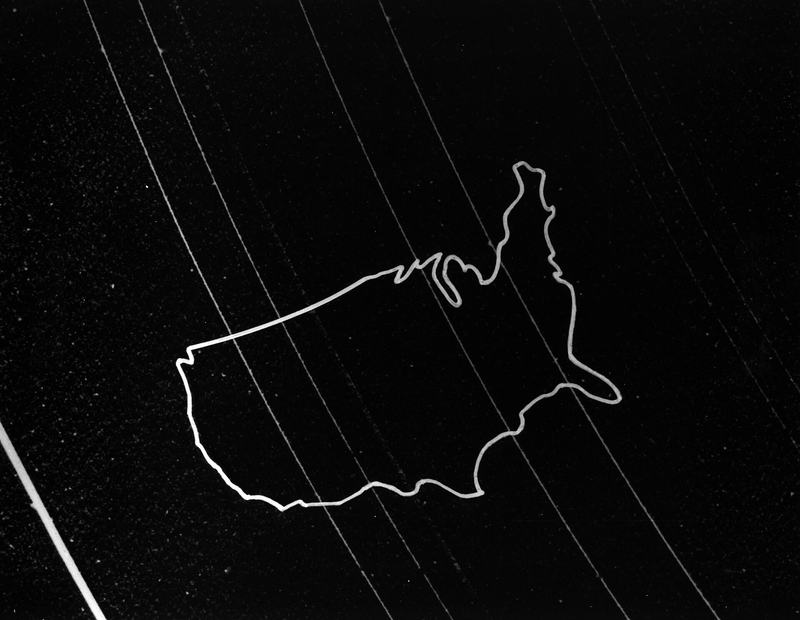
Uranus's rings consist of 13 known rings, discovered on 10 March 1977 — nearly two centuries after Herschel first spotted the planet itself. The brightest of them, the epsilon ring, is responsible for about two-thirds of the light reflected by the entire ring system. The rest are far fainter, which is a large part of why Uranus's rings went undetected by direct observation for so long even after the planet itself had been found and named.
.jpg)
Moons Named for Shakespeare, Not Zeus
Unlike the moons of every other planet, Uranus's moons are named after characters from the works of William Shakespeare and Alexander Pope rather than after figures from Greek or Roman mythology.
Titania, the largest of them, has a radius of 788.9 km — less than half that of Earth's Moon — yet it is still the eighth-largest moon in the entire Solar System. That ranking says less about Titania's own size and more about how small Uranus's whole satellite system is: the combined mass of Uranus's five major moons is less than half that of Triton, Neptune's single largest moon, alone.
Miranda, a Moon at the Edge of Round
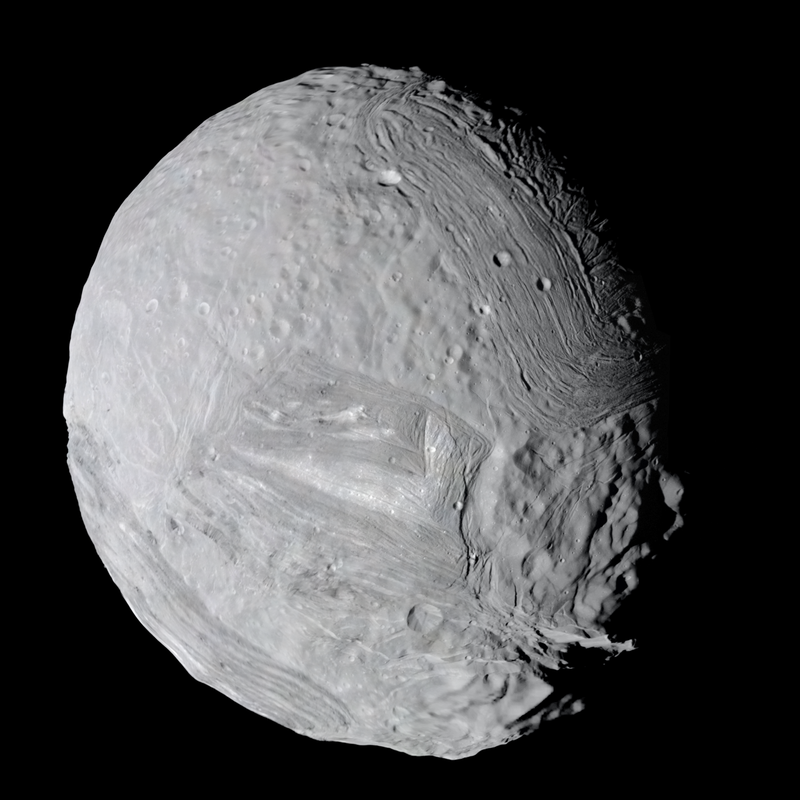
The smallest of Uranus's five round moons is Miranda, just 470 km in diameter — small enough that its total surface area is roughly equal to that of the U.S. state of Texas. Miranda sits right at the edge of what a small icy body can do: it is one of the smallest objects ever closely observed that might be in hydrostatic equilibrium, meaning gravity alone has pulled it into a sphere rather than leaving it a lumpy, irregular shape the way most objects its size end up.

The One Spacecraft That Ever Went
Voyager 2 is the only spacecraft to have ever visited either of the ice giants, Uranus or Neptune. When it flew by Uranus in 1986, it observed a total of just 10 cloud features across the entire planet — and in the decades since, no other mission has gone back, so everything else learned about the planet's rings, moons, and magnetic field up close comes from that single pass.
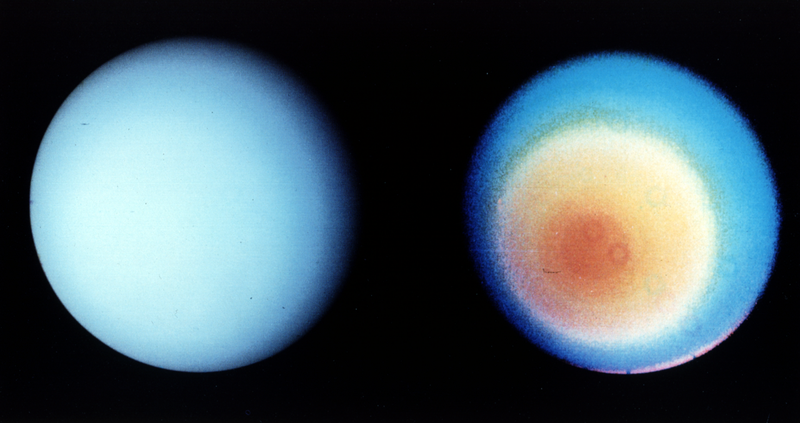
What Voyager found was strange. Uranus's magnetic field doesn't originate from the planet's geometric center, and it is tilted 59° from the planet's axis of rotation. That lopsided geometry produces a highly asymmetric magnetic field: as low as 0.1 gauss at the surface in the southern hemisphere, but as high as 1.1 gauss in the northern hemisphere — a difference large enough that a compass would tell wildly different stories depending on which pole you stood near.