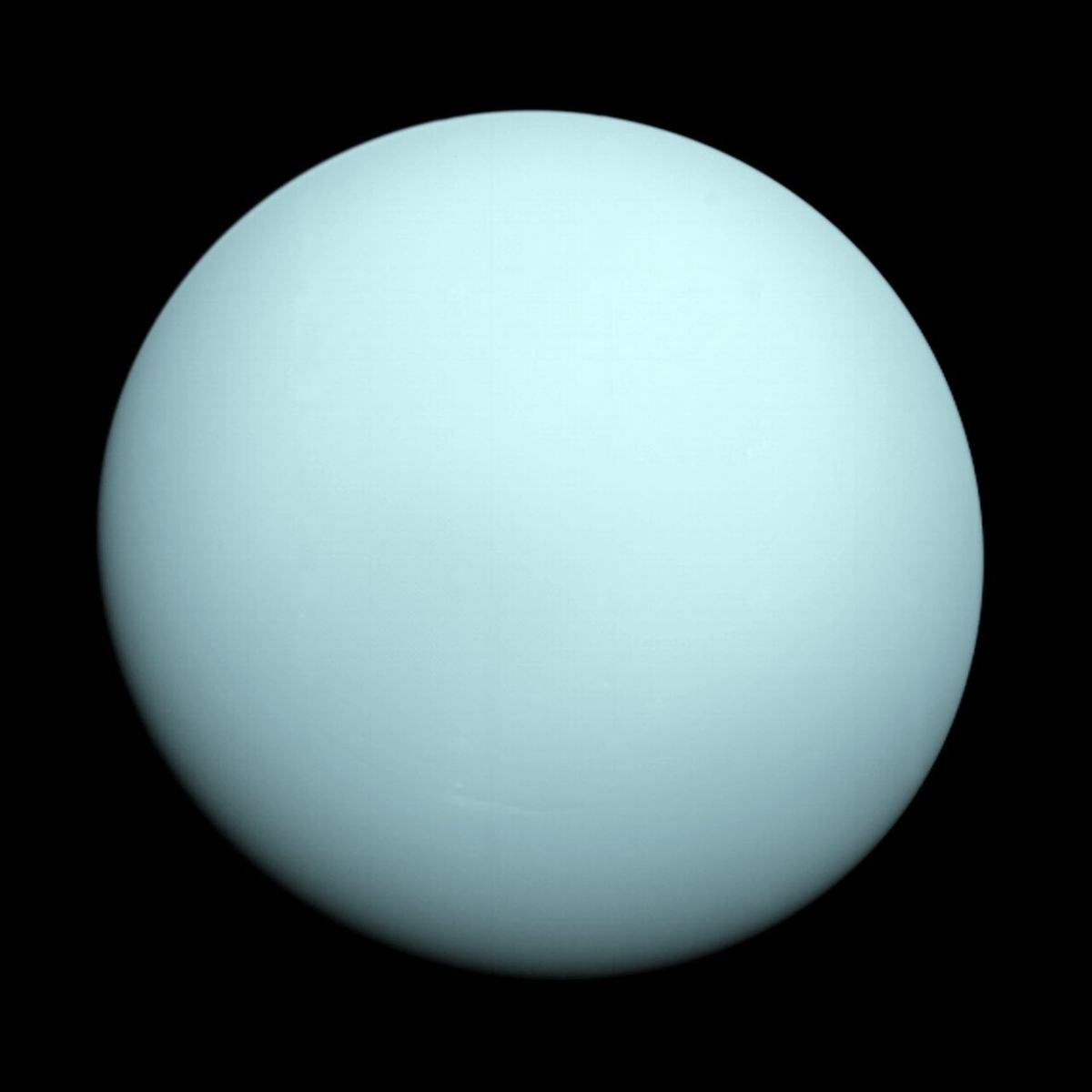
Voyager 2 is the only spacecraft to have flown past both Uranus and Neptune, which means humanity's only close-up look at either ice giant still comes from one probe's brief pass through their neighborhoods decades ago. No successor mission has followed.
NASA sent the probe skyward on August 20, 1977, a mere 16 days ahead of its twin, Voyager 1, as one half of the Voyager program. Its main assignment was to study the outer planets, with a bonus mission tacked on afterward: keep going and report back from interstellar space.
What made that first assignment possible was not luck but timing. The rest of this article follows that timing outward, planet by planet, moon by moon, to the edge of the solar system and beyond.
Aligned Once Every 176 Years
In 1964, an engineer at the Jet Propulsion Laboratory named Gary Flandro noticed something buried in the orbital mechanics: Jupiter, Saturn, Uranus, and Neptune were going to fall into a lineup in the late 1970s that let a single probe swing from one planet to the next using each flyby's gravity as a boost, instead of burning its own fuel for every course change.
That kind of lineup is not common. The four giant planets arrange themselves this way only once every 176 years, so the launch window NASA used in the 1970s was not going to come back around for the engineers who built the mission, or for several generations after them.
The Only Close Look Uranus Has Ever Had
Voyager 2 reached Uranus in 1986, and as of 2026 nothing has gone back. Four decades on, it remains the only spacecraft ever to visit the planet.
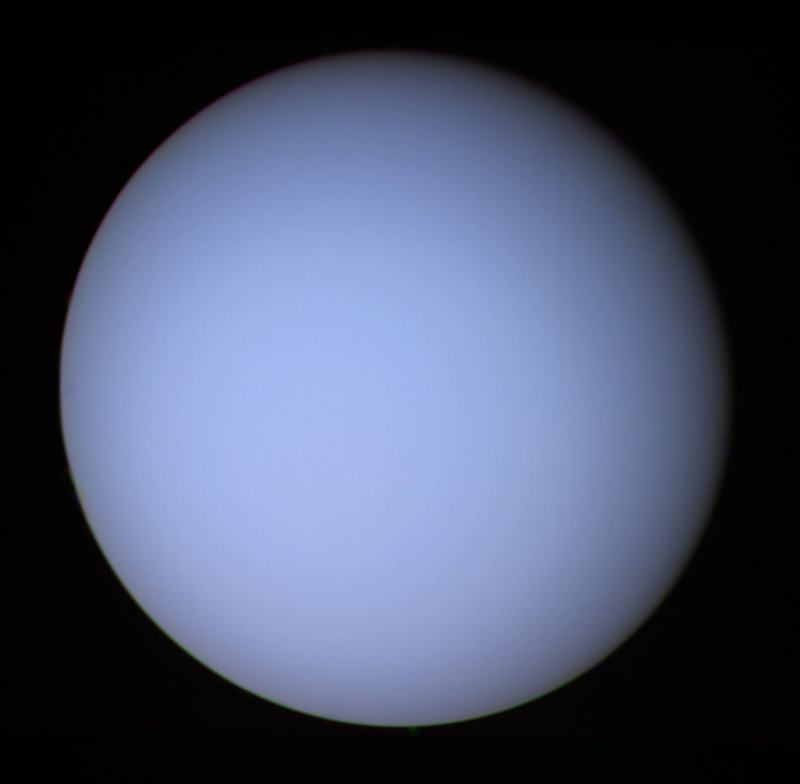

During that single flyby, the probe found 11 moons circling Uranus that no telescope had ever picked out, including Cordelia, Ophelia, and Puck. It also studied the planet's atmosphere, shaped by an extreme 97.8-degree axial tilt that leaves Uranus rolling around the Sun almost on its side, and it examined the system of rings encircling the planet.
A Five-Hour Detour to Neptune's Backyard
Three years after Uranus, Voyager 2 swept past Neptune on August 25, 1989. It is still the only mission that has ever visited that planet.
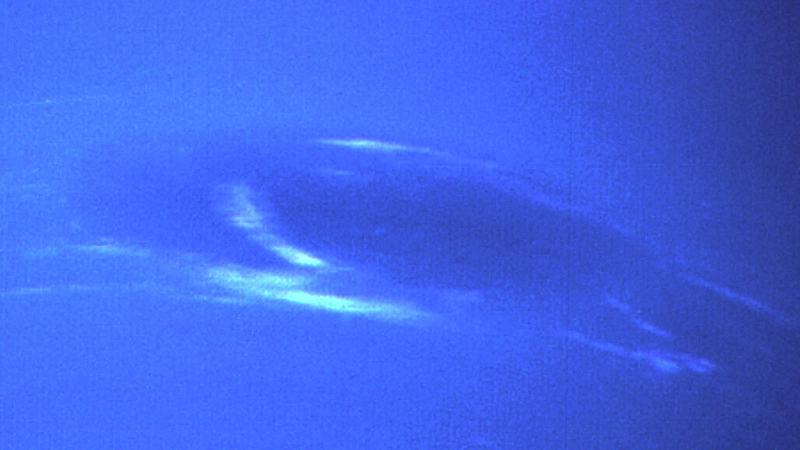

While there, the probe photographed a giant storm astronomers named the Great Dark Spot. It did not last: by the time the Hubble Space Telescope went looking for it again, the storm had disappeared entirely. Just 5 hours after its closest pass by Neptune, Voyager 2 also swept by Triton, Neptune's largest moon, closing to a gap of roughly 40,000 km (25,000 mi).
Triton, Visited Once and Barely Half-Mapped
At 2,710 km (1,680 mi) across, Triton ranks seventh among all the moons in the solar system by size, and it outsizes every dwarf planet known today. It also turned out to be one of the most geologically active worlds anyone has found: its surface looks no older than about 100 million years, which is young by planetary standards and points to ongoing resurfacing rather than a frozen, ancient crust.
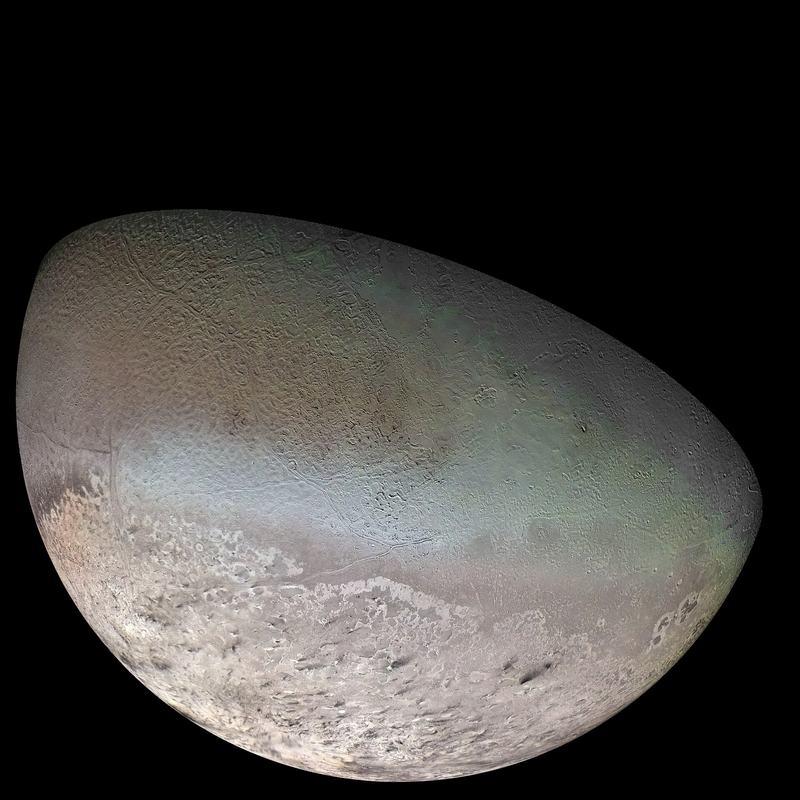

Voyager 2's quick pass only covered about 40% of Triton's surface. That gap is a large part of why several concept missions have since been proposed to go back and finish the job.
Crossing Into the Space Between the Stars
Voyager 2 left the protective bubble the Sun blows around the solar system, known as the heliosphere, and entered interstellar space on November 5, 2018. At that moment it was 119.7 AU (17.9 billion km) from the Sun, moving at 15.341 km/s.
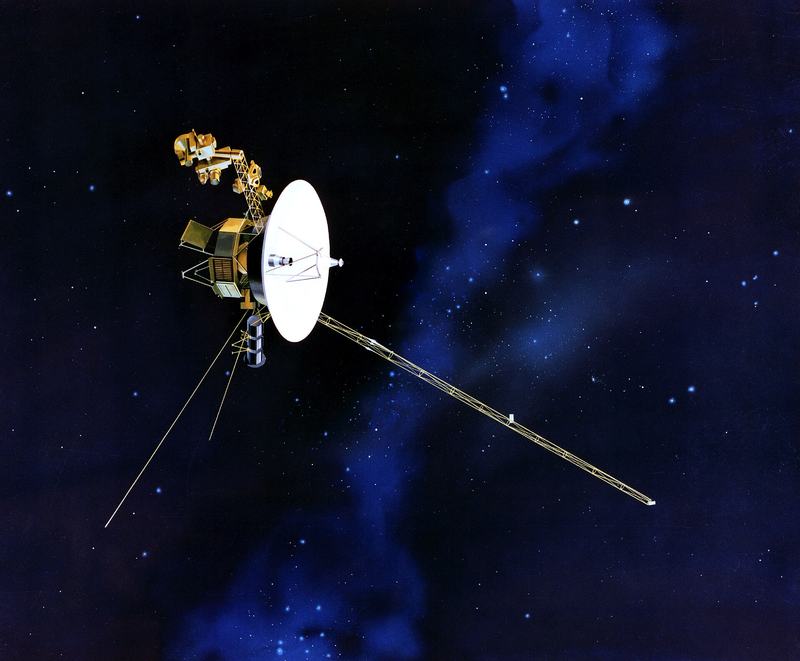

The clearest proof of that crossing came from an instrument called the Plasma Science Experiment. The equivalent instrument on Voyager 1 had already died in 1980, long before that twin reached the same boundary, so Voyager 2 ended up recording plasma data neither probe had ever captured before. By the time of that 2018 crossing, the five-year mission the Voyagers were designed for had already stretched to 41 years, making Voyager 2 NASA's longest-running spacecraft.
Talking to a Probe 16.5 Hours Away
As of February 2026, Voyager 2 is about 143.05 AU (21.4 billion km) from Earth. Mission controllers still exchange signals with it, but every message travels at the speed of light, and even at that speed the trip between the spacecraft and Earth takes roughly 16.5 hours.
That lag is the price of the alignment that sent Voyager 2 past two planets nothing else has ever reached. The next spacecraft to attempt the same outer-planet lineup will have to wait for the stars, or rather the planets, to arrange themselves again.