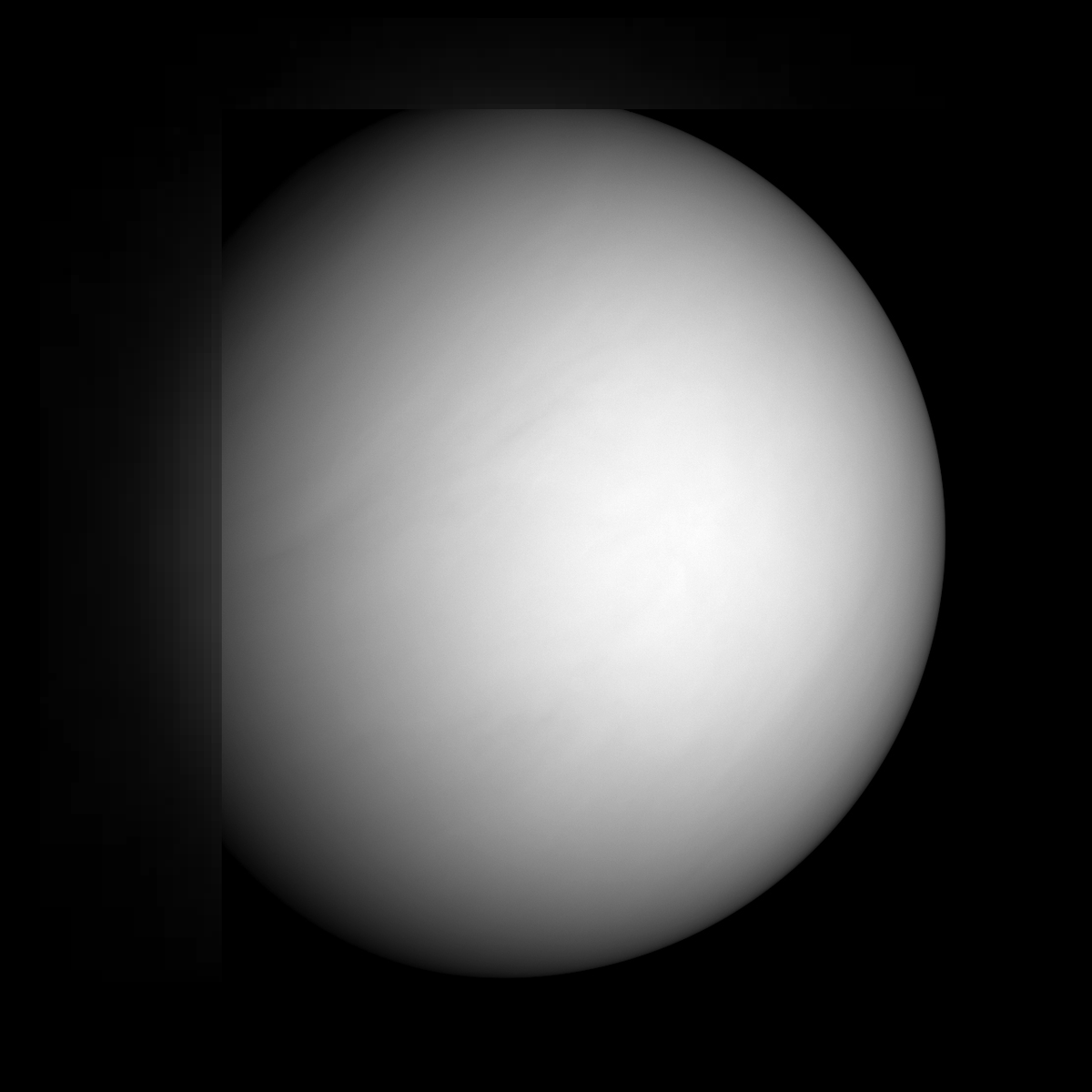
Venus is nearly Earth's twin in size — a diameter of 12,103.6 km, only 638.4 km less than Earth's, and a mass 81.5% of Earth's, which makes it the third-smallest planet in the Solar System, just ahead of Earth. And that is where the resemblance ends. Its surface pressure is 9.3 megapascals, its skies are thick with sulfuric acid, and its single day lasts longer than its entire year.
Venus has been watched, worshipped, and finally visited more than almost any world beyond our own. Ancient Sumerians already understood it was one object, not two; Soviet engineers spent two decades throwing hardware at it that melted within the hour. What is left today is a planet that keeps surprising the people who study it hardest.
Hot Enough to Melt Lead, and Hotter Than Mercury
At the surface, Venus reaches 737 K (464 °C; 867 °F) under a crushing 9.3 megapascals (93 bars) of pressure — conditions extreme enough to keep both carbon dioxide and nitrogen in a supercritical state, a phase of matter that behaves like a dense fluid rather than a familiar gas or liquid. That single fact rules out surface probes lasting more than an hour or two, no matter how well they are built.
What makes it stranger is where that heat comes from. Venus's surface is hotter than Mercury's, even though Venus sits nearly twice as far from the Sun and receives only about a quarter of the sunlight Mercury does. Distance from the Sun barely matters next to what a planet's atmosphere decides to do with the sunlight it gets — and Venus's dense, carbon-dioxide-heavy atmosphere traps heat far more effectively than distance alone would predict.
A Day That Outlasts Half Its Year
Venus's clock runs backward from every other planet's. It has retrograde rotation: unlike most planets, including Earth, it turns clockwise on its own axis, opposite to the counter-clockwise direction it orbits the Sun. That alone would be a strange enough footnote, but the numbers make it stranger still.
A Venusian solar day — sunrise to sunrise — lasts 116.75 Earth days, about half of a Venusian year of 224.7 Earth days. But the planet's true spin, its sidereal day measured against the stars rather than the Sun, is 243 Earth days — longer than the 224.7-day year itself. Because Venus rotates backward while it orbits forward, the Sun and the stars disagree about how long a "day" is, and by the stars' reckoning, Venus finishes an entire trip around the Sun before it finishes spinning once on its own axis.
The Pentagram Venus Draws in Earth's Sky
Venus and Earth fall into step with each other every 1.6 years, the interval between successive close approaches called synodic periods. Plot those approaches from Earth's point of view and something unexpected emerges: the path traces a five-pointed pentagram in the sky, one point added every synodic period, each shifted 144° from the last, closing the shape after five cycles.
That same rhythm of approach makes Venus the closest any planet ever gets to Earth: at inferior conjunction, when Venus passes directly between Earth and the Sun, the average distance is just 41 million km. Zoom out far enough, though, and even that reliable geometry has a strange gap in its schedule. Between the years 1 and 5383, Venus and Earth come within 40 million km of each other 526 times — and then, for roughly the next 60,158 years, they never do again. The clockwork is real, but it does not run forever.
The Only Planet Named for a Woman
Every other planet in the Solar System carries the name of a male god. Venus is the only planet named after a female deity, and true to that pattern, most of the individual features mapped across its surface — craters, ridges, plains — are named for women too, real and mythological alike.
Venus also breaks another rule in an unexpected way. It is one of only two planets in the Solar System with no moon of its own, yet it does have a quasi-satellite: a small object that shares its neighborhood in space without technically orbiting it. That object has officially been named Zoozve, and the International Astronomical Union recognizes it as the first-identified quasi-satellite of a major planet — a category that did not formally exist until Venus's example forced the issue.
More Volcanoes Than Any World We Know
Venus is, by a wide margin, the most volcanic planet astronomers have surveyed. It has several times as many volcanoes as Earth, including 167 individual volcanoes larger than 100 km across — a scale of volcanic complex that on Earth exists in exactly one place, Hawaii's Big Island. Counting every volcanic structure identified and mapped on the planet, the total climbs past 85,000.
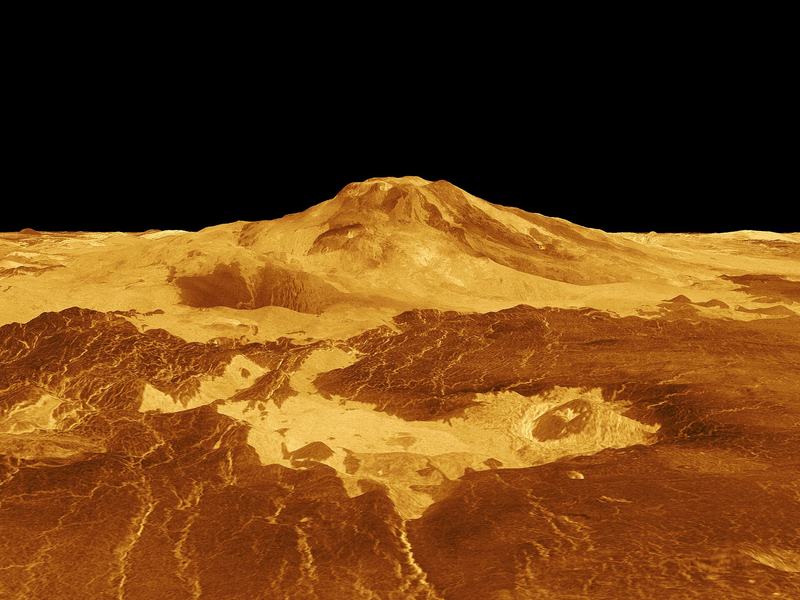
One of those volcanoes may not be finished. Maat Mons, Venus's tallest, rises 8 km above the planet's mean radius and nearly 5 km above the surrounding plains. In 2023, a study published in the journal Science analyzed radar images the Magellan spacecraft had taken of Maat Mons between 1990 and 1992 — three decades earlier — and concluded that Venus had genuinely erupted somewhere in that two-year window. Nobody was looking for an active eruption in the 1990s data; it was sitting there, waiting to be noticed once someone thought to compare the images closely enough.

Clouds of Acid, Winds That Outrun the Planet
The clouds that hide Venus's surface from ordinary telescopes are not water vapor. They are thick and composed mainly — 75 to 96% — of sulfuric acid droplets, suspended high above a surface no rain from them could ever reach without evaporating first.
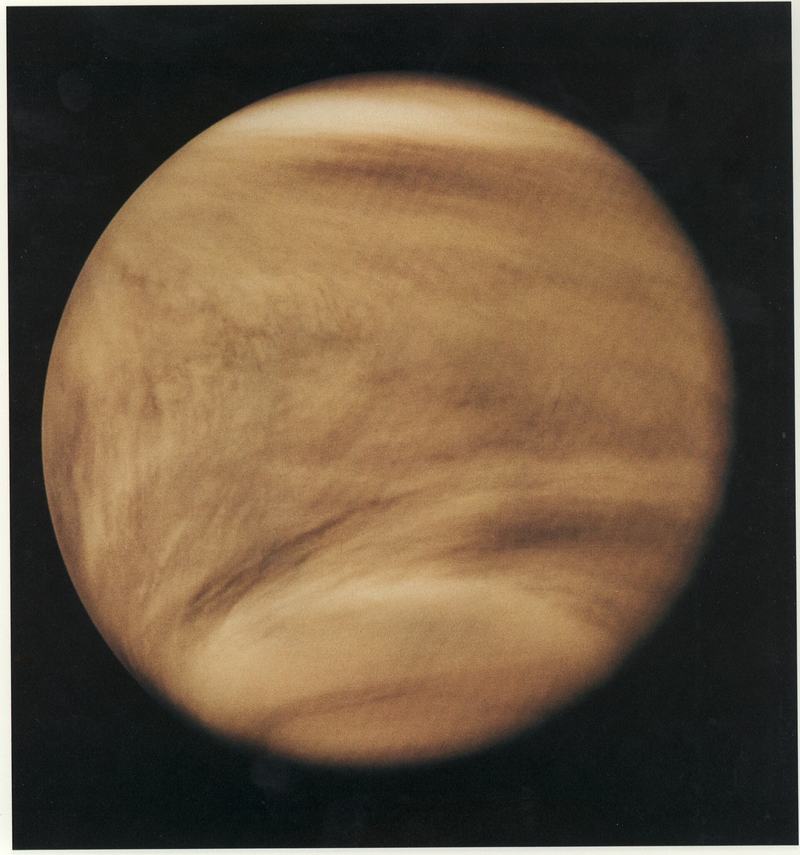

Those clouds also move at a pace the planet itself cannot match. The upper atmosphere super-rotates, circling all the way around Venus in just four Earth days, dramatically faster than the planet's own 243-day sidereal rotation. A cloud deck sixty times faster than the ground beneath it is one of the least-explained phenomena in the Solar System — the surface below barely turns while the sky above races around it.
The Soviet Union's Brutal Race to the Surface
The Soviet Union's Venera program sent a long series of landers toward Venus's surface. Due to the extreme heat and pressure, its landers could only survive on the surface for a short window, somewhere between 23 minutes and two hours, before their electronics gave out.
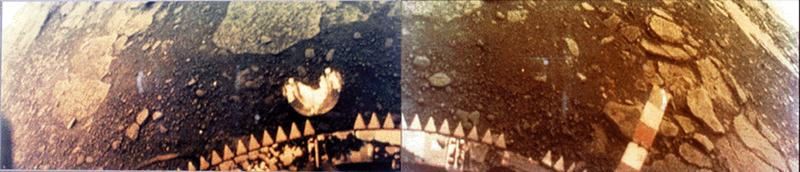
Venera 3 opened that story in the bluntest way possible: in 1966, it became the first human-made object to ever impact the surface of another planet, though it crash-landed rather than survived. Later missions did better. Venera 9's descent vehicle returned the first pictures ever taken from the surface of another planet, and in 1982 Venera 13 sent back the first color images — an orange-brown expanse of flat bedrock scattered with small, angular rocks. Venera 13 also set the program's endurance record, operating for 127 minutes before Venus's conditions finally caught up with it.
Mapping a Hidden World by Radar
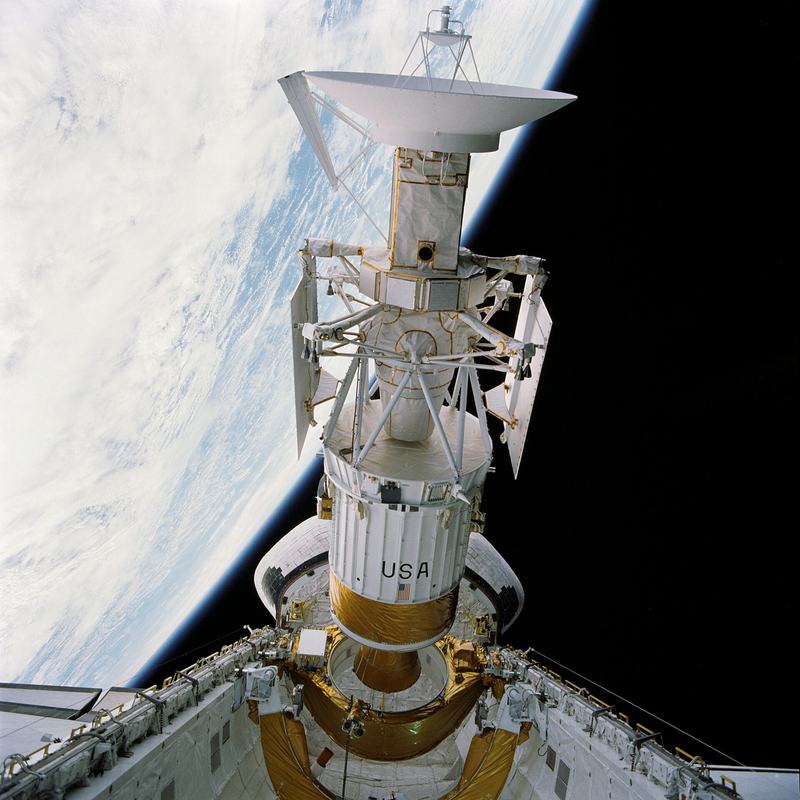
Because Venus's clouds block any ordinary camera, mapping its surface required a different kind of mission. NASA's Magellan spacecraft, a 1,035-kilogram probe launched on 4 May 1989, was the first interplanetary mission ever launched from the Space Shuttle, the first to use the Inertial Upper Stage booster, and the first spacecraft to test aerobraking — skimming a planet's upper atmosphere to shed speed — as a way to settle into orbit. It reached Venus on 10 August 1990 and used radar to see straight through the clouds to the rock below.
.jpg)
What Magellan found was a young, restless-looking surface. About 80% of Venus is covered in smooth volcanic plains, and roughly 85% of its impact craters are in pristine, barely weathered condition. Taken together, that pattern points to a global resurfacing event 300 to 600 million years ago, followed by a long decline in volcanic activity — a planet that essentially repaved itself once, and has been quietly cooling down, except perhaps at Maat Mons, ever since.