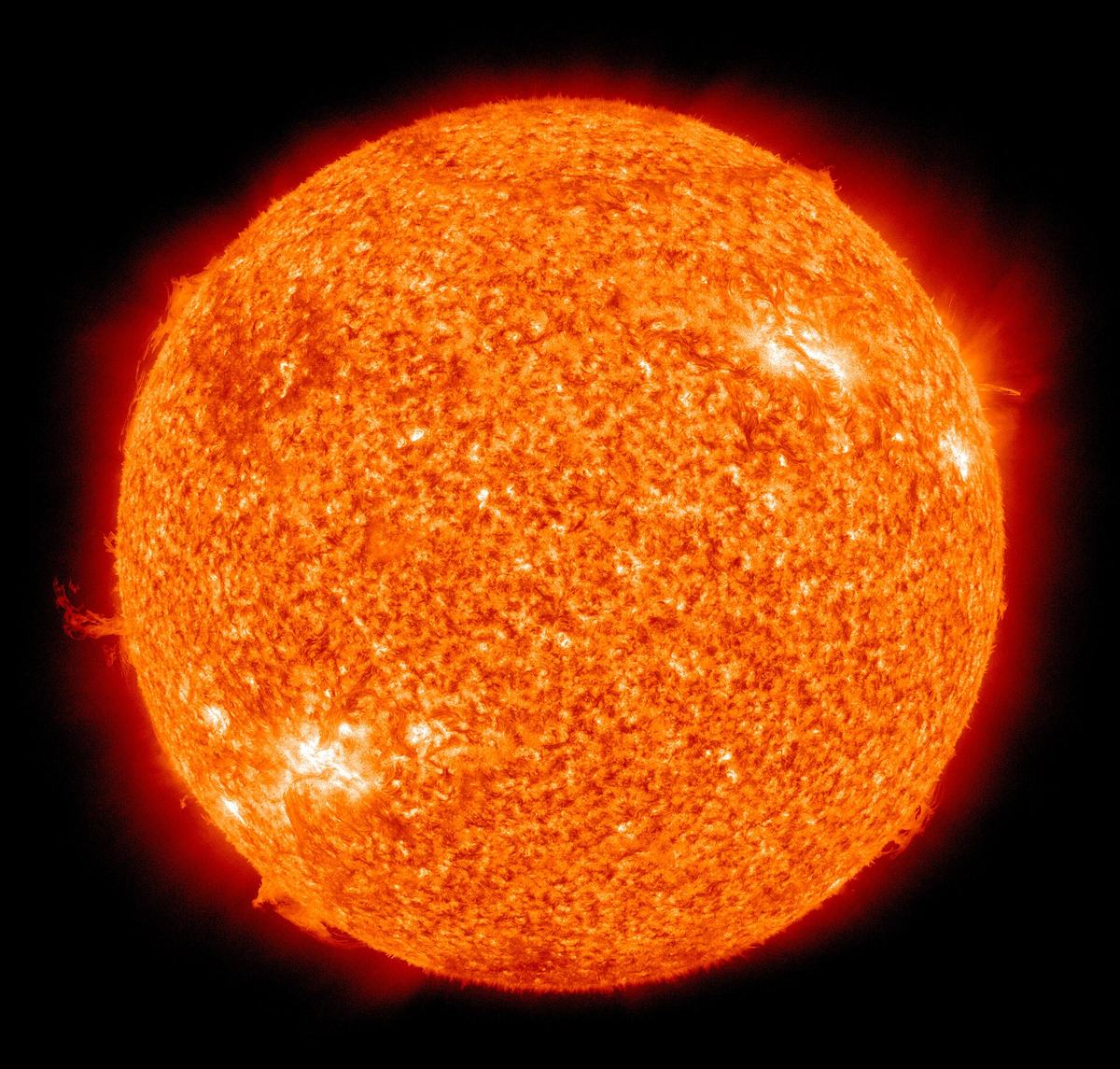
A photon born in the Sun's core can take up to 170,000 years to fight its way out to the surface. A neutrino born in the exact same fusion reaction, at the exact same instant, makes the same trip in 2.3 seconds. That gap says more about what the Sun actually is — a dense, churning reactor, not a simple ball of fire — than almost any other fact about it.
The Sun is the star at the center of the Solar System, the source of essentially all the light, heat, and energy that make life on Earth possible. It is close enough to study in detail and ordinary enough, as stars go, to teach us about the billions of others we will never visit.
That combination of familiarity and strangeness is what makes it worth a closer look. Its surface is millions of degrees cooler than the wispy atmosphere above it, its shape is closer to a perfect sphere than anything else ever measured, and spacecraft have only recently managed to fly through its outer edge and survive to report back.
A Sphere Rounder Than Anything Else We've Measured
The Sun is enormous by any human standard — its diameter is about 1,391,400 km, around 109 times that of Earth, which makes it the largest and most massive object in the Solar System. It alone accounts for about 99.86% of the total mass of the Solar System; everything else, from Jupiter down to the smallest asteroid, is what's left. To put the mass gap in human-scale terms, it would take more than 330,000 Earths to balance the Sun on a scale, and 1.3 million Earths to fill its volume.
Despite that bulk, the Sun is remarkably close to a perfect sphere. Satellite measurements found its oblateness — how much it bulges at the equator versus flattens at the poles — to be only about 8 parts per million. That makes it, by that measurement, the natural object closest to a perfect sphere ever observed. For an object made entirely of churning plasma with no rigid surface to hold its shape, that precision is unexpected; it implies the Sun's gravity dominates its internal dynamics so completely that even fast rotation barely distorts it.
Speaking of rotation, the Sun does not spin like a solid planet. Measured against the background stars, its rotational period is about 25.6 days at the equator but 33.5 days at the poles — a difference called differential rotation, possible only because the Sun is fluid all the way through rather than a rigid body.
A Core Hot Enough to Fuse Atoms, a Surface Cool by Comparison
At the Sun's center, temperatures reach close to 15.7 million kelvin and densities climb to 150 g/cm3 — about 150 times the density of liquid water — conditions extreme enough to sustain nuclear fusion. That fusion is what makes the Sun shine, but the energy it releases does not travel outward directly. It gets absorbed and re-emitted repeatedly by the surrounding plasma, a process so slow that the photon delay of up to 170,000 years described above is a direct consequence of how thoroughly packed the Sun's interior is.
The dominant fusion process is the proton-proton chain, but a secondary pathway called the CNO cycle currently supplies about 0.8% of the Sun's energy — a small fraction today, but one astronomers expect to grow as the Sun ages and brightens over billions of years. By the time energy generated by that fusion finally reaches the surface, the temperature has dropped enormously: the Sun's surface, or photosphere, sits at only about 5800 K, a small fraction of the core's temperature.
That steep drop from core to surface sets up the next puzzle, because the atmosphere above the surface reverses the trend entirely.
An Atmosphere That Gets Hotter the Farther You Go
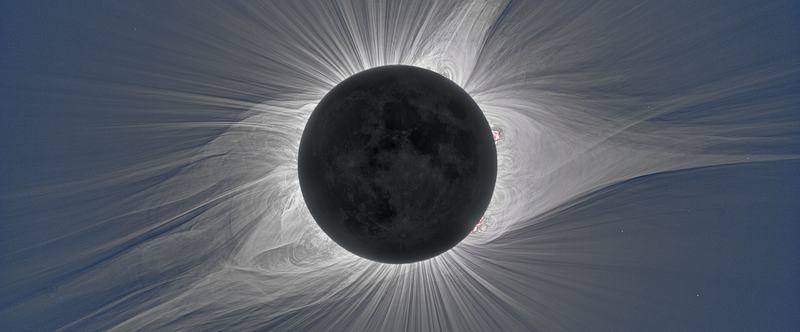
Immediately above the 5800 K photosphere sits the corona, the Sun's outer atmosphere — and it is dramatically hotter, not cooler. The corona averages 1,000,000 to 2,000,000 K, and its hottest regions reach 8,000,000 to 20,000,000 K. No complete theory yet explains why the corona is so much hotter than the surface it sits above, though magnetic reconnection is known to supply at least part of the heat. It remains one of the Sun's most stubborn open questions.
.jpg)
Studying the corona up close only became possible recently. In April 2021, NASA's Parker Solar Probe became the first spacecraft to fly through it, crossing the corona at heliocentric distances of 16 to 20 solar radii and surviving conditions no earlier mission had been built to withstand. Reaching that boundary took over six decades of spaceflight history — a reminder of how hostile the environment immediately around our own star still is.
The corona isn't confined near the Sun, either. Streaming outward, it becomes the solar wind, which travels through the entire Solar System until it hits the heliopause more than 50 au (7.5 billion km) from the Sun. Voyager 1 crossed that boundary into interstellar space on 25 August 2012, at about 122 au (18.3 billion km) out — proof that the Sun's influence extends far beyond the planets before it finally gives way to the rest of the galaxy.
Bright Enough to Outshine Every Other Star Combined
From Earth, the Sun has an apparent magnitude of -26.74, making it by far the brightest object in the sky. That number translates to nearly 13 billion times brighter than Sirius, the next brightest star, which has an apparent magnitude of -1.46. The gap is really about distance, not raw power: the Sun is only about 93 million miles (150 million kilometers) from Earth, while every other star is trillions of miles away — close enough that its light overwhelms every other point in the night sky combined.
Sunspots, Flares, and Prominences: The Sun's Weather
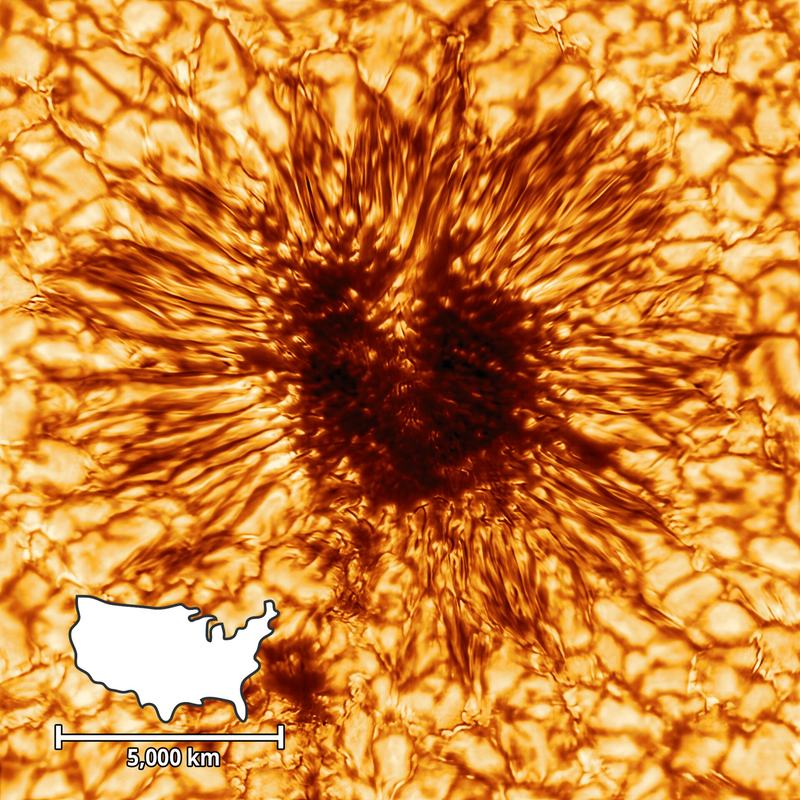

The Sun's surface is not static. Sunspots — cooler, darker patches caused by concentrated magnetic fields — have core temperatures of roughly 3,000 to 4,500 K against a surrounding photosphere at about 5,780 K, and they range enormously in size, from 16 km up to 160,000 km across. Their number rises and falls on an 11-year solar cycle, making sunspot counts one of the oldest continuously tracked indicators of solar activity.
More violent are solar flares, sudden releases of magnetic energy that are ranked by X-ray brightness on a lettered scale. Severe X10-class flares occur about eight times per 11-year cycle, while minor M1-class flares happen roughly 2,000 times in the same span — a stark reminder that the Sun's most extreme outbursts are rare precisely because they are extreme. Flares were first identified in 1859, when astronomers Richard Carrington and Richard Hodgson independently observed one by projecting the Sun's image through a telescope, decades before anyone understood what a magnetic field on the Sun even meant.
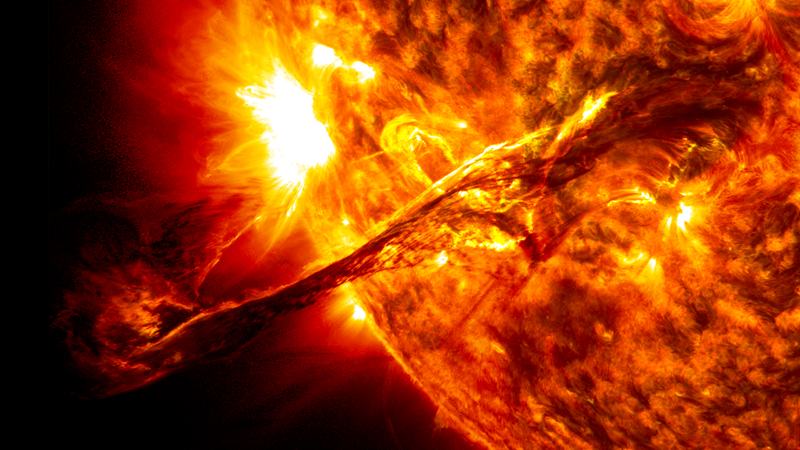

Solar prominences are calmer but visually striking: loops of relatively cool plasma anchored to the surface and arching out into the corona. Like the corona itself, they're normally too faint to see against the Sun's glare and become visible to the naked eye only during a total solar eclipse. The largest prominence ever recorded stretched more than 800,000 km — roughly the length of a solar radius — looping off a star that is, on the scale of the galaxy, a fairly ordinary size.
A Star on the Move
The Sun and its entire planetary system are not sitting still. The Solar System travels through the Milky Way at an average velocity of 450,000 miles per hour (720,000 km/h) — fast enough to cross the continental United States in under 30 seconds. Yet even at that speed, one full orbit of the galaxy takes about 230 million years, a span so long that the Sun has completed only about 20 such orbits since it formed. Scale is relative: a star that outshines everything else in our sky by billions of times is, from the perspective of the Milky Way, just one light on a very slow-moving carousel.