Astronomers using the European Space Agency's Herschel infrared observatory once found something that should not exist: an honest-to-goodness hole punched through a cloud of gas and dust. It sounds like a rounding error, but it turned into one of the clearest windows we have into how a star's birth finally ends.
A star is, at its simplest, a ball of gas lit from within by fusion. But the details behind that simple sentence are stranger and more precise than most people expect — from the letters astronomers use to sort them, to the exact recipe of gas they are built from, to the improbably tiny remnants some of them leave behind. This article works through what the record actually shows, fact by fact.
A Hole Punched Through a Star Nursery
Herschel was scanning a region near the reflection nebula NGC 1999 when it spotted a patch of sky that had always looked like just another dark dust cloud. It was not. The dark patch turned out to be an actual gap, and it handed astronomers a rare, direct glimpse of the last stage of star formation — the moment a young star finishes clearing away the material it was born from.
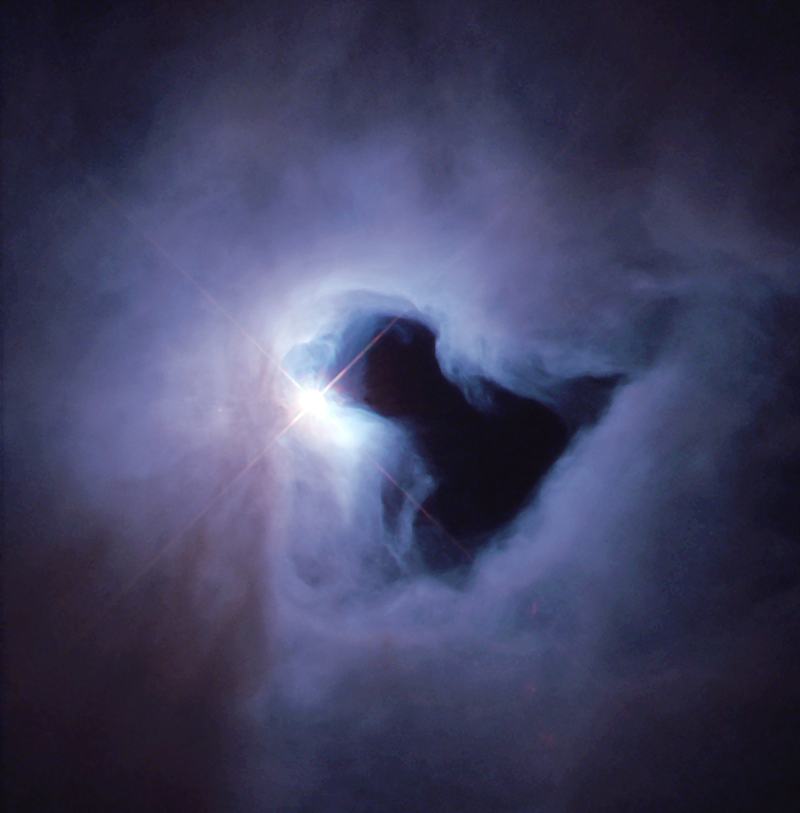

The leading explanation is mechanical rather than mysterious. Researchers think narrow jets of gas fired out by young stars in the region physically punched a way out through the surrounding gas and dust that make up NGC 1999, carving the opening Herschel photographed. It matters because catching this process mid-act is rare — most of what we know about star formation comes from comparing snapshots of different stars at different ages, not watching one process unfold in a single system.
Sorting Stars by Letter
Nearly every star gets filed into the Morgan-Keenan system, which sorts stars by seven letters — O, B, A, F, G, K, M — running from the hottest O-type stars down to the coolest M-type stars. The order looks arbitrary until you know it is a straight temperature ranking — the historical accident is only in the letters, not the physics.
Each class also takes a numeric subdivision, and the record shows just how fine-grained that scale gets: the star Mu Normae carries the designation O9.7, a fractional class squeezed between whole-number steps. That precision exists because temperature is a continuum, and a seven-letter alphabet was never going to capture it without decimals.
The Sun's Own Spectral ID
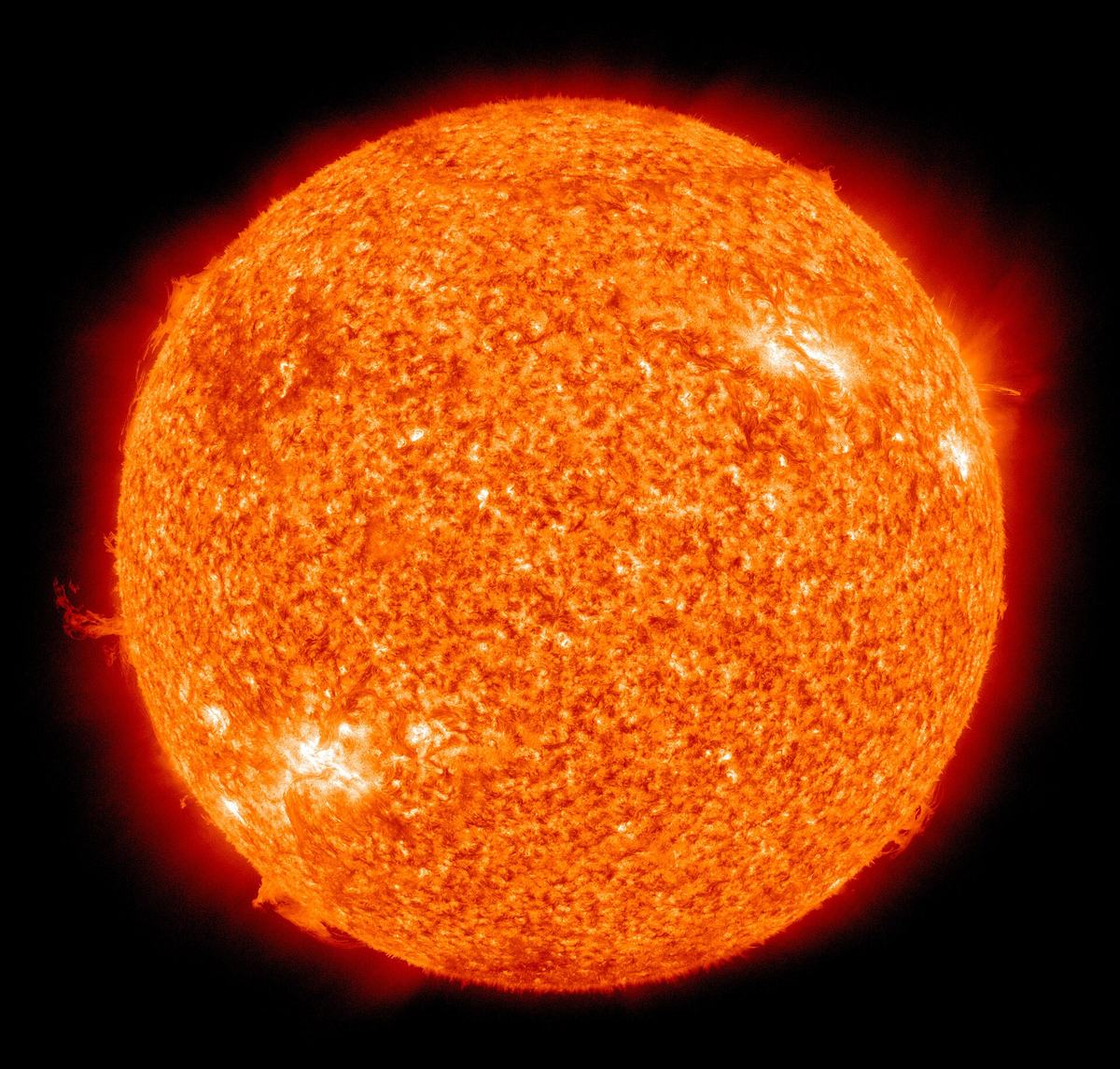
Run the Sun through that same system and it comes out as G2V, a designation that puts its surface temperature at roughly 5,800 K. The "V" is doing real work there: it marks the Sun as an ordinary, hydrogen-burning star rather than a giant or a stellar remnant.
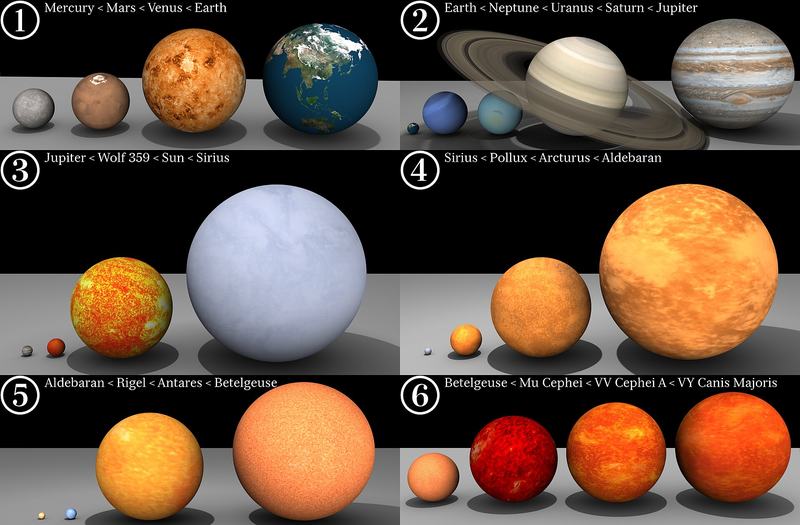

That temperature sits comfortably inside the main sequence's full range, which runs from roughly 2,000 K at the coolest to 50,000 K at the hottest. Stranger still, some newly formed white dwarfs — stars that have already finished burning — run hotter than any main-sequence star, above 100,000 K. A stellar corpse can, for a while, outshine in temperature almost everything still actively fusing hydrogen.
Built Mostly From Hydrogen
Weigh the Sun today and 74.9% of its mass is hydrogen, with helium making up 23.8% and the remaining 1.3% made of heavier elements, a share astronomers simply call its metallicity. Those numbers are not fixed at birth: a newly formed protostar starts out closer to 70% hydrogen and 28% helium by mass, with only trace amounts of anything heavier.
The gap between those two snapshots is fusion doing its slow work — billions of years of hydrogen quietly converting into helium in the core. It is a reminder that a star's composition is really a running total, not a label fixed at formation.
The Reaction That Powers Starlight
The clue that made this possible arrived almost by accident. Francis Aston's 1919 invention of the mass spectrometer let scientists weigh atoms precisely enough to show that four hydrogen atoms outweigh a single helium atom — the mass difference that fusion releases as light and heat. It took another two decades for the mechanism to be pinned down: physicists Hans Bethe and Charles Critchfield published the details in 1938, describing the proton-proton chain as the specific fusion sequence that dominates energy production in Sun-like stars.
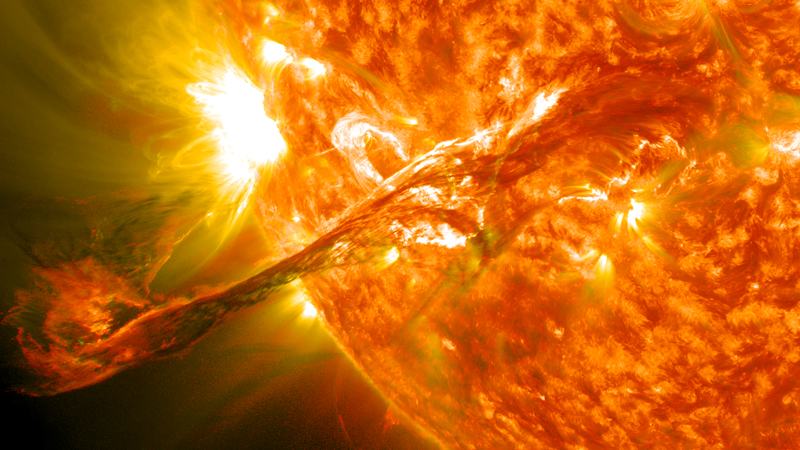

Getting that energy out of the core is its own problem, and different stars solve it differently. Convection — bulk currents of hot gas physically carrying heat outward — becomes an important transport method specifically in stars weighing in at roughly 1.3 to 1.5 solar masses or heavier. Below that threshold, radiation alone tends to do the job.
Measuring the Improbably Large and Improbably Far
Some of the most important stellar facts are not about stars themselves but about the tools used to pin them down. In 1838, Friedrich Bessel used the parallax technique — measuring a star's tiny apparent shift against the background sky — to show that 61 Cygni lies 11.4 light-years from Earth. It was the first time anyone had directly measured a star's distance rather than estimating it.
Modern instruments have pushed that same basic idea absurdly far. In April 2018, astronomers reported that a star nicknamed Icarus, formally MACS J1149 Lensed Star 1, is the most distant ordinary star ever detected — 9 billion light-years away, visible at all only because a foreground galaxy cluster's gravity bent and magnified its light. None of this distance work happens without a fixed ruler, which is why the International Astronomical Union settled the matter in 2012, fixing the astronomical unit at exactly 149,597,870,700 meters.
The Long Afterlife of a Star
Not every star fades quietly. Once a star like the Sun exhausts its fuel, what is left behind is a white dwarf — and the record of finding one sits close to home. The nearest known white dwarf, Sirius B, lies just 8.6 light-years away as the smaller companion in the Sirius binary system, hidden for decades in the glare of its brighter partner before astronomers confirmed it. The term itself is comparatively young: white dwarf was coined only in 1922, by the astronomer Willem Jacob Luyten.
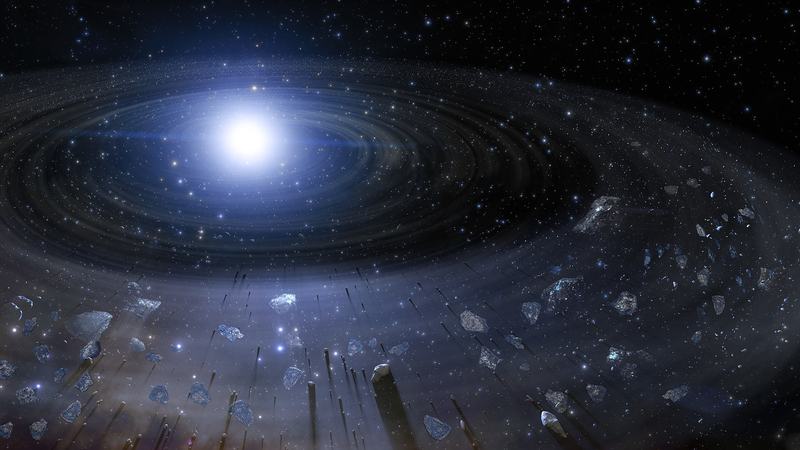

There is a hard ceiling on how massive one of these remnants can be. A white dwarf is held up only by electron degeneracy pressure — a quantum effect, not ordinary gas pressure — and that pressure cannot support more than about 1.44 times the Sun's mass, a boundary known as the Chandrasekhar limit. Cross it, and the star cannot remain a white dwarf at all; it collapses into something else entirely.