The word nebula comes from the Latin for "cloud" or "fog," and it can be pluralized as either nebulae or nebulas. That vagueness suits the object: a nebula is simply a large, glowing or obscuring patch of the interstellar medium, and it can mean wildly different things depending on which kind you're looking at.
Some nebulae are stellar nurseries where gas and dust clump together until they collapse into new stars. Others are the wreckage left behind when a star dies — sometimes gently, sometimes in a catastrophic explosion. One entire category is named after planets even though it has nothing to do with planets at all. The physics behind each type is different enough that astronomers had to invent separate names, separate explanations, and, in some cases, wait centuries to figure out which kind of nebula they were even looking at.
A Cloud With No Fixed Shape
Nebulae are often star-forming regions: gas, dust, and other material inside them clump together into denser regions that keep attracting more matter until they become dense enough to form stars. That's the mechanism behind most of the new stars that appear in a galaxy — they are quite literally condensed out of a nebula's own material.
Most nebulae are enormous, with some spanning hundreds of light-years across. And unlike a planet or a star, a nebula rarely has a crisp outline: most nebulae are classified as diffuse nebulae, meaning they are extended clouds with no well-defined boundaries. That combination of huge scale and fuzzy edges is why long-exposure astrophotography, rather than a quick glance through a small telescope, is what usually reveals a nebula's true structure.
Astronomers Have Been Recording Them for Almost 2,000 Years
Nebulae aren't a modern discovery. Around 150 AD, the astronomer Ptolemy recorded five stars that appeared nebulous in books VII–VIII of his Almagest — without any way of knowing that some of what he was describing wasn't a star at all, just a fuzzy patch of light in the wrong place to be one.
It took centuries for anyone to describe something more clearly identifiable as a nebula rather than a cluster of stars. What changed the picture wasn't just diffuse fuzziness, but the ability to record and cross-reference detailed positions and descriptions of the sky — the kind of systematic observing that later let astronomers separate true clouds of gas from mere unresolved starlight.
Nebulae That Glow on Their Own
Emission nebulae shine because their gas is ionized by nearby stars, rather than reflecting anyone else's light. Stars hotter than 25,000 K generally emit enough ionizing ultraviolet radiation, at wavelengths shorter than 91.2 nm, to make the emission nebulae around them brighter than reflection nebulae. In other words, the temperature of a single embedded star decides whether the nebula around it will glow on its own or simply scatter borrowed light.
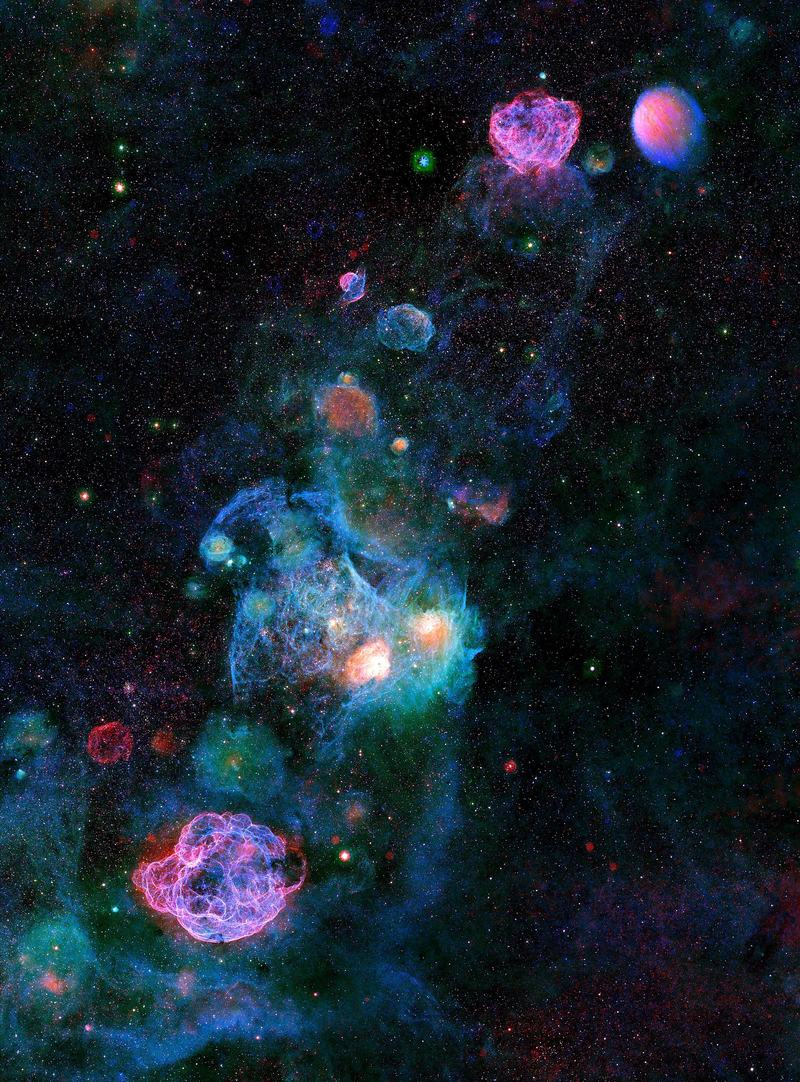

The gas itself is not exotic. Most emission nebulae are about 90% hydrogen, with the rest made up of helium, oxygen, nitrogen, and other elements. Different ionized elements glow at different wavelengths, which is why long-exposure images of emission nebulae often come out in vivid reds and greens rather than a single uniform color.
Nebulae That Only Borrow Light
Reflection nebulae work on the opposite principle: their dust isn't hot enough to be ionized, so instead it just scatters starlight, the way fog scatters a car's headlights. In 1912, astronomer Vesto Slipher analyzed the spectrum of the nebula around the star Merope in the Pleiades and concluded the nebula was simply reflecting light from Merope and the star Alcyone rather than glowing on its own. That was a genuine discovery at the time — nobody had proven that a nebula's light could be entirely borrowed rather than self-generated.
Distinguishing reflection nebulae from emission nebulae, as separate physical phenomena with separate causes, became one of the foundational classifications in nebular astronomy — and it depended entirely on spectroscopy, since the two types can look deceptively similar to the naked eye.
The Nebulae You Can't See Directly
Not every nebula glows. In dark nebulae, the extinction of light is caused by interstellar dust grains in the coldest, densest parts of molecular clouds. Rather than emitting or reflecting light, a dark nebula blocks it, showing up as a black silhouette against a brighter background of stars or glowing gas.
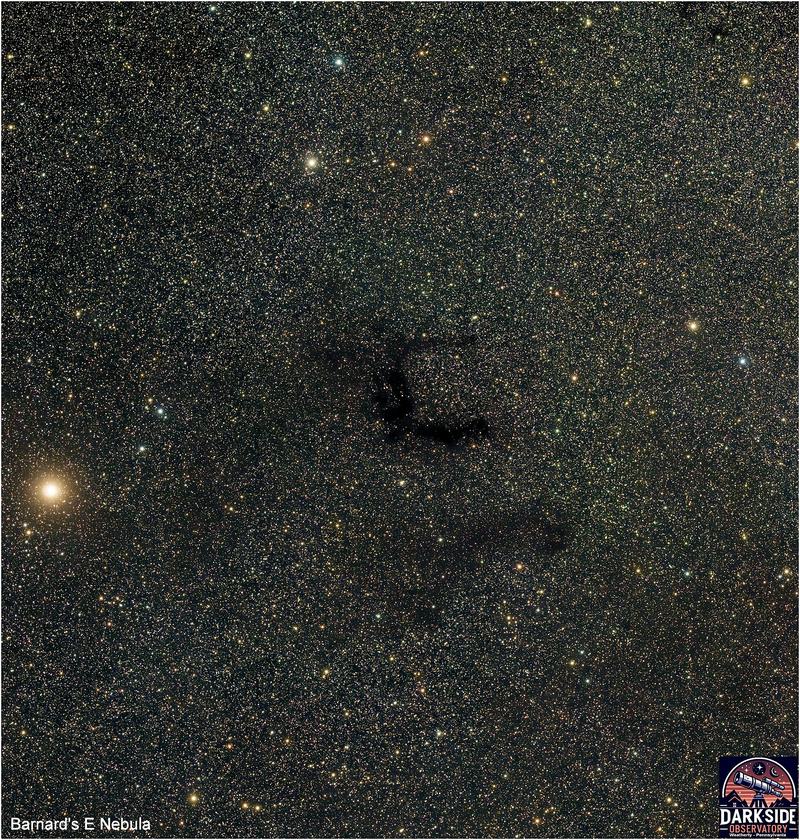

Because dark nebulae are defined by what they block rather than what they emit, visible-light telescopes are the wrong tool for studying what's actually inside them — astronomers instead rely on wavelengths the dust doesn't absorb as effectively.
The Beautiful Death of a Sun-Like Star
Planetary nebulae form at the end of the life of intermediate-mass stars, roughly 1 to 8 solar masses — which, notably, includes the Sun. As a star like this runs out of fuel, it sheds its outer layers into space, leaving behind an expanding shell of glowing gas.
The name is a historical accident. "Planetary nebula" is a misnomer: these objects have nothing to do with planets. The name comes from their round, planet-like shape as seen through early telescopes. Astronomers centuries ago simply couldn't resolve the fine detail that would have told them they weren't looking at another world.
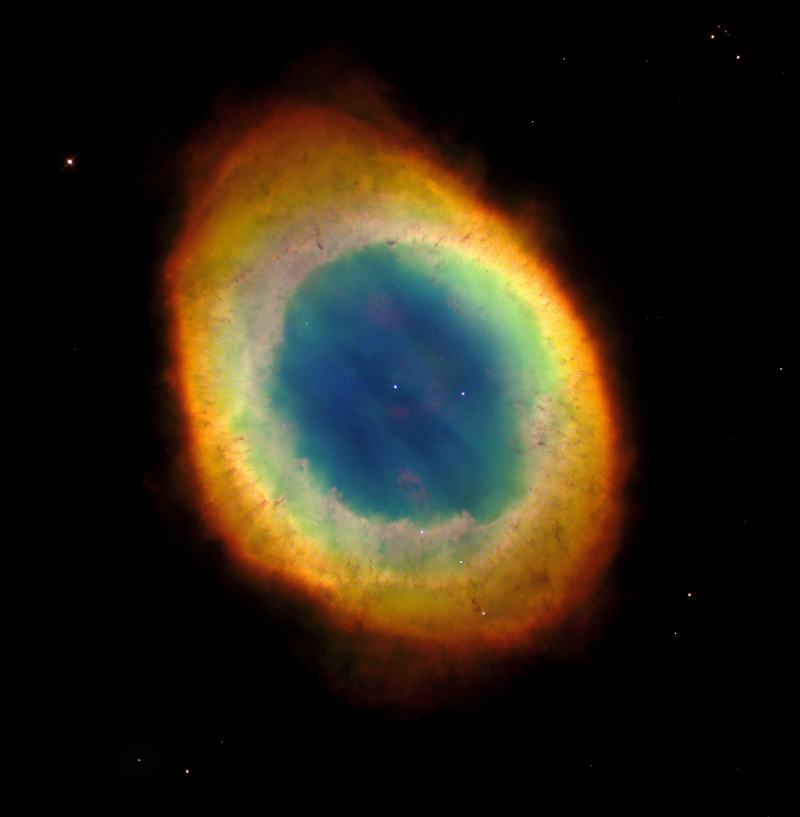

They're also far less substantial than they look. A typical planetary nebula is roughly one light-year across and made of extremely rarefied gas, with a density generally between 100 and 10,000 particles per cubic centimeter — a near-vacuum by any everyday standard, held together only by the enormous scale involved. About 3,000 planetary nebulae are currently known in the Milky Way, out of roughly 200 billion stars in the galaxy, a reminder of just how brief this phase of stellar life actually is compared to the billions of years a star spends on the main sequence.
They also aren't the tidy spheres their name might suggest. Only about 20% of planetary nebulae are spherically symmetric; the rest have more complex, asymmetric shapes, shaped by factors astronomers are still working out. And this fate isn't exotic or rare — it's the Sun's own future. The Sun itself is expected to produce a planetary nebula about 12 billion years after it formed, the same quiet ending that has already happened to thousands of similar stars across the galaxy.
The Violent Death of a Giant Star
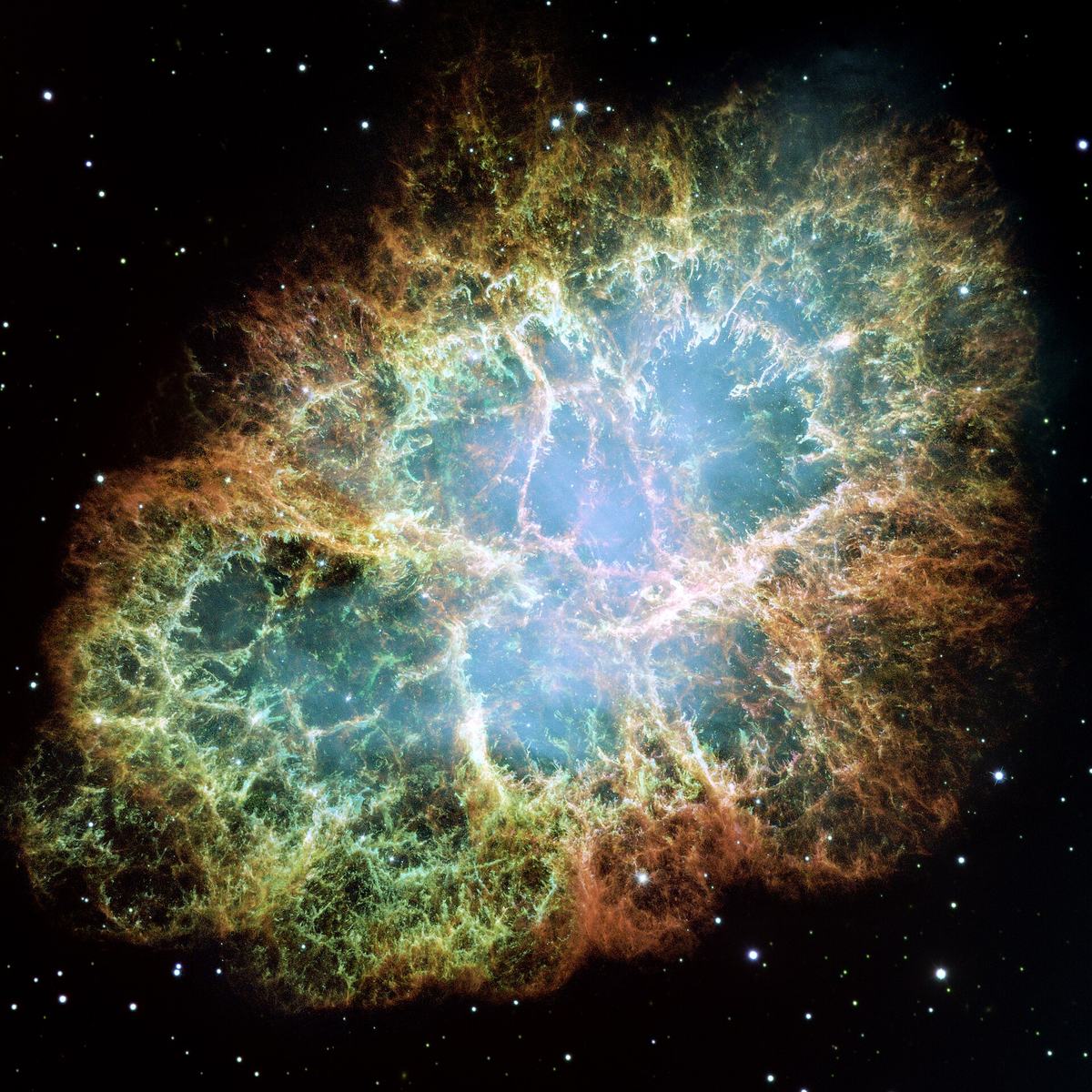
Stars far more massive than the Sun don't fade out gently — they explode, and the wreckage becomes a supernova remnant. A supernova explosion can expel stellar material at velocities as much as 10% of the speed of light, or roughly 30,000 km/s, and the resulting shock wave heats the surrounding plasma to temperatures well above millions of kelvin. That is an entirely different scale of violence from the slow shedding that produces a planetary nebula.
Well-known supernova remnants include the Crab Nebula, Tycho (the remnant of SN 1572, named after Tycho Brahe), and Kepler (the remnant of SN 1604, named after Johannes Kepler). Each one is a permanent record of a specific explosion, in some cases one that was bright enough to be noticed and written down by observers who had no idea what they were actually seeing.
Photographing the Pillars of Creation
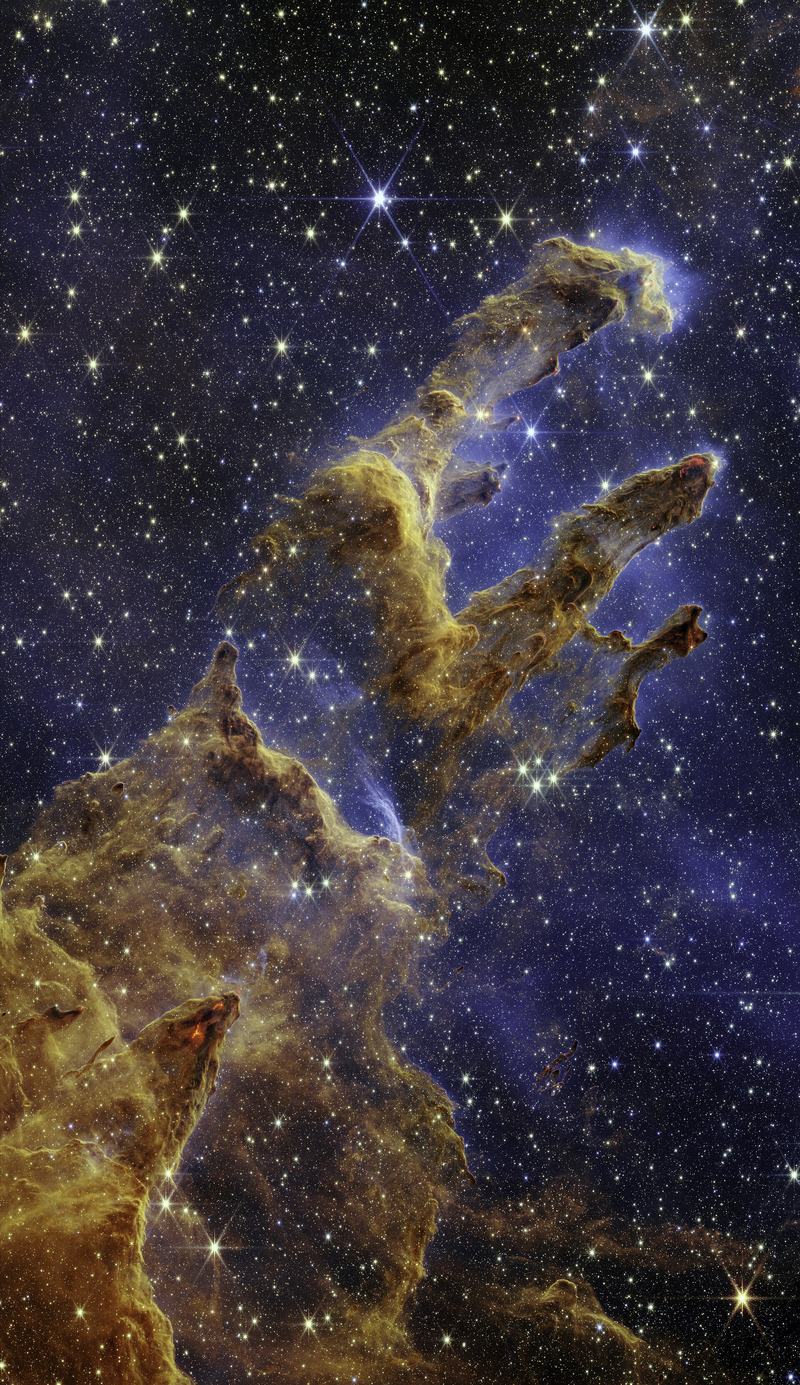
Modern nebula images owe a lot to space telescopes that can see wavelengths no ground-based observatory can reach cleanly. The famous "Pillars of Creation" photo of gas-and-dust structures in the Eagle Nebula, taken by the Hubble Space Telescope on April 1, 1995, shows a region roughly 6,500-7,000 light-years from Earth, and it remains one of the most recognizable astronomical images ever taken.
.jpg)
Newer instruments have gone back to the same target with different eyes. Infrared imaging cuts through the dust that visible light can't penetrate, revealing structure inside the pillars that the original photograph could only hint at — a good illustration of how a "final" iconic image of a nebula rarely stays final for long as telescope technology improves.