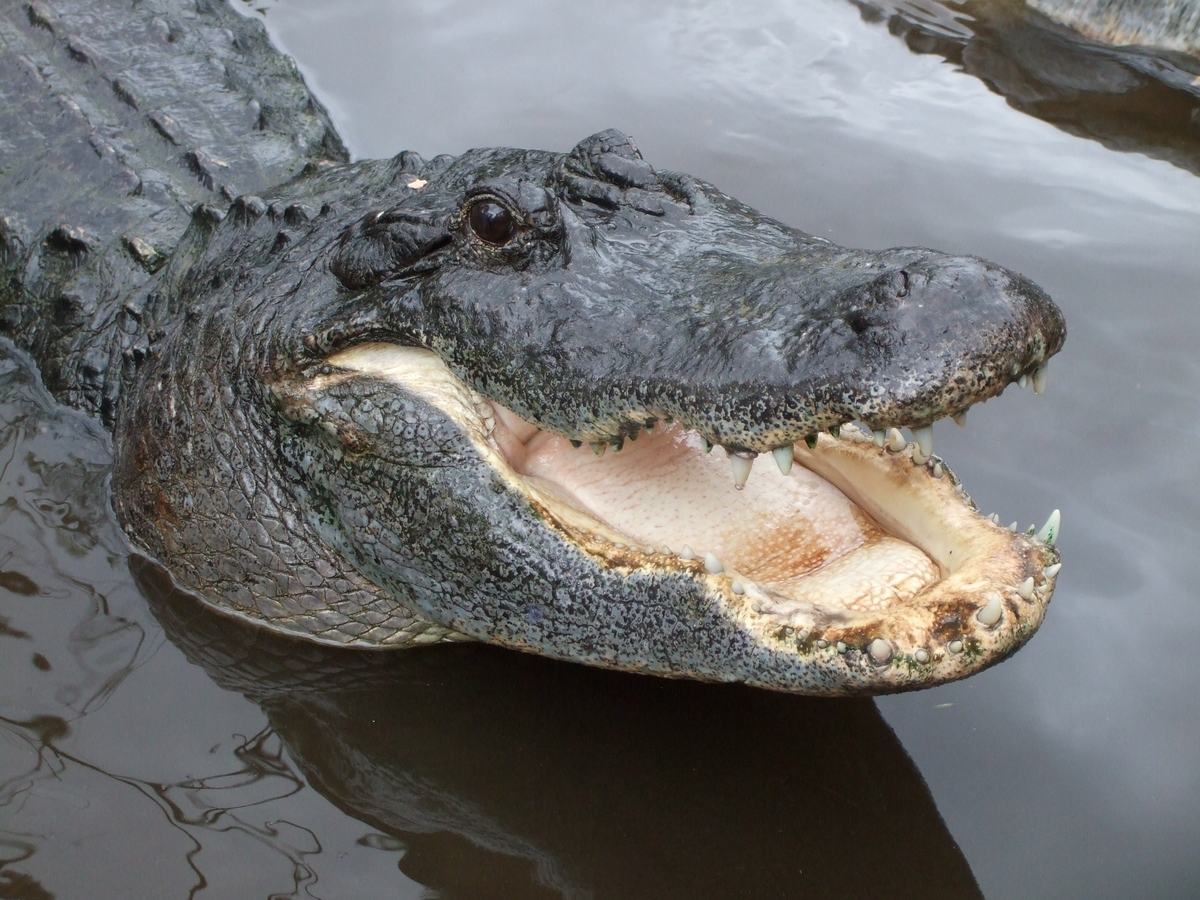
If you asked my Year 4 class how many kinds of alligator there are in the world, they would guess ten, then a hundred, then possibly a thousand. The real answer is two. That is the whole club. Alligators are older than they look, stranger than they let on, and rather better at surviving than most animals their size. Here is what makes them worth a proper look.
Only Two Alligators in the World
There are just two living species of alligator. One is the American alligator, which can pass four metres long and lurks across the southeastern United States. The other is the Chinese alligator, which grows to about 1.5 metres and could nap comfortably on your sofa [7]. The Chinese one is critically endangered, with only around a hundred left in the wild [7]. When people say 'alligator', they almost always mean the American sort. The little cousin gets rather overlooked.
A Bite Built for Crushing
A large American alligator can bite down with around 2,980 pounds of force, one of the strongest bites ever measured in a living animal [1]. Yet all that power runs one way. The muscles that snap the jaws shut are enormous, while the ones that open them are feeble. This is why a keeper can hold an alligator's mouth closed with two hands, or even a strip of tape. Opening it is the easy part. Staying near it is not.
Teeth on a Conveyor Belt
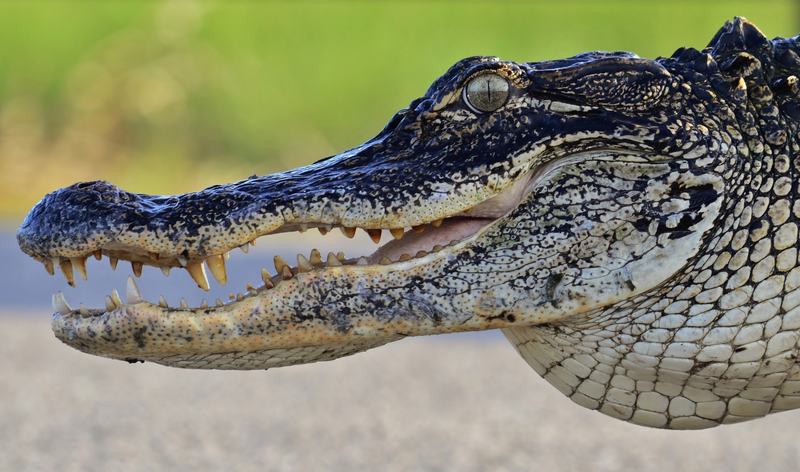
An alligator has around 80 teeth, and losing one is no bother at all. Under every tooth sits a small replacement, waiting its turn, with stem cells ready to grow the one after that [2]. Each socket can cycle through up to 50 teeth, so a single alligator may grow around 3,000 in a lifetime [2]. Ours get one swap and then it is dentures. Scientists are studying the alligator's trick in the hope it might one day work for us.

The Nest Temperature Decides
Alligators do not have sex chromosomes the way we do. Instead, the temperature inside the nest decides whether an egg becomes male or female [3]. Cooler nests, around 30 degrees or below, tend to produce females. Warmer ones, around 34 degrees and up, produce males [3]. A few degrees in a mound of rotting vegetation is the difference between a son and a daughter. It also means a warming climate could tip whole clutches one way, which is a genuine worry.
Surprisingly Devoted Mothers
For an animal with that reputation, the mothering is remarkably tender. The female builds a large mound of mud and plants, lays her eggs inside, and guards it fiercely for the two months or so it takes them to hatch. When the babies are ready they start chirping from inside their shells, and she digs them out. Then she carries them down to the water in that fearsome mouth, one careful load at a time. My class refuses to believe this bit.
Poking Through the Ice
Alligators are cold-blooded, so a hard frost ought to be the end of them. It is not. When a pond starts to freeze, an alligator will tip its snout up to the surface and let the ice form around it, breathing through that one gap while the rest of it waits below [4]. This is called brumation, a sort of reptile hibernation. Its heart can slow to about three beats a minute [4]. It simply stops, and waits for spring.

The Rare White Ones
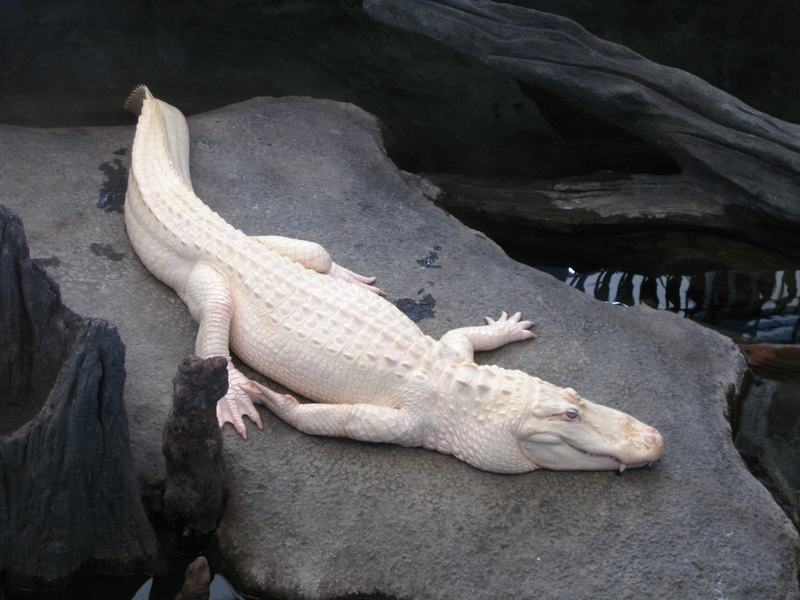
Every so often an alligator turns up pale and ghostly white. Most of these are leucistic, meaning they keep their blue eyes but lose their dark colouring. True albinos, with pink eyes, are rarer still. In the wild a white alligator does not last long, because it has no camouflage and its skin burns in the sun. Nearly all the ones you will ever see live safely in zoos and aquariums. They are, I admit, quietly spectacular.
Engineers of the Swamp
Alligators do not just live in the wetlands, they rebuild them. Using its tail, snout and feet, a big alligator scoops out a 'gator hole', a deep pool that stays wet when the rest of the marsh dries up [5]. In the dry season these pools become a lifeline for fish, turtles, birds and insects [5]. This makes the alligator a keystone species: pull it out, and a great many other animals lose their refuge. Not bad for a lump of teeth and patience.
From Almost Gone to Thriving
By the middle of the last century, hunting for skins had pushed the American alligator to the edge, and in 1967 it was listed as endangered [6]. Then the rules changed. Hunting was banned, the habitat was protected, and the alligator did something few endangered animals manage. It came roaring back. By 1987 it was taken off the endangered list, one of the great conservation success stories [6]. Today there are millions of them across the American South.
Frequently Asked Questions
What is the difference between an alligator and a crocodile?
Alligators have wide, U-shaped snouts and hide their teeth when the mouth is closed. Crocodiles have narrower, V-shaped snouts, and the large fourth tooth on the lower jaw stays visible. Alligators also prefer freshwater, while crocodiles tolerate saltwater far better. The two belong to separate families and are only distant relatives.
How long do alligators live?
American alligators commonly live 30 to 50 years in the wild, and often longer in captivity, where some pass 70 years. Their slow, cold-blooded metabolism lets them go long stretches without food, which helps them reach such ages. Size is a rough guide to age, since they keep growing slowly for much of their lives.
Are alligators dangerous to humans?
Alligators generally avoid people, and serious attacks are rare, though they do happen. Most incidents involve alligators that have been fed by humans and lost their natural wariness. The safe rule is simple: keep your distance, never feed them, and keep pets and small children back from the water's edge in alligator country.
How fast can an alligator move?
On land an alligator can manage short bursts of around 11 miles per hour, but only over a very short distance before it tires. In water they are far more capable, using the tail to move quickly and quietly. The old advice to run in zigzags is a myth. If you meet one on land, simply move away in a straight line.
Sources
- Crocodiles Have Strongest Bite Ever Measured, Hands-on Tests Show - National Geographic
- Solving an Alligator Mystery May Help Humans Regrow Lost Teeth - Smithsonian Magazine
- Temperature of Egg Incubation Determines Sex in Alligator mississippiensis - Nature
- How Alligators Survive in a Frozen Pond: They 'Snorkel' - Live Science
- The American Alligator and Its Importance to the Florida Everglades - Ecological Society of America
- American Alligator - Endangered Species Coalition
- Chinese Alligator - Encyclopaedia Britannica