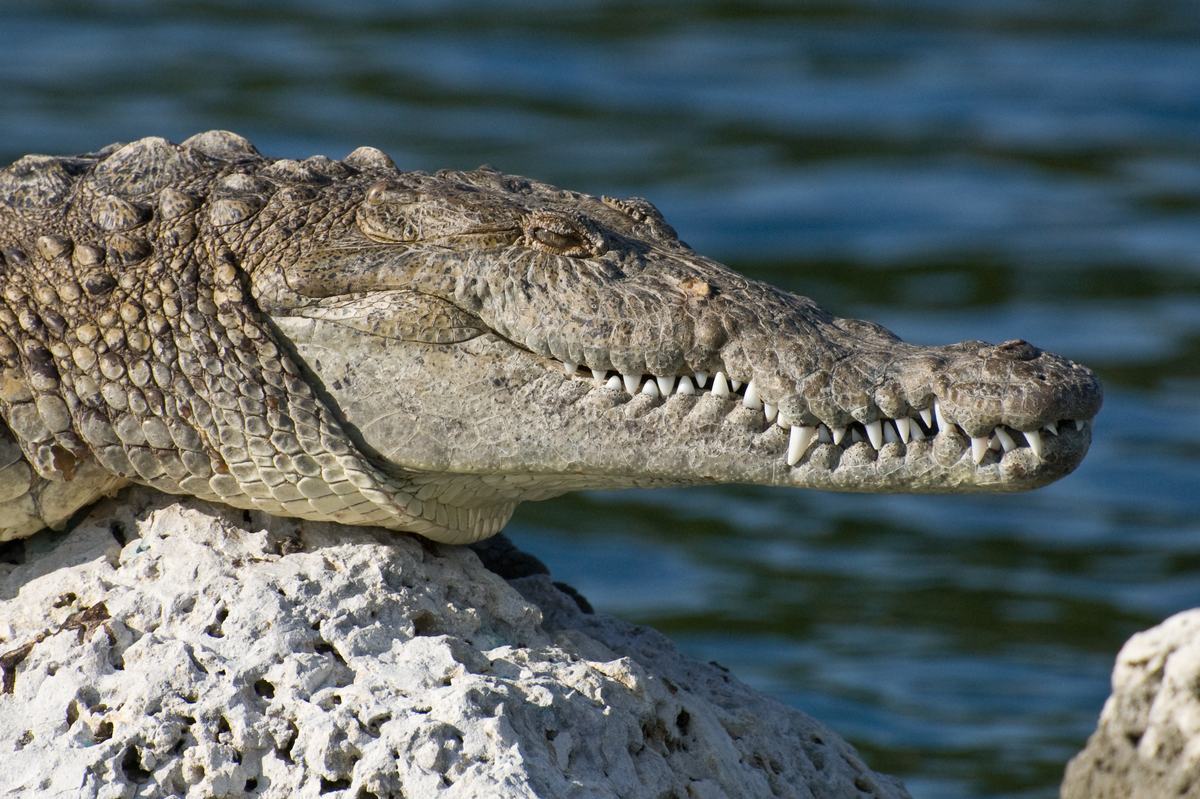
If you asked my Year 4 class to name an animal that has barely changed since the dinosaurs, they would guess the shark, then the tortoise, then something entirely made up. Very few guess the crocodile. And yet here it is, lurking in rivers with roughly the same body plan it had 200 million years ago, still doing perfectly well without a single upgrade. Crocodiles are old, patient, and quietly impressive. Here is what makes them worth a closer look.
Older Than the Dinosaurs' Neighbours
Crocodiles did not evolve from dinosaurs, but they shared the planet with them. Their ancestors, the crocodylomorphs, appear in the fossil record more than 200 million years ago, back in the Late Triassic [5]. Most of the features you would recognise today, the flat skull, the eyes on top, the armoured back, were already in place by then [5]. This is why people call them living fossils. They found a design that worked and simply stopped fiddling with it.
The Hardest Bite Ever Measured
A team led by Gregory Erickson spent eleven years strapping crocodilians to a bite-force meter, which is a job I would not swap for teaching. A large saltwater crocodile clamped down at 3,700 pounds of force, the strongest bite ever measured in a living animal [1]. Scaled up to the biggest crocodiles on record, the figure climbs past 7,000 pounds [1]. Their jaw muscles are built almost entirely for closing, not opening. You could hold a croc's mouth shut with your bare hands. Please do not test this.

Jaws More Sensitive Than Your Fingertips
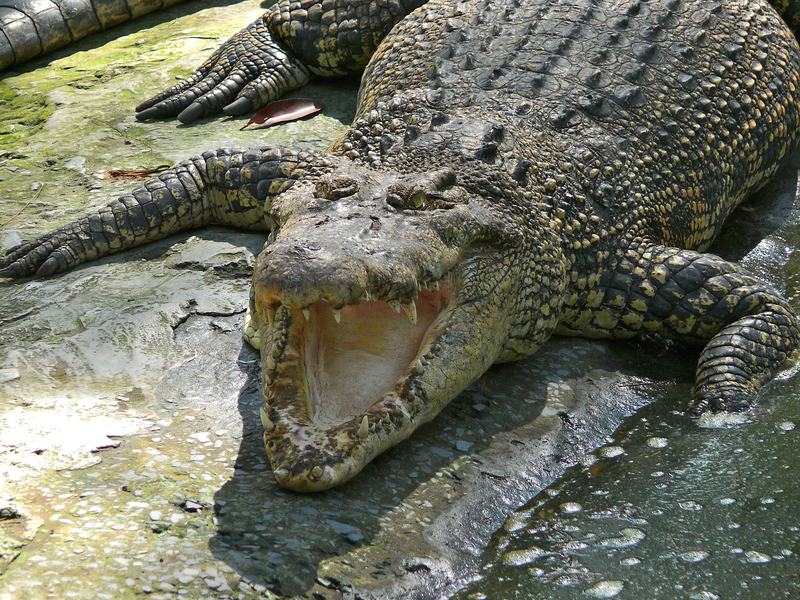
Here is the strange part. Those same crushing jaws are covered in thousands of little dark bumps, and each one is a pressure sensor [2]. Scientists found that a crocodile's face is more sensitive to touch than a human fingertip, about ten times more in the most delicate spots [2]. A croc lying still in murky water can feel a single drop land on the surface. It knows something is there long before it can see it. Rather terrifying, when you think about it.
They Cannot Chew a Thing
Crocodiles have around 60 teeth and not one of them is for chewing. The teeth grip and puncture, nothing more [3]. To break up a large meal, a crocodile clamps on and spins, the famous death roll, tearing off a chunk it can swallow whole [3]. To help digestion, it also swallows stones, called gastroliths, which sit in the stomach and grind the food down [3]. A four-chambered heart, a valve at the back of the throat to keep water out. It is a surprisingly tidy bit of engineering.

The Temperature Picks the Sex
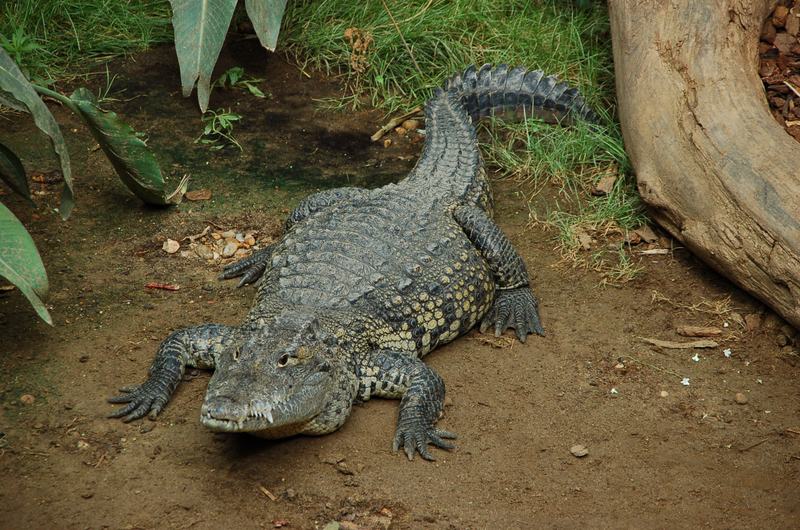
Crocodiles do not have sex chromosomes the way we do. Instead, the temperature of the nest decides whether an egg becomes male or female [4]. Cooler nests, around 30 degrees, tend to produce females. Warmer ones, around 34 degrees, produce males [4]. A few degrees in the mud is the difference between a son and a daughter. It also means a warming climate is a real worry for them, because a nest that runs too hot or too cold can skew the whole clutch one way.
Surprisingly Soft Parents
For an animal this fearsome, the parenting is remarkably gentle. When the babies are ready, they start chirping from inside their eggs, and the mother digs them out [4]. Then she picks them up in that enormous mouth, all teeth and menace, and carries them carefully down to the water [4]. She may guard them for weeks. My class refuses to believe a crocodile can be tender, and I understand the scepticism, but the footage does not lie.
Built to Wait
Crocodiles are cold-blooded, which sounds like a disadvantage until you see the maths. Because they do not burn energy keeping warm, a big crocodile can go for months between meals [3]. They also live a very long time. Many reach 70 years in the wild, and in captivity they can pass 100 [6]. A saltwater crocodile named Cassius, in Australia, was thought to be over 120 [6]. Patience, it turns out, is a survival strategy, and crocodiles have had 200 million years to practise it.
Frequently Asked Questions
What is the difference between a crocodile and an alligator?
Crocodiles have narrower, V-shaped snouts, and their lower fourth tooth stays visible when the mouth is shut. Alligators have wider, U-shaped snouts and hide that tooth. Crocodiles also cope with saltwater far better, thanks to glands that remove excess salt. The two are related but sit in separate families.
What is the largest crocodile?
The saltwater crocodile is the largest living reptile. Big males commonly reach around 5 metres and can exceed 1,000 kilograms, and historical records describe individuals over 6 metres. Females are much smaller, usually under 3.4 metres. Size, not species, is what determines a crocodile's bite force.
How strong is a crocodile's bite?
A large saltwater crocodile bites with about 3,700 pounds of force, the strongest bite ever measured in a living animal. The muscles that open the jaw, however, are weak. That is why handlers can tape a captured crocodile's mouth shut fairly easily, even though nobody enjoys the closing part.
How long do crocodiles live?
Many crocodiles live around 70 years in the wild, and some pass 100 in captivity. A saltwater crocodile named Cassius, in Australia, was estimated at more than 120 years old. Their slow metabolism and generally unhurried lifestyle help explain the long lifespans.
Sources
- Crocodiles Have Strongest Bite Ever Measured, Hands-on Tests Show - National Geographic
- Crocodile and Alligator Jaws Are More Sensitive Than Human Fingertips - Smithsonian Magazine
- Crocodilian - San Diego Zoo Animals and Plants
- Croc Blog: Social Behavior, Reproduction and Play - Smithsonian's National Zoo
- Early crocodile ancestor shows how the reptiles became feared aquatic predators - Natural History Museum
- 120-year-old Cassius is pushing the limit of crocodile longevity - Live Science