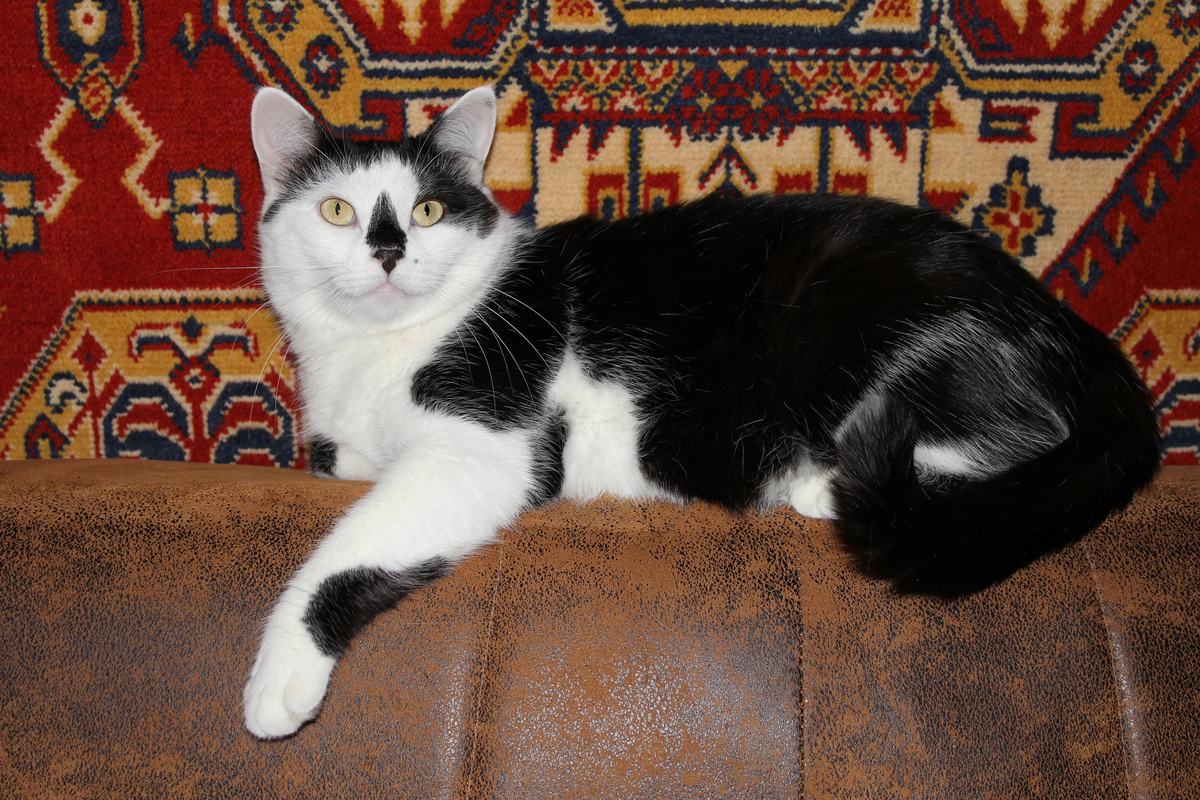
If you asked my Year 4 class how many bones a cat has, they would guess somewhere near our own count. They would be low. A cat carries around 230 bones, a good couple of dozen more than we do, and it wears them like a very well-fitted coat.[^3] What follows is a short tour of the animal most of us think we already know, sat on the radiator, judging us quietly.
A Collarbone That Connects to Nothing
Cats do have a collarbone. It just does not attach to the rest of the skeleton. It sits buried in muscle, floating free, which is why a cat can post itself through any gap its skull will clear.[^3] My kids find this deeply unfair, given how often they wedge themselves in the school railings. A cat simply folds its shoulders and pours through. The head is the only part that has to fit. The rest, somehow, follows.
Thirty-Two Muscles Per Ear
Each cat ear is worked by about 32 muscles, and a cat can swivel each one roughly 180 degrees, independently.[^4] Ours manage a faint wobble, and only if we concentrate. That swivel lets a cat pin a sound to within a few centimetres from across the room, which is how it locates a mouse behind the skirting board. It also explains the slow, irritated ear-turn a cat gives you when you say its name and it chooses not to come.
Whiskers That Measure Doorways
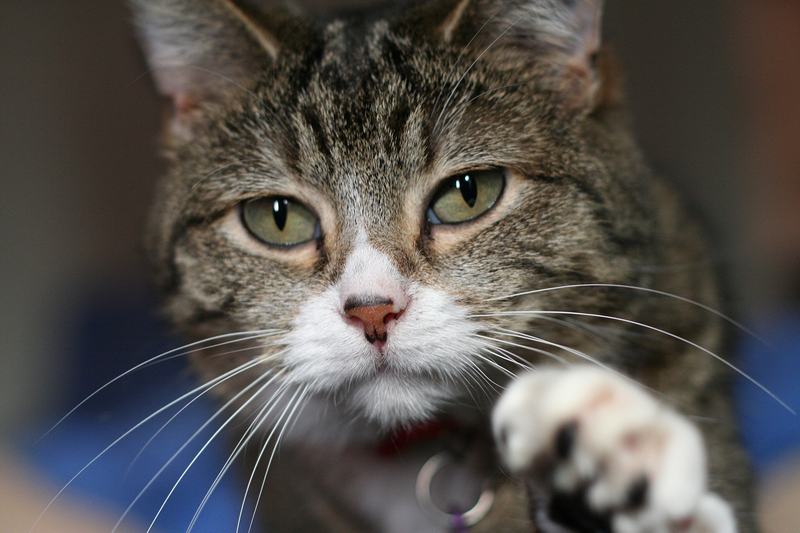
A cat's whiskers are not decoration. They are stiff, deeply rooted sensors, and they tend to span roughly the width of the cat's own body.[^3] So a cat can judge, in the dark, whether a gap is worth attempting before it commits its shoulders. Trim them and a cat becomes clumsy and unsure. This is also why a well-fed cat that has widened over winter can misjudge a hole its whiskers no longer match. The whiskers did not get the memo.

No Taste for Sweetness
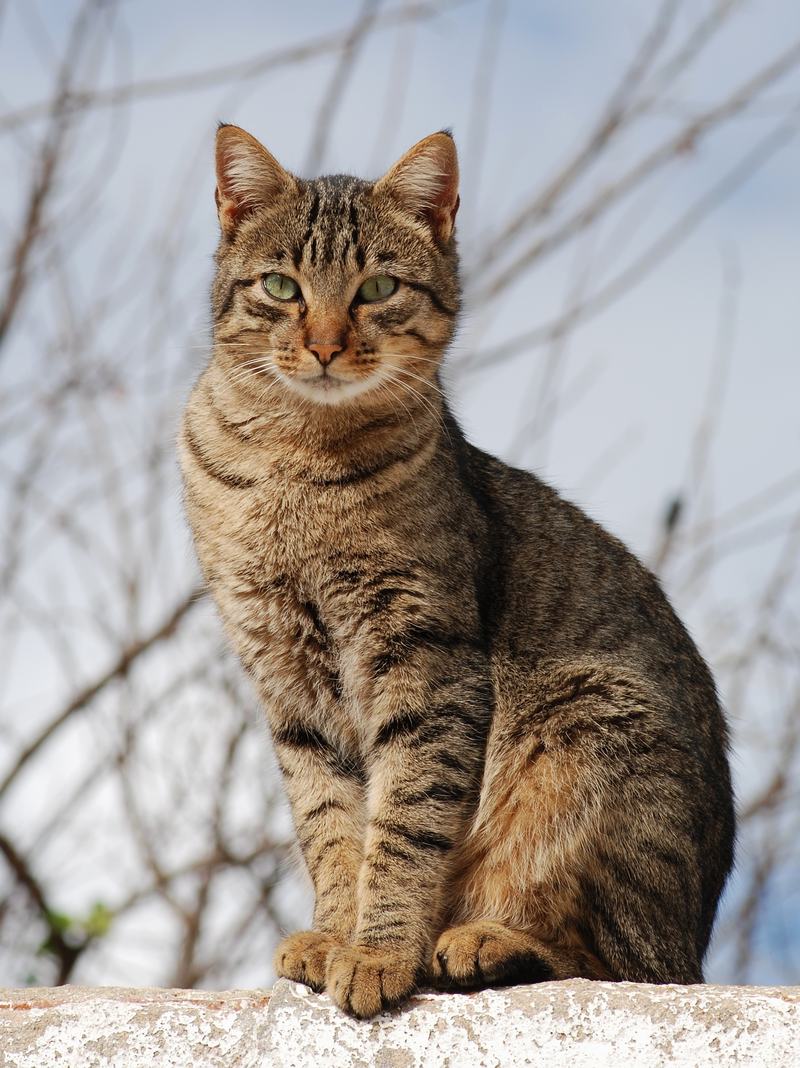
Cats cannot taste sweet things. The gene that builds the sweet receptor is broken in cats, so sugar registers as nothing at all.[^2] Which, fair enough - they are strict meat-eaters, and there is no sugar in a mouse. If your cat seems keen on ice cream, it is chasing the fat and the dairy, not the sweetness. It literally cannot know the biscuit is sweet. A whole aisle of the supermarket means less to a cat than an empty cardboard box.
Built to Land Upright
The famous trick of landing on their feet is real, and it is physics, not luck. A falling cat uses its inner ear to work out which way is up, then folds and twists the front and back halves of its body in opposite directions to swing itself upright.[^5] Kittens can do it by about seven weeks old. It is not foolproof, and it does not mean cats should be dropped or left near open windows. But the reflex itself is a genuinely elegant piece of engineering.

Most of a Life Spent Asleep
Most cats sleep between 12 and 16 hours a day, which adds up to roughly two thirds of their lives.[^4] They are built for short, explosive bursts of hunting, so the rest of the time is spent conserving fuel. A fair chunk of that is light dozing rather than deep sleep, the sort where an ear still tracks the room. So the cat asleep on your keyboard is not lazy, exactly. It is simply very good at doing nothing until a bird appears.
The Purr That Might Do More
A cat purrs at a low frequency, somewhere in the range of 25 to 150 hertz, and it can do it while breathing in and out, which most animal sounds cannot manage.[^6] Cats purr when content, but also when injured, giving birth, or frightened, which has led researchers to wonder whether the vibration soothes the cat itself, and possibly even helps tissue mend. Nobody has settled it. For now it remains one of the friendliest noises in the animal world that we still do not fully understand.
From Desert Hunter to Hearth
The house cat descends from the African wildcat, and the two barely differ. Cats settled near humans in the Near East around 10,000 years ago, drawn to the mice in our first grain stores.[^1] They were never really domesticated in the way dogs were. They moved in, made themselves useful, and kept their own hours. A cat on Cyprus was buried beside a person some 9,500 years ago, so this arrangement is old, and the cat has changed remarkably little since.
They Mostly Meow at Us
Adult cats rarely meow at other cats. The meow is aimed largely at people, a sound they lean on because it works on us.[^4] Kittens meow to their mothers, then most grow out of it with each other and keep it for the humans who open tins. Some cats even develop a specific insistent cry, pitched close to a human baby's, that is remarkably hard to ignore. So yes, your cat is talking to you specifically. And yes, it has your number.
Frequently Asked Questions
Why do cats knead with their paws?
Kneading is a comfort behaviour carried over from kittenhood, when kittens press their mother to encourage milk. Adult cats knead soft surfaces, and people, when they feel safe and settled. It is generally a sign of contentment, sometimes paired with purring and a faraway look.
Can cats really see in complete darkness?
No, cats cannot see in total darkness, but they see far better than we do in very low light. A reflective layer behind the retina, the tapetum lucidum, bounces light back through the eye for a second chance to catch it. This is also what makes cats' eyes glow in a photo.
Why does my cat cover its food?
Some cats scratch around their bowl as if burying the food. It is an instinct linked to hiding leftovers from other animals, or simply covering a scent. It usually means nothing is wrong. If a cat consistently refuses food, though, that is worth a vet visit.
Do cats actually like being alone?
Cats are more social than their reputation suggests, but they are independent and dislike being crowded. Many form strong bonds with their people and other pets, on their own terms. They tend to prefer choosing when to be close rather than having closeness imposed on them.
Sources
- The Taming of the Cat - Scientific American
- Pseudogenization of a Sweet-Receptor Gene Accounts for Cats' Indifference toward Sugar - PLoS Genetics
- Cat Anatomy and Physiology - VCA Animal Hospitals
- Cornell Feline Health Center - Cornell University College of Veterinary Medicine
- How Does a Cat Always Land on Its Feet - Scientific American
- Why and How Do Cats Purr - Library of Congress Everyday Mysteries